In 1969, when I was a patrol sergeant in Hollywood I got a call to the Desilu studios on Gower. Eddie Albert greeted me on the set. In the next room was Lana Turner. Albert prevailed upon me that Turner was not feeling well and that it was nothing to worry about. I don’t recall the exact nature of the call, but I could tell that Albert was interested in keeping it low profile. Once I felt convinced there was no foul play, I had no problem in not going into the next room and checking on Turner. Albert was quite persuasive. I suppose I was a bit foolish, but often having been around actors, I understood their need for privacy, particularly in “iffy” situations like this one.
Lana Turner (February 8, 1921 – June 29, 1995) was an American actress popular during the 1940s and 1950s. Turner was born Julia Jean Turner in Wallace, Idaho. She was the only daughter of John Virgil Turner, a miner from Montgomery, Alabama (January 23, 1903 – December 14, 1930), and Mildred Frances Cowan, a sixteen-year-old native of Lamar, Arkansas (June 19, 1904 – February 22, 1982). Her father was of Dutch ancestry and her mother was of Scottish, English and Irish ancestry. A common and often repeated error is to add the given names of her mother Mildred Frances to her birth name. These names she used when she converted to Catholicism as a child.
Until her film career took off, young Julia Turner was known to family and friends as “Judy”. Hard times eventually forced the family to re-locate to San Francisco, where her parents soon separated. On December 14, 1930, her father won some money at a traveling craps game, stuffed his winnings in his left sock, and headed for home. He was later found dead on the corner of Minnesota and Mariposa Streets, on the edge of Potrero Hill and the Dogpatch District in San Francisco, his left shoe and sock missing. The robbery and murder were never solved. Soon after, her mother developed health problems and was advised by her doctor to move to a drier climate. With her ten-year-old daughter, she moved to Los Angeles in 1931.
Mildred and Lana were very poor, and Turner was sometimes separated from her mother, living with friends or acquaintances so that the family could save money. Her mother worked 80 hours a week as a beautician to support them. After Turner was discovered, her mother became the overseer of Turner’s career.
Turner’s discovery at a Hollywood drug store is a show-business legend. As a sixteen-year-old student at Hollywood High School, Turner skipped a typing class and bought a Coke at the Top Hat Malt Shop located on the southeast corner of Sunset Boulevard and McCadden Place (not Schwab’s Pharmacy, as is commonly believed), where she was spotted by William R. Wilkerson, publisher of The Hollywood Reporter. Wilkerson was attracted by her beauty and physique, and referred her to the actor/comedian/talent agent Zeppo Marx. Marx’s agency immediately signed her on and introduced her to film director Mervyn LeRoy, who cast her in her first film, They Won’t Forget (1937).
Turner earned the nickname “The Sweater Girl” from her form-fitting attire in a scene in They Won’t Forget. According to her daughter, this was a nickname Turner detested throughout her entire career.In late 1937, she signed a contract with Metro-Goldwyn-Mayer for $100 a week, and graduated from high school in between filming. According to LeRoy, it was thanks to him that she made the switch, for he left Warners to work at MGM and was advised by studio head Jack Warner to take her with him, because Warner believed that she wouldn’t “amount to anything.” Her first starring role for MGM was scheduled to be an adaptation of The Sea-Wolf, co-starring Clark Gable, but the project was eventually canned. Instead, she was assigned opposite teen idol Mickey Rooney in the Andy Hardy film Love Finds Andy Hardy (1938). It was this appearance, as a flirtatious girl described as “the kissing bug,” that convinced Louis B. Mayer that LeRoy’s protégée Turner could be the next Jean Harlow, a sex symbol who had died six months before Turner’s arrival at MGM.
Mayer turned her into a glamorous star, mostly popular among college boys, and gave her the leads in several teen-oriented films in the late 1930s and early 1940s, such as Dramatic School (1938), These Glamour Girls (1939) and Dancing Co-Ed (1939). In early 1940, she was also set to star in a remake of Our Dancing Daughters, but the film was never made.[10] From the beginning of her career, Turner stood her ground on her beliefs and was one of the few actresses at MGM to go against Mayer’s wishes.
Turner, an actress bolstered by her extreme beauty, reached the height of her fame in the 1940s and 1950s. During World War II, Turner became a popular pin-up girl due to her popularity in such films such as Ziegfeld Girl (1941), Johnny Eager (1942), Slightly Dangerous (1943) and four films with Metro-Goldwyn-Mayer’s “king of the lot”, Clark Gable. The Turner-Gable films’ successes were only heightened by gossip-column rumors about a relationship between the two. Turner even had a B-17 Flying Fortress—the Tempest Turner—named after her. Following the canned The Sea Wolf project, Turner and Gable were set to star in The Uniform in December 1940. Turner was eventually replaced by Rosalind Russell and the film was released as They Met in Bombay (1941).
Meanwhile, Turner was receiving much publicity for her personal life, and her career was one of the very few to be furthered by this. MGM boosted this by changing the title of her latest film to Slightly Dangerous (1943).
After the war, Turner’s career continued successfully with the release, The Postman Always Rings Twice (1946), which co-starred John Garfield. As claimed in a documentary, Turner did not get along with him and when she found he was her male lead, she responded: “Couldn’t they at least hire someone attractive?” The now-classic film noir marked a turning point in her career, and it marked Turner’s first femme fatale role. Reviews of the film, and in particular, Turner’s performance, were glowing, with a critic of The New York Times writing it was “the role of her career.” While not exactly giving up her pin-up credentials, Turner established herself as a skilled actress. The Postman Always Rings Twice was thus a turning point in her career. Turner commented on this:
“I finally got tired of making movies where all I did was walk across the screen and look pretty. I got a big chance to do some real acting in The Postman Always Rings Twice, and I’m not going to slip back if I can help it. I tried to persuade the studio to give me something different. But every time I went into my argument about how bad a picture was they’d say, ‘well, it’s making a fortune.’ That licked me.”
She got the role after turning down “four pretty-pretty parts in a row.” The film became a box office success, which prompted the studio to take more risks on the star. In August 1946, it was announced Turner was set to replace Katharine Hepburn in the big budgeted historical drama Green Dolphin Street (1947), a role for which she darkened her hair and lost 15 pounds. She was cast due to the persistence of producer Carey Wilson, who was overwhelmed by her performance in The Postman Always Rings Twice. Turner later recalled she was surprised about replacing Hepburn, saying: “And I guess I’m about the most un-Hepburnish actress on the lot. But it was just what I wanted to do.” It was her first starring role that did not center on her looks. In an interview, Turner said: “I even go running around in the jungles of New Zealand in a dress that’s filthy and ragged. I don’t wear any make-up and my hair’s a mess.” Nevertheless, she insisted she would not give up her glamorous image.
Later that year, Turner headlined Cass Timberlane, a role that Jennifer Jones, Vivien Leigh and Virginia Grey were previously considered for. As of early 1946, Turner was set for the role, but schedules with Green Dolphin Street almost prohibited her from taking the role, and by late 1946, she was almost recast.Production of Cass Timberlane was very exhausting for Turner, as it was shot in between retakes of Green Dolphin Street. Nevertheless, she took the female lead in Homecoming (1948) in August 1947, only moments after finishing Cass Timberlane. She was the studio’s first choice for the role, but they were reluctant to offer her the part, considering her overbooked schedule.[19] Paired again with Clark Gable in Homecoming, their chemistry projected on the screen was well received by the audience, and they were nicknamed “the team that generates steam”. By this period, Turner achieved the milestone of her film career, and was not only MGM’s most popular star, but also one of the ten best paid women in the United States.
In 1948, Turner appeared in her first Technicolor film, appearing as Lady de Winter in The Three Musketeers, opposite Gene Kelly, Van Heflin and June Allyson. In November 1947, she agreed to do the film, thereby giving up an unfinished film project called Bedeviled. However, in January 1948 it was reported that she had withdrawn from the film. Initially, Louis B. Mayer gave her permission for doing so because of her schedule, but she was later that month put on suspension. Eventually, Turner agreed to make the film, but did not start production until March due to having to lose weight. In 1949, she was to headline A Life of Her Own (1950). The project was shelved for several months, and Turner insisted in December 1949 that she had nothing to do with it, saying: “Everybody agrees that the script is still a pile of junk. I’m anxious to get started. By the time this one comes out, it will be almost three years since I was last on the screen, in The Three Musketeers. I don’t think it’s healthy to stay off the screen that long.”
During the 1950s, Turner starred in a series of films that failed to succeed at the box office, a situation MGM attempted to remedy by casting her in musicals. The first, Mr. Imperium (1951), was a flop, while The Merry Widow (1952) was more successful. She gave a widely praised performance in Vincente Minnelli’s film, The Bad and the Beautiful (1952) (in a role partly based on Diana Barrymore), and later starred with John Wayne in the adventure film The Sea Chase (1955). She was then cast in the epic The Prodigal (1955), but the film and her performance in general were not well received. After the film Diane (1956), MGM opted not to renew her contract. This was a difficult time for Hollywood’s major studios because a recent court decision forced them to divest themselves of their movie theaters. In addition, television had caught on in a big way; the public was staying home. Turner was just one of MGM’s star roster to be let go.
Turner’s career recovered briefly after she appeared in the hugely successful big-screen adaptation of Grace Metalious’s best-selling novel, Peyton Place (1957), for which she was nominated for an Academy Award for Best Actress. Another few box-office failures followed (Another Time, Another Place (1958), for example) when the 1958 scandal surrounding her daughter’s killing of Stompanato threatened to derail her career completely.
In the trail of the related negative publicity, Turner accepted the lead role in Ross Hunter’s remake of Imitation of Life (1959) under the direction of Douglas Sirk. Universal Studios capitalized on her new-found notoriety; the result was one of the biggest hits of the year, as well as the biggest hit of Turner’s career: she owned 50% of the earnings of the picture and for only the first year of the film’s career she earned $11 million. Critics and audiences couldn’t help noticing that the plots of both Peyton Place and Imitation of Life had borrowed heavily from Turner’s private life. Each film depicted the troubled, complicated relationship between a single mother and her teenage daughter.
She made her last film at MGM starring with Bob Hope in Bachelor in Paradise (1961). Other highlights of this era include By Love Possessed (1961), based on the James Gould Cozzens novel and two Hunter productions (for whom she did Imitation of Life), Portrait in Black (1960) and Madame X (1966), which proved to be her last major starring role.
In 1969, Turner appeared in her only lead starring role on television in ABC’s Harold Robbins’ The Survivors, but despite the presence of other big-name stars, the program fared badly opposite Mayberry R.F.D. and The Doris Day Show on CBS and The NBC Monday Movie, and was cancelled midway into the season.
In the 1970s and 1980s, Turner appeared in several television roles, most notably as a guest star for several episodes on the series Falcon Crest as the mysterious Jaqueline Perrault and The Love Boat, but the majority of her final decade was spent out of the public eye.
On October 25, 1981 the National Film Society presented Lana with an Artistry in Cinema award. In 1994 she received Donostia Lifetime Achievement Award at the San Sebastian International Film Festival, Spain. In 1982, Turner released a memoir, in which she stated that she had two abortions and three stillbirths. She said she was an alcoholic and had attempted suicide.
Turner spent most of the 1970s and early 1980s in semi-retirement, working only occasionally. In 1982 she accepted a much publicized and lucrative recurring guest role in the television series Falcon Crest. Her first appearance on the show gave the series the highest rating it ever achieved. Turner made her next final film appearance in 1991, and died from throat cancer in 1995.
Jayne Mansfield (born Vera Jayne Palmer; April 19, 1933 – June 29, 1967) was an American actress in film, theatre, and television, a nightclub entertainer, a singer, and one of the early Playboy Playmates. She was a major Hollywood sex symbol of the 1950s and early 1960s. Mansfield was 20th Century Fox’s alternative Marilyn Monroe and came to be known as the Working Man’s Monroe. She was also known for her well-publicized personal life and publicity stunts.
Mansfield became a major Broadway star in 1955, a major Hollywood star in 1956, and a leading celebrity in 1957. She was one of Hollywood’s original blonde bombshells, and although many people have never seen her movies, Mansfield remains one of the most recognizable icons of 1950s celebrity culture. With the decrease of the demand for big-breasted blonde bombshells and the increase in the negative backlash against her over-publicity, she became a box-office has-been by the early 1960s.
While Mansfield’s film career was short-lived, she had several box office successes and won a Theatre World Award and a Golden Globe. She enjoyed success in the role of fictional actress Rita Marlowe in both the 1955–1956 Broadway version, and, in the 1957 Hollywood film version of Will Success Spoil Rock Hunter?. She showcased her comedic skills in The Girl Can’t Help It (1956), her dramatic assets in The Wayward Bus (1957), and her sizzling presence in Too Hot to Handle (1960). She also sang for studio recordings, including the album Shakespeare, Tchaikovsky & Me and the singles Suey and As the Clouds Drift by (with Jimi Hendrix). Mansfield’s notable television work included television dramas Follow the Sun and Burke’s Law, game shows The Match Game and What’s My Line?, variety shows The Jack Benny Program and The Bob Hope Show, the The Ed Sullivan Show, and a large number of talk shows.
By the early 1960s, Mansfield’s box office popularity had declined and Hollywood studios lost interest in her. Some of the last attempts that Hollywood took to publicize her were in The George Raft Story (1961) and It Happened in Athens (1962). But, towards the end of her career, Mansfield remained a popular celebrity, continuing to attract large crowds outside the United States and in lucrative and successful nightclub acts (including The Tropicana Holiday and The House of Love in Las Vegas), and summer-theater work. Her film career continued with cheap independent films and European melodramas and comedies, with some of her later films being filmed in United Kingdom, Italy, Germany, and Greece. In the sexploitation film Promises! Promises! (1963), she became the first major American actress to have a nude starring role in a Hollywood motion picture.
Mansfield, one-upping Sophia Loren
Mansfield took her professional name from her first husband, public relations professional Paul Mansfield, with whom she had a daughter. She was the mother of three children from her second marriage to actor–bodybuilder Mickey Hargitay. She married her third husband, film director Matt Cimber, in 1964, and separated from him in 1966. Mansfield and Cimber had a son. In 1967 Mansfield died in a car accident at the age of 34.
In January 1955 Mansfield appeared at a Silver Springs, Florida press junket promoting the film Underwater!, starring Jane Russell. Mansfield purposely wore a too-small red bikini, lent her by photographer friend Peter Gowland. When she dove into the pool for photographers her top came off, which created a burst of media attention. The ensuing publicity led to Warner Bros. and Playboy approaching her with offers. In June 8 of the same year, her dress fell down to her waist twice in a single evening – once at a movie party, and later at a nightclub. In February 1958, she was stripped to the waist at a Mardi Gras party in Rio de Janeiro. In June 1962, she shimmied out of her polka-dot dress in a Rome nightclub. In the three years since making her Broadway debut in Will Success Spoil Rock Hunter?, Mansfield had become the most controversial star of the decade.
In April 1957, her bosom was the focus of a notorious publicity stunt intended to deflect media attention from Sophia Loren during a dinner party in the Italian star’s honor. Photographs of the encounter were published around the world. The best-known photo showed Loren’s gaze falling on the cleavage of the American actress (who was seated between Loren and her dinner companion, Clifton Webb) when Mansfield leaned over the table, allowing her breasts to spill over her low neckline and exposing one nipple. Several similar photos were taken in a short time. Fearful of public outrage, most Italian newspapers refused to print the wirephotos; Il Giorno and Gazzetta del Popolo printed them after retouching to cover much of Mansfield’s bosom, and only Il Giornale d’Italia printed them uncensored. The photo inspired a number of later photographers. In 1993, Daniela Federici created an homage with Anna Nicole Smith as Mansfield and New York City DJ Sky Nellor as Loren for a Guess Jeans campaign. Later, Mark Seliger took a picture named Heidi Klum at Romanoff’s with Heidi Klum in a reproduction of the restaurant set.
A similar incident (resulting in the exposure of both breasts) occurred during a film festival in West Berlin, when Mansfield was wearing a low-cut dress and her husband, Mickey Hargitay, picked her up so she could bite a bunch of grapes hanging overhead at a party. The movement exposed both her breasts. The photograph of that episode was a UPI sensation, appearing in newspapers and magazines with the word “censored” hiding the actress’s exposed bosom.
At the same time, the world’s media were quick to condemn Mansfield’s stunts. One editorial columnist wrote, “We are amused when Miss Mansfield strains to pull in her stomach to fill out her bikini better; but we get angry when career-seeking women, shady ladies, and certain starlets and actresses…use every opportunity to display their anatomy unasked”. By the late 1950s, Mansfield began to generate a great deal of negative publicity because of repeated exposure of her breasts in carefully staged public “accidents”. Richard Blackwell, her wardrobe designer (who also designed for Jane Russell, Dorothy Lamour, Peggy Lee and Nancy Reagan), dropped her from his client list because of those accidents. In April 1967, Los Angeles Times wrote, “She confuses publicity and notoriety with stardom and celebrity and the result is very distasteful to the public.”
My only personal “connection” with Sandra Dee is that I dated a girl, a singer (Anna May) in ’54 when she attended Hollywood Professional School (Jimmy Boyd went there, too), a school Dee attended several years later.
Sandra Dee (April 23, 1942 – February 20, 2005) was an American actress. Dee began her career as a model and progressed to film. Best known for her portrayal of ingenues, (new young actress or one typecast in such roles. The term comes from the French adjective ingénu meaning “ingenuous” or innocent, virtuous, and candid. The term might also imply a lack of sophistication and cunning.)
Dee won a Golden Globe Award in 1959 as one of the year’s most promising newcomers, and over several years her films were popular. By the late 1960s her career had started to decline, and a highly publicized marriage to Bobby Darin ended in divorce.
Dee rarely acted after this time, and her final years were marred by illness; she died of complications from kidney disease in 2005.
Dee was born Alexandra Zuck in Bayonne, New Jersey. Her parents, Mary (née Cymboliak) and John Zuck, met as teenagers at a Russian Orthodox church dance. They married shortly after, but divorced before she was five. She was of Polish and Carpatho-Rusyn ancestry and was raised in the Russian Orthodox Church. Her son Dodd Darin wrote in his biographical book about his parents, Dream Lovers, that Dee’s mother, Mary, and her sister Olga “were first generation daughters of a working class Russian Orthodox couple. Dee herself recalled, “We belonged to a Russian Orthodox Church, and there was dancing at the social events.” Alexandra would soon take the name Sandra Dee. She became a professional model by the age of four and subsequently progressed to television commercials.
There has been some confusion as to Dee’s actual birth year, with evidence pointing to both 1942 and 1944. According to her son’s book, Dee was born in 1944, but, having begun modeling and acting at a very young age, she and her mother falsely inflated her age by two years so she could find more work. Therefore, 1942 was listed as her birth year in official studio press releases, leading to that year’s being considered truthful in verifiable sources. After having studied at Hollywood Professional School, she graduated from University High, Los Angeles, in June 1958. In a 1959 interview, Dee recalled that she “grew up fast”, surrounded mostly by older people, and was “never held back in anything [she] wanted to do.”
During her modeling career, Dee attempted to lose weight to “be as skinny as the high fashion models”, though an improper diet “ruined [her] skin, hair, nails – everything”. Having slimmed down, her body was unable to digest any food she ate, and it took the help of a doctor to regain her health. According to the actress, she “could have killed [herself]” and “had to learn to eat all over again.”
Ending her modeling career, Dee moved from New York to Hollywood in 1957. There, she made her first film, Until They Sail, in 1957. The following year, she won a Golden Globe Award for New Star Of The Year – Actress, along with Carolyn Jones and Diane Varsi.
She became known for her wholesome ingenue roles in such films as The Reluctant Debutante, Gidget, Imitation of Life, and A Summer Place. She later played “Tammy” in two Universal sequels to Tammy and the Bachelor, in the role created by Debbie Reynolds. During the 1970s, Dee took very few acting jobs but made occasional television appearances.
Dee’s marriage to Bobby Darin in 1960 kept her in the public eye for much of the decade. They met while making the film Come September (released in 1961) together. She was under contract to Universal Studios, which tried to develop Dee into a mature actress, and the films she made as an adult—including a few with Darin—were moderately successful. On 16 December 1961, they had one son, Dodd Mitchell Darin (also known as Morgan Mitchell Darin). She and Darin divorced in 1967 and Darin died in 1973.
In 1994, Dee’s son Dodd Darin published a book about his parents, Dream Lovers: The Magnificent Shattered Lives of Bobby Darin and Sandra Dee, in which he chronicled his mother’s anorexia, drug and alcohol problems, and her claim she had been sexually abused as a child by her stepfather, Eugene Douvan.
One of the popular songs of the Broadway musical and 1978 movie Grease is “Look at Me, I’m Sandra Dee”, in which the rebellious Rizzo satirizes new girl Sandy’s clean cut image, likened to Sandra Dee’s.
Dee’s life with Bobby Darin was dramatized in the 2004 film Beyond the Sea, in which Kevin Spacey played Darin and Dee was played by Kate Bosworth.
Leslie Claire Margaret Caron was born 1 July 1931. She is a French film actress and dancer, who appeared in 45 films between 1951 and 2003.
Caron is best known for the musical films An American in Paris (1951), Lili (1953), Daddy Long Legs (1955), Gigi (1958), and for the non-musical films Fanny (1961), The L-Shaped Room (1962), and Father Goose (1964). She received two Academy Award nominations for Best Actress. In 2006, her performance in Law and Order: Special Victims Unit won her an Emmy for guest actress in a drama series. Her autobiography Thank Heaven, was published in 2010 in the UK and US, and in 2011 in a French version. She speaks French, English, and Italian.
Caron with Gene Kelly in An American in Paris

Caron started her career as a ballerina. Gene Kelly discovered her in Roland Petit Company “Ballet des Champs Elysées”, and cast her to appear opposite him in the musical An American in Paris (1951), a role in which a pregnant Cyd Charisse was originally cast. This led to a long-term MGM contract and a sequence of films, which included the musical The Glass Slipper (1955) and the drama Man with a Cloak (1956), with Joseph Cotten and Barbara Stanwyck. Still, she has said of herself: “Unfortunately, Hollywood considers musical dancers as hoofers. Regrettable expression.”
With Fred Astaire in Daddy Long Legs
She also starred in the successful musicals Lili (1953), with Mel Ferrer; Daddy Long Legs (1955), with Fred Astaire, and Gigi (1958) with Louis Jourdan and Maurice Chevalier.
Daddy Long Legs (1955) is a Hollywood musical comedy film set in France, New York City, and the fictional college town of “Walston” in Massachusetts. The film was directed by Jean Negulesco, with music and lyrics by Johnny Mercer. The screenplay was written by Phoebe Ephron and Henry Ephron, and was loosely based on the 1912 novel Daddy-Long-Legs by Jean Webster.
It was one of Astaire’s personal favorites, largely due to the script that, for once, directly addresses the complications inherent in a love affair between a young woman and a man thirty years her senior. However, the making of it was marred by his wife’s death from lung cancer. Deeply traumatized, Astaire offered to pay the production expenses already incurred in order to quit the project, but then changed his mind.
This was the first of three consecutive Astaire films set in France or with a French theme (the others being Funny Face and Silk Stockings), following the fashion for French-themed musicals established by ardent Francophile Gene Kelly with An American in Paris (1951), which also featured Kelly’s protégée Caron.
In 1953, Caron was nominated for an Academy Award for Best Actress for her starring role in Lili. In 1963, she was also nominated for the Academy Award for Best Actress for her performance in the British drama The L-Shaped Room.
In the 1960s and thereafter, Caron worked in European films as well. Her later film assignments included Father Goose (1964), with Cary Grant; Ken Russell’s Valentino (1977), in the role of silent-screen legend Alla Nazimova; and Louis Malle’s Damage (1992).
In 1967 she was a member of the jury of the 5th Moscow International Film Festival.[3] In 1989 she was a member of the jury at the 39th Berlin International Film Festival.
She has continued to act, appearing in the film Chocolat (2000). She is one of the few actors from the classic era of MGM musicals who is still active in film—a group that includes Mickey Rooney, Debbie Reynolds, Dean Stockwell, Rita Moreno, Margaret O’Brien, June Lockhart. Her other recent credits include Funny Bones (1995) with Jerry Lewis and Oliver Platt, The Last of the Blonde Bombshells (2000) with Judi Dench and Cleo Laine, and Le Divorce (2003) by Merchant/Ivory with Kate Hudson and Naomi Watts.
On 30 June 2003, Caron traveled to San Francisco to appear as the special guest star in The Songs of Alan Jay Lerner: I Remember It Well, a retrospective concert staged by San Francisco’s 42nd Street Moon Company. In 2007, Caron’s guest appearance on Law and Order: Special Victims Unit earned her a 2007 Primetime Emmy Award. On 27 April 2009, Caron traveled to New York as an honored guest at a tribute to Alan Jay Lerner and Frederick Loewe at the Paley Center for Media.
On 8 December 2009, Caron received the 2,394th Star on the Hollywood Walk of Fame. In February 2010, she played Madame Armfeldt in A Little Night Music at the Théâtre du Châtelet in Paris, which also featured Greta Scacchi and Lambert Wilson.
Caron married George Hormel III, a grandson of the founder of Hormel (a meat-packing company) in September 1951. They divorced in 1954. Her second husband was British theater director Peter Hall. They married in 1956 and had two children, Christopher John Hall (TV producer) in 1957 and Jennifer Caron Hall, a writer, painter and actress, in 1958. Caron had an affair with Warren Beatty (1961). When she and Hall divorced in 1965, Beatty was named as a co-respondent and was ordered by the London court to pay “the costs of the case.” In 1969, Caron married Michael Laughlin, best known as producer of the film Two-Lane Blacktop; they divorced in 1980. Her son-in-law is Glenn Wilhide the producer and screenwriter.
Caron was also romantically linked to Dutch television actor Robert Wolders from 1994 to 1995.
From June 1993 until September 2009 Caron owned and operated a hotel and restaurant, Auberge La Lucarne aux Chouettes (The Owls’ Nest), located in Villeneuve-sur-Yonne, located about 130 km (81 mi) south of Paris.
Burton Stephen “Burt” Lancaster (November 2, 1913 – October 20, 1994) was an American film actor noted for his athletic physique, blue eyes and distinctive smile (which he called “The Grin”). After initially building his career on “tough guy” roles Lancaster abandoned his “all-American” image in the late 1950s in favor of more complex and challenging roles, and came to be regarded as one of the best actors of his generation as a result.
Lancaster was nominated four times for Academy Awards and won once—for his work in Elmer Gantry in 1960. He also won a Golden Globe for that performance and BAFTA Awards for The Birdman of Alcatraz (1962) and Atlantic City (1980). His production company, Hecht-Hill-Lancaster, was the most successful and innovative star-driven independent production company in Hollywood of the 1950s, making movies such as Marty (1955), Trapeze (1956), and Sweet Smell of Success (1957).
In 1999, the American Film Institute named Lancaster 19th among the greatest male stars of all time.
Lancaster was born in Manhattan, New York City, at his parents’ home at 209 East 106th Street, between Second and Third Avenues, today the site of Benjamin Franklin Plaza. Lancaster was the son of Elizabeth (née Roberts) and James Henry Lancaster, who was a postman. Both of his parents were Protestants of working-class origin. Lancaster’s maternal grandparents were Northern Irish immigrants to the U.S. from Belfast and descendants of English immigrants to Ireland. The family believed themselves to be related to Frederick Roberts, 1st Earl Roberts. Lancaster grew up in East Harlem and spent much of his time on the streets, where he developed great interest and skill in gymnastics while attending the DeWitt Clinton High School, where he was a basketball star. Before he graduated from DeWitt Clinton, his mother died of a cerebral hemorrhage. Lancaster was accepted into New York University with an athletic scholarship but subsequently dropped out.
At the age of 19, Lancaster met Nick Cravat, with whom he continued to work throughout his life. Together they learned to act in local theatre productions and circus arts at Union Settlement, one of the city’s oldest settlement houses. They formed the acrobat duo “Lang and Cravat” in the 1930s and soon joined the Kay Brothers circus. However, in 1939, an injury forced Lancaster to give up the profession, with great regret. He then found temporary work until 1942—first as a salesman for Marshall Fields, and then as a singing waiter in various restaurants.
The United States having then entered World War II, Lancaster joined the US Army and performed with the Army’s Twenty-First Special Services Division, one of the military groups organized to follow the troops on the ground and provide USO entertainment to keep up morale. He served with General Mark Clark’s Fifth Army in Italy from 1943–1945.
A young Burt Lancaster, in The Killers
Though initially unenthusiastic about acting, he returned from service, auditioned for a Broadway play, and was offered a role. Although Harry Brown’s A Sound of Hunting had a run of only three weeks, Lancaster’s performance drew the attention of a Hollywood agent, Harold Hecht, and through him to Hal Wallis, who cast Lancaster in The Killers (1946). (Hecht and Lancaster later formed several production companies in the 1950s to give Lancaster greater creative control.) The tall, muscular actor won significant acclaim and appeared in two more films the following year. Subsequently, he played in a variety of films, especially in dramas, thrillers, and military and adventure films. In two, The Flame and the Arrow and The Crimson Pirate, a friend from his circus years, Nick Cravat, played a key supporting role, and both actors impressed audiences with their acrobatic prowess.
Lancaster with Deborah Kerr, on the infamous beach in From Here to Eternity
In 1953, Lancaster played one of his best-remembered roles with Deborah Kerr in From Here to Eternity. The American Film Institute acknowledged the iconic status of the scene from that film in which he and Deborah Kerr make love on a Hawaiian beach amid the crashing waves. The organization named it one of “AFI’s top 100 Most Romantic Films” of all time.
Elmer Gantry
Lancaster won the 1960 Academy Award for Best Actor, a Golden Globe Award, and the New York Film Critics Award for his performance in Elmer Gantry.
In 1966, at the age of 52, Lancaster appeared nude in director Frank Perry’s film, The Swimmer.
During the latter part of his career, Lancaster left adventure and acrobatic films behind and portrayed more distinguished characters. This period brought him work on several European productions, with directors such as Luchino Visconti and Bernardo Bertolucci. Lancaster sought demanding roles, and if he liked a part or a director, he was prepared to work for much lower pay than he might have earned elsewhere. He even helped to finance movies whose artistic value he believed in. He also mentored directors such as Sydney Pollack and John Frankenheimer and appeared in several television films. Lancaster’s last film was Field of Dreams (1989).
For his contribution to the motion picture industry, Lancaster has a star on the Hollywood Walk of Fame at 6801 Hollywood Boulevard.
Lancaster was an early and successful actor/producer. In 1952, Lancaster co-produced The Crimson Pirate with producer Harold Hecht (who had previously produced three Lancaster films under his own production company Norma Productions; Kiss the Blood Off My Hands (1948), The Flame and the Arrow (1950), and Ten Tall Men (1951)). In 1954, they collaborated again on His Majesty O’Keefe, with Lancaster acting and Hecht producing. The writer for this film was James Hill. The trio started a production company, originally with Hill as a silent partner, under the name “Hecht-Lancaster.” The name was later extended to include all three with “Hecht-Hill-Lancaster.”
The “H-H-L” team impressed Hollywood with its success; as Life wrote in 1957, “[a]fter the independent production of a baker’s dozen of pictures it has yet to have its first flop … (They were also good pictures.).” Together they produced the films Apache (1954), Vera Cruz (1954), Marty (1955) (which won both the Academy Award for Best Picture and the Palme d’Or award at the Cannes Film Festival), The Kentuckian (1955), Trapeze (1956), The Bachelor Party (1956), Sweet Smell of Success (1957), Run Silent, Run Deep (1958), Separate Tables (1958), The Devil’s Disciple (1959), Take a Giant Step (1959), Summer of the Seventeenth Doll (1960), and The Unforgiven (1960). The company dissolved in 1960, but Hecht would produce two more films in which Lancaster acted, under Norma Productions, The Young Savages (1961) and Birdman of Alcatraz (1962). Twelve years later, Hecht and Lancaster produced Ulzana’s Raid (1972) together.
In the late 1960s, Lancaster teamed with Roland Kibbee to form “Norlan Productions” and along with “Bristol Films” produce The Scalphunters (1968), Valdez Is Coming (1971), and The Midnight Man (1974).
In addition, Lancaster directed two films, The Kentuckian (1955) and The Midnight Man (1974). The Midnight Man was in fact starred in, co-written, produced, and directed by Lancaster.
Apart from acting in a total of seventeen films produced by Harold Hecht, Lancaster also appeared in eight films produced by Hal B. Wallis.
Lancaster made seven films over the years with Kirk Douglas, including I Walk Alone (1948), Gunfight at the O.K. Corral (1957), The Devil’s Disciple (1959), The List of Adrian Messenger (1963), Seven Days in May (1964), Victory at Entebbe (1976) and Tough Guys (1986), all of which fixed the notion of the pair as something of a team in the public imagination. The connection was firmly cemented by the time Lancaster and Douglas reteamed for their final movie, Tough Guys. Although Douglas was always second-billed under Lancaster in these films, their roles were usually more or less the same size with the exceptions of I Walk Alone, in which Douglas played a villain, and in Seven Days in May, where Douglas’ part was larger than Lancaster’s but not as dramatic.
Lancaster also often asked his close friend Nick Cravat to appear in his films. They co-starred together in nine films: The Flame and the Arrow (1952), Ten Tall Men (1951), The Crimson Pirate (1952), Run Silent, Run Deep (1958), The Scalphunters (1968), Airport (1970), Valdez Is Coming (1971), Ulzana’s Raid (1972), The Midnight Man (1974), and The Island of Dr. Moreau (1977).
Lancaster starred in three films with Deborah Kerr; From Here to Eternity, Separate Tables, and The Gypsy Moths.
In addition, John Frankenheimer directed five films with Lancaster: The Young Savages (1961), Birdman of Alcatraz (1962), Seven Days in May (1964), The Train (1964), and The Gypsy Moths (1969).
Lancaster used make-up veteran Robert Schiffer in 20 credited films. Lancaster hired Schiffer on nearly all the films he produced.
Finally, I personally got to watch Burt Lancaster being filmed in a football “kicking” scene in North Hollywood Park in 1950 while on my walk home through the park from junior high school.
Jim Thorpe – All-American is a 1951 biographical film produced by Warner Bros. and directed by Michael Curtiz, honoring Jim Thorpe, the great Native American athlete who won medals at the 1912 Olympics and distinguished himself in various sports, both in college and on professional teams.
The film starred Burt Lancaster as Thorpe and featured some archival footage of both the 1912 and 1932 Summer Olympics, as well as other footage of the real Thorpe (seen in long shots). Charles Bickford played the famed coach Glenn Scobey “Pop” Warner, who was Thorpe’s longtime mentor. Bickford also narrated the film, which told of Thorpe’s athletic rise and fall, ending on an upbeat note when he was asked by a group of boys to coach them. Phyllis Thaxter portrayed Thorpe’s first wife. Warner Bros. used a number of contract players in the film, as well as a few Native American actors.
Humphrey DeForest Bogart (December 25, 1899 – January 14, 1957) was an American actor and is widely regarded as an American cultural icon. In 1999, the American Film Institute ranked Bogart as the greatest male star in the history of American cinema.
After trying various jobs, Bogart began acting in 1921 and became a regular in Broadway productions in the 1920s and 1930s. When the stock market crash of 1929 reduced the demand for plays, Bogart turned to film. His first great success was as Duke Mantee in The Petrified Forest (1936), and this led to a period of typecasting as a gangster with films such as Angels with Dirty Faces (1938) and B-movies like The Return of Doctor X (1939).
Bogart’s breakthrough as a leading man came in 1941, with High Sierra and The Maltese Falcon. The next year, his performance in Casablanca raised him to the peak of his profession and, at the same time, cemented his trademark film persona, that of the hard-boiled cynic who ultimately shows his noble side. Other successes followed, including To Have and Have Not (1944); The Big Sleep (1946); Dark Passage (1947) and Key Largo (1948), with his wife Lauren Bacall; The Treasure of the Sierra Madre (1948); In a Lonely Place (1950); The African Queen (1951), for which he won his only Academy Award; Sabrina (1954); and The Caine Mutiny (1954). His last movie was The Harder They Fall (1956). During a film career of almost 30 years, he appeared in 75 feature films.
Bogart was born on Christmas Day, 1899 in New York City, the eldest child of Dr. Belmont DeForest Bogart (July 1867, Watkins Glen, New York – September 8, 1934, Tudor City apartments, New York City) and Maud Humphrey (1868–1940). Belmont and Maud married in June 1898. The name “Bogart” comes from the Dutch surname “Bogaert”. It is derived from the word “bogaard”, a short name for “boomgaard”, which means “orchard”. Bogart’s father was a Presbyterian of English and Dutch descent; his mother was an Episcopalian of English descent. Bogart was raised in the Episcopalian faith, but did not share in his family’s belief in God.
Bogart’s birthday has been a subject of controversy; according to Warner Bros, he was born on Christmas Day, 1899. Others believe that this was a fiction created by the studio to romanticize their star, and that he was actually born on January 23, 1899. However, this story is now considered baseless: although no birth certificate has ever been found, his birth notice did appear in a New York newspaper in early January 1900, which supports the December 1899 date, as do other sources, such as the 1900 census.
Bogart’s father, Belmont, was a cardiopulmonary surgeon. His mother, Maud Humphrey, was a commercial illustrator, who received her art training in New York and France, including study with James McNeill Whistler, and who later became artistic director of the fashion magazine The Delineator. She was a militant suffragette. She used a drawing of baby Humphrey in a well-known ad campaign for Mellins Baby Food. In her prime, she made over $50,000 a year, then a vast sum, far more than her husband’s $20,000 per year. The Bogarts lived in a fashionable Upper West Side apartment, and had an elegant cottage on a fifty-five acre estate in upstate New York on Canandaigua Lake. As a youngster, Humphrey’s gang of friends at the lake would put on theatricals.
Humphrey was the oldest of three children; he had two younger sisters, Frances and Catherine Elizabeth (Kay). His parents were very formal, busy in their careers, and frequently fought—resulting in little emotion directed at the children, “I was brought up very unsentimentally but very straightforwardly. A kiss, in our family, was an event. Our mother and father didn’t glug over my two sisters and me.” As a boy, Bogart was teased for his curls, his tidiness, the “cute” pictures his mother had him pose for, the Little Lord Fauntleroy clothes she dressed him in—and the name “Humphrey.” From his father, Bogart inherited a tendency for needling people, a fondness for fishing, a lifelong love of boating, and an attraction to strong-willed women.
The Bogarts sent their son to private schools. Bogart attended the Delancey School until fifth grade, when he was enrolled in Trinity School. He was an indifferent, sullen student who showed no interest in after-school activities. Later he went to the prestigious preparatory school Phillips Academy, in Andover, Massachusetts, where he was admitted based on family connections. They hoped he would go on to Yale, but in 1918, Bogart was expelled. The details of his expulsion are disputed: one story claims that he was expelled for throwing the headmaster (alternatively, a groundskeeper) into Rabbit Pond, a man-made lake on campus. Another cites smoking and drinking, combined with poor academic performance and possibly some inappropriate comments made to the staff. It has also been said that he was actually withdrawn from the school by his father for failing to improve his academics, as opposed to expulsion. In any case, his parents were deeply dismayed by the events and their failed plans for his future.
With no viable career options, Bogart followed his passion for the sea and enlisted in the United States Navy in the spring of 1918. He recalled later, “At eighteen, war was great stuff. Paris! Sexy French girls! Hot damn!” Bogart is recorded as having been a model sailor who spent most of his months in the Navy after the Armistice was signed. The ship he was on ferried troops back from Europe.
It was during his naval stint that Bogart may have gotten his trademark scar and developed his characteristic lisp, though the actual circumstances are unclear. In one account, during a shelling of his ship the USS Leviathan, his lip was cut by a piece of shrapnel, although some claim Bogart did not make it to sea until after the Armistice with Germany was signed. Another version, which Bogart’s long-time friend, author Nathaniel Benchley, claims is the truth, is that Bogart was injured while on assignment to take a naval prisoner to Portsmouth Naval Prison in Kittery, Maine. Supposedly, while changing trains in Boston, the handcuffed prisoner asked Bogart for a cigarette and while Bogart looked for a match, the prisoner raised his hands, smashed Bogart across the mouth with his cuffs, cutting Bogart’s lip, and fled. The prisoner was eventually taken to Portsmouth. An alternate explanation is in the process of un-cuffing an inmate, Bogart was struck in the mouth when the inmate wielded one open, un-cuffed bracelet while the other side was still on his wrist.
By the time Bogart was treated by a doctor, the scar had already formed. “Goddamn doctor,” Bogart later told David Niven, “instead of stitching it up, he screwed it up.” Niven says that when he asked Bogart about his scar he said it was caused by a childhood accident; Niven claims the stories that Bogart got the scar during wartime were made up by the studios to inject glamour. His post-service physical makes no mention of the lip scar even though it mentions many smaller scars, so the actual cause may have come later. When actress Louise Brooks met Bogart in 1924, he had some scarred tissue on his upper lip, which Belmont Bogart may have partially repaired before Bogart went into films in 1930. She believes his scar had nothing to do with his distinctive speech pattern, his “lip wound gave him no speech impediment, either before or after it was mended. Over the years, Bogart practiced all kinds of lip gymnastics, accompanied by nasal tones, snarls, lisps and slurs. His painful wince, his leer, his fiendish grin were the most accomplished ever seen on film.”
Bogart returned home to find his father was suffering from poor health (perhaps aggravated by morphine addiction), his medical practice was faltering, and he lost much of the family’s money on bad investments in timber. During his naval days, Bogart’s character and values developed independent of family influence, and he began to rebel somewhat against their values. He came to be a liberal who hated pretensions, phonies, and snobs, and at times he defied conventional behavior and authority, traits he displayed in life and in his movies. On the other hand, he retained their traits of good manners, articulateness, punctuality, modesty, and a dislike of being touched. After his naval service, Bogart worked as a shipper and then bond salesman. He joined the Naval Reserve.
Bogart resumed his friendship with boyhood pal Bill Brady, Jr. whose father had show business connections, and eventually Bogart got an office job working for William A. Brady Sr.’s new company World Films. Bogart got to try his hand at screenwriting, directing, and production, but excelled at none. For a while, he was stage manager for Brady’s daughter’s play A Ruined Lady. A few months later, in 1921, Bogart made his stage debut in Drifting as a Japanese butler in another Alice Brady play, nervously speaking one line of dialog. Several more appearances followed in her subsequent plays. Bogart liked the late hours actors kept, and enjoyed the attention an actor got on stage. He stated, “I was born to be indolent and this was the softest of rackets.” He spent a lot of his free time in speakeasies and became a heavy drinker. A barroom brawl during this time might have been the actual cause of Bogart’s lip damage, as this coincides better with the Louise Brooks account.
Bogart had been raised to believe acting was beneath a gentleman, but he enjoyed stage acting. He never took acting lessons, but was persistent and worked steadily at his craft. He appeared in at least seventeen Broadway productions between 1922 and 1935. He played juveniles or romantic second-leads in drawing room comedies. He is said to have been the first actor to ask “Tennis, anyone?” on stage. Critic Alexander Woollcott wrote of Bogart’s early work that he “is what is usually and mercifully described as inadequate.” Some reviews were kinder. Heywood Broun, reviewing Nerves wrote, “Humphrey Bogart gives the most effective performance…both dry and fresh, if that be possible.” Bogart loathed the trivial, effeminate parts he had to play early in his career, calling them “White Pants Willie” roles.
Early in his career, while playing double roles in the play Drifting at the Playhouse Theatre in 1922, Bogart met actress Helen Menken. They were married on May 20, 1926 at the Gramercy Park Hotel in New York City, divorced on November 18, 1927, but remained friends. On April 3, 1928, he married Mary Philips at her mother’s apartment in Hartford, Connecticut. She, like Menken, had a fiery temper and, like every other Bogart spouse, was an actress. He had met Mary when they appeared in the play Nerves, which had a very brief run at the Comedy Theatre in September 1924.
After the stock market crash of 1929, stage production dropped off sharply, and many of the more photogenic actors headed for Hollywood. Bogart’s earliest film role is with Helen Hayes in the 1928 two-reel The Dancing Town, of which a complete copy has never been found. He also appeared with Joan Blondell and Ruth Etting in a Vitaphone short, Broadway’s Like That (1930) that was re-discovered in 1963.
Bogart then signed a contract with Fox Film Corporation for $750 a week. Spencer Tracy was a serious Broadway actor whom Bogart liked and admired, and they became good friends and drinking buddies. It was Tracy, in 1930, who first called him “Bogey”. (Spelled variously in many sources, Bogart himself spelled his nickname “Bogie”.) Tracy and Bogart appeared in their only film together in John Ford’s early sound film Up the River (1930), with both playing inmates. It was Tracy’s film debut. Bogart then performed in The Bad Sister with Bette Davis in 1931, in a minor part.
Bogart shuttled back and forth between Hollywood and the New York stage from 1930 to 1935, suffering long periods without work. His parents had separated, and Belmont died in 1934 in debt, which Bogart eventually paid off. Bogart inherited his father’s gold ring that he always wore, even in many of his films. At his father’s deathbed, Bogart finally told Belmont how much he loved him. His second marriage was on the rocks, and he was less than happy with his acting career to date; he became depressed, irritable, and drank heavily.
Bogart starred in the Broadway play Invitation to a Murder at the Theatre Masque, now the John Golden Theatre, in 1934. The producer Arthur Hopkins heard the play from off-stage and sent for Bogart to play escaped murderer Duke Mantee in Robert E. Sherwood’s new play, The Petrified Forest. Hopkins recalled:
When I saw the actor I was somewhat taken aback, for he was the one I never much admired. He was an antiquated juvenile who spent most of his stage life in white pants swinging a tennis racquet. He seemed as far from a cold-blooded killer as one could get, but the voice (dry and tired) persisted, and the voice was Mantee’s.
The play had 197 performances at the Broadhurst Theatre in New York in 1935. Leslie Howard though, was the star. New York Times critic Brooks Atkinson said of the play, “a peach… a roaring Western melodrama… Humphrey Bogart does the best work of his career as an actor.” Bogart said the play “marked my deliverance from the ranks of the sleek, sybaritic, stiff-shirted, swallow-tailed ‘smoothies’ to which I seemed condemned to life.” However, he was still feeling insecure.
Warner Bros. bought the screen rights to The Petrified Forest. The studio was famous for its socially realistic, urban, low-budget action pictures; the play seemed like the perfect property for it, especially since the public was entranced by real-life criminals like John Dillinger (whom Bogart resembled), and Dutch Schultz. Bette Davis and Leslie Howard were cast. Howard, who held production rights, made it clear he wanted Bogart to star with him. The studio tested several Hollywood veterans for the Duke Mantee role, and chose Edward G. Robinson, who had first-rank star appeal and was due to make a film to fulfill his expensive contract. Bogart cabled news of this to Howard, who was in Scotland. Howard’s cabled reply was, “Att: Jack Warner Insist Bogart Play Mantee No Bogart No Deal L.H.” When Warner Bros. saw that Howard would not budge, they gave in and cast Bogart. Jack Warner, famous for butting heads with his stars, tried to get Bogart to adopt a stage name, but Bogart stubbornly refused. Bogart never forgot Howard’s favor, and in 1952 he named his only daughter “Leslie Howard” after Howard, who had died in World War II under mysterious circumstances. Robert E. Sherwood remained a close friend of Bogart’s.
The film version of The Petrified Forest was released in 1936. His performance was called “brilliant,” “compelling,” and “superb.” Despite his success in an “A movie,” Bogart received a tepid twenty-six week contract at $550 per week and was typecast as a gangster in a series of “B movie” crime dramas. Bogart was proud of his success, but the fact that it came from playing a gangster weighed on him. He once said: “I can’t get in a mild discussion without turning it into an argument. There must be something in my tone of voice, or this arrogant face—something that antagonizes everybody. Nobody likes me on sight. I suppose that’s why I’m cast as the heavy.” Bogart’s roles were not only repetitive, but physically demanding and draining (studios were not yet air-conditioned), and his regimented, tightly scheduled job at Warner’s was not exactly the “peachy” actor’s life he hoped for. However, he was always professional and generally respected by other actors. In those “B movie” years, Bogart started developing his lasting film persona – the wounded, stoical, cynical, charming, vulnerable, self-mocking loner with a core of honor.
The studio system, then at its most entrenched, usually restricted actors to one studio, with occasional loan-outs, and Warner Bros. had no interest in making Bogart a top star. Shooting on a new movie might begin days or only hours after shooting on the previous one was completed. Any actor who refused a role could be suspended without pay. Bogart disliked the roles chosen for him, but he worked steadily: between 1936 and 1940, Bogart averaged a movie every two months, sometimes even working on two simultaneously, as movies were not generally shot sequentially. Amenities at Warner’s were few compared to those for their fellow actors at MGM. Bogart thought that the Warner’s wardrobe department was cheap, and often wore his own suits in his movies. In High Sierra, Bogart used his own pet dog Zero to play his character’s dog, Pard. Bogart’s disputes with Warner Bros. over roles and money were similar to those the studio had with other less-than-obedient stars, such as Bette Davis, James Cagney, Errol Flynn, and Olivia de Havilland.
The leading men ahead of Bogart at Warner Bros. included not only such classic stars as James Cagney and Edward G. Robinson, but also actors far less well-known today, such as Victor McLaglen, George Raft and Paul Muni. Most of the studio’s better movie scripts went to these men, and Bogart had to take what was left. He made films like Racket Busters, San Quentin, and You Can’t Get Away with Murder. The only substantial leading role he got during this period was in Dead End (1937), while loaned to Samuel Goldwyn, where he portrayed a gangster modeled after Baby Face Nelson. He did play a variety of interesting supporting roles, such as in Angels with Dirty Faces (1938) (in which his character got shot by James Cagney’s). Bogart was gunned down on film repeatedly by Cagney and Edward G. Robinson, among others. In Black Legion (1937), for a change, he played a good man caught up and destroyed by a racist organization, a movie Graham Greene called “intelligent and exciting, if rather earnest.”
In 1938, Warner Bros. put Bogart in a “hillbilly musical” called Swing Your Lady as a wrestling promoter; he later apparently considered this his worst film performance. In 1939, Bogart played a mad scientist in The Return of Doctor X. He cracked, “If it’d been Jack Warner’s blood…I wouldn’t have minded so much. The trouble was they were drinking mine and I was making this stinking movie.” Mary Philips, in her own stage hit A Touch of Brimstone (1935), refused to give up her Broadway career to go to Hollywood with Bogart. After the play closed, however, she went to Hollywood, but insisted on continuing her career and they divorced in 1937.
On August 21, 1938, Bogart entered into a disastrous third marriage, with actress Mayo Methot, a lively, friendly woman when sober, but paranoid when drunk. She was convinced that her husband was cheating on her. The more she and Bogart drifted apart, the more she drank, got furious and threw things at him: plants, crockery, anything close at hand. She even set the house on fire, stabbed him with a knife, and slashed her wrists on several occasions. Bogart for his part needled her mercilessly and seemed to enjoy confrontation. Sometimes he turned violent. The press accurately dubbed them “the Battling Bogarts.” “The Bogart-Methot marriage was the sequel to the Civil War,” said their friend Julius Epstein. A wag observed that there was “madness in his Methot.” During this time, Bogart bought a motor launch, which he named Sluggy, after his nickname for his hot-tempered wife. Despite his proclamations that, ‘I like a jealous wife,” and “We get on so well together (because) we don’t have illusions about each other,” and, “I wouldn’t give you two cents for a dame without a temper,” it was a highly destructive relationship.
In California in 1945, Bogart bought a 55-foot (17 m) sailing yacht, the Santana, from actor Dick Powell. The sea was his sanctuary and he loved to sail around Catalina Island. He was a serious sailor, respected by other sailors who had seen too many Hollywood actors and their boats. About 30 weekends a year, he went out on his boat. He once said, “An actor needs something to stabilize his personality, something to nail down what he really is, not what he is currently pretending to be.”
Bogart had a lifelong disgust for the pretentious, fake or phony, as his son Stephen told Turner Classic Movies host Robert Osborne in 1999. Sensitive yet caustic, and disgusted by the inferior movies he was performing in, Bogart cultivated the persona of a soured idealist, a man exiled from better things in New York, living by his wits, drinking too much, cursed to live out his life among second-rate people and projects.
Bogart rarely saw his own films and avoided premieres. He even protected his privacy with invented press releases about his private life to satisfy the curiosity of the newspapers and the public. When he thought an actor, director, or a movie studio had done something shoddy, he spoke up about it and was willing to be quoted. He advised Robert Mitchum that the only way to stay alive in Hollywood was to be an “againster.” As a result, he was not the most popular of actors, and some in the Hollywood community shunned him privately to avoid trouble with the studios. But the Hollywood press, unaccustomed to candor, was delighted. Bogart once said:
All over Hollywood, they are continually advising me, “Oh, you mustn’t say that. That will get you in a lot of trouble,” when I remark that some picture or writer or director or producer is no good. I don’t get it. If he isn’t any good, why can’t you say so? If more people would mention it, pretty soon it might start having some effect.
High Sierra, a 1941 movie directed by Raoul Walsh, had a screenplay written by Bogart’s friend and drinking partner, John Huston, adapted from the novel by W. R. Burnett (Little Caesar, etc.). Both Paul Muni and George Raft turned down the lead role, giving Bogart the opportunity to play a character of some depth, although legendary director Walsh initially fought the casting of supporting player Bogart as a leading man, much preferring Raft for the part. The film was Bogart’s last major film playing a gangster (his final gangster role was in The Big Shot in 1942). Bogart worked well with Ida Lupino, and her relationship with him was a close one, provoking jealousy from Bogart’s wife Mayo.
The film cemented a strong personal and professional connection between Bogart and Huston. Bogart admired and somewhat envied Huston for his skill as a writer. Though a poor student, Bogart was a lifelong reader. He could quote Plato, Pope, Ralph Waldo Emerson and over a thousand lines of Shakespeare. He subscribed to the Harvard Law Review. He admired writers, and some of his best friends were screenwriters, including Louis Bromfield, Nathaniel Benchley and Nunnally Johnson. Bogart enjoyed intense, provocative conversation and stiff drinks, as did Huston. Both were rebellious and liked to play childish pranks. John Huston was reported to be easily bored during production, and admired Bogart (who also got bored easily off camera) not just for his acting talent, but for his intense concentration on the set.
Raft turned down the lead in John Huston’s directorial debut The Maltese Falcon (1941), due to its being a cleaned up version of the pre-Production Code The Maltese Falcon (1931), his contract stipulating that he did not have to appear in remakes. The original novel, written by Dashiell Hammett, was first published in the pulp magazine Black Mask in 1929. It was also the basis for another movie version, Satan Met a Lady (1936) starring Bette Davis. Complementing Bogart were co-stars Sydney Greenstreet, Peter Lorre, Elisha Cook, Jr., and Mary Astor as the treacherous female foil. Bogart’s sharp timing and facial expressions as private detective Sam Spade were praised by the cast and director as vital to the quick action and rapid-fire dialogue. The film was a huge hit and for Huston, a triumphant directorial debut. Bogart was unusually happy with it, remarking, “It is practically a masterpiece. I don’t have many things I’m proud of… but that’s one.”
Bogart gained his first real romantic lead in 1942’s Casablanca, playing Rick Blaine, the hard-pressed expatriate nightclub owner, hiding from the past and negotiating a fine line among Nazis, the French underground, the Vichy prefect and unresolved feelings for his ex-girlfriend. The film was directed by Michael Curtiz and produced by Hal Wallis, and featured Ingrid Bergman, Claude Rains, Sydney Greenstreet, Paul Henreid, Conrad Veidt, Peter Lorre and Dooley Wilson. It was reportedly Bogart’s idea that Rick Blaine be portrayed as a chess player, which served as a metaphor for the sparring relationship of the characters played by Bogart and Rains. In real life Bogart played tournament chess, one division below master level, and often played with crewmembers and cast off the set. However, Paul Henreid proved to be the best player.
The on-screen magic of Bogart and Bergman was the result of two actors doing their very best work, not any real-life sparks, though Bogart’s perennially jealous wife assumed otherwise. Off the set, the co-stars hardly spoke during the filming, where normally Bergman had a reputation for affairs with her leading men. She later said of Bogart, “I kissed him but I never knew him.” Because Bergman was taller than her leading man, Bogart had 3-inch (76 mm) blocks attached to his shoes in certain scenes.
Casablanca won the 1943 Academy Award for Best Picture. Bogart was nominated for Best Actor in a Leading Role, but lost to Paul Lukas for his performance in Watch on the Rhine. The film vaulted Bogart from fourth place to first in the studio’s roster, finally exceeding James Cagney, and by 1946 more than doubling his annual salary to over $460,000, making him the highest paid actor in the world.
Bogart met Lauren Bacall while filming To Have and Have Not (1944), a loose adaptation of the Ernest Hemingway novel. The movie has many similarities with Casablanca – the same enemies, the same kind of hero, even a piano player sidekick (this time Hoagy Carmichael). When they met, Bacall was 19 and Bogart was 44. He nicknamed her “Baby.” She had been a model since she was 16 and had acted in two failed plays. Bogart was drawn to Bacall’s high cheekbones, green eyes, tawny blond hair, and lean body, as well as her poise and earthy, outspoken honesty. Reportedly he said, “I just saw your test. We’ll have a lot of fun together.” Their physical and emotional rapport was very strong from the start, and the age difference and different acting experience also created the additional dimension of a mentor-student relationship. Quite contrary to the Hollywood norm, it was his first affair with a leading lady. Bogart was still miserably married and his early meetings with Bacall were discreet and brief, their separations bridged by ardent love letters. The relationship made it much easier for the newcomer to make her first film, and Bogart did his best to put her at ease by joking with her and quietly coaching her. He let her steal scenes and even encouraged it. Howard Hawks, for his part, also did his best to boost her performance and her role, and found Bogart easy to direct.
Hawks at some point began to disapprove of the pair. Hawks considered himself her protector and mentor, and Bogart was usurping that role. Hawks fell for Bacall as well (normally he avoided his starlets, and he was married). Hawks told her that she meant nothing to Bogart and even threatened to send her to Monogram, the worst studio in Hollywood. Bogart calmed her down and then went after Hawks. Jack Warner settled the dispute and filming resumed. Hawks said of Bacall: “Bogie fell in love with the character she played, so she had to keep playing it the rest of her life.”
Just months after wrapping the film, Bogart and Bacall were reunited for their second movie together, the film noir The Big Sleep, based on the novel by Raymond Chandler, again with script help from William Faulkner. Chandler thoroughly admired Bogart’s performance: “Bogart can be tough without a gun. Also, he has a sense of humor that contains that grating undertone of contempt.” The film holds a rare niche in Hollywood history as having been completed and slated for release in 1945, then withdrawn and substantially re-edited with new, juiced up scenes added to better exploit the box office chemistry that shined between Bogie and Bacall in To Have and Have Not and the notoriety of their personal relationship. “After the public’s response to Bacall’s debut performance in To Have and Have Not at the urging of director Howard Hawks production partner Charles K. Feldman, scenes were re-written to heighten the ‘insolent’ quality that had intrigued critics and audiences in that film.” By chance, a 35 mm nitrate composite master positive (fine grain) of the 1945 version survived. The UCLA Film Archive, in association with Turner Entertainment and with funding provided by Hugh Hefner, restored and released it in 1996.
Bogart was still torn between his new love and his sense of duty to his marriage. The mood on the set was tense, the actors both emotionally exhausted as Bogart tried to find a way out of his dilemma. The dialogue, especially in the newly shot scenes, was full of sexual innuendo supplied by Hawks, and Bogart is convincing and enduring as private detective Philip Marlowe. In the end, the film was successful, though some critics found the plot confusing and overly complicated. Reportedly Chandler himself could not answer the question who killed the limousine driver in the story when the baffled screenwriters called him up for final reference.
Dark Passage (1947) was Bogart and Bacall’s next collaboration. The first third of the film is shot from the protagonist’s point of view, with the camera seeing what he sees. After the character’s plastic surgery, the rest of the movie is shot normally with Bogart as the lead character. The picture is a suspense thriller with Bogart intent on finding the real killer in a murder he was blamed for and sentenced to prison.
Key Largo was directed by John Huston and, in addition to the presence of Bogart and Bacall, features Edward G. Robinson as “Johnny Rocco,” a seething older synthesis of many of his past vicious gangster roles. The cast is trapped during a spectacular hurricane in a hotel owned by Bacall’s character’s father in law, played by Lionel Barrymore. Claire Trevor won an Academy Award for Best Supporting Actress for her performance as Rocco’s physically abused, alcoholic, girlfriend. Robinson had always had top billing over Bogart in their previous films together but for this movie, Robinson’s name appears to the right of Bogart’s, but placed a little higher on the posters, and also in the film’s opening credits, to indicate Robinson’s near-equal status. Robinson’s image was also markedly larger and centered on the original poster, with Bogart relegated to the background. In the film’s trailer, Bogart is repeatedly mentioned first but Robinson’s name is listed above Bogart’s in a cast list at the trailer’s very end. Robinson’s role remains similar in circumstance to Duke Mantee in The Petrified Forest (1936), Bogart’s initial breakthrough that the studio had originally earmarked for Robinson.
Bogart filed for divorce from Methot in February 1945. He and Bacall married in a small ceremony at the country home of Bogart’s close friend, Pulitzer Prize-winning author Louis Bromfield, at Malabar Farm near Lucas, Ohio on May 21, 1945.
Bogart and Bacall moved into a $160,000 (equal to $2,040,370 today) white brick mansion in an exclusive neighborhood in Holmby Hills. The marriage proved to be a happy one, though there were the normal tensions due to their differences. He was a homebody and she liked nightlife; he loved the sea, which made her seasick. Bogart’s drinking sometimes inflamed tensions.
Bogart became a father at age 49 when Bacall gave birth to Stephen (Steve) Humphrey Bogart on January 6, 1949, during the filming of Tokyo Joe. Bogart told Tokyo Joe’s screenwriter, Steve Fisher, “Don’t get any stupid ideas. It just happens to fit.” Stephen was actually named after Bogart’s character’s nickname in To Have and Have Not. Stephen would go on to become an author and biographer, later hosting a television special about his father on Turner Classic Movies. Their daughter, Leslie Howard Bogart, was born on August 23, 1952 and named after British actor Leslie Howard, his co-star in The Petrified Forest.
The enormous success of Casablanca redefined Bogart’s career. For the first time, Bogart could be cast successfully as a tough, strong man and, at the same time, as a vulnerable love interest. Despite Bogart’s elevated standing, he did not yet have a contractual right of script refusal, so when he got weak scripts, he dug in his heels, and locked horns again with the front office, as he did on the film Conflict (1945). Though he submitted to Jack Warner on that picture, he successfully turned down God is My Co-Pilot (1945). During part of 1943 and 1944, Bogart went on USO and War Bond tours accompanied by Mayo, enduring arduous travels to Italy and North Africa, including Casablanca.
Riding high in 1947 with a new contract that provided some script refusal rights and the right to form his own separate production company, Bogart reunited with John Huston for The Treasure of the Sierra Madre, a stark tale of greed involving three gold prospectors played out in the dusty back country of Mexico. Absent any love story or a happy ending, it was deemed a risky project. Bogart later said of co-star (and John Huston’s father) Walter Huston, “He’s probably the only performer in Hollywood to whom I’d gladly lost a scene.”
The film was grueling to make, and was done in summer for greater realism and atmosphere. James Agee wrote, “Bogart does a wonderful job with this character…miles ahead of the very good work he has done before.” John Huston won the Academy Award for direction and screenplay and his father won Best Supporting Actor, but the film had mediocre box office results. Bogart complained, “An intelligent script, beautifully directed—something different—and the public turned a cold shoulder on it.”
Bogart, a liberal Democrat, organized a delegation to Washington, D.C., called the Committee for the First Amendment, against the House Un-American Activities Committee’s harassment of Hollywood screenwriters and actors. He subsequently wrote an article “I’m No Communist” in the March 1948 edition of Photoplay magazine in which he distanced himself from The Hollywood Ten to counter the negative publicity that resulted from his appearance. Bogart wrote: “The ten men cited for contempt by the House Un-American Activities Committee were not defended by us.”
In addition to being offered better, more diverse roles, in 1948 he started his own production company, Santana Productions, named after his private sailing yacht. (Santana was also the name of the cabin cruiser featured in the 1948 film Key Largo). Bogart’s contract gave him the right to have his own production company, but Jack Warner was reportedly furious at this, fearing that other stars would do the same and major studios would lose their power. The studios, however, were already under a lot of pressure, not just from free-lancing actors like Bogart, James Stewart, Henry Fonda and others (who also saved taxes as independents), but also from the eroding impact of television and from anti-trust laws that were breaking up theater chains. Bogart performed in his final films for Warner’s, Chain Lightning, released early in 1950, and The Enforcer, released early in 1951.
Under Bogart’s Santana Productions, which released its films through Columbia Pictures, Bogart starred in Knock on Any Door (1949), Tokyo Joe (1949), In a Lonely Place (1950), Sirocco (1951) and Beat the Devil (1954). Santana made two other films without him: And Baby Makes Three (1949) and The Family Secret (1951).
While the majority of his films lost money at the box office (the main reason for Santana’s end), at least two are still remembered today; In a Lonely Place is now recognized as a masterpiece of film noir. Bogart plays embittered writer Dixon Steele, who has a history of violence and becomes a suspect in a murder case at the same time that he falls in love with a failed actress, played by Gloria Grahame. Many Bogart biographers and actress/writer Louise Brooks agree that the role is the closest to Bogart’s real self and is considered among his best performances. She wrote that the film “gave him a role that he could play with complexity, because the film character’s pride in his art, his selfishness, drunkenness, lack of energy stabbed with lightning strokes of violence were shared by the real Bogart.” The character even mimics some of Bogart’s personal habits, including twice ordering Bogart’s favorite meal of ham and eggs.
Beat the Devil, Bogart’s last film with his close friend and favorite director John Huston, also enjoys a cult following. Co-written by Truman Capote, the movie is a parody of The Maltese Falcon, and is a tale of an amoral group of rogues chasing an unattainable treasure, in this instance uranium.
Bogart sold his interest in Santana to Columbia for over $1 million in 1955.
Bogart starred with Katharine Hepburn in the film The African Queen in 1951, again directed by his friend John Huston. The novel was overlooked and left undeveloped for fifteen years until producer Sam Spiegel and Huston bought the rights. Spiegel sent Katharine Hepburn the book and she suggested Bogart for the male lead, firmly believing that “he was the only man who could have played that part.” Huston’s love of adventure, a chance to work with Hepburn, and Bogart’s earlier successes with Huston convinced Bogart to leave the comfortable confines of Hollywood for a difficult shoot on location in the Belgian Congo in Africa. Bogart was to get 30 percent of the profits and Hepburn 10 percent, plus a relatively small salary for both. The stars met up in London and announced the happy prospect of working together.
Bacall came for the duration (over four months), leaving their young child behind, but the Bogarts started the trip with a junket through Europe, including a visit with Pope Pius XII. Later, the glamour would be gone and she would make herself useful as a cook, nurse and clothes washer, for which Bogart praised her, “I don’t know what we’d have done without her. She Luxed my undies in darkest Africa.” Just about everyone in the cast came down with dysentery except Bogart and John Huston, who subsisted on canned food and alcohol. Bogart explained: “All I ate was baked beans, canned asparagus and Scotch whisky. Whenever a fly bit Huston or me, it dropped dead.” The tee totaling Hepburn, in and out of character, fared worse in the difficult conditions, losing weight, and at one time, getting very ill. Bogart resisted Huston’s insistence on using real leeches in a key scene where Bogart has to drag the boat through a shallow marsh, until reasonable fakes were employed. In the end, the crew overcame illness, soldier ant invasions, leaking boats, poor food, attacking hippos, bad water filters, fierce heat, isolation, and a boat fire to complete a memorable film. Despite the discomfort of jumping from the boat into swamps, rivers and marshes the film apparently rekindled in Bogart his early love of boats and on his return to California from the Congo he bought a classic mahogany Hacker-Craft runabout which he kept until his death.
The African Queen was the first Technicolor film in which Bogart appeared. He appeared in relatively few color films during the rest of his career, which continued for another five years. The role of Charlie Allnutt won Bogart his only Academy Award for Best Actor in a Leading Role in 1951. Bogart considered his performance to be the best of his film career. He had vowed to friends that if he won, his speech would break the convention of thanking everyone in sight. He advised Claire Trevor, when she had been nominated for Key Largo, to “just say you did it all yourself and don’t thank anyone.” But when Bogart won the Academy Award, which he truly coveted despite his well-advertised disdain for Hollywood, he said “It’s a long way from the Belgian Congo to the stage of this theatre. It’s nicer to be here. Thank you very much…No one does it alone. As in tennis, you need a good opponent or partner to bring out the best in you. John and Katie helped me to be where I am now.” Despite the thrilling win and the recognition, Bogart later commented, “The way to survive an Oscar is never to try to win another one…too many stars…win it and then figure they have to top themselves…they become afraid to take chances. The result: A lot of dull performances in dull pictures.”
Bogart dropped his asking price to get the role of Captain Queeg in Edward Dmytryk’s The Caine Mutiny, then griped with some of his old bitterness about it. For all his success, he was still his melancholy old self, grumbling and feuding with the studio, while his health was beginning to deteriorate. The character of Captain Queeg mirrored those Bogart had played in The Maltese Falcon, Casablanca and The Big Sleep—the wary loner who trusts no one—but with none of the warmth or humor of those roles. Like his portrayal of Fred C. Dobbs in The Treasure of the Sierra Madre, Bogart played a paranoid, self-pitying character whose small-mindedness eventually destroyed him. Three months before the film’s release, Bogart as Queeg appeared on the cover of TIME magazine, while on Broadway Henry Fonda was starring in the stage version (in a different role), both of which generated strong publicity for the film.
In Sabrina, Billy Wilder, unable to secure Cary Grant, chose Bogart for the role of the older, conservative brother who competes with his younger playboy sibling (William Holden) for the affection of the Cinderella-like Sabrina (Audrey Hepburn). Bogart was lukewarm about the part, but agreed to it on a handshake with Wilder, without a finished script, and with the director’s assurances to take good care of Bogart during the filming. But Bogart got on poorly with his director and co-stars. He also complained about the script, which was written on a last minute, daily basis, and that Wilder favored Hepburn and Holden on and off the set. The main problem was that Wilder was the opposite of his ideal director, John Huston, in both style and personality. Bogart told the press that Wilder was “overbearing” and “is the kind of Prussian German with a riding crop. He is the type of director I don’t like to work with… the picture is a crock of crap. I got sick and tired of who gets Sabrina.” Wilder said, “We parted as enemies but finally made up.” Despite the acrimony, the film was successful. The New York Times said of Bogart, “he is incredibly adroit… the skill with which this old rock-ribbed actor blend the gags and such duplicities with a manly manner of melting is one of the incalculable joys of the show.”
The Barefoot Contessa, directed by Joseph Mankiewicz, was filmed in Rome, and released in 1954. In this Hollywood back-story movie, Bogart again is the broken-down man, this time the cynical director-narrator who saves his career by making a star of a flamenco dancer, Ava Gardner, modeled on the real life of Rita Hayworth. Bogart was uneasy with Gardner because she had just split from “Rat Pack” buddy Frank Sinatra and was carrying on with bullfighter Luis Miguel Dominguín. Bogart told her, “Half the world’s female population would throw themselves at Frank’s feet and here you are flouncing around with guys who wear capes and little ballerina slippers.” He was also annoyed by her inexperienced performance. Later, Gardner credited Bogart with helping her. Bogart’s performance was generally praised as the strongest part of the film. During the filming, while Bacall was home, Bogart resumed his discreet affair with Verita Peterson, his long-time studio assistant, whom he took sailing and enjoyed drinking with. But when Bacall suddenly arrived on the scene discovering them together, Bacall took it quite well. She extracted an expensive shopping spree from him and the three traveled together after the shooting.
Bogart could be generous with actors, particularly those who were blacklisted, down on their luck, or having personal problems. During the filming of The Left Hand of God (1955), he noticed his co-star Gene Tierney having a hard time remembering her lines and behaving oddly. He coached Tierney, feeding her lines. He was familiar with mental illness (his sister had bouts of depression), and Bogart encouraged Tierney to seek treatment. He also stood behind Joan Bennett and insisted on her as his co-star in We’re No Angels when a scandal made her persona non grata with Jack Warner.
In 1955, Bogart made three films: We’re No Angels (dir. Michael Curtiz), The Left Hand of God (dir. Edward Dmytryk) and The Desperate Hours (dir. William Wyler). Mark Robson’s The Harder They Fall (1956) was his last film.
Bogart rarely appeared on television. However, he and Bacall appeared on Edward R. Murrow’s Person to Person in which they disagreed in answering every question. Bogart was also featured on The Jack Benny Show. The surviving kinescope of the live Benny telecast features Bogart in his only TV sketch comedy outing. Bogart and Bacall also worked together on an early color telecast, in 1955, an NBC adaptation of The Petrified Forest for Producers’ Showcase; only a black and white kinescope of the live telecast has survived.
Bogart performed radio adaptations of some of his best-known films, such as Casablanca and The Maltese Falcon. He also recorded a radio series called Bold Venture with Lauren Bacall.
Bogart was a founding member and the original leader, until his death, of the Rat Pack. In the spring of 1955, after a long party in Las Vegas with Frank Sinatra, Judy Garland, her husband Sid Luft, Mike Romanoff and wife Gloria, David Niven, Angie Dickinson and others, Lauren Bacall surveyed the wreckage of the party and declared, “You look like a goddamn rat pack.”
Romanoff’s in Beverly Hills was where the Rat Pack became official. Sinatra was named Pack Leader, Bacall was named Den Mother, Bogie was Director of Public Relations, and Sid Luft was Acting Cage Manager. When asked by columnist Earl Wilson what the purpose of the group was, Bacall responded, “to drink a lot of bourbon and stay up late.”
By the mid-1950s, Bogart’s health was failing. Once, after signing a long-term deal with Warner Bros., Bogart predicted with glee that his teeth and hair would fall out before the contract ended. Bogart had formed a new production company and had plans for a new film Melville Goodwin, U.S.A., in which he would play a general and Bacall a press magnate. His persistent cough and difficulty eating became too serious to ignore and he dropped the project. The film was renamed Top Secret Affair and made with Kirk Douglas and Susan Hayward.
Bogart, a heavy smoker and drinker, developed cancer of the esophagus. He almost never spoke of his failing health and refused to see a doctor until January 1956. A diagnosis was made several weeks later and by then removal of his esophagus, two lymph nodes, and a rib on March 1, 1956, was too late to halt the disease, even with chemotherapy. He underwent corrective surgery in November 1956 after the cancer had spread. Katharine Hepburn and Spencer Tracy visited him at this time. Frank Sinatra was also a frequent visitor. With time, Bogart grew too weak to walk up and down stairs. He valiantly fought the pain and joked about his immobility: “Put me in the dumbwaiter and I’ll ride down to the first floor in style.” The dumbwaiter was then altered to accommodate his wheelchair. In an interview, Hepburn described the last time she and Spencer Tracy saw Bogart (the night before he died):
Spence patted him on the shoulder and said, “Goodnight, Bogie.” Bogie turned his eyes to Spence very quietly and with a sweet smile covered Spence’s hand with his own and said, “Goodbye, Spence.” Spence’s heart stood still. He understood.
Bogart had just turned 57 and weighed 80 pounds (36 kg) when he died on January 14, 1957, after falling into a coma. He died at his home at 232 South Mapleton Drive in Holmby Hills, California. His simple funeral was held at All Saints Episcopal Church with musical selections from Bogart’s favorite composers, Johann Sebastian Bach and Claude Debussy. The ceremony was attended by some of Hollywood’s biggest stars, including Katharine Hepburn, Spencer Tracy, Judy Garland, David Niven, Ronald Reagan, James Mason, Bette Davis, Danny Kaye, Joan Fontaine, Marlene Dietrich, James Cagney, Errol Flynn, Gregory Peck and Gary Cooper, as well as Billy Wilder and Jack Warner. Bacall had asked Tracy to give the eulogy, but Tracy was too upset, so John Huston spoke instead and reminded the gathered mourners that while Bogart’s life had ended far too soon, it had been a rich one.
Himself, he never took too seriously—his work most seriously. He regarded the somewhat gaudy figure of Bogart, the star, with an amused cynicism; Bogart, the actor, he held in deep respect…In each of the fountains at Versailles there is a pike which keeps all the carp active; otherwise they would grow over fat and die. Bogie took rare delight in performing a similar duty in the fountains of Hollywood. Yet his victims seldom bore him any malice, and when they did, not for long. His shafts were fashioned only to stick into the outer layer of complacency, and not to penetrate through to the regions of the spirit where real injuries are done…”He is quite irreplaceable. There will never be another like him.”
Bogart’s cremated remains were interred in Forest Lawn Memorial Park Cemetery, Glendale, California. He was buried with a small, gold whistle once part of a charm bracelet he had given to Lauren Bacall before they married. It was inscribed with a quote from their first movie together: “If you want anything, just whistle.”
The probate value of Bogart’s estate was $910,146 gross; $737,668 was the final estate value.
After his death, a “Bogie Cult” formed at the Brattle Theatre in Cambridge, Massachusetts, as well as Greenwich Village, New York and in France, which contributed to his spike in popularity in the late 1950s and 1960s. In 1997, Entertainment Weekly magazine named him the number one movie legend of all time. In 1999, the American Film Institute ranked him the Greatest Male Star of All Time.
Jean-Luc Godard’s Breathless (1960) was the first film to pay tribute to Bogart. Later, in Woody Allen’s comic tribute to Bogart Play It Again, Sam (1972), Bogart’s ghost comes to the aid of Allen’s bumbling character, a movie critic with woman troubles and whose “sex life has turned into the ‘Petrified Forest’.”
On August 21, 1946, Humphrey Bogart was honored in a ceremony at Grauman”s Chinese Theater to record his hand and footprints in cement. On February 8, 1960 he was posthumously given a star on the Hollywood Walk of Fame at 6322 Hollywood Boulevard. During his career he was nominated for several awards including the BAFTA award for best foreign actor in 1952 for The African Queen and three Academy Awards for Casablanca, The African Queen, and The Caine Mutiny.
In 1997, the United States Postal Service honored Bogart with a stamp bearing his image in its “Legends of Hollywood” series as the third figure to be recognized. At a formal ceremony attended by Lauren Bacall, and the Bogart children, Stephen and Leslie, Tirso del Junco, the chairman of the governing board of the USPS, provided an eloquent tribute:
“Today, we mark another chapter in the Bogart legacy. With an image that is small and yet as powerful as the ones he left in celluloid, we will begin today to bring his artistry, his power, his unique star quality, to the messages that travel the world.”
On June 24, 2006, a section of 103rd Street between Broadway and Amsterdam Avenue in New York City was renamed “Humphrey Bogart Place.” Lauren Bacall and her son Stephen Bogart were present at the commemorative event. “Bogie would never have believed it,” Lauren Bacall expressed to the assembled group of city officials and onlookers in attendance.
Two Bugs Bunny cartoons featured Humphrey Bogart:
In Slick Hare (1947), Bogart orders fried rabbit in a Hollywood restaurant. Told that they do not have any, he becomes insistent, leading waiter Elmer Fudd to try (unsuccessfully as usual) to serve Bugs as the meal. Bogart finally gives up, saying: “Baby will just have to have a ham sandwich instead.” – “Baby” being Bacall’s nickname. Bugs, upon hearing the name, immediately presents himself and goes completely ga-ga over Bacall, who looks on with amusement.
In 8 Ball Bunny (1950) Bugs decides to take a baby penguin back to the South Pole. At intervals, “Fred C. Dobbs” (Bogart’s character in Treasure of the Sierra Madre) appears and asks Bugs to “help out a fellow American who’s down on his luck” – a line Bogart says a number of times in the film to John Huston, playing an American gringo.
Bogart is featured in one of Woody Allen’s comic movies, Play It Again, Sam (1972), which relates the story of a young man obsessed by his persona.
Issue No.70 of the US The Phantom (1977) comic book is known as the “Bogart” issue, as the story stars Humphrey Bogart, Lauren Bacall, Sydney Greenstreet, Peter Lorre and Claude Rains and is a mixture of Casablanca, The African Queen, The Maltese Falcon and The Treasure of the Sierra Madre.
The Man with Bogart’s Face (1981) was an homage to Bogart and starred Bogart lookalike Robert Sacchi.
The slang term “Bogarting’ refers to taking an unfairly long time with a joint that is supposed to be shared. It derives from Bogart’s style of cigarette smoking, with which he left his cigarette dangling from his mouth rather than withdrawing it between puffs. The term also inspired a 1968 song Don’t Bogart Me (also known as Don’t Bogart That Joint) by US band Fraternity of Man, which became popular in counterculture through its inclusion in the soundtrack of the 1969 film Easy Rider, and the song, Don’t Bogart My Heart by Australian singer/songwriter Darren Hanlon. “Bogart” can also refer to coercion or bullying in African-American slang
2HB is a song written by Bryan Ferry and first recorded by Roxy Music for their 1972 debut album, Roxy Music. Ferry also recorded a version for his 1976 solo album, Let’s Stick Together. The title is a pun, not about the European nomenclature of pencil leads, but a dedication to Bogart (“2HB” = “to Humphrey Bogart”). In particular, the song references “Casablanca.”
Bogart is credited with five of the American Film Institute’s top 100 quotations in American cinema, the most by any actor:
5th: “Here’s looking at you, kid” – Casablanca
14th: “The stuff that dreams are made of.” – The Maltese Falcon
20th: “Louis, I think this is the beginning of a beautiful friendship.” – Casablanca
43rd: “We’ll always have Paris.” – Casablanca
67th: “Of all the gin joints in all the towns in all the world, she walks into mine.’ – Casablanca
Bogart is also credited with one of the top movie misquotations. In Casablanca, neither he nor anyone else ever said, “Play it again, Sam,” although that “quote” is widely credited to him, and is the title of the Woody Allen tribute movie. When Ilsa (Ingrid Bergman), his former love, first enters the Café Americain, she spots Sam, the piano player (Dooley Wilson) and asks him to “Play it once, Sam, for old times’ sake.” When he feigns ignorance, she responds, “Play it, Sam. Play ‘As Time Goes By.’” Later that night, alone with Sam, Rick says, “You played it for her and you can play it for me,” and “If she can stand it, I can! Play it!”
Vera-Ellen (born Vera Ellen Westmeier Rohe; b. February 16, 1921, d.August 30, 1981) was an American actress and dancer, principally celebrated for her filmed dance partnerships with Fred Astaire, Gene Kelly, Danny Kaye, and Donald O’Connor.
Vera-Ellen was born in Norwood, Ohio, a suburb of Cincinnati, to Martin Rohe and Alma Catherine Westmeier, both descended from German immigrants. She began dancing at age 10 and quickly became very proficient. At 16 she was a winner on the Major Bowes Amateur Hour and embarked upon a professional career.
In 1939, 18-year-old Vera-Ellen made her Broadway theatre debut in the Jerome Kern/Oscar Hammerstein musical Very Warm for May. She became one of the youngest Rockettes at Radio City Music Hall, although she was only 5’4″. This led to roles on Broadway in Panama Hattie, By Jupiter, and A Connecticut Yankee, where she was spotted by Samuel Goldwyn, who cast her opposite Danny Kaye and Virginia Mayo in the 1945 film Wonder Man.
She danced with Gene Kelly in the Hollywood musicals Words and Music and On the Town, while also appearing in the last Marx Brothers film, Love Happy. She received top billing alongside Fred Astaire in the musicals Three Little Words and The Belle of New York. She had a co-starring role with Donald O’Connor in the Ethel Merman vehicle, Call Me Madam. Vera-Ellen’s second to last film role was the 1954 blockbuster hit White Christmas, co-starring with Bing Crosby, Danny Kaye and Rosemary Clooney. She starred in only one more film, the 1957 British production Let’s Be Happy.
Vera-Ellen’s last performances were on a November 1958 television episode of The Perry Como Show and a February 1959 broadcast of the The Dinah Shore Show.
During the 1950s Vera-Ellen was known for having the “smallest waist in Hollywood,” and is believed to have suffered from anorexia nervosa.
Vera-Ellen was married twice. Her first husband was a fellow dancer, Robert Hightower, from February 1941 to November 1946.
Her second husband, from 1954 to their 1966 divorce, was millionaire Victor Rothschild. While married to Rothschild, she gave birth to a daughter, Victoria Ellen, who died at three months of age from SIDS in 1963. Following the death of her only child, she withdrew from public life.
Vera-Ellen died of cancer in Los Angeles, California, on August 30, 1981, aged 60. Her remains are buried at Glen Haven Memorial Park in Sylmar, California.
I never knew Steve McQueen. However I did briefly own a black ’69 Mustang fastback. My wife at the time had gone against my suggestion to only have it serviced at an authorized Ford dealership. Without informing me, she took it to a local Shell station in Glendale (CA). At four a.m. the following day I got a call from Glendale PD, asking if my Mustang was in my custody. I groggily replied that it should be parked in the carport below our apartment. Needless to say it wasn’t. An hour later I arrived at a vacant lot in Pacoima to view my Mustang, torched and completely stripped. The thief had thoughtfully left the license plate; thus my being contacted. The ‘Stang was a stick shift, and nothing on the street could out-drag it. When others were shifting into third gear, the Mustang was still in first. Losing the car like that helped me decide to part company with my then-wife. I mean, what would Steve McQueen have done?
Terence Stephen “Steve” McQueen (March 24, 1930 – November 7, 1980) was an American actor. He was nicknamed “The King of Cool.” His “anti-hero” persona, which he developed at the height of the Vietnam counterculture, made him one of the top box-office draws of the 1960s and 1970s. McQueen received an Academy Award nomination for his role in The Sand Pebbles. His other popular films include The Thomas Crown Affair, Bullitt, The Getaway, and Papillon, as well as the all-star ensemble films The Magnificent Seven, The Great Escape, and The Towering Inferno. In 1974, he became the highest-paid movie star in the world. Although, McQueen was combative with directors and producers, his popularity put him in high demand and enabled him to command large salaries.
McQueen was an avid motorcycle and racecar enthusiast. When he had the opportunity to drive in a movie, he performed many of his own stunts. Perhaps, the most memorable were the car chases in Bullitt and motorcycle chases in The Great Escape.
To his dismay, McQueen was never able to own the legendary Ford Mustang GT 390 he drove in Bullitt, which featured a highly modified drive train that suited McQueen’s driving style. One of the two Mustangs was so badly damaged that it was judged beyond repair and scrapped. The second car still exists, but the owner has consistently refused to sell it at any price.


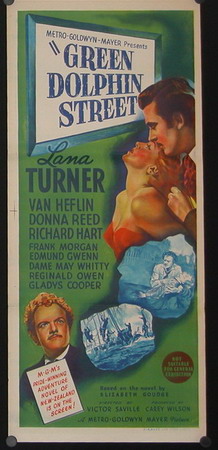


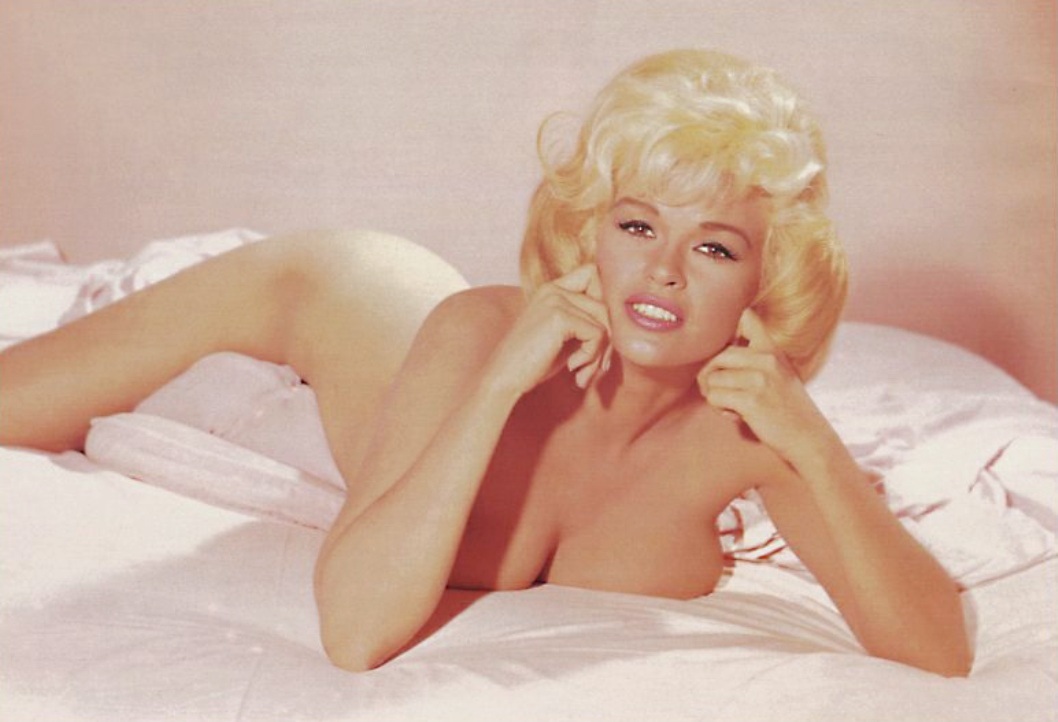


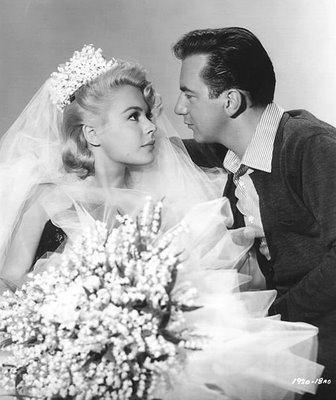

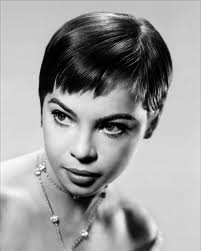

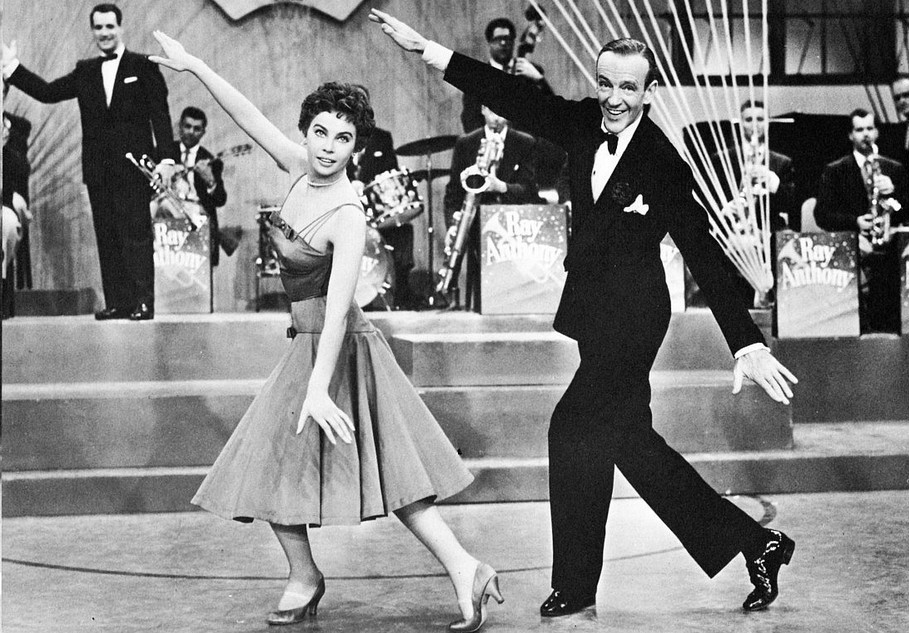
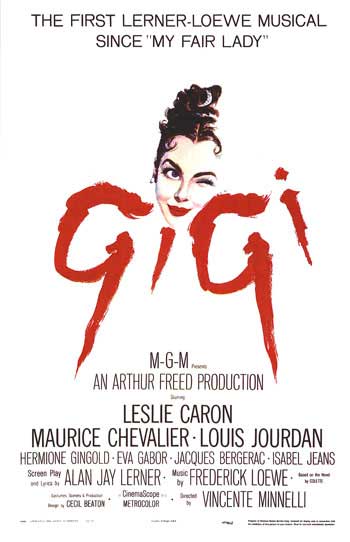


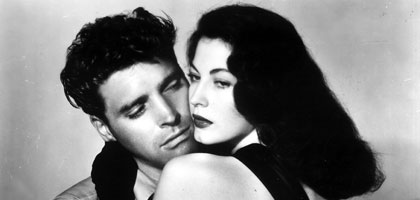

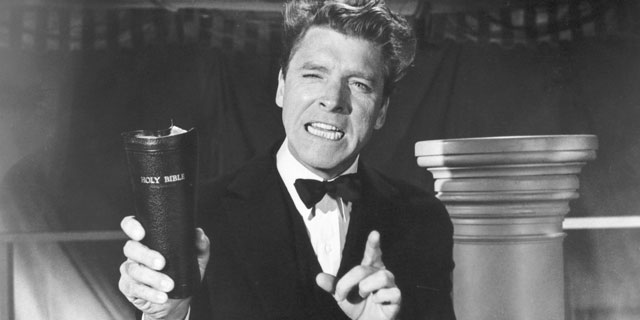
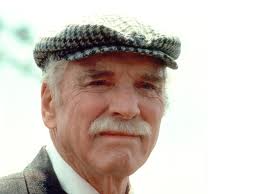

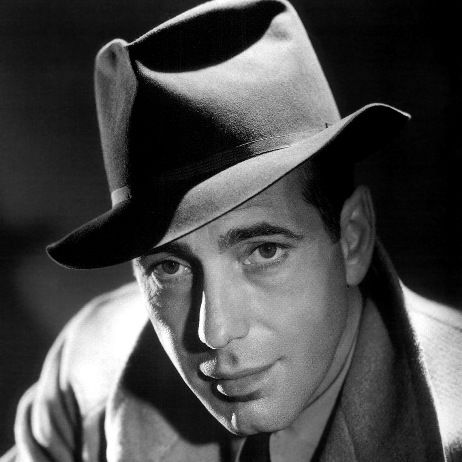
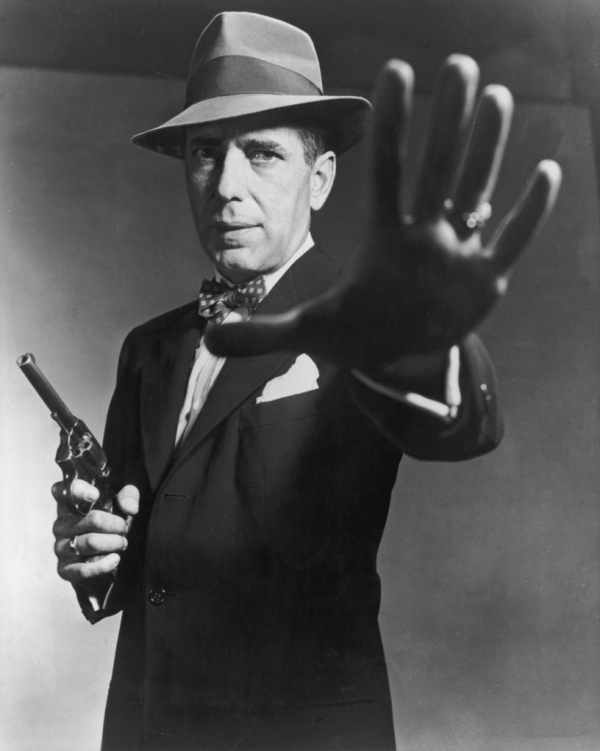

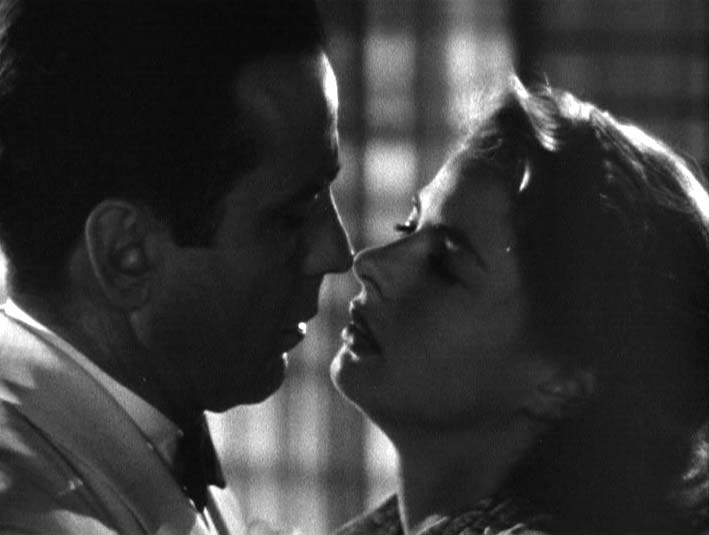
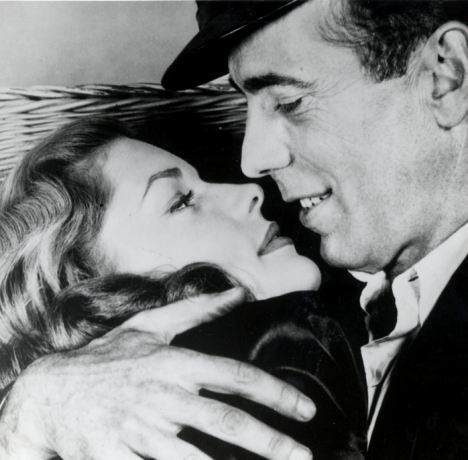


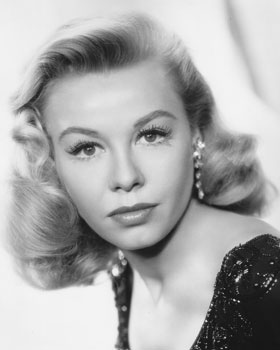


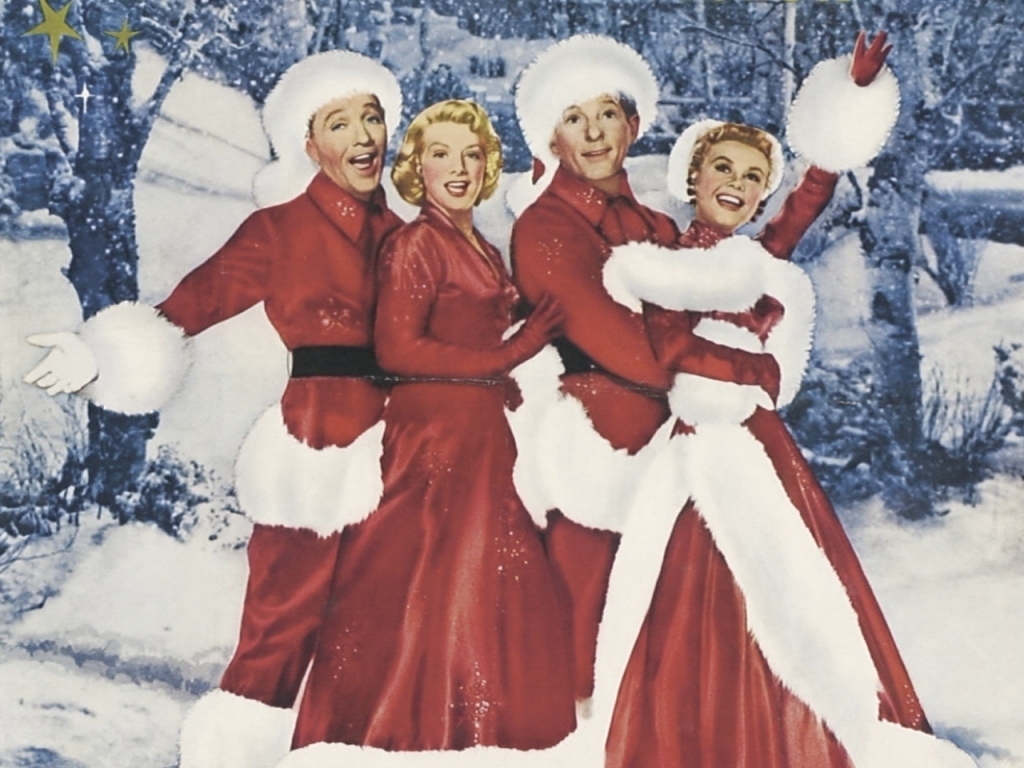


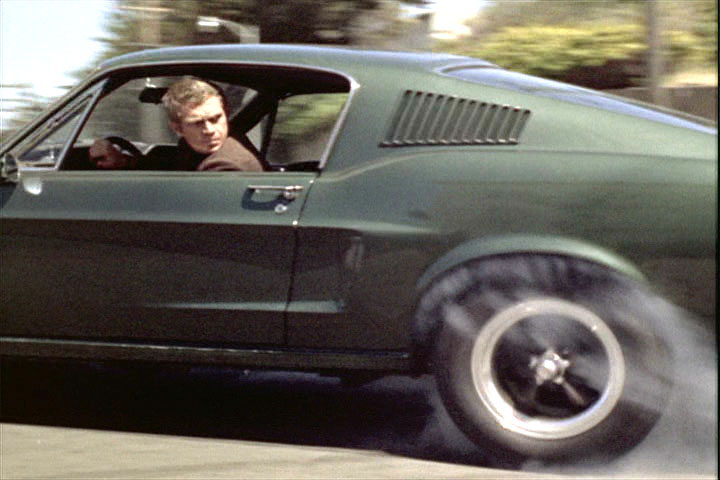
 Jess Waid