Mature was born in Louisville, Kentucky. His father, Marcello Gelindo Maturi, later Marcellus George Mature, was an Italian-speaking immigrant. His mother, Clara P. (Ackley), was Kentucky-born and of Swiss heritage. An older brother, Marcellus Paul Mature, died at 11 in 1918. Victor Mature was educated at parochial schools, the Kentucky Military Institute and the Spencerian Business School. He briefly sold candy and operated a restaurant before moving to California.
Film Career
Mature went to study and act at the Pasadena Community Playhouse. For three years he lived in a tent and was spotted by an agent for Hal Roach while acting in To Quito and Back. This led to a contract with Roach, who cast him in a small role in The Housekeeper’s Daughter then gave Mature his first leading role as a fur-clad caveman in One Million B.C. (1940). This was followed up with Captain Caution.
In 1941 Mature’s contract was bought out by 20th Century Fox, who used him to star opposite actresses such as Betty Grable and Rita Hayworth. He also supported Gertrude Lawrence on Broadway in Lady in the Dark.
World War II
In July 1942 Mature attempted to enlist in the U.S. Navy but was rejected for color blindness. He enlisted in the U.S. Coast Guard after taking a different eye test the same day. He was assigned to the USCGC Storis, which was doing Greenland Patrol work. After 14 months aboard the Storis, Mature was promoted to the rate of Chief Boatswain’s Mate.
In 1944 he did a series of War Bond tours and acted in morale shows. He assisted Coast Guard recruiting efforts by being a featured player in the musical revue. “Tars and Spars”, which opened in April 1944, and toured the United States for the next year. In May 1945, Mature was reassigned to the Coast Guard manned troop transport USS Admiral H. T. Mayo that was involved in transferring troops to the Pacific Theater. Mature was honorably discharged from the Coast Guard in November 1945, and he resumed his acting career.
Resumption of Career
After the war, Mature was cast by John Ford in My Darling Clementine, playing Doc Holliday opposite Henry Ford’s Wyatt Earp. Darryl F. Zanuck was delighted that Ford wanted to use Mature, telling the director, “Personally, I think the guy has been one of the most under-rated performers in Hollywood. The public is crazy about him and strangely enough every picture that he has been in has been a big box-office hit. Yet the Romanoff round table has refused to take him seriously as an actor. A part like Doc Holiday will be sensational for him and I agree with you that the peculiar traits of his personality are ideal for a characterization such as this.”
For the next decade, Mature settled into playing hard-boiled characters in a range of genres such as film noir, Westerns, and Biblical motion pictures like The Robe (with Richard Burton and Jean Simmons) and its sequel, Demetrius and the Gladiators (with Susan Hayward). Mature also starred with Hedy Lamarr in Cecil B. DeMille’s Biblical epic, Samson and Delilah (1949) and as Horemheb in The Egyptian (1954) with Jean Simmons and Gene Tierney. He reportedly stated he was successful in Biblical epics because he could, “make with the holy look”.
He also continued to appear in a number of musicals, co-starred with Esther Williams in Million Dollar Mermaid (1952) and, according to her autobiography, had a romantic relationship with her.
Mature’s old agreement with Roach contained multiple loan-out clauses to RKO which still applied when it was transferred to 20th Century-Fox and he made a number of films for RKO. However Fox suspended him in 1949 for refusing to make Mike Fury. Fox later suspended him for refusing to appear with Tyrone Power and Susan Hayward in Untamed (1955).
In the 1950s Mature’s contract with 20th Century Fox ended and he freelanced. He concentrated mostly on action adventure movies, making a number in particular for Warwick Films. In 1954 he signed a two-picture deal with Columbia Pictures giving him script and co-star approval.
Retirement
After five years of retirement, he was lured back into acting by the opportunity to parody himself in After the Fox (1966), co-written by Neil Simon. Mature played “Tony Powell.” an ageing American actor who is living off of his reputation from his earlier body of work. In a similar vein in 1968 he played a giant, The Big Victor, in Head, a movie starring The Monkees. The character poked fun at both his screen image and, reportedly, RCA Victor who distributed Colgems Records, the Monkees’s label. Mature enjoyed the script while admitting it made no sense to him, saying,”All I know is it makes me laugh.”
Mature was famously self-deprecatory about his acting skills. Once, after being rejected for membership in a country club because he was an actor, he cracked, “I’m not an actor — and I’ve got sixty-four films to prove it!” He was quoted in 1968 on his acting career: “Actually, I am a golfer. That is my real occupation. I never was an actor. Ask anybody, particularly the critic
He came out of retirement again in 1971 to star in Every Little Crook and Nanny and again in 1976 along with many other former Hollywood stars in Won Ton Ton, the Dog Who Saved Hollywood. His last appearance was a cameo as a millionaire in the 1979 film Firepower.
“I was never that crazy about acting,” Mature once stated. “I had a compulsion to earn money, not to act. So I worked as an actor until I could afford to retire. I wanted to quit while I could still enjoy life… I like to loaf. Everyone told me I would go crazy or die if I quit working. Yeah? Well what a lovely way to die.”
Private Life
Mature was married five times. His first two wives were Frances Charles and Martha Stephenson Kemp. His third wife, Dorothy, whom he married in 1948, divorced him in 1955 alleging mental cruelty. He married Adriene Urwick in 1959 but they divorced. He had also been engaged to Rita Hayworth (before she married Orson Welles), and Anne Shirley.
Death
Mature died of leukemia in 1999 at his Rancho Santa Fe, California home, at the age of 86. He was buried in the family plot, marked by a replica of the Angel of Grief, at St. Michael’s Cemetery in his hometown of Louisville.
For his contribution to the motion picture industry, Mature has a star on the Hollywood Walk of Fame located at 6780 Hollywood Boulevard.
Susan Hayward(June 30, 1917 – March 14, 1975), an American actress.
After working as a fashion model in New York, Hayward traveled to Hollywood in 1937. She secured a film contract, and played several small supporting roles over the next few years.
After Hayward’s second marriage and subsequent move to Georgia, her film appearances became infrequent, although she continued acting in film and television until 1972. She died in 1975 of brain cancer.
Early life
Hayward was born Edythe Marrenner inBrooklyn, the youngest of three children born to Ellen (née Pearson) and Walter Marrenner. Her paternal grandmother was an actress, Kate Harrigan, from County Cork, Ireland. Her mother was of Swedish descent. She had an older sister Florence (born May 1910) and an older brother Walter, Jr. (born December 1911).
Hayward was educated at Public School 181, and later attended The Girls’ Commercial High School (later renamed Prospect Heights High School). During her high school years, she acted in various school plays and was named “Most Dramatic” by her class. She graduated in June 1935.
Coincidentally, entertainer Lena Horne was born on exactly the same day (June 30, 1917) as Susan Hayward and also born in Brooklyn, N.Y.
Hayward began her career as a photographer’s model, going to Hollywood in 1937, aiming to secure the role of Scarlett O’Hara in Gone with the Wind. Although she did not win the role, Hayward found employment playing bit parts until she was cast in Beau Geste (1939) opposite Gary Cooper. During the war years, she acted with John Wayne twice, as a second lead in Reap the Wild Wind (1942), and as his leading lady in The Fighting Seabees (1944). She also starred in the film version of The Hairy Ape (1944). Later, in 1956, she was cast by Howard Hughes to play Bortai in the historical epic The Conqueror, as John Wayne’s leading lady.
During the 1950s she won acclaim for her dramatic performances as President Andrew Jackson‘s melancholic wife in The President’s Lady (1953); the alcoholic actress Lillian Roth in I’ll Cry Tomorrow (1955), based on Roth’s best-selling autobiography of the same name, for which she received a Cannes award; and the real-life California murderer Barbara Graham in I Want to Live! (1958). Hayward’s portrayal of Graham won her the Academy Award for Best Actress. In 1959, she played the lead, Mary Sharron, in Woman Obsessed.
Though Hayward never truly became known as a singer because she hated her own singing, she acted out roles as singers in several films. In I’ll Cry Tomorrow, however, though a “ghost singer” was actually recruited, it is her own voice that is actually heard on the soundtrack. Susan Haward performed in the musical biography of Jane Froman in the 1952 film, With a Song in My Heart, a role that won her the Golden Globe for Best Actress Comedy film. Jane Froman’s voice was dubbed as Hayward acted out the songs.
In 1961, Hayward starred as a working girl who becomes the wife of the state’s next governor (Dean Martin) and ultimately takes over that office herself in Ada. The same year, she played Rae Smith in Ross Hunter‘s lavish remake of Back Street, which also starred John Gavin and Vera Miles. In 1967, Hayward replaced Judy Garland as Helen Lawson in the film adaptation of Jacqueline Susann‘s Valley of the Dolls. She received good reviews for her performance in a Las Vegas production of Mame, but left the production. She was replaced by Celeste Holm.
She continued to act into the early 1970s, when she was diagnosed with brain cancer. Her final film role was as Dr. Maggie Cole in the 1972 made-for-TV drama Say Goodbye, Maggie Cole. (The film was intended to be a pilot for a weekly television series, but because of Hayward’s cancer diagnosis and failing health, the series was never produced). Her last public appearance was at the Academy Awards telecast in 1974 to present the Best Actress award despite being very ill. With Charlton Heston‘s support, she was able to present the award.
Personal life
Hayward was married to actor Jess Barker for ten years and they had two children, fraternal twin sons named Gregory and Timothy, born February 19, 1945. The marriage was described in Hollywood gossip columns as turbulent. They divorced in 1954. Hayward survived a subsequent suicide attempt after the divorce. During the contentious divorce proceedings, Hayward felt it necessary to stay in the United States and not join the Hong Kong location shooting for the film Soldier of Fortune. She shot her scenes with co-star Clark Gable indoors in Hollywood. A few brief, distant scenes of Gable and a Hayward double walking near landmarks in Hong Kong were combined with the indoor shots.
In 1957, Hayward married Floyd Eaton Chalkley, commonly known as Eaton Chalkley. He was a Georgia rancher and businessman who had formerly worked as a federal agent. Though he was an unusual husband for a Hollywood movie star, the marriage was a happy one. She lived with him on a farm near Carrollton, Ga. The couple also owned property across the state line in Cleburne County, just outside of Heflin, Alabama. She became a popular figure in an area that in the 1950s was off the beaten path for most celebrities. In December 1964, she and her husband were baptized Catholic by Father McGuire at SS Peter and Paul’s Roman Catholic Church on Larimar Avenue, in the East Liberty section of Pittsburgh. She had met McGuire while in China and promised him that if she ever converted, he would be the one to baptize her. Chalkley died on January 9, 1966. Hayward went into mourning and did little acting for several years, and took up residence in Florida, because she preferred not to live in her Georgia home without her husband.
Hayward was a proponent of astrology. She particularly relied on the advice of Carroll Righter, who called himself “the Gregarious Aquarius” and the self-proclaimed “Astrologer to the Stars”, who informed her that the optimum time to sign a film contract was exactly 2:47 a.m., causing her to set her alarm for 2:45 so that she could be sure to obey his instructions.
Death
Hayward was diagnosed with brain cancer in 1973. On March 14, 1975, she suffered a seizure in her Beverly Hills home and died at age 57. Her two sons survived her from Hayward’s marriage with Barker. Her funeral was held on March 16 at Our Lady of Perpetual Help Roman Catholic Church in Carrollton. Susan Hayward was buried in the church’s cemetery next to Chalkley.
There is speculation that Hayward may have developed cancer from radioactive fallout from atmospheric atomic bomb tests while making The Conqueror with John Wayne. Several production members, as well as Wayne himself, Agnes Moorehead, Pedro Armendáriz and its director Dick Powell, later succumbed to cancer and cancer-related illnesses.
For her contribution to the film industry, Susan Hayward has a star on the Hollywood Walk of Fame at 6251 Hollywood Boulevard.
Jeff Chandler (December 15, 1918 – June 17, 1961) an American film actor and singer in the 1950s, best remembered for playing Cochise in Broken Arrow (1950), and for being one of Universal International‘s most popular male stars of the decade.
Early life
Chandler was born Ira Grossel to a Jewish family in Brooklyn, the only child of Anna (née Herman) and Phillip Grossel. His mother raised him after his parents separated when he was a child.
He attended Erasmus Hall High School, the alma mater of many stage and film personalities. His father was connected with the restaurant business and got his son a job as a restaurant cashier. Chandler said he always wanted to act, but courses for commercial art were cheaper, so he studied art for a year and worked as a layout artist for a mail order catalogue.
Chandler eventually saved up enough money to take a drama course at the Feagin School of Dramatic Art in New York. He worked briefly in radio, and then got a job in a stock company on Long Island as an actor and stage manager. He worked for two years in stock companies, acting in a performance of The Trojan Horse with Gordon MacRae and his wife.
Chandler formed his own company, the Shady Lane Playhouse, in Illinois in 1941. This toured the Midwest with some success before the war came along.
He served in World War II for four years, mostly in the Aleutians, finishing with the rank of lieutenant. His enlistment record for the Cavalry on November 18, 1941 gave his height as six foot four inches and his weight as 210 pounds.
Radio
After being discharged from the military, Chandler moved to Los Angeles with $3,000 he had saved and soon found work as a radio actor. He appeared in episodes of anthology drama series such as Escape and Academy Award Theater, and became well known for playing the lead in Michael Shayne and bashful biology teacher Phillip Boynton on Our Miss Brooks. Chandler was the first actor to portray Chad Remington in Frontier Town. In 1945 he was involved in a serious car accident on the way to a screen test which resulted in a large scar on his forehead.
Chandler had acted on radio in Rogue’s Gallery with Dick Powell, who was impressed enough to give the actor his first film role, a one-line part as a gangster in Johnny O’Clock (1947).
His performance as Boynton in Our Miss Brooks brought him to the attention of executives at Universal, who were looking for someone to play an Israeli leader in Sword in the Desert (1948). Chandler was cast and impressed the studio so much he ended up being signed to Universal for a seven-year contract.
Stardom
Chandler’s first movie for Universal under his new contract was Abandoned (1949), and then he was borrowed by 20th Century Fox to play Cochise in Broken Arrow (1950). This film was a considerable hit, earning Chandler an Oscar nomination and establishing him as a star. He later reprised the role as the legendary Apache chief in The Battle at Apache Pass (1952) and in a cameo in Taza, Son of Cochise (1954). He was the first actor nominated for an Academy Award for portraying an American Indian.
Chandler’s success in Broken Arrow led to him being cast as a variety of nationalities from different historical periods, such as an Arab chief in Flame of Araby (1951) and a Polynesian in Bird of Paradise (1951). He also played an embittered Union cavalryman in Two Flags West (1950). In 1952 exhibitors voted him the 22nd most popular star in the US and he signed a fresh contract with Universal.
In 1957, Chandler left Universal and signed a contract with United Artists. Having long desired to be an executive he formed his own company, Earlmar Productions, with agent Meyer Mishkin. Together they produced the film Drango (1957), which Chandler also directed for a few weeks.
Chandler was due to star in Operation Petticoat (1959) but fell ill and had to pull out. He later formed another production company, August, for which he made The Plunderers, at Allied Artists.
Singing
Chandler had a concurrent career as a singer and recording artist, releasing several albums and playing nightclubs. In 1955 he became only the second star to play at the Riviera, after Liberace was the featured headliner. In her autobiography Hold the Roses (2002), Rose Marie wrote, “Jeff Chandler was a great guy, but he was no singer. He put together an act and we opened at the Riviera. He came with a conductor, piano player, light man, press agent, and manager. None of it helped”. And “Everybody raved about Jeff’s singing, but let’s face it: he really didn’t sing very well. He definitely had guts to open in Vegas.” He left to work on a movie after three and a half weeks.
Personal life
Chandler married actress Marjorie Hoshelle (1918–1989) in 1946. The couple had two daughters, Jamie Tucker (1947–2003) and Dana Grossel (1949–2002), before separating in 1954. They reconciled but his wife applied for divorce again in 1957.
Both of Chandler’s daughters died of cancer, as did his mother, maternal aunt, uncle and grandfather.
When his friend Sammy Davis, Jr. lost an eye in an accident and was in danger of losing the other, Chandler offered to give Davis one of his own eyes. Chandler himself had nearly lost an eye and had been visibly scarred in an auto accident years earlier.
He was romantically linked with Esther Williams, who claimed in her 1999 autobiography Chandler was a cross dresser and she broke off the relationship. According to the Los Angeles Times, many friends and colleagues of Chandler’s rejected Williams’ claims. Jane Russell commented, “I’ve never heard of such a thing. Cross-dressing is the last thing I would expect of Jeff. He was a sweet guy, definitely all man.”
His public support for Israel’s 1956 attack on Egypt prompted the United Arab Republic to ban his films in Arab countries in 1960.
Death
Shortly after completing his role in Merrill’s Marauders in 1961, Chandler injured his back while playing baseball with U.S. Army Special Forces soldiers who served as extras in the movie. He entered a Culver City hospital and had surgery for a spinal disc herniation, on May 13, 1961. There were severe complications; an artery was damaged and Chandler hemorrhaged. In a seven-and-a-half-hour emergency operation over-and-above the original surgery, he was given 55 pints of blood. Another operation followed, date unknown, where he received an additional 20 pints of blood. He died on June 17, 1961. His death was deemed malpractice and resulted in a large lawsuit and settlement for his children. He is buried at Hillside Memorial Park Cemetery in Culver City.
For his contribution to the motion picture industry, Jeff Chandler has a star on the Hollywood Walk of Fame, at 1770 Vine Street.
Critical appraisal
Film historian David Shipman once wrote this analysis of Chandler:
Jeff Chandler looked as though he had been dreamed up by one of those artists who specialize in male physique studies or, a mite further up the artistic scale, he might have been plucked bodily from some modern mural on a biblical subject. For that he had the requisite Jewishness (of which he was very proud) – and he was not quite real. Above all, he was impossibly handsome. He would never have been lost in a crowd, with that big, square, sculpted 20th-century face and his prematurely grey wavy hair. If the movies had not found him the advertising agencies would have done – and in fact, whenever you saw a still of him you looked at his wristwatch or pipe before realizing that he wasn’t promoting something. In the colored stills and on posters his studio always showed his hair as blue, heightening the unreality. His real name was Ira Grossel and his film-name was exactly right.
An obituary of Chandler stated: “Known for his careful attention to detail in making pictures, Chandler was often described as introverted. But colleagues who worked with him closely said he had an easy, light-hearted approach on the set that helped ease some of the strain of production.
As a “bonus,” here’s a brief trailer for Broken Arrow. It’s focus is James Stewart, but it both gives a nice taste of the film’s style, and provides a good look at Jeff Chandler as Cochise in the final frames…
Leigh died in 2004 at the age of 77, following a year-long battle with vasculitis, an inflammation of the blood vessels. She was survived by her fourth husband of 42 years, Robert Brandt, and her two daughters.
Early Life
The only child of Helen Lita (née Westergaard) and Frederick Robert Morrison, Leigh was born Jeanette Helen Morrison in Merced, California, and grew up in Merced. Her maternal grandparents were immigrants from Denmark. In winter 1945, she was discovered by actress Norma Shearer, whose late husband Irving Thalberg had been a senior executive at Metro-Goldwyn-Mayer. Shearer showed talent agent Lew Wasserman a photograph she had seen of Leigh while vacationing at Sugar Bowl, the ski resort where the girl’s parents worked. Shearer later recalled that “that smile made it the most fascinating face I had seen in years. I felt I had to show that face to somebody at the studio.” Leigh left the University of the Pacific, where she was studying music and psychology, after Wasserman secured a contract with MGM, despite having no acting experience. She was placed under the tutelage of drama coach Lillian Burns.
Life and Career
Prior to beginning her movie career, Leigh was a guest star on the radiodramaticanthologyThe Cresta Blanca Hollywood Players. Her initial appearance on radio[4] at age 19 was in the program’s production “All Through the House,” December 24, 1946.
Leigh made her film debut in the big budget film The Romance of Rosy Ridge in 1947, as the romantic interest of Van Johnson‘s character. She got the role when performing Phyllis Thaxter‘s long speech in Thirty Seconds Over Tokyo (1944) for the head of the studio talent department in 1946. During the shooting, Leigh’s name was first changed to “Jeanette Reames”, then to “Janet Leigh” and finally back to her birth name “Jeanette Morrison”, because “Janet Leigh” resembled Vivien Leigh too much. However, Johnson did not like the name and it was finally changed back to “Janet Leigh”. Leigh initially left college for a film career, but enrolled in night school at the University of Southern California in 1947.
Immediately after the film’s release, Leigh was cast opposite Walter Pidgeon and Deborah Kerr in If Winter Comes (1947) in the summer of 1947. Furthermore, due to the box office success of The Romance of Rosy Ridge, Leigh and Johnson were teamed up again in a film project called The Life of Monty Stratton in August 1947. The project was eventually shelved and released in 1949 as The Stratton Story, starring James Stewart and June Allyson. Another film that Leigh was set to star in, before being replaced, was Alias a Gentleman, in which she was cast in April 1947. By late 1947, Leigh was occupied with the shooting of the Lassie film Hills of Home (1948), the first film in which she received star billing.
In late 1948, Leigh was hailed the “No. 1 glamor girl” of Hollywood, although known for her polite, generous and down-to-earth persona.
Many movies followed, notably the 1949 box-office hits Little Women, based on the novel by Louisa May Alcott, and Holiday Affair with Robert Mitchum. In October 1949, Leigh began filming the Cold War action film Jet Pilot with John Wayne. The film had a notoriously troubled production, with several directorial changes and a filming schedule that dragged on until May 1953. Its release was then delayed another four years due to the extensive (and obsessive) re-editing process by producer Howard Hughes, before finally hitting theaters in 1957.
Her initial roles were ingenues based on characters from historical literature, for example in Scaramouche opposite Stewart Granger. By 1958, she moved to more complex roles, such as the role of Linda Latham in Safari opposite Victor Mature.
Her most famous performance was as Marion Crane in the Alfred Hitchcock film Psycho (1960). The fact that the star died early in the movie violated narrative conventions of the time. She received a Golden Globe Award for Best Supporting Actress and was nominated for the Academy Award for Best Supporting Actress. Leigh was so traumatized by the film’s iconic shower scene that she went to great lengths to avoid showers for the rest of her life.
Leigh had starring roles in many other films, including The Manchurian Candidate (1962) with Frank Sinatra, and Bye Bye Birdie (1963) based on the hit Broadway show. Following those two films, Leigh scaled back her acting work and turned down several roles, including the role of Simone Clouseau in The Pink Panther, because she didn’t want to go off on location and away from her family.
Her many guest appearances on TV series include The Man From U.N.C.L.E. two-part episode, “The Concrete Overcoat Affair”, in which she played a sadistic Thrush agent named Miss Dyketon, a highly provocative part for mainstream TV at the time. The two-part episode was released in Europe as a feature film in 1967, entitled The Spy in the Green Hat. She also appeared in the title role in the 1970 episode “Jenny” of The Virginian, the Murder, She Wrote 1987 episode, “Doom with a View”, as “Barbara LeMay” in an episode of The Twilight Zone in 1989 and the Touched by an Angel episode, “Charade”, in 1997. She guest-starred twice as different characters on both Fantasy Island and The Love Boat. In 1973, she appeared in the episode “Beginner’s Luck” of the romantic anthology series Love Story.
Leigh is also the author of four books. Her first, the memoir There Really Was a Hollywood (1984), became a New York Times bestseller. In 1995, she published the non-fiction book Psycho: Behind the Scenes of the Classic Thriller. In 1996, she published her first novel, House of Destiny, which explored the lives of two friends who forged an empire that would change the course of Hollywood’s history. The book’s success spawned a follow-up novel, The Dream Factory (2002), which was set in Hollywood during the height of the studio system.
Jane Wyman (born Sarah Jane Mayfield; January 5, 1917 – September 10, 2007) was an American singer, dancer, and film/television actress. She began her film career in the 1932 and her work in television lasted into 1993. She was considered a prolific performer for two decades. She received an Academy Award for Best Actress for her performance in Johnny Belinda (1948), and later in life achieved a new level of success in the 1980s as the aging wine country matriarch Angela Channing on Falcon Crest.
She was the first wife of Ronald Reagan; they married in 1940 and divorced in 1949.
Wyman was born in St. Joseph, Missouri. Although her birth date has been widely reported for many years as January 4, 1914, research by biographers and genealogists indicates she was born on January 5, 1917. The most likely reason for the 1914 year of birth is that she added to her age so as to be able to work and act while still a minor. She may have moved her birthday back by one day to January 4 so as to share the same birthday as her daughter, Maureen (born January 4, 1941). The 1920 census, on the other hand, has her at 3 and living in Philadelphia, Pa. After Wyman’s death, a release posted on her official website confirmed these details.
Her parents were Manning Jefferies Mayfield (c.1885–1922), a meal-company laborer, and Gladys Hope Christian (c.1891–1960), a doctor’s stenographer and office assistant. In October 1921, her mother filed for divorce, and her father died unexpectedly the following year at age 37. After her father’s death, her mother moved to Cleveland, Ohio, leaving her to be reared by foster parents, Emma (1866–1951) and Richard D. Fulks (1862–1928), the chief of detectives in Saint Joseph. She took their surname unofficially, including in her school records and, apparently, her first marriage certificate.
Her unsettled family life resulted in few pleasurable memories. Wyman later said, “I was raised with such strict discipline that it was years before I could reason myself out of the bitterness I brought from my childhood. In 1928, aged 11, she moved to southern California with her foster mother, but it is not known for certain if she attempted a career in motion pictures at this time, or if the relocation was due to the fact that some of Fulks’ children also lived in the area. In 1930, the two moved back to Missouri, where Sarah Jane attended Lafayette High School in Saint Joseph. That same year she began a radio singing career, calling herself “Jane Durrell” and adding years to her birth date to work legally since she would have been under age.
After dropping out of Lafayette in 1932, at age 15, she returned to Hollywood, taking on odd jobs as a manicurist and a switchboard operator, before obtaining small parts in such films as The Kid from Spain (as a “Goldwyn Girl”; 1932), My Man Godfrey (1936) and Cain and Mabel (1936). After changing her name from Jane Durrell to Jane Wyman, she began her career as a contract player with Warner Bros. in 1936 at age 19. Her big break came the following year, when she received her first starring role in Public Wedding.
In 1939, Wyman starred in Torchy Plays With Dynamite. In 1941, she appeared in You’re in the Army Now, in which she and Regis Toomey had the longest screen kiss in cinema history: 3 minutes and 5 seconds.
She hosted an anthology television series, Jane Wyman Presents the Fireside Theater, for which she was nominated for an Emmy Award in 1957. During her tenure as host, however, ratings steadily declined, and the show ended after three seasons. She was later cast in two unsold pilots during the 1960s and 1970s. After those pilots were not picked up, Wyman went into semi-retirement and remained there for most of the 1970s, although she did make guest appearances on Charlie’s Angels and The Love Boat.
Falcon Crest
In the spring of 1981, Wyman’s career enjoyed a resurgence when she was cast as the scheming Californian vintner and matriarch Angela Channing in The Vintage Years, which was retooled as the primetime soap operaFalcon Crest. The series, which ran from December 1981 to May 1990, was created by Earl Hamner, who had created The Waltons a decade earlier. Also starring on the show was an already established character actress, Susan Sullivan, as Angela’s niece-in-law, Maggie Gioberti, and the relatively unknown actor Lorenzo Lamas as Angela’s irresponsible grandson, Lance Cumson. The on- and off-screen chemistry between Wyman and Lamas helped fuel the series’ success. In its first season, Falcon Crest was a ratings hit, behind other 1980s prime-time soap operas, such as Dallas and Knots Landing, but initially ahead of rival soap opera Dynasty. Cesar Romero appeared from 1985 to 1987 on Falcon Crest as the romantic interest of Angela Channing.
For her role as Angela Channing, Wyman was nominated for a Soap Opera Digest Award five times (for Outstanding Actress in a Leading Role and for Outstanding Villainess: Prime Time Serial), and was also nominated for a Golden Globe Award in 1983 and 1984. Her 1984 Golden Globe nomination resulted in a win for Wyman, who took home the award for Best Performance By an Actress in a TV Series. Later in the show’s run, Wyman suffered several health problems. In 1986, she had abdominal surgery which caused her to miss two episodes (her character simply “disappeared” under mysterious circumstances). In 1988, she missed another episode due to ill health and was told by her doctors to avoid work. However, she wanted to continue working, and she completed the rest of the 1988-1989 season while her health continued to deteriorate. Months later in 1989, Wyman collapsed on the set and was hospitalized due to problems with diabetes and a liver ailment. Her doctors told her that she should end her acting career. Wyman was absent for most of the ninth and final season of Falcon Crest in 1989-1990 (her character was written out of the series by making her comatose in a hospital bed following an attempted murder).
Against her doctor’s advice, she returned for the final three episodes in 1990, even writing a soliloquy for the series finale. Wyman ultimately appeared in almost every episode up until the beginning of the ninth and final season, for a total of 208 of the show’s 227 episodes. After Falcon Crest, Wyman acted only once more, playing Jane Seymour‘s screen mother in a 1993 episode of Dr. Quinn, Medicine Woman. Following this, she retired from acting permanently. Wyman had starred in 83 movies, two successful TV series, and was nominated for an Academy Award four times, winning once.
Later life
Wyman spent her retirement painting and entertaining friends. A recluse, she made only a few public appearances in her last years in part due to suffering from diabetes and arthritis, although she did attend her daughter Maureen’s funeral in 2001 after the latter’s death from cancer. (Ronald Reagan was unable to attend due to his Alzheimer’s disease). She also attended the funeral of her long-time friend Loretta Young in 2000. Wyman broke her silence about her ex-husband upon his death in 2004, attending his funeral and issuing an official statement that read “America has lost a great president and a great, kind, and gentle man.”
Death
Wyman died at the age of 90 at her Rancho Mirage home on September 10, 2007. Wyman’s son, Michael Reagan, released a statement saying: I have lost a loving mother, my children Cameron and Ashley have lost a loving grandmother, my wife Colleen has lost a loving friend she called Mom and Hollywood has lost the classiest lady to ever grace the silver screen.
Anthony Quinn was born Antonio Rudolfo Oaxaca Quinn on April 21, 1915, in Chihuahua, Mexico, to an Irish-Mexican father and a Mexican mother. After starting life in extremely modest circumstances in Mexico, his family moved to Los Angeles, California, where he grew up in the Boyle Heights and the Echo Park neighborhoods. In Los Angeles he attended Polytechnic High School, and later Belmont High, but he eventually dropped out. The young Quinn boxed (which stood him in good stead as a stage actor, when he played Stanley Kowalski to rave reviews in Chicago), then later studied architecture under Frank Lloyd Wright at the great architect’s studio, Taliesin, in Arizona. Quinn was close to Wright, who encouraged him when Quinn decided to give acting a try. After a brief apprenticeship in theatre, Quinn hit Hollywood in 1936 and picked up a variety of small roles in several films at Paramount, including as an Indian warrior in The Plainsman (1936), which was directed by the man who later became his father-in-law, Cecil B. DeMille.
As a contract player at Paramount, Quinn mainly played villains and ethnic types, such as an Arab chieftain in the Bing Crosby-‘Bob Hope’ vehicle Road to Morocco (1942). As a Mexican national (he did not become an American citizen until 1947), he was exempt from the draft. With many actors in the service fighting World War II, Quinn was able to move up into better supporting roles. He had married DeMille’s daughter Katherine DeMille, which enabled him to move in the top circles of Hollywood society.
He became disenchanted with his career and did not renew his Paramount contract despite the advice of others, including his father-in-law (whom Quinn felt never accepted him due to his Mexican roots). Instead, he returned to the stage to hone his craft. His portrayal of Stanley Kowalski in “A Streetcar Named Desire” in Chicago and on Broadway (where he replaced the legendary Marlon Brando, who is forever associated with the role) made his reputation and boosted his film career when he returned to the movies.
Brando and Elia Kazan, who directed “Streetcar” on Broadway and on film, were crucial to Quinn’s future success. Kazan, knowing the two were potential rivals due to their acclaimed portrayals of Kowalski, cast Quinn as Brando’s brother in his biographical film of Mexican revolutionary Emiliano Zapata, Viva Zapata! (1952). Quinn won the Best Supporting Actor Academy Award for 1952, making him the first Mexican-American to win an Oscar. It was not to be his lone appearance in the winner’s circle: he won his second Supporting Actor Oscar in 1957 for his portrayal of Paul Gauguin in Vincente Minnelli‘s biographical film of Vincent van Gogh, Lust for Life (1956), opposite Kirk Douglas. Over the next decade Quinn lived in Italy and became a major figure in world cinema, as many studios shot films in Italy to take advantage of the lower costs (“runaway production” had buffeted the industry since its beginnings in the New York / New Jersey area since the 1910s). He appeared in several Italian films, giving one of his greatest performances as the circus strongman who brutalizes the sweet soul played by Giulietta Masina in her husband Federico Fellini‘s masterpiece The Road(1954). Alternating between Europe and Hollywood, Quinn built his reputation and entered the front-rank of character actors and character leads. He received his third Oscar nomination (and first for Best Actor) for George Cukor‘s Wild Is the Wind (1957). He played a Greek resistance fighter against the Nazi occupation in the monster hit The Guns of Navarone (1961) and received kudos for his portrayal of a once-great boxer on his way down in Rod Serling‘s Requiem for a Heavyweight (1962).
He went back to playing ethnic parts, such as an Arab warlord in David Lean‘s masterpiece Lawrence of Arabia (1962), and he played the eponymous lead in the “sword-and-sandal” blockbuster Barabbas (1961). Two years later he reached the zenith of his career, playing Zorba the Greek in the 1964 film of the same name (a.k.a. Zorba the Greek(1964)), which brought him his fourth, and last, Oscar nomination as Best Actor. The 1960s were kind to him: he played character leads in such major films as The Shoes of the Fisherman (1968) and The Secret of Santa Vittoria (1969). However, his appearance in the title role in the film adaptation of John Fowles‘ novel, The Magus (1968), did nothing to save the film, which was one of that decade’s notorious turkeys.
In the 1960s Quinn told Life magazine that he would fight against typecasting. Unfortunately, the following decade saw him slip back into playing ethnic types again, in such critical bombs as The Greek Tycoon (1978). He starred as the Hispanic mayor of a southwestern city in the short-lived 1971 TV series The Man and the City (1971), but his career lost its momentum during the 1970s. Aside from playing a thinly disguised Aristotle Onassis in the cinematic roman-a-clef “The Greek Tycoon”, his other major roles of the decade was as Hamza in the controversial 1977 movie The Message(1977) (a.k.a. “Mohammad, Messenger of God”, as the Italian patriarch in The Inheritance (1976), yet another Arab in Caravans (1978) and a Mexican patriarch in The Children of Sanchez (1978). In 1983 he reprised his most famous role, Zorba the Greek, t on Broadway in the revival of the musical “Zorba”, for 362 performances. Though his film career slowed during the 1990s, he continued to work steadily in films and television.
Quinn lived out the latter years of his life in Bristol, Rhode Island, where he operated a restaurant. He died in hospital in Boston from pneumonia and respiratory failure linked to his battle with throat cancer. He was 86 years old.
John Garfield John Garfield (March 4, 1913 – May 21, 1952) was an American actor adept at playing brooding, rebellious, working-class characters. He grew up in poverty in Depression-era New York City and in the early 1930’s became an important member of the Group Theater.
In 1937, he moved to Hollywood, eventually becoming one of Warner Bros.’ major stars. Called to testify before the U.S. Congressional House Committee on Un-American Activities (HUAC), he denied Communist affiliation and refused to “name names,” effectively ending his film career. Some have claimed that the stress of this incident led to his premature death at 39 from a heart attack.
Garfield is acknowledged as a predecessor of such Method actors as Montgomery Clift, Marlon Brando, and James Dean. Garfield was born Jacob Julius Garfinkle in a small apartment on Rivington Street in Manhattan’s Lower East Side, to David and Hannah Garfinkle, Russian Jewish immigrants, and grew up in the heart of the Yiddish Theater District. In early infancy a middle name—Julius—was added, and for the rest of his life those who knew him well called him Julie. His father, a clothes presser and part-time cantor, struggled to make a living and to provide even marginal comfort for his small family. When Garfield was five, his brother Max was born, and their mother never fully recovered from what was described as a “difficult” pregnancy. She died two years later, and the young boys were sent to live with various relatives, all poor, scattered across the boroughs of Brooklyn, Queens, and the Bronx.
Several of these relatives lived in tenements in a section of East Brooklyn called Brownsville, and Garfield lived there in one house and slept in another. At school he was judged a poor reader and speller, deficits that were aggravated by irregular attendance. He would later say of his time on the streets there, that he learned “all the meanness, all the toughness it’s possible for kids to acquire. If I hadn’t become an actor, I might have become Public Enemy Number One.” His father remarried and moved to the West Bronx, where Garfield joined a series of gangs. Much later he would recall: “Every street had its own gang. That’s the way it was in poor sections… the old safety in numbers.” He soon became gang leader.
At this time people started to notice his ability to mimic well-known performers, both bodily and facially. He also began to hang out and eventually spar at a boxing gym on Jerome Avenue. At some point he contracted scarlet fever, (it was diagnosed later in adulthood), causing permanent damage to his heart and causing him to miss a lot of school. After being expelled three times and expressing a wish to quit school altogether, his parents sent him to P.S. 45, a school for difficult children. It was under the guidance of the school’s principal—the noted educator Angelo Patri—that he was introduced to acting. Noticing Garfield’s tendency to stammer, Patri assigned him to a speech therapy class taught by a charismatic teacher named Margaret O’Ryan. She gave him acting exercises and made him memorize and deliver speeches in front of the class and, as he progressed, in front of school assemblies. O’Ryan thought he had natural talent and cast him in school plays. She encouraged him to sign up for a city-wide debating competition sponsored by the New York Times. To his own surprise, he took second prize.
With Patri and O’Ryan’s encouragement he began to take acting lessons at a drama school that was part of The Heckscher Foundation, and began to appear in their productions. At one of the latter he received back-stage congratulations and an offer of support from the Yiddish actor Jacob Ben-Ami who recommended him to the American Laboratory Theater. Funded by the Theatre Guild, “the Lab” had contracted with Richard Boleslavski to stage its experimental productions, and with Russian actress and expatriate Maria Ouspenskaya, to supervise classes in acting. Former members of the Moscow Art Theater, they were the first proponents of Stanislavsky’s “system” in the United States.
Garfield took morning classes and began volunteering time at the Lab after hours, auditing rehearsals, building and painting scenery, and doing crew work. He would later view this time as beginning his apprenticeship in the theater. Among the people becoming disenchanted with the Guild and turning to the Lab for a more radical, challenging environment were Stella Adler, Lee Strasberg, Franchot Tone, Cheryl Crawford and Harold Clurman. In varying degrees, all would become influential in Garfield’s later career. After a stint with Eva Le Gallienne’s Civic Repertory Theater and a short period of vagrancy involving hitchhiking, freight hopping, picking fruit, and logging in the Pacific Northwest (Preston Sturges conceived the film Sullivan’s Travels after hearing Garfield tell of his hobo adventures), Garfield made his Broadway debut in 1932, in a play called Lost Boy. It ran for only two weeks but gave Garfield something critically important for an actor struggling to break into the theater: a credit.
Garfield received feature billing in his next role, that of Henry the office boy, in Elmer Rice’s play Counsellor-at-Law starring Paul Muni. The play ran for three months, made an eastern tour and returned for an unprecedented second return engagement, only closing when Muni was contractually compelled to return to Hollywood to make a film for Warner’s. At this point the Warner company expressed an interest in Garfield and sought to arrange a screen test. He turned them down. Garfield’s former colleagues Crawford, Clurman, and Strasburg had begun a new theater collective, calling it simply “the Group,” and Garfield lobbied his friends hard to get in. After months of rejection he began frequenting the inside steps of the Broadhurst Theater where the Group had its offices. Cheryl Crawford noticed him one day and greeted him warmly. Feeling encouraged, he made his request for apprenticeship. Something intangible impressed her and she recommended him to the other directors. They made no dissent.
Clifford Odets
Clifford Odets had been a close friend of Garfield from the early days in the Bronx. After Odets’ one-act play Waiting for Lefty became a surprise hit, the Group announced it would mount a production of his full length drama Awake and Sing. At the playwright’s insistence, Garfield was cast as Ralph, the sensitive young son who pled for “a chance to get to first base.” The play opened in February 1935 and Garfield was singled out by critic Brooks Atkinson for having a “splendid sense of character development.” Garfield’s apprenticeship was officially over; he was voted full membership by the company.
Odets was the man of the moment and he claimed to the press that Garfield was his “find”; that he would soon write a play just for him. That play would turn out to be Golden Boy, and when Luther Adler was cast in the lead role instead, a disillusioned Garfield began to take a second look at the overtures being made by Hollywood.
Garfield had been approached by Hollywood studios before—both Paramount and Warners offering screen tests—but talks had always stalled over a clause he wanted inserted in his contract, one that would allow him time off for stage work. Now Warner Bros. acceded to his demand and Garfield signed a standard feature-player agreement—seven years with options—in Warner’s New York office. Many in the Group were livid over what they considered his betrayal. Elia Kazan’s reaction was different, suggesting that the Group did not so much fear that Garfield would fail, but that he would succeed.
Garfield in Four Daughters
Jack Warner’s first order of business was a change of name, to John Garfield. After many false starts he was finally cast in a supporting, yet crucial role as a tragic young composer in a Michael Curtiz film titled Four Daughters. After the picture’s release in 1938, he received wide critical acclaim and a nomination for the Academy Award for Best Supporting Actor. The studio quickly revised Garfield’s contract—designating him a star player rather than a featured one—for seven years without options. They also created a name-above-the-title vehicle for him, titled: They Made Me a Criminal. Before the breakout success of Daughters, Garfield had made a B movie feature called Blackwell’s Island. Not wanting their new star to appear in a low-budget film, Warner’s ordered an A movie upgrade by adding an additional $100,000 to its budget and recalling its director Michael Curtiz to shoot newly scripted scenes.
Garfield’s debut had a cinematic impact difficult to conceive in retrospect. As biographer Lawrence Swindell put it: “Garfield’s work was spontaneous, non-actory; it had abandon. He didn’t recite dialogue, he attacked it until it lost the quality of talk and took on the nature of speech. The screen actor had been dialogue’s servant, but now Julie had switched those roles. Like Cagney, he was an exceptionally mobile performer from the start of his screen career. These traits were orchestrated with his physical appearance to create a screen persona innately powerful in the sexual sense. What Warner’s saw immediately was that Garfield’s impact was felt by both sexes. This was almost unique.”
His “honeymoon” with Warner’s over, Garfield entered a protracted period of conflict with the studio, they attempting to cast him in crowd-pleasing melodramas like Dust Be My Destiny, and he insisting on quality scripts that would offer a challenge and highlight his versatility. The result was often a series of suspensions, Garfield refusing an assigned role and Warner’s refusing to pay him. Garfield’s problem was the same one shared by any actor working in the studio system of the 1930’s: by contract the studio had the right to cast him in any project they wanted to. But, as Robert Nott explains, “To be fair, most of the studios had a team of producers, directors, and writers who could pinpoint a particular star’s strengths and worked to capitalize on those strengths in terms of finding vehicles that would appeal to the public – and hence make the studio money. The forces that prevented him from getting high quality roles were really the result of the combined willpower of Warner Bros., the studio system in general, and the general public, which also had its own perception of how Garfield (or Cagney or Bogart for that matter) should appear on screen.”
A notable exception to this trend was Daughters Courageous, a not-quite-sequel (same cast, different story and characters) to his debut film. The film did well critically but failed to find an audience, the public dissatisfied that it was not a true sequel (hard to pull off, since the original character, Mickey Borden, died in the first picture). The director Curtiz called the film “my obscure masterpiece.”
At the onset of World War II, Garfield immediately attempted to enlist in the armed forces, but was turned down because of his heart condition. Frustrated, he turned his energies to supporting the war effort. He and actress Bette Davis were the driving forces behind the opening of the Hollywood Canteen, a club offering food and entertainment for American servicemen. He traveled overseas to help entertain the troops, made several bond selling tours, and starred in a string of popular, patriotic films like Air Force, Destination Tokyo, and Pride of the Marines (all box office successes). He was particularly proud of that last film based on the life of Al Schmid, a war hero blinded in combat. In preparing for the role Garfield lived for several weeks with Schmid and his wife in Philadelphia and would blindfold himself for hours at a time.
Pride of the Marines
After the war Garfield starred in a series of successful films such as The Postman Always Rings Twice (1946) with Lana Turner, Humoresque (1946) with Joan Crawford, and the Oscar-winning Best Picture, Gentleman’s Agreement (1947). In Gentleman’s Agreement, Garfield took a featured, but supporting, part because he believed deeply in the film’s exposé of anti-semitism in America. In 1948, he was nominated for the Academy Award for Best Actor for his starring role in Body and Soul (1947).
That same year, Garfield returned to Broadway in the play Skipper Next to God. A strong-willed and often verbally combative individual, Garfield did not hesitate to venture out on his own when the opportunity arose. In 1946, when his contract with Warner Bros. expired, Garfield decided not to renew it, and opted to start his own independent production company, one of the first Hollywood stars to take this step.
“I have nothing to hide and nothing to be ashamed of. My life is an open book. I am no Red. I am no ‘pink.’ I am no fellow traveler. I am a Democrat by politics, a liberal by inclination, and a loyal citizen of this country by every act of my life.” —From Garfield’s statement read before the HUAC.
Long involved in liberal politics, Garfield was caught up in the Communist scare of the late 1940’s and early 1950’s. He supported the Committee for the First Amendment, which opposed governmental investigation of political beliefs. When called to testify before the House Committee on Un-American Activities, which was empowered to investigate purported communist infiltration in America, Garfield refused to name Communist Party members or followers, testifying that, indeed, he knew none in the film industry.
Garfield rejected Communism, and just prior to his death in hopes of redeeming himself in the eyes of the “blacklisters,” wrote that he had been duped by Communist ideology, in an unpublished article called “I Was a Sucker for a Left Hook,” a reference to Garfield’s movies about boxing. However, his forced testimony before the committee had severely damaged his reputation. He was blacklisted in Red Channels, and barred from future employment as an actor by Hollywood movie studio bosses for the remainder of his career.
With film work scarce because of the blacklist, Garfield returned to Broadway and starred in a 1952 revival of Golden Boy, finally being cast in the lead role denied him years before. He was in 35 feature films, five short subjects, and one documentary: The John Garfield Story (2003) (available on Warner Home Video’s 2004 DVD of The Postman Always Rings Twice).
Garfield moved out of his New York apartment for the last time, indicating to friends it was not a temporary separation. He confided to columnist Earl Wilson that he would soon be divorced. Close friends speculated that it was his wife’s opposition to his plotted confession in Look magazine that triggered the separation. He heard that a HUAC investigator was reviewing his testimony for possible perjury charges. His agent reported that 20th Century-Fox wanted him for a film called Taxi but would not even begin talks unless the investigation concluded in his favor. Three actor friends, Canada Lee, Mady Christians, and J. Edward Bromberg, had all recently died after being listed by the committee.
The morning of May 20, 1952, Garfield, against his doctor’s strict orders, played several strenuous sets of tennis with a friend, mentioning the fact that he had not been to bed the night before. He met actress Iris Whitney for dinner and afterward became suddenly ill, complaining that he felt chilled. She took him to her apartment where he refused to let her call a doctor and instead went to bed. The next morning she found him dead. Long-term heart problems, allegedly aggravated by the stress of his blacklisting, had led to his death at the age of 39.
The funeral was the largest in New York since Rudolph Valentino, with over ten thousand persons crowding the streets outside. His estate, valued at “more than $100,000,” was left entirely to his wife. Shortly afterward, ironically, the HUAC closed its investigation of John Garfield, leaving him in the clear. Garfield is interred at Westchester Hills Cemetery in Hastings-on-Hudson, Westchester County, New York. In 1954, the widowed Roberta Garfield married attorney Sidney Cohn, who died in 1991. She died in January 2004.
He and Roberta Seidman married in February 1935. Though his wife had been a member of the Communist Party, there was no evidence that Garfield himself was ever a Communist. They had three children: Katherine (1938–1945), who died of an allergic reaction on March 18, 1945; David (1943–1994); and Julie (born 1946), the latter two later becoming actors themselves. Garfield was nominated for the Academy Award for Best Supporting Actor for Four Daughters in 1939 , and Best Actor for Body and Soul in 1948. He was given a star on the Hollywood Walk of Fame at 7065 Hollywood Boulevard.
Mickey Rooney Mickey Rooney (born Joseph Yule, Jr.; September 23, 1920 – April 6, 2014) was an American film actor and entertainer whose film, television, and stage appearances spanned almost his entire lifetime. Rooney had one of the longest careers in cinematic history; he first appeared on film in 1927 and made his last appearance in 2014. He received multiple awards, including a Juvenile Academy Award, an Honorary Academy Award, two Golden Globes and an Emmy Award. Working as a performer since he was a child, he was a superstar as a teenager for the films in which he played Andy Hardy, and he had one of the longest careers of any actor, spanning 87 years actively making films in ten decades, from the 1920s to the 2010s. For a younger generation of fans, he gained international fame for his leading role as Henry Dailey in The Family Channel’s The Adventures of the Black Stallion. Until his death in April 2014, Rooney was one of the last surviving stars who worked in the silent film era.
Rooney was born Joseph Yule, Jr. in the Brooklyn borough of New York City. His father, Joe Yule (born Ninnian Joseph Ewell), was from Glasgow, Scotland, and his mother, Nellie W. (née Carter), was from Kansas City, Missouri. Both of his parents were in vaudeville, appearing in a Brooklyn production of A Gaiety Girl when Joseph, Jr. was born. He began performing at the age of 17 months as part of his parents’ routine, wearing a specially tailored tuxedo. When he was fourteen months old, unknown to everyone, he crawled onstage wearing overalls and a little harmonica around his neck. He sneezed and his father, Joe Sr., grabbed him up, introducing him to the audience as Sonny Yule. He felt the spotlight on him and described it as his mother’s womb. From that moment on, the stage was his home. While Joe Sr. was traveling, Joe Jr. and his mother moved from Brooklyn to Kansas City to live with his aunt. While his mother was reading the entertainment newspaper, Nellie was interested in getting Hal Roach to approach her son to participate in the Our Gang series in Hollywood. Roach offered $5 a day to Joe, Jr., while the other young stars were paid five times more.
As he was getting bit parts in films, he was working with established film stars such as Joel McCrea, Colleen Moore, Clark Gable, Douglas Fairbanks, Jr., and Jean Harlow. While selling newspapers around the corner, he also entered into Hollywood Professional School, where he went to school with dozens of unfamiliar students such as Judy Garland and Lana Turner, among many others, and later Hollywood High School, where he graduated in 1938. The Yules separated in 1924 during a slump in vaudeville, and in 1925, Nell Yule moved with her son to Hollywood, where she managed a tourist home. Fontaine Fox had placed a newspaper ad for a dark-haired child to play the role of “Mickey McGuire” in a series of short films. Lacking the money to have her son’s hair dyed, Mrs. Yule took her son to the audition after applying burnt cork to his scalp. Joe got the role and became “Mickey” for 78 of the comedies, running from 1927 to 1936, starting with Mickey’s Circus, released September 4, 1927. These had been adapted from the Toonerville Trolley comic strip, which contained a character named Mickey McGuire. Joe Yule briefly became Mickey McGuire legally in order to trump an attempted copyright lawsuit (if it was his legal name, the film producer Larry Darmour did not owe the comic strip writers royalties). His mother also changed her surname to McGuire in an attempt to bolster the argument, but the film producers lost. The litigation settlement awarded damages to the owners of the cartoon character, compelling the twelve-year-old actor to refrain from calling himself Mickey McGuire on- and off screen. Rooney later claimed that, during his Mickey McGuire days, he met cartoonist Walt Disney at the Warner Brothers studio, and that Disney was inspired to name Mickey Mouse after him, although Disney always said that he had changed the name from “Mortimer Mouse” to “Mickey Mouse” on the suggestion of his wife.
During an interruption in the series in 1932, Mrs. Yule made plans to take her son on a ten-week vaudeville tour as McGuire, and Fox sued successfully to stop him from using the name. Mrs. Yule suggested the stage name of Mickey Looney for her comedian son, which he altered slightly to Rooney, a less frivolous version. Rooney made other films in his adolescence, including several more of the McGuire films, and signed with Metro-Goldwyn-Mayer in 1934. MGM cast Rooney as the teenage son of a judge in 1937’s A Family Affair, setting Rooney on the way to another successful film series. Rooney with Judy Garland in Love Finds Andy Hardy (1938) In 1937, Rooney was selected to portray Andy Hardy in A Family Affair, which MGM had planned as a B-movie. Rooney provided comic relief as the son of Judge James K. Hardy, portrayed by Lionel Barrymore (although Lewis Stone would play the role of Judge Hardy in subsequent films). The film was an unexpected success, and led to 13 more Andy Hardy films between 1937 and 1946, and a final film in 1958. According to author Barry Monush, MGM wanted the Andy Hardy films to appeal to all family members. Rooney’s character would portray a typical “anxious, hyperactive, girl-crazy teenager,” and he soon became the unintended main star of the films. Although some critics describe the series of films as “sweet, overly idealized, and pretty much interchangeable,” their ultimate success was because they gave viewers a “comforting portrait of small-town America that seemed suited for the times,” with Rooney instilling “a lasting image of what every parent wished their teen could be like.”
Behind the scenes, however, Rooney was in fact very much the “hyperactive girl-crazy teenager” he portrayed. MGM head, Louis B. Mayer, who became like a father to Rooney during this period, found it necessary to manage his public image, explains historian Jane Ellen Wayne: Mayer naturally tried to keep all his child actors in line, like any father figure. After one such episode, Mickey Rooney replied, “I won’t do it. You’re asking the impossible.” Mayer then grabbed young Rooney by his lapels and said, “Listen to me! I don’t care what you do in private. Just don’t do it in public. In public, behave. Your fans expect it. You’re Andy Hardy! You’re the United States! You’re the Stars and Stripes. Behave yourself! You’re a symbol!” Mickey nodded. “I’ll be good, Mr. Mayer. I promise you that.” Mayer let go of his lapels, “All right,” he said. In 1937, Rooney received top billing as Shockey Carter in Hoosier Schoolboy. Also in 1937, Rooney made his first film alongside Judy Garland with Thoroughbreds Don’t Cry. Garland and Rooney became close friends and a successful song-and-dance team. Besides three of the Andy Hardy films, where she portrayed Betsy Booth, a younger girl with a crush on Andy, they appeared together in a string of successful musicals, including the Oscar-nominated Babes in Arms (1939). During an interview in the 1992 documentary film MGM: When the Lion Roars, Rooney describes their friendship: “Judy and I were so close we could’ve come from the same womb. We weren’t like brothers or sisters but there was no love affair there; there was more than a love affair. It’s very, very difficult to explain the depths of our love for each other. It was so special. It was a forever love. Judy, as we speak, has not passed away. She’s always with me in every heartbeat of my body.”
With Carmen Miranda backstage at Babes on Broadway (1941) Rooney’s breakthrough-role as a dramatic actor came in 1938’s Boys Town opposite Spencer Tracy as Father Flanagan, who runs a home for underprivileged and delinquent boys in Omaha, Nebraska. Rooney was awarded a special Juvenile Academy Award in 1939 and Tracy won the Oscar for Best Actor. The popularity of his films made Rooney the biggest box-office draw in 1939, 1940 and 1941. For their roles in Boys Town, Rooney and Tracy won first and second place in the Motion Picture Herald 1940 National Poll of Exhibitors, based on the box office appeal of 200 players. Boys’ Life magazine wrote, “Congratulations to Messrs. Rooney and Tracy! Also to Metro-Goldwyn-Mayer we extend a hearty thanks for their very considerable part in this outstanding achievement.”
A star in early 1940s, his picture appeared on the cover of the March 18, 1940 issue of Time magazine, timed to coincide with the release of Young Tom Edison; the cover story began: Hollywood’s No. 1 box office bait in 1939 was not Clark Gable, Errol Flynn or Tyrone Power, but a rope-haired, kazoo-voiced kid with a comic-strip face, who until this week had never appeared in a picture without mugging or overacting it. His name (assumed) was Mickey Rooney, and to a large part of the more articulate U.S. cinema audience, his name was becoming a frequently used synonym for brat. Rooney, with Garland, was one of many celebrities caricatured in Tex Avery’s 1941 Warner Bros. cartoon, Hollywood Steps Out.
In 1991, Rooney was honored by the Young Artist Foundation with its Former Child Star “Lifetime Achievement” Award recognizing his achievements within the film industry as a child actor. After presenting the award to Rooney, the foundation subsequently renamed the accolade “The Mickey Rooney Award” in his honor. Rooney entertaining troops in 1945 In 1944, Rooney enlisted in the United States Army. He served more than 21 months, until shortly after the end of World War II. During and after the war he helped entertain the troops in America and Europe, and spent part of the time as a radio personality on the American Forces Network and was awarded the Bronze Star Medal for entertaining troops in combat zones. In addition to the Bronze Star Medal, Rooney also received the Army Good Conduct Medal, American Campaign Medal, European-African-Middle Eastern Campaign Medal, and World War II Victory Medal for his military service.
After his return to civilian life, his career slumped. He appeared in a number of films, including Words and Music in 1948, which paired him for the last time with Garland on film (he appeared with her on one episode as a guest on her CBS variety series in 1963). He briefly starred in a CBS radio series, Shorty Bell, in the summer of 1948, and reprised his role as “Andy Hardy”, with most of the original cast, in a syndicated radio version of The Hardy Family in 1949 and 1950 (repeated on Mutual during 1952). His first television series, The Mickey Rooney Show: Hey, Mulligan (created by Blake Edwards with Rooney as his own producer), appeared on NBC television for 32 episodes between August 28, 1954 and June 4, 1955. In 1951, he directed a feature film for Columbia Pictures, My True Story starring Helen Walker. Rooney also starred as a ragingly egomaniacal television comedian, loosely based on Red Buttons, in the live 90-minute television drama The Comedian, in the Playhouse 90 series on the evening of Valentine’s Day in 1957, and as himself in a revue called The Musical Revue of 1959 based on the 1929 film The Hollywood Revue of 1929, which was edited into a film in 1960, by British International Pictures. In 1958, Rooney joined Dean Martin and Frank Sinatra in hosting an episode of NBC’s short-lived Club Oasis comedy and variety show. In 1960, Rooney directed and starred in The Private Lives of Adam and Eve, an ambitious comedy known for its multiple flashbacks and many cameos.
In the 1960’s, Rooney returned to theatrical entertainment. He still accepted film roles in undistinguished films, but occasionally would appear in better works, such as Requiem for a Heavyweight (1962), It’s a Mad, Mad, Mad, Mad World (1963), and The Black Stallion (1979). Mickey Rooney – “What’s My Line?” On December 31, 1961, he appeared on television’s What’s My Line and mentioned that he had already started enrolling students in the MRSE (Mickey Rooney School of Entertainment). His school venture never came to fruition. This was a period of professional distress for Rooney; as a childhood friend, director Richard Quine put it: “Let’s face it. It wasn’t all that easy to find roles for a 5-foot-3 man who’d passed the age of Andy Hardy.”
In 1962, his debts had forced him into filing for bankruptcy. In 1966, while Rooney was working on the film Ambush Bay in the Philippines, his wife Barbara Ann Thomason (AKAs: Tara Thomas, Carolyn Mitchell), a former pinup model and aspiring actress who had won 17 straight beauty contests in Southern California, was found dead in their bed. Beside her was her lover, Milos Milos, an actor friend of Rooney’s. Detectives ruled it murder-suicide, which was committed with Rooney’s own gun. Rooney was awarded an Academy Juvenile Award in 1938, and in 1983 the Academy of Motion Picture Arts and Sciences voted him their Academy Honorary Award for his lifetime of achievement. He was mentioned in the 1972 song “Celluloid Heroes” by The Kinks: “If you stomped on Mickey Rooney/ He’d still turn ’round and smile…”
In addition to his movie roles, Rooney made numerous guest-starring roles as a character actor for nearly six decades, beginning with an episode of Celanese Theatre. The part led to other roles on such television series as Schlitz Playhouse, Playhouse 90, Producers’ Showcase, Alcoa Theatre, Wagon Train, General Electric Theater, Hennesey, The Dick Powell Theatre, Arrest and Trial, Burke’s Law, Combat!, The Fugitive, Bob Hope Presents the Chrysler Theatre, The Jean Arthur Show, The Name of the Game, Dan August, Night Gallery, The Love Boat, Kung Fu: The Legend Continues, among many others. Rooney made a successful transition to television and stage work. In 1961, he guest-starred in the 13-week James Franciscus adventure–drama CBS television series The Investigators. In 1962, he was cast as himself in the episode “The Top Banana” of the CBS sitcom, Pete and Gladys, starring Harry Morgan and Cara Williams. In 1963, he entered CBS’s The Twilight Zone, giving a one-man performance in the episode “The Last Night of a Jockey.” Also in 1963, in “The Hunt” episode 9, season 1 for Suspense Theater, he played the sadistic sheriff hunting the young surfer played by James Caan. In 1964, he launched another half-hour sitcom, Mickey, on ABC. The story line had “Mickey” operating a resort hotel in southern California. Son Tim Rooney appeared as Rooney’s teenaged son on this program, and Emmaline Henry starred as Rooney’s wife. It lasted 17 episodes, ending primarily due to the suicide of co-star Sammee Tong in October 1964.
He won a Golden Globe and an Emmy Award for his role in 1981’s Bill. Playing opposite Dennis Quaid, Rooney’s character was a mentally handicapped man attempting to live on his own after leaving an institution. He reprised his role in 1983’s Bill: On His Own, earning an Emmy nomination for the role. Rooney provided the voices for four Christmas TV animated/stop action specials: Santa Claus Is Comin’ to Town (1970), The Year Without a Santa Claus (1974), Rudolph and Frosty’s Christmas in July (1979), and A Miser Brothers’ Christmas (2008)—always playing Santa Claus. He continued to work on stage and television through the 1980s and 1990s, appearing in the acclaimed stage play Sugar Babies with Ann Miller beginning in 1979. Following this, he toured as Pseudelous in Stephen Sondheim’s A Funny Thing Happened on the Way to the Forum.
In the 1990’s, he returned to Broadway for the final months of Will Rogers Follies, playing the ghost of Will’s father. On television, he starred in the short-lived sitcom, One of the Boys, along with two unfamiliar young stars, Dana Carvey and Nathan Lane, in 1982. He toured Canada in a dinner theatre production of The Mind with the Naughty Man in the mid-1990’s. He played The Wizard in a stage production of The Wizard of Oz with Eartha Kitt at Madison Square Garden. Jo Anne Worley later replaced Kitt. In 1995 he starred with Charlton Heston, Peter Graves and Deborah Winters in the Warren Chaney docudrama America: A Call to Greatness. He also appeared in the documentaries That’s Entertainment! and That’s Entertainment! III, in both films introducing segments paying tribute to Judy Garland.
Rooney voiced Mr. Cherrywood in The Care Bears Movie (1985), and starred as the Movie Mason in a Disney Channel Original Movie family film 2000’s Phantom of the Megaplex. He had a guest-spot on an episode of The Golden Girls as Sophia’s boyfriend “Rocko”, who claimed to be a bank robber. He voiced himself in the Simpsons episode “Radioactive Man” of 1995. In 1996–97, Rooney played Talbut on the TV series, Kleo The Misfit Unicorn. He costarred in Night at the Museum in 2006 with Dick Van Dyke and Ben Stiller; Rooney filmed a cameo with Van Dyke for the 2009 sequel, Night at the Museum: Battle of the Smithsonian, which was cut from the film but included as an extra on the DVD release.
After starring in one unsuccessful TV series and turning down an offer for a huge TV series, Rooney finally hit the jackpot, at 70, when he was offered a starring role on The Family Channel’s The Adventures of the Black Stallion, where he reprised his role as Henry Dailey in the film of the same name, eleven years earlier. The show was based on a novel by Walter Farley. For this role, he had to travel to Vancouver. The show became an immediate hit with teenagers, young adults and people all over the world, being seen in 70 countries.
Rooney appeared in television commercials for Garden State Life Insurance Company in 1999, alongside his wife Jan Rooney. In commercials shown in 2007, he can be seen in the background washing imaginary dishes. In 2003, Rooney and his wife began their association with Rainbow Puppet Productions, providing their voices to the 100th Anniversary production of Toyland!, an adaptation of Victor Herbert’s Babes in Toyland. He created the voice for the Master Toymaker while Jan provided the voice for Mother Goose. Since that time, they have created voices for additional Rainbow Puppet Productions including Pirate Party, which also features vocal performances by Carol Channing. On May 26, 2007, he was grand marshal at the Garden Grove Strawberry Festival. Rooney made his British pantomime debut, playing Baron Hardup in Cinderella, at the Sunderland Empire Theatre over the 2007 Christmas period, a role he reprised at Bristol Hippodrome in 2008 and at the Milton Keynes theatre in 2009. In 2008, Rooney starred as Chief, a wise old ranch owner, in the independent family feature film Lost Stallions: The Journey Home, marking a return to starring in equestrian-themed productions for the first time since the 1990s TV show Adventures of the Black Stallion. Even though they acted together before, Lost Stallions: The Journey Home was the sole film in which Rooney and Jan portrayed a married couple on screen.
In December 2009, he appeared as a guest at a dinner-party hosted by David Gest on Come Dine With Me. In 2011, Rooney made a brief cameo appearance in The Muppets and appeared in an episode of Celebrity Ghost Stories, recounting how, during a down period in his career, his deceased father appeared to him one night, telling him not to give up on his career. He claimed that the experience bolstered his resolve and soon afterwards his career experienced a resurgence. In 2014, Rooney returned to film scenes to reprise his role as “Gus” in Night at the Museum 3. It is currently unknown whether he completed his scenes and whether his death will affect the film’s production.
Rooney was married eight times. In the 1950’s and 1960’s, he was often the subject of comedians’ jokes for his alleged inability to stay married. At the time of his death, he was married to Jan Chamberlin, although they were then separated. He had a total of nine children, as well as 19 grandchildren and several great-grandchildren. In 1942, he married Hollywood starlet Ava Gardner, but the two were divorced well before she became a star in her own right. While stationed in the military in Alabama in 1944, Rooney met and married local beauty queen Betty Jane Phillips. This marriage ended in divorce after he returned from Europe at the end of World War II. His subsequent marriages to Martha Vickers (1949) and Elaine Mahnken (1952) were also short-lived and ended in divorce. In 1958, Rooney married Barbara Ann Thomason (stage name Carolyn Mitchell), but tragedy struck when she was murdered in 1966. Falling into deep depression, he married Barbara’s friend, Marge Lane, who helped him take care of his young children. The marriage lasted only 100 days. He was married to Carolyn Hockett from 1969 to 1974, but financial instability ended the relationship. Finally, in 1978, Rooney married Jan Chamberlin, his eighth wife; the union would endure for 37 years, longer than all of Mickey’s previous marriages combined. They both were outspoken advocates for veterans and animal rights.
After the deaths of his wife Barbara Ann Thomason and his mother, problems with alcohol and drugs, and various financial problems that included a bankruptcy, Rooney had a religious experience with a busboy in a casino coffee shop. In 1975, Rooney was an active member of the Church of Religious Science, a New Thought group founded by Ernest Holmes. Rooney’s oldest child, Mickey Rooney, Jr., is a born-again Christian, and has an evangelical ministry in Hemet, California. He and several of Rooney’s other eight children have worked at various times in show business. One of them, actor Tim Rooney, died in 2006, aged 59.
On September 23, 2010, Rooney celebrated his 90th birthday at Feinstein’s at Loews Regency in the Upper East Side of New York City. Among those who attended the fete were Donald Trump, Regis Philbin, Nathan Lane, and Tony Bennett. In December 2010 he was honored as Turner Classic Movies Star of the Month. On February 16, 2011, Rooney was granted a temporary restraining order against Christopher Aber, one of Jan Rooney’s two sons from a previous marriage. On March 2, 2011 Rooney appeared before a special U.S. Senate committee that was considering legislation to curb elder abuse. Rooney stated that unnamed family members financially abused him. On March 27, 2011, all of Rooney’s finances were permanently handed over to lawyers over the claim of missing money. In April 2011, the temporary restraining order that Rooney was previously granted was replaced by a confidential settlement between Rooney and his stepson. Christopher Aber and Jan Rooney have denied all the allegations. In May 2013, Rooney sold his house of many years, separated from his wife Jan Rooney and split the proceeds.
Rooney died surrounded by his family at his home in North Hollywood, Los Angeles, California, on April 6, 2014, at the age of 93. Rooney was survived by his wife of 37 years, Jan Chamberlain, as well as eight surviving children, two stepchildren, nineteen grandchildren, and several great-grandchildren.
During his peak years from the late 1930s to the early 1940s, Rooney was among the top box-office stars in the United States. His success was due not only to the versatility of his acting, but to being co-starred with other great actors of the time, including Judy Garland, Wallace Beery, and Spencer Tracy. Between the age of 15 and 25 he made forty-three pictures. Among those, his role as Andy Hardy became one of “Hollywood’s best-loved characters,” with Marlon Brando calling him “the best actor in films.” For his acting the part in thirteen Andy Hardy films, he received an honorary Oscar in 1938 for “bringing to the screen the spirit and personification of youth” and for “setting a high standard of ability and achievement.” Rooney became an MGM standard, a success vehicle noted for his ability to act, sing, dance, clown, and play various musical instruments, most of which he did with apparent ease and raw talent. “There was nothing he couldn’t do,” said actress Margaret O’Brien. MGM boss Louis B. Mayer treated him like a son and saw in Rooney “the embodiment of the amiable American boy who stands for family, humbug, and sentiment,” writes critic and author, David Thomson. By the time Rooney was 20, his consistent portrayals of characters with youth and energy suggested that his future success was unlimited. Thomson also explains that Rooney’s characters were able to cover a wide range of emotional types, and gives three examples where “Rooney is not just an actor of genius, but an artist able to maintain a stylized commentary on the demon impulse of the small, belligerent man:” Rooney’s Puck in A Midsummer Night’s Dream (1935) is truly inhuman, one of cinema’s most arresting pieces of magic. . . . His toughie in Boys Town (1938) struts and bullies like something out of a nightmare and then comes clean in a grotesque but utterly frank outburst of sentimentality in which he aspires to the boy community. . . . His role as Baby Face Nelson (1957), the manic, destructive response of the runt against a pig society.
By the end of the 1940s, his movie characters were no longer in demand and his career went downhill. “In 1938,” he said, “I starred in eight pictures. In 1948 and 1949 together, I starred in only three.” However, film historian Jeanine Basinger notes that although his career “reached the heights and plunged to the depths, Rooney kept on working and growing, the mark of a professional.” Some of the films which reinvigorated his popularity, were Requiem for a Heavyweight (1962), It’s a Mad, Mad, Mad, Mad World (1963), and The Black Stallion (1979). In the early 1980s, he returned to Broadway in Sugar Babies, and “found himself once more back on top.” Jeanine Basinger tries to encapsulate Rooney’s career: Rooney’s abundant talent, like his film image, might seem like a metaphor for America: a seemingly endless supply of natural resources that could never dry up, but which, it turned out, could be ruined by excessive use and abuse, by arrogance or power, and which had to be carefully tended to be returned to full capacity. From child star to character actor, from movie shorts to television specials, and from films to Broadway, Rooney ultimately did prove he could do it all, do it well, and keep on doing it. His is a unique career, both for its versatility and its longevity.
Danny Kaye (born David Daniel Kaminsky; January 18, 1913 – March 3, 1987) was an American actor, singer, dancer, and comedian. His performances featured physical comedy, idiosyncratic pantomimes, and rapid-fire nonsense songs.
Kaye starred in 17 movies, notably The Kid from Brooklyn (1946), The Secret Life of Walter Mitty (1947), The Inspector General (1949), Hans Christian Andersen (1952), White Christmas (1954), and The Court Jester (1956). His films were popular, especially his bravura performances of patter songs and favorites such as “Inchworm” and “The Ugly Duckling.” He was the first ambassador-at-large of UNICEF in 1954 and received the French Legion of Honor in 1986 for his years of work with the organization.
Early years
David Daniel Kaminsky was born to Ukrainian Jewish immigrants in Brooklyn. Jacob and Clara Nemerovsky Kaminsky and their two sons, Larry and Mac, left Yekaterinoslav two years before his birth; he was the only son born in the United States. He spent his early youth attending Public School 149 in East New York, Brooklyn—which eventually was renamed to honor him—where he began entertaining his classmates with songs and jokes, before moving to Thomas Jefferson High School, though he never graduated. His mother died when he was in his early teens. Clara enjoyed the impressions and humor of her son and always had words of encouragement; her death was a loss for the young Kaye.
Not long after his mother’s death, Kaye and his friend Louis ran away to Florida. Kaye sang while Louis played the guitar; the pair eked out a living for a while. When Kaye returned to New York, his father did not pressure him to return to school or work, giving his son the chance to mature and discover his own abilities. Kaye said he had wanted to be a surgeon as a young boy, but there was no chance of the family affording a medical-school education. He held a succession of jobs after leaving school, as a soda jerk, insurance investigator, and office clerk. Most ended with his being fired. He lost the insurance job when he made an error that cost the insurance company $40,000. The dentist who hired him to look after his office at lunch hour did the same when he found Kaye using his drill on the office woodwork. He learned his trade in his teenage years in the Catskills as a tummler in the Borscht Belt, and for four seasons at the White Roe resort.
Kaye’s first break came in 1933 when he joined the “Three Terpsichoreans,” a vaudeville dance act. They opened in Utica, New York, with him using the name Danny Kaye for the first time. The act toured the United States, then performed in Asia with the show La Vie Paree. The troupe left for a six-month tour of the Far East on February 8, 1934. While they were in Osaka, Japan, a typhoon hit the city. The hotel where Kaye and his colleagues stayed suffered heavy damage; a piece of the hotel’s cornice was hurled into Kaye’s room by the strong wind, nearly killing him. By performance time that evening, the city was in the grip of the storm. There was no power, and the audience was restless and nervous. To calm them, Kaye went on stage, holding a flashlight to illuminate his face, and sang every song he could recall as loudly as he was able. The experience of trying to entertain audiences who did not speak English inspired him to the pantomime, gestures, songs, and facial expressions that eventually made his reputation. Sometimes it was necessary just to get a meal. Kaye’s daughter, Dena, tells a story her father related about being in a restaurant in China and trying to order chicken. Kaye flapped his arms and clucked, giving the waiter an imitation of a chicken. The waiter nodded in understanding, bringing Kaye two eggs. His interest in cooking began on the tour.
When Kaye returned to the United States, jobs were in short supply and he struggled for bookings. One job was working in a burlesque revue with fan dancer Sally Rand. After the dancer dropped a fan while trying to chase away a fly, Kaye was hired to watch the fans so they were always held in front of her.
Career
Danny Kaye made his film debut in a 1935 comedy short Moon Over Manhattan. In 1937 he signed with New York–based Educational Pictures for a series of two-reel comedies. Kaye usually played a manic, dark-haired, fast-talking Russian in these low-budget shorts, opposite young hopefuls June Allyson or Imogene Coca. The Kaye series ended abruptly when the studio shut down in 1938. He was working in the Catskills in 1937, using the name Danny Kolbin. Kaye’s next venture was a short-lived Broadway show, with Sylvia Fine as the pianist, lyricist and composer. The Straw Hat Revue opened on September 29, 1939, and closed after ten weeks, but critics took notice of Kaye’s work. The reviews brought an offer for both Kaye and his bride, Sylvia, to work at La Martinique, a New York City nightclub. Kaye performed with Sylvia as his accompanist. At La Martinique, playwright Moss Hart saw Danny perform, which led to Hart casting him in his hit Broadway comedy Lady in the Dark.
Kaye scored a triumph in 1941 in Lady in the Dark. His show-stopping number was “Tchaikovsky,” by Kurt Weill and Ira Gershwin, in which he sang the names of a string of Russian composers at breakneck speed, seemingly without taking a breath. In the next Broadway season, he was the star of a show about a young man who is drafted, called Let’s Face It!.
His feature film debut was in producer Samuel Goldwyn’s Technicolor 1944 comedy Up in Arms, a remake of Goldwyn’s Eddie Cantor comedy Whoopee! (1930). Kaye’s rubber face and patter were a hit, and rival producer Robert M. Savini cashed in by compiling three of Kaye’s Educational Pictures shorts into a patchwork feature, The Birth of a Star (1945). Studio mogul Goldwyn wanted Kaye’s prominent nose fixed to look less Jewish, Kaye refused. He did allow his red hair to be dyed blonde, apparently because it looked better in Technicolor.
Kaye starred in a radio program, The Danny Kaye Show, on CBS in 1945–1946. The cast included Eve Arden, Lionel Stander and Big Band leader Harry James, and it was scripted by radio notable Goodman Ace and playwright-director Abe Burrows.
The program’s popularity rose quickly. Before a year, he tied with Jimmy Durante for fifth place in the Radio Daily popularity poll. Kaye was asked to participate in a USO tour following the end of World War II. It meant he would be absent from his radio show for nearly two months at the beginning of the season. Kaye’s friends filled in, with a different guest host each week. Kaye was the first American actor to visit postwar Tokyo; He’d toured there some ten years before with the vaudeville troupe. When Kaye asked to be released from his radio contract in mid-1946, he agreed not to accept a regular radio show for one year and limited guest appearances on radio programs of others. Many of the show’s episodes survive today, notable for Kaye’s opening “signature” patter.
“Git gat gittle, giddle-di-ap, giddle-de-tommy, riddle de biddle de roop, da-reep, fa-san, skeedle de woo-da, fiddle de wada, reep!”
Kaye was sufficiently popular to inspire imitations:
• The 1946 Warner Bros. cartoon Book Revue had a sequence with Daffy Duck impersonating Kaye singing “Carolina in the Morning” with the Russian accent that Kaye affected from time to time.
• Satirical songwriter Tom Lehrer’s 1953 song “Lobachevsky” was based on a number that Kaye had done, about the Russian director Constantin Stanislavski, with the affected Russian accent. Lehrer mentioned Kaye in an opening monologue, citing him as an “idol since childbirth”.
• Superman creators Jerry Siegel and Joe Shuster fashioned a short-lived superhero title, Funnyman, taking inspiration from Kaye’s persona.
Kaye starred in several movies with actress Virginia Mayo in the 1940s, and is known for films such as The Secret Life of Walter Mitty (1947), The Inspector General (1949), On the Riviera (1951) co-starring Gene Tierney, Knock on Wood (1954), White Christmas (1954, in a role intended for Fred Astaire, then Donald O’Connor), The Court Jester (1956), and Merry Andrew (1958). Kaye starred in two pictures based on biographies, Hans Christian Andersen (1952) the Danish storyteller, and The Five Pennies (1959) about jazz pioneer Red Nichols. His wife, writer/lyricist Sylvia Fine, wrote many tongue-twisting songs Danny Kaye was famous for. She was an associate producer. Some of Kaye’s films included the theme of doubles, two people who look identical (both Danny Kaye) being mistaken for each other, to comic effect.
Kaye teamed with the popular Andrews Sisters (Patty, Maxene, and LaVerne) on Decca Records in 1947, producing the number-three Billboard smash hit “Civilization (Bongo, Bongo, Bongo)”. The success of the pairing prompted both acts to record through 1950, producing rhythmically comical fare as “The Woody Woodpecker Song” (based on the bird from the Walter Lantz cartoons, and a Billboard hit for the quartet), “Put ’em in a Box, Tie ’em with a Ribbon (And Throw ’em in the Deep Blue Sea),” “The Big Brass Band from Brazil,” “It’s a Quiet Town (In Crossbone County),” “Amelia Cordelia McHugh (Mc Who?),” “Ching-a-ra-sa-sa”, and a duet by Danny and Patty of “Orange Colored Sky”. The acts teamed for two yuletide favorites: a frantic, harmonic rendition of “A Merry Christmas at Grandmother’s House (Over the River and Through the Woods)”, and a duet by Danny & Patty, “All I Want for Christmas Is My Two Front Teeth”
While his wife wrote Kaye’s material, there was much that was unwritten, springing from the mind of Danny Kaye, often while performing. Kaye had one character he never shared with the public; Kaplan, the owner of an Akron, Ohio rubber company, came to life only for family and friends. His wife Sylvia described the Kaplan character:
He doesn’t have any first name. Even his wife calls him just Kaplan. He’s an illiterate pompous character who advertises his philanthropies. Jack Benny or Dore Schary might say, “Kaplan, why do you hate unions so?” If Danny feels like doing Kaplan that night, he might be off on Kaplan for two hours.
When he appeared at the London Palladium in 1948, he “roused the Royal family to laughter and was the first of many performers who have turned British variety into an American preserve.” Life magazine described his reception as “worshipful hysteria” and noted that the royal family, for the first time, left the royal box to watch from the front row of the orchestra. He related that he had no idea of the familial connections when the Marquess of Milford Haven introduced himself after a show and said he would like his cousins to see Kaye perform. Kaye stated that he never returned to the venue because there was no way to re-create the magic of that time. Kaye had an invitation to return to London for a Royal Variety Performance in November of the same year. When the invitation arrived, Kaye was busy with The Inspector General (which had a working title of Happy Times). Warner’s stopped the film to allow their star to attend. When his Decca co-workers The Andrews Sisters began their engagement at the London Palladium on the heels of Kaye’s successful 1948 appearance there, the trio was well received and David Lewin of the Daily Express declared, “The audience gave the Andrews Sisters the Danny Kaye roar!”
He hosted the 24th Academy Awards in 1952. The program was broadcast on radio. Telecasts of the Oscar ceremony came later. During the 1950s, Kaye visited Australia, where he played “Buttons” in a production of Cinderella in Sydney. In 1953, Kaye started a production company, Dena Pictures, named for his daughter. Knock on Wood was the first film produced by his firm. The firm expanded into television in 1960 under the name Belmont Television.
Kaye entered television in 1956 on the CBS show See It Now with Edward R. Murrow. The Secret Life of Danny Kaye combined his 50,000-mile, ten-country tour as UNICEF ambassador with music and humor. His first solo effort was in 1960 with an hour special produced by Sylvia and sponsored by General Motors; with similar specials in 1961 and 1962. He hosted a variety hour on CBS television, The Danny Kaye Show, from 1963 to 1967, which won four Emmy awards and a Peabody award. Beginning in 1964, he acted as television host to the CBS telecasts of MGM’s The Wizard of Oz. Kaye did a stint as a What’s My Line? Mystery Guest on the Sunday night CBS-TV quiz program.
Kaye was later a guest panelist on that show. He also appeared on the NBC interview program Here’s Hollywood.
In the 1970s, Kaye tore a ligament in his leg in the run of the Richard Rodgers musical Two by Two, but went on with the show, appearing with his leg in a cast and cavorting on stage in a wheelchair. He had done much the same on his television show in 1964 when his right leg and foot were burned from a cooking accident. Camera shots were planned so television viewers did not see Kaye in his wheelchair.
In 1976, he played Mister Geppetto in a television musical adaptation of The Adventures of Pinocchio with Sandy Duncan in the title role. Kaye portrayed Captain Hook opposite Mia Farrow in a musical version of Peter Pan featuring songs by Anthony Newley and Leslie Bricusse. It was shown on NBC-TV in December 1976, the Hallmark Hall of Fame series. He later guest-starred in episodes of The Muppet Show, The Cosby Show and in the 1980s revival of The Twilight Zone.
In many films, as well as on stage, Kaye proved to be an able actor, singer, dancer and comedian. He showed his serious side as Ambassador for UNICEF and in his dramatic role in the memorable TV film Skokie, when he played a Holocaust survivor. Before his death in 1987, Kaye conducted an orchestra during a comical series of concerts organized for UNICEF fundraising. Kaye received two Academy Awards: an Academy Honorary Award in 1955 and the Jean Hersholt Humanitarian Award in 1982. Also that year he received the Screen Actors Guild Annual Award.
Kaye was enamored of music. While he claimed an inability to read music, he was said to have perfect pitch. Kaye’s ability with an orchestra was mentioned by Dmitri Mitropoulos, then conductor of the New York Philharmonic Orchestra. After Kaye’s appearance, Mitropoulos remarked, “Here is a man who is not musically trained, who cannot even read music, and he gets more out of my orchestra than I have.” Kaye was invited to conduct symphonies as charity fundraisers and was the conductor of the all-city marching band at the season opener of the Los Angeles Dodgers in 1984. Over his career he raised over US $5,000,000 in support of musician pension funds.
In 1980, Kaye hosted and sang in the 25th Anniversary of Disneyland celebration, and hosted the opening celebration for Epcot in 1982 (EPCOT Center at the time), both were aired on prime-time American television.
Cooking
In his later years he entertained at home as chef—he had a special stove on his patio – and specialized in Chinese and Italian cooking. The stove Kaye used for his Chinese dishes was fitted with metal rings for the burners to allow the heat to be highly concentrated. Kaye installed a trough with circulating ice water to use the burners. Kaye taught Chinese cooking classes at a San Francisco Chinese restaurant in the 1970s. The theater and demonstration kitchen under the library at the Culinary Institute of America in Hyde Park, New York is named for him.
Kaye referred to his kitchen as “Ying’s Thing.” While filming The Madwoman of Chaillot in France, he phoned home to ask his family if they would like to eat at “Ying’s Thing” that evening; Kaye flew home for dinner. Not all of his efforts in the kitchen went well. After flying to San Francisco for a recipe for sourdough bread, he came home and spent hours preparing loaves. When his daughter asked about the bread, Kaye hit the bread on the kitchen table. His bread was hard enough to chip it. Kaye approached his kitchen work with enthusiasm, making sausages and other foods needed for his cuisine. His work as a chef earned him the “Les Meilleurs Ouvriers de France” culinary award; Kaye was the only non-professional to achieve this honor.
Flying
Kaye was an aviation enthusiast. He became interested in learning to fly in 1959. An enthusiastic and accomplished golfer, he gave up golf in favor of flying. When Kaye went for his written pilot’s exam, he brought a liverwurst sandwich in case he was there for hours. The first plane Kaye owned was a Piper Aztec. Kaye received his first license as a private pilot of multi-engine aircraft, not being certified for operating a single engine plane until six years later. He was an accomplished pilot, rated for airplanes ranging from single-engine light aircraft to multi-engine jets. Kaye held a commercial pilot’s license and had flown every type of aircraft except military planes. A vice-president of Learjet, Kaye owned and operated a Learjet 24. He supported many flying projects. In 1968, he was Honorary Chairman of the Las Vegas International Exposition of Flight, a show that utilized many facets of the city’s entertainment industry while presenting an air show. The operational show chairman was well-known aviation figure Lynn Garrison. Kaye flew his plane to 65 cities in five days on a mission to help UNICEF.
Danny Kaye was fond of the legendary arranger Vic Schoen. Schoen had arranged for him on White Christmas, The Court Jester, and albums and concerts with the Andrews Sisters. In the 1960s, Vic Schoen was working on a show in Las Vegas with Shirley Temple. He was injured in a car accident. When Danny Kaye heard about the accident, he flew to McCarran Airport to pick up Schoen and bring him to Los Angeles for medical attention.
Baseball
Kaye was part owner of baseball’s Seattle Mariners with Lester Smith from 1977 to 1981. Prior to that, the lifelong fan of the Brooklyn/Los Angeles Dodgers recorded a song called “The D-O-D-G-E-R-S Song (Oh really? No, O’Malley!)”, describing a fictitious encounter with the San Francisco Giants, a hit during the real-life pennant chase of 1962. That song is included on Baseball’s Greatest Hits compact discs. A good friend of Leo Durocher, he often traveled with the team. In addition to being an owner, Kaye had an encyclopedic knowledge of the game.
Charity
Throughout his life, Kaye donated to charities. Working alongside UNICEF’s Halloween fundraiser founder, Ward Simon Kimball Jr., the actor educated the public on impoverished children in deplorable living conditions overseas and assisted in the distribution of donated goods and funds. His involvement with UNICEF came about in an unusual way. Kaye was flying home from London in 1949 when one of the plane’s four engines lost its propeller and caught fire. The problem was initially thought serious enough that it might make an ocean landing; life jackets and life rafts were made ready. The plane was able to head back over 500 miles to land at Shannon Airport, Ireland. On the way back to Shannon, the head of the Children’s Fund, Maurice Pate, had the seat next to Danny Kaye and spoke at length about the need for recognition for the Fund. Their discussion continued on the flight from Shannon to New York; it was the beginning of the actor’s long association with UNICEF.
Death
Kaye died of heart failure on March 3, 1987, brought on by internal bleeding and complications of hepatitis. Kaye had quadruple bypass heart surgery in February 1983; he contracted hepatitis from a blood transfusion. He left a widow, Sylvia Fine, and a daughter, Dena. His ashes are interred in Kensico Cemetery in Valhalla, New York. His grave is adorned with a bench that contains friezes of a baseball and bat, an aircraft, a piano, a flowerpot, musical notes, and a chef’s toque. Kaye’s name, birth and death dates are inscribed on the toque. The United Nations held a memorial tribute to him at their New York headquarters on the evening of October 21, 1987.
Personal life
Kaye and Sylvia Fine grew up in Brooklyn, living a few blocks apart, but they did not meet until they were working on an off-Broadway show in 1939. Sylvia was an audition pianist. Sylvia discovered that Danny had worked for her father, dentist Samuel Fine. Kaye, working in Florida, proposed on the telephone; the couple were married in Fort Lauderdale on January 3, 1940. Their daughter, Dena, was born on December 17, 1946.
Kaye and his wife raised their daughter without parental hopes or aspirations for her future. Kaye said in a 1954 interview, “Whatever she wants to be she will be without interference from her mother nor from me.” When she was very young, Dena did not like seeing her father perform because she did not understand that people were supposed to laugh at what he did. On January 18, 2013, during a 24-hour salute to Kaye on Turner Classic Movies in celebration of his 100th birthday, Kaye’s daughter Dena revealed to TCM host Ben Mankiewicz that Kaye was born in 1911.
After Kaye and his wife became estranged, circa 1947, he was allegedly involved with a succession of women, though he and Fine never divorced. The best known of these women was actress Eve Arden.
There are persistent claims that Kaye was homosexual or bisexual, and some sources assert that Kaye and Laurence Olivier had a ten-year relationship in the 1950s while Olivier was married to Vivien Leigh. A biography of Leigh states that their love affair caused her to have a breakdown. Olivier’s official biographer, Terry Coleman, has denied the affair. Joan Plowright, Olivier’s third wife and widow, has dealt with the matter in different ways on occasion: she deflected the question (but alluded to Olivier’s “demons”) in a BBC interview. She is reputed to have referred to Danny Kaye on one occasion, in response to a claim that it was she who broke up Olivier’s marriage to Leigh. However, in her memoirs, Plowright denies an affair between the two men. Producer Perry Lafferty reported: “People would ask me, ‘Is he gay? Is he gay?’ I never saw anything to substantiate that in the time I was with him.” Kaye’s final girlfriend, Marlene Sorosky, reported that he told her, “I’ve never had a homosexual experience in my life. I’ve never had any kind of gay relationship. I’ve had opportunities, but I never did anything about them.”
Eugene Curran “Gene” Kelly (August 23, 1912 – February 2, 1996) was an American dancer, actor, singer, film director, producer, and choreographer. Kelly was known for his energetic and athletic dancing style, his good looks and the likeable characters that he played on screen.
Although he is known today for his performances in An American in Paris (1951) and Singin’ in the Rain (1952), he was a dominant force in Hollywood musical films from the mid-1940s until this art form fell out of fashion in the late 1950s. His many innovations transformed the Hollywood musical film, and he is credited with almost single-handedly making the ballet form commercially acceptable to film audiences.
Kelly was the recipient of an Academy Honorary Award in 1952 for his career achievements. He later received lifetime achievement awards in the Kennedy Center Honors (1982), and from the Screen Actors Guild and American Film Institute; in 1999, the American Film Institute also numbered him 15th in their Greatest Male Stars of All Time list.
Early life
Kelly was born in the Highland Park neighborhood of Pittsburgh. He was the third son of Harriet Catherine (née Curran) and James Patrick Joseph Kelly, a phonograph salesman. His father was born in Peterborough, Ontario, Canada, to a family of Irish descent. His maternal grandfather was an immigrant from Derry, Ireland, and his maternal grandmother was of German ancestry. At the age of eight, Kelly was enrolled by his mother in dance classes, along with his elder brother James. They both rebelled, and, according to Kelly: “We didn’t like it much and were continually involved in fistfights with the neighborhood boys who called us sissies…I didn’t dance again until I was fifteen.” At one time Kelly’s childhood dream was to play shortstop for the hometown Pittsburgh Pirates. Kelly returned to dance on his own initiative and by then was an accomplished sportsman and well able to take care of himself. He attended St. Raphael Elementary School in the Morningside neighborhood of Pittsburgh. He graduated from Peabody High School in 1929 at the age of sixteen. He enrolled in Pennsylvania State College to study journalism but the economic crash obliged him to seek employment to help with the family’s finances. At this time, he worked up dance routines with his younger brother Fred in order to earn prize money in local talent contests, and they also performed in local nightclubs.
In 1931, Kelly enrolled at the University of Pittsburgh to study economics where he joined the Phi Kappa Theta fraternity. While at Pitt, Kelly became involved in the university’s Cap and Gown Club, which staged original, comedic musical productions. Earning a Bachelor of Arts degree in Economics with his graduation from Pitt in 1933, he remained active with the Cap and Gown Club, serving as its director from 1934 to 1938, while at the same time enrolling in the University of Pittsburgh Law School. Also during this period, Kelly’s family started a dance studio on Munhall Road in the Squirrel Hill neighborhood of Pittsburgh. In 1932, the dance studio was renamed The Gene Kelly Studio of the Dance. A second location was opened in Johnstown, Pennsylvania in 1933. Kelly served as a teacher at the studio during both his undergraduate and law student years at Pitt. In 1931, he was approached by the Rodef Shalom synagogue in Pittsburgh to teach dance, and to stage the annual Kermess. This venture was successful enough that his services were retained for seven years until his departure for New York. Eventually, though, he decided to pursue his career as a dance teacher and full-time entertainer, so Kelly dropped out of law school after two months. He began to increasingly focus on performing and later claimed: “With time I became disenchanted with teaching because the ratio of girls to boys was more than ten to one, and once the girls reached sixteen the dropout rate was very high.” In 1937, having successfully managed and developed the family’s dance school business, he finally did move to New York City in search of work as a choreographer.
After a fruitless search, Kelly returned to Pittsburgh, to his first position as a choreographer with the Charles Gaynor musical revue Hold Your Hats at the Pittsburgh Playhouse in April, 1938. Kelly appeared in six of the sketches, one of which, “La Cumparsita”, became the basis of an extended Spanish number in Anchors Aweigh eight years later.
His first Broadway assignment, in November 1938, was as a dancer in Cole Porter’s Leave It to Me! as the American ambassador’s secretary who supports Mary Martin while she sings “My Heart Belongs to Daddy”. He had been hired by Robert Alton who had staged a show at the Pittsburgh Playhouse and been impressed by Kelly’s teaching skills. When Alton moved on to choreograph One for the Money he hired Kelly to act, sing and dance in a total of eight routines. In 1939, he was selected to be part of a musical revue “One for the Money” produced by the actress Katharine Cornell, who was known for finding and hiring talented young actors.
Kelly’s first career breakthrough was in the Pulitzer Prize-winning The Time of Your Life, which opened on October 25, 1939, where for the first time on Broadway he danced to his own choreography. In the same year he received his first assignment as a Broadway choreographer, for Billy Rose’s Diamond Horseshoe. Betsy Blair was a member of the cast. He began dating Blair, and they married on October 16, 1941.
In 1940, he was given the leading role in Rodgers and Hart’s Pal Joey, again choreographed by Robert Alton, and this role propelled him to stardom. During its run he told reporters: “I don’t believe in conformity to any school of dancing. I create what the drama and the music demand. While I am a hundred percent for ballet technique, I use only what I can adapt to my own use. I never let technique get in the way of mood or continuity.” It was at this time also, that his colleagues noticed his phenomenal commitment to rehearsal and hard work. Van Johnson who also appeared in Pal Joey recalled: “I watched him rehearsing, and it seemed to me that there was no possible room for improvement. Yet he wasn’t satisfied. It was midnight and we had been rehearsing since eight in the morning. I was making my way sleepily down the long flight of stairs when I heard staccato steps coming from the stage…I could see just a single lamp burning. Under it, a figure was dancing…Gene.”
Offers from Hollywood began to arrive but Kelly was in no particular hurry to leave New York. Eventually, he signed with David O. Selznick, agreeing to go to Hollywood at the end of his commitment to Pal Joey, in October 1941. Prior to his contract, he also managed to fit in choreographing the stage production of Best Foot Forward.
1941–1945: Becoming established in Hollywood
Selznick sold half of Kelly’s contract to MGM for his first motion picture: For Me and My Gal (1942) starring box-office champion Judy Garland. Kelly claimed to be “appalled at the sight of myself blown up twenty times. I had an awful feeling that I was a tremendous flop”, (Betsy Blair told a different story!). For Me and My Gal performed very well and, in the face of much internal resistance, Arthur Freed of MGM picked up the other half of Kelly’s contract. After appearing in a cheap B-movie drama Pilot #5 he took the male lead in Cole Porter’s Du Barry Was a Lady opposite Lucille Ball (in a part originally intended for Ann Sothern). His first opportunity to dance to his own choreography came in his next picture Thousands Cheer, where he performed a mock-love dance with a mop.
He achieved his breakthrough as a dancer on film when MGM loaned him out to Columbia to work with Rita Hayworth in Cover Girl (1944), where he created a memorable routine dancing to his own reflection. Despite this, noted critic Manny Farber was moved to praise Kelly’s “attitude,” “clarity,” and “feeling” as an actor while inauspiciously concluding, “The two things he does least well – singing and dancing – are what he is given most consistently to do.” In 1944 he also starred in Christmas Holiday.
In Kelly’s next film Anchors Aweigh (1945), MGM virtually gave him a free hand to devise a range of dance routines, including the celebrated animated dance with Jerry Mouse, and his duets with co-star Frank Sinatra. The iconic performance was enough for Manny Farber to completely reverse his previous assessment of Kelly’s skills; reviewing the film, Farber enthused, “Kelly is the most exciting dancer to appear in Hollywood movies.” Anchors Aweigh became one of the most successful films of 1945 and it garnered Kelly his first and only Academy Award nomination for Best Actor.
In Ziegfeld Follies (1946) – which was produced in 1944 but not released until 1946 – Kelly collaborated with Fred Astaire – for whom he had the greatest admiration – in the famous “The Babbitt and the Bromide” challenge dance routine.
At the end of 1944, Kelly enlisted in the U.S. Naval Air Service and was commissioned as lieutenant junior grade. He was stationed in the Photographic Section, Washington D.C., where he was involved in writing and directing a range of documentaries, and this stimulated his interest in the production side of film-making.
1946–1952: MGM
On his return to Hollywood in the spring of 1946, MGM had nothing planned and used him in a routine, black-and-white movie: Living in a Big Way. The film was considered so weak that Kelly was asked to design and insert a series of dance routines, and his ability to carry off such assignments was noticed. This led to his next picture with Judy Garland and director Vincente Minnelli, a musical film version of S.N. Behrman’s play The Pirate, with songs by Cole Porter, in which Kelly plays the eponymous swashbuckler. The Pirate gave full rein to Kelly’s athleticism and is probably best remembered for Kelly’s work with The Nicholas Brothers – the leading African-American dancers of their day – in a virtuoso dance routine. Now regarded as a classic, the film was ahead of its time, but was a box-office flop.
Although MGM wanted Kelly to return to safer and more commercial vehicles, he ceaselessly fought for an opportunity to direct his own musical film. In the interim, he capitalized on his swashbuckling image as d’Artagnan in The Three Musketeers. and also appeared with Vera-Ellen in the Slaughter on Tenth Avenue ballet in Words and Music (1948). He was due to play the male lead opposite Garland in Easter Parade (1948), but broke his ankle playing volleyball. He withdrew from the film and convinced Fred Astaire to come out of retirement to replace him. There followed Take Me Out to the Ball Game (1949), his second film with Sinatra, where Kelly paid tribute to his Irish heritage in The Hat My Father Wore on St. Patrick’s Day routine. It was this musical film which persuaded Arthur Freed to allow Kelly to make On the Town, where he partnered with Frank Sinatra for the third and final time, creating a breakthrough in the musical film genre which has been described as “the most inventive and effervescent musical thus far produced in Hollywood.”
Stanley Donen, brought to Hollywood by Kelly to be his assistant choreographer, received co-director credit for On the Town. According to Kelly: “…when you are involved in doing choreography for film you must have expert assistants. I needed one to watch my performance, and one to work with the cameraman on timing; without such people as Stanley, Carol Haney and Jeanne Coyne I could never have done these things. When we came to do On the Town, I knew it was time for Stanley to get screen credit because we weren’t boss-assistant anymore but co-creators.” Together, they opened up the musical form, taking the film musical out of the studio and into real locations, with Donen taking responsibility for the staging and Kelly handling the choreography. Kelly went much further than before in introducing modern ballet into his dance sequences, going so far in the “Day in New York” routine as to substitute four leading ballet specialists for Sinatra, Munshin, Garrett and Miller.
Singin’ in the Rain (1952)
It was now Kelly’s turn to ask the studio for a straight acting role and he took the lead role in the early Mafia melodrama: Black Hand (1950). This exposé of organized crime is set in New York’s “Little Italy” during late 19th century, and focuses on the Black Hand, a group which extorts money upon threat of death. In real-life incidents upon which this film is based, it was the Mafia, not the Black Hand, who functioned as the villain. Even in 1950, however, Hollywood had to tread gingerly whenever dealing with big-time crime, it being safer to go after a “dead” criminal organization than a “live” one.
There followed Summer Stock (1950) – Judy Garland’s last musical film for MGM – in which Kelly performed the celebrated “You, You Wonderful You” solo routine with a newspaper and a squeaky floorboard. In his book “Easy the Hard Way”, Joe Pasternak, head of one of the other musical units within MGM, singled out Kelly for his patience and willingness to spend as much time as necessary to enable the ailing Garland to complete her part.
There followed in quick succession two musicals which have secured Kelly’s reputation as a major figure in the American musical film, An American in Paris (1951) and – probably the most popular and admired of all film musicals – Singin’ in the Rain (1952). As co-director, lead star and choreographer, Kelly was the central driving force. Johnny Green, head of music at MGM at the time, described him as follows:
“Gene is easygoing as long as you know exactly what you are doing when you’re working with him. He’s a hard taskmaster and he loves hard work. If you want to play on his team you’d better like hard work, too. He isn’t cruel but he is tough, and if Gene believed in something he didn’t care who he was talking to, whether it was Louis B. Mayer or the gatekeeper. He wasn’t awed by anybody, and he had a good record of getting what he wanted.”
An American in Paris won six Academy Awards, including Best Picture and, in the same year, Kelly was presented with an honorary Academy Award for his contribution to film musicals and the art of choreography. The film also marked the debut of Leslie Caron, who Kelly had spotted in Paris and brought to Hollywood. Its dream ballet sequence, lasting an unprecedented seventeen minutes, was the most expensive production number ever filmed up to that point. It was described by Bosley Crowther as, “whoop-de-doo … one of the finest ever put on the screen.” Singin’ in the Rain featured Kelly’s celebrated and much imitated solo dance routine to the title song, along with the “Moses Supposes” routine with Donald O’Connor and the “Broadway Melody” finale with Cyd Charisse. Though the scene did not initially generate the same enthusiasm as An American in Paris, it subsequently overtook the earlier film to occupy its current pre-eminent place among critics and filmgoers alike.
1953–57: The Decline of the Hollywood Musical
Kelly, at the very peak of his creative powers, now made what in retrospect is seen as a serious mistake. In December 1951 he signed a contract with MGM that sent him to Europe for nineteen months so that Kelly could use MGM funds frozen in Europe to make three pictures while personally benefiting from tax exemptions. Only one of these pictures was a musical, Invitation to the Dance, a pet project of Kelly’s to bring modern ballet to mainstream film audiences. It was beset with delays and technical problems, and flopped when finally released in 1956. When Kelly returned to Hollywood in 1953, the film musical was already beginning to feel the pressures from television, and MGM cut the budget for his next picture Brigadoon (1954), with Cyd Charisse, forcing the film to be made on studio back lots instead of on location in Scotland. This year also saw him appear as guest star with his brother Fred in the celebrated “I Love to Go Swimmin’ with Wimmen” routine in Deep in My Heart. MGM’s refusal to loan him out for Guys and Dolls and Pal Joey put further strains on his relationship with the studio. He negotiated an exit to his contract that involved making three further pictures for MGM.
The first of these, It’s Always Fair Weather (1956) co-directed with Donen, was a musical satire on television and advertising, and includes his famous roller skate dance routine to “I Like Myself,” and a dance trio with Michael Kidd and Dan Dailey which allowed Kelly to experiment with the widescreen possibilities of Cinemascope. MGM had lost faith in Kelly’s box-office appeal and as a result It’s Always Fair Weather “premiered” at seventeen drive-in theatres around the Los Angeles metroplex. Next followed Kelly’s last musical film for MGM, Les Girls (1957), in which he partnered a trio of leading ladies, Mitzi Gaynor, Kay Kendall and Taina Elg. It too sold few movie tickets. The third picture he completed was a co-production between MGM and himself, a cheapie B-film The Happy Road, set in his beloved France, his first foray in a new role as producer-director-actor.
1958–1996: Years of perseverance
Leaving MGM in 1957, Kelly returned to stage work. In 1958 he directed Rodgers and Hammerstein’s musical play Flower Drum Song. Early in 1960, Kelly, an ardent Francophile and fluent French speaker, was invited by A. M. Julien, the general administrator of the Paris Opéra and Opéra-Comique,[6] to select his own material and create a modern ballet for the company, the first time an American had received such an assignment. The result was Pas de Dieux, based on Greek mythology, combined with the music of George Gershwin’s Concerto in F. It was a major success, and led to his being honored with the Chevalier of the Legion d’Honneur by the French Government.
Kelly continued to make some film appearances, such as Hornbeck in the 1960 Hollywood production of Inherit the Wind. However, most of his efforts were now concentrated on film production and directing. In 1962, he directed Jackie Gleason in Gigot in Paris, but the film was drastically re-cut by Seven Arts Productions and flopped. Another French effort, Jacques Demy’s homage to the MGM musical: Les Demoiselles de Rochefort (1967) in which Kelly appeared, was popular in France and nominated for Academy Awards for Best Music and Score of a Musical Picture (Original or Adaptation) but performed poorly, elsewhere. He appeared as himself in George Cukor’s Let’s Make Love (1960).
His first foray into television was a documentary for NBC’s Omnibus, Dancing is a Man’s Game (1958) where he assembled a group of America’s greatest sportsmen – including Mickey Mantle, Sugar Ray Robinson and Bob Cousy – and re-interpreted their moves choreographically, as part of his lifelong quest to remove the effeminate stereotype of the art of dance, while articulating the philosophy behind his dance style. It gained an Emmy nomination for choreography and now stands as the key document explaining Kelly’s approach to modern dance.
Kelly also frequently appeared on television shows during the 1960s, but his one effort at television series, as Father Chuck O’Malley in Going My Way (1962–63), based on the Best Picture of 1944 starring Bing Crosby, was dropped after thirty episodes, although it enjoyed great popularity in Roman Catholic countries outside of the United States. He also appeared in three major TV specials: New York, New York (1966), The Julie Andrews’ Show (1965), and Jack and the Beanstalk (1967) a show he produced and directed which returned to a combination of cartoon animation with live dance, winning him an Emmy Award for Outstanding Children’s Program.
In 1963 Kelly joined Universal Pictures for a two-year stint. He joined 20th Century Fox in 1965, but had little to do – partly due to his decision to decline assignments away from Los Angeles for family reasons. His perseverance finally paid off, with the major box-office hit A Guide for the Married Man (1967) where he directed Walter Matthau. Then, a major opportunity arose when Fox – buoyed by the returns from The Sound of Music (1965) – commissioned Kelly to direct Hello, Dolly! (1969), again directing Matthau along with Barbra Streisand. Those splashy “in your face” production numbers caused the film to flop.
In 1970, he made another TV special: Gene Kelly and 50 Girls and was invited to bring the show to Las Vegas, Nevada, which he duly did for an eight-week stint – on condition he be paid more than any artist had hitherto been paid there. He directed veteran actors James Stewart and Henry Fonda in the comedy western The Cheyenne Social Club (1970) which performed poorly at the box-office. In 1973, he would work again with Frank Sinatra as part of Sinatra’s Emmy nominated TV special Ol’ Blue Eyes Is Back. Then, in 1974, he appeared as one of many special narrators in the surprise hit of the year That’s Entertainment! and subsequently directed and co-starred with his friend Fred Astaire in the sequel That’s Entertainment, Part II (1976). It was a measure of his powers of persuasion that he managed to coax the 77-year-old Astaire – who had insisted that his contract rule out any dancing, having long since retired – into performing a series of song and dance duets, evoking a powerful nostalgia for the glory days of the American musical film. Kelly continued to make frequent TV appearances and, in 1980, appeared in an acting and dancing role with Olivia Newton-John in Xanadu (1980), an expensive theatrical flop which has since attained a cult following. In Kelly’s opinion, “The concept was marvelous but it just didn’t come off.” In the same year, he was invited by Francis Ford Coppola to recruit a production staff for American Zoetrope’s One from the Heart (1982). Although Coppola’s ambition was for him to establish a production unit to rival the Freed Unit at MGM, the film’s failure put an end to this idea. In 1985, Kelly served as executive producer and co-host of That’s Dancing! – a celebration of the history of dance in the American musical. Kelly’s final on-screen appearance was to introduce That’s Entertainment! III. His final film project was in 1994 for the animated movie Cats Don’t Dance, released in 1997 and dedicated to him, on which Kelly acted as an un-credited choreographic consultant.
Working methods and influence on filmed dance
When he began his collaborative film work, Robert Alton and John Murray Anderson influenced him; he strived to create moods and character insight with his dances. He choreographed his own movement, along with that of the ensemble, with the assistance of Jeanne Coyne, Stanley Donen, Carol Haney, and Alex Romero. He experimented with lighting, camera techniques and special effects in order to achieve true integration of dance with film, and was one of the first to use split screens, double images, live action with animation and is credited as the person who made the ballet form commercially acceptable to film audiences.
There was a clear progression in his development, from an early concentration on tap and musical comedy style to greater complexity using ballet and modern dance forms. Kelly himself refused to categorize his style: “I don’t have a name for my style of dancing…It’s certainly hybrid…I’ve borrowed from the modern dance, from the classical, and certainly from the American folk dance – tap-dancing, jitterbugging…But I have tried to develop a style which is indigenous to the environment in which I was reared.” He especially acknowledged the influence of George M. Cohan: “I have a lot of Cohan in me. It’s an Irish quality, a jaw-jutting, up-on-the-toes cockiness – which is a good quality for a male dancer to have.” He was also heavily influenced by an African-American dancer Dancing Dotson, whom he saw at Loew’s Penn Theatre around 1929, and was briefly taught by Frank Harrington, an African-American tap specialist from New York. However, his main interest was in ballet, which he studied under Kotchetovsky in the early Thirties. As biographer Clive Hirschhorn explains: “As a child he used to run for miles through parks and streets and woods – anywhere, just as long as he could feel the wind against his body and through his hair. Ballet gave him the same feeling of exhilaration, and in 1933 he was convinced it was the most satisfying form of self-expression.” He also studied Spanish dancing under Angel Cansino, Rita Hayworth’s uncle. Generally speaking, he tended to use tap and other popular dance idioms to express joy and exuberance – as in the title song from Singin’ in the Rain or “I Got Rhythm” from An American in Paris, whereas pensive or romantic feelings were more often expressed via ballet or modern dance, as in “Heather on the Hill” from Brigadoon or “Our Love Is Here to Stay” from An American in Paris.
Kelly in rehearsal with Sugar Ray Robinson and assistant Jeanne Coyne in the NBC Omnibus television special Dancing is a Man’s Game (1958)
According to Delamater, Kelly’s work “seems to represent the fulfillment of dance-film integration in the 1940s and 1950s”. While Fred Astaire had revolutionized the filming of dance in the 1930s by insisting on full-figure photography of dancers while allowing only a modest degree of camera movement, Kelly freed up the camera, making greater use of space, camera movement, camera angles and editing, creating a partnership between dance movement and camera movement without sacrificing full-figure framing. Kelly’s reasoning behind this was that he felt the kinetic force of live dance often evaporated when brought to film, and he sought to partially overcome this by involving the camera in movement and giving the dancer a greater number of directions in which to move. Examples of this abound in Kelly’s work and are well illustrated in the “Prehistoric Man” sequence from On the Town and “The Hat My Father Wore on St. Patrick’s Day” from Take Me Out to the Ball Game. In 1951, he summed up his vision as follows: “If the camera is to make a contribution at all to dance, this must be the focal point of its contribution; the fluid background, giving each spectator an undistorted and altogether similar view of dancer and background. To accomplish this, the camera is made fluid, moving with the dancer, so that the lens becomes the eye of the spectator, your eye”.
Kelly’s athleticism gave his moves a distinctive broad, muscular quality, and this was a very deliberate choice on his part, as he explained: “There’s a strong link between sports and dancing, and my own dancing springs from my early days as an athlete…I think dancing is a man’s game and if he does it well he does it better than a woman.” He railed against what he saw as the widespread effeminacy in male dancing which, in his opinion, “tragically” stigmatized the genre, alienating boys from entering the field: “Dancing does attract effeminate young men. I don’t object to that as long as they don’t dance effeminately. I just say that if a man dances effeminately he dances badly — just as if a woman comes out on stage and starts to sing bass. Unfortunately people confuse gracefulness with softness. John Wayne is a graceful man and so are some of the great ball players…but, of course, they don’t run the risk of being called sissies.” In his view, “one of our problems is that so much dancing is taught by women. You can spot many male dancers who have this tuition by their arm movements — they are soft, limp and feminine.” He acknowledged that, in spite of his efforts — in TV programs such as Dancing: A Man’s Game (1958) for example — the situation changed little over the years.
He also sought to break from the class-conscious conventions of the 1930s and early 40s, when top hat and tails or tuxedos were the norm, by dancing in casual or everyday work clothes, so as to make his dancing more relevant to the cinema-going public. As his first wife, actress and dancer Betsy Blair explained: “A sailor suit or his white socks and loafers, or the T-shirts on his muscular torso, gave everyone the feeling that he was a regular guy, and perhaps they too could express love and joy by dancing in the street or stomping through puddles…he democratized the dance in movies.” In particular, he wanted to create a completely different image from that associated with Fred Astaire, not least because he believed his physique didn’t suit such refined elegance: “I used to envy his cool aristocratic style, so intimate and contained. Fred wears top hat and tails to the manner born — I put them on and look like a truck driver.”
Marriages
Kelly married actress Betsy Blair in 1941. They had one child, Kerry, and divorced in April 1957.
In 1960, Kelly married his choreographic assistant Jeanne Coyne, who had divorced Stanley Donen in 1949 after a brief marriage. He remained married to Coyne until her death in 1973. They had two children, Bridget and Tim. He was married to Patricia Ward from 1990 until his death in 1996.
Political and religious views
Kelly was a lifelong supporter of the Democratic Party that occasionally created difficulty for him as his period of greatest prominence coincided with the McCarthy era in the U.S. In 1947, he was part of the Committee for the First Amendment, the Hollywood delegation that flew to Washington to protest at the first official hearings by the House Committee on Un-American Activities. His first wife, Betsy Blair, was suspected of being a Communist sympathizer and when United Artists, who had offered Blair a part in Marty (1955), were considering withdrawing her under pressure from the American Legion, Kelly successfully threatened MGM’s influence on United Artists with a pullout from It’s Always Fair Weather unless his wife was restored to the part. He used his position on the board of directors of the Writers Guild of America, West on a number of occasions to mediate disputes between unions and the Hollywood studios, and although some on the right of championing the unions frequently accused him; the studios valued him as an effective mediator.
Kelly was a major financial supporter of the Official Irish Republican Army (IRA), and he left thousands of pounds to NORAID in his will. He was raised as a Roman Catholic, and he was a member of the Good Shepherd Parish and the Catholic Motion Picture Guild in Beverly Hills, California. However, after becoming disenchanted by the Roman Catholic Church’s support for Francisco Franco against the Spanish Republic, he officially severed his ties with the church in September 1939. This separation was prompted, in part, by a trip Kelly made to Mexico in which he became convinced of the Church’s failure in helping the poor. After his departure from the Catholic Church, Kelly became an agnostic and remained so for the rest of his life. He retained a lifelong passion for sports and relished competition. He was known as a big fan of the Pittsburgh Steelers and New York Yankees. From the mid-1940s through the early 1950s, he and Blair organized weekly parties at their Beverly Hills home, and they often played an intensely competitive and physical version of charades, known as “The Game.”
Final years and death
Kelly’s health declined steadily in the late 1980s. A stroke in July 1994 resulted in a seven-week hospital stay, and another stroke in early 1995 left Kelly mostly bedridden in his Beverly Hills home. He died in his sleep at 8:15 a.m. on February 2, 1996, and his body was subsequently cremated, without any funeral or memorial services. Kelly’s papers are currently housed at the Howard Gotlieb Archival Research Center at Boston University


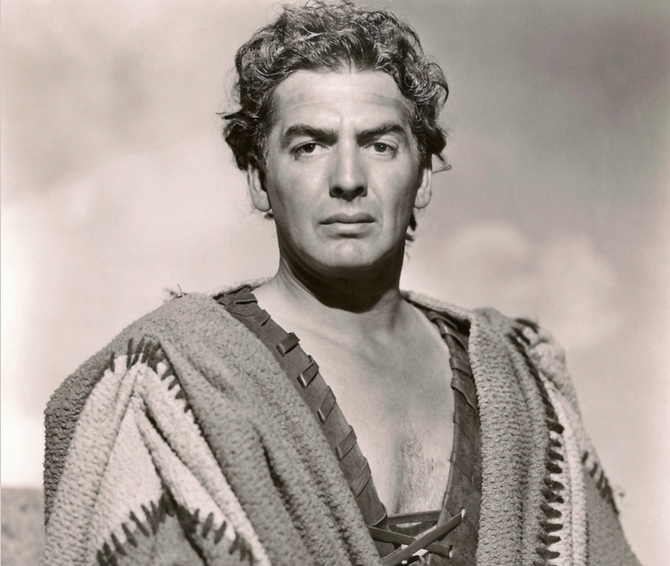


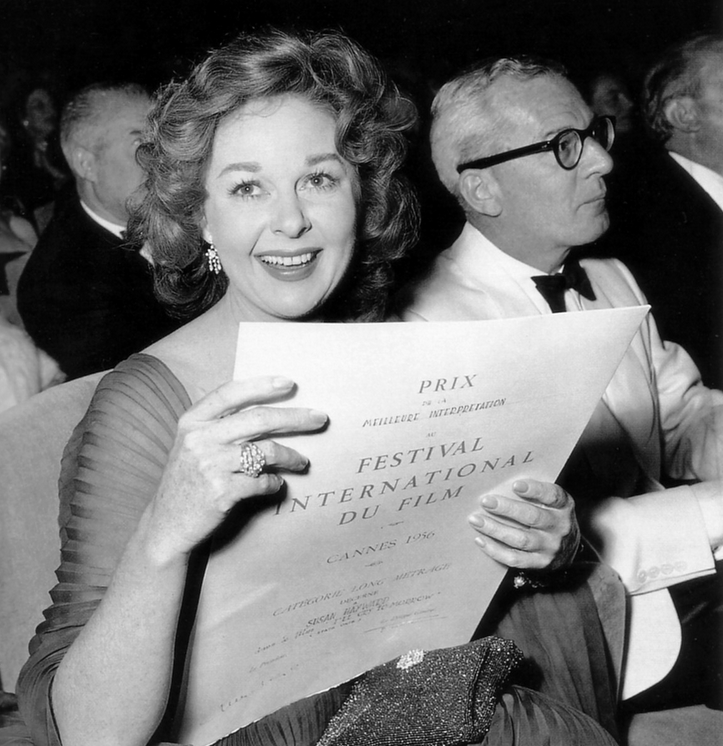


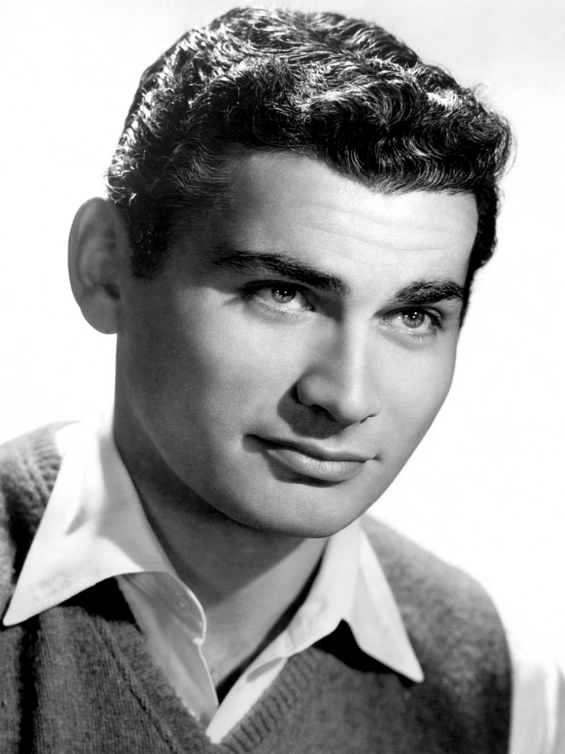

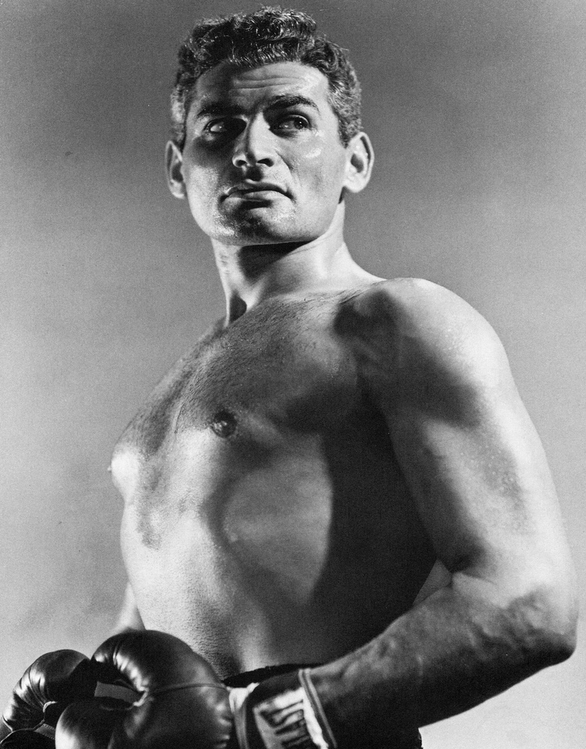

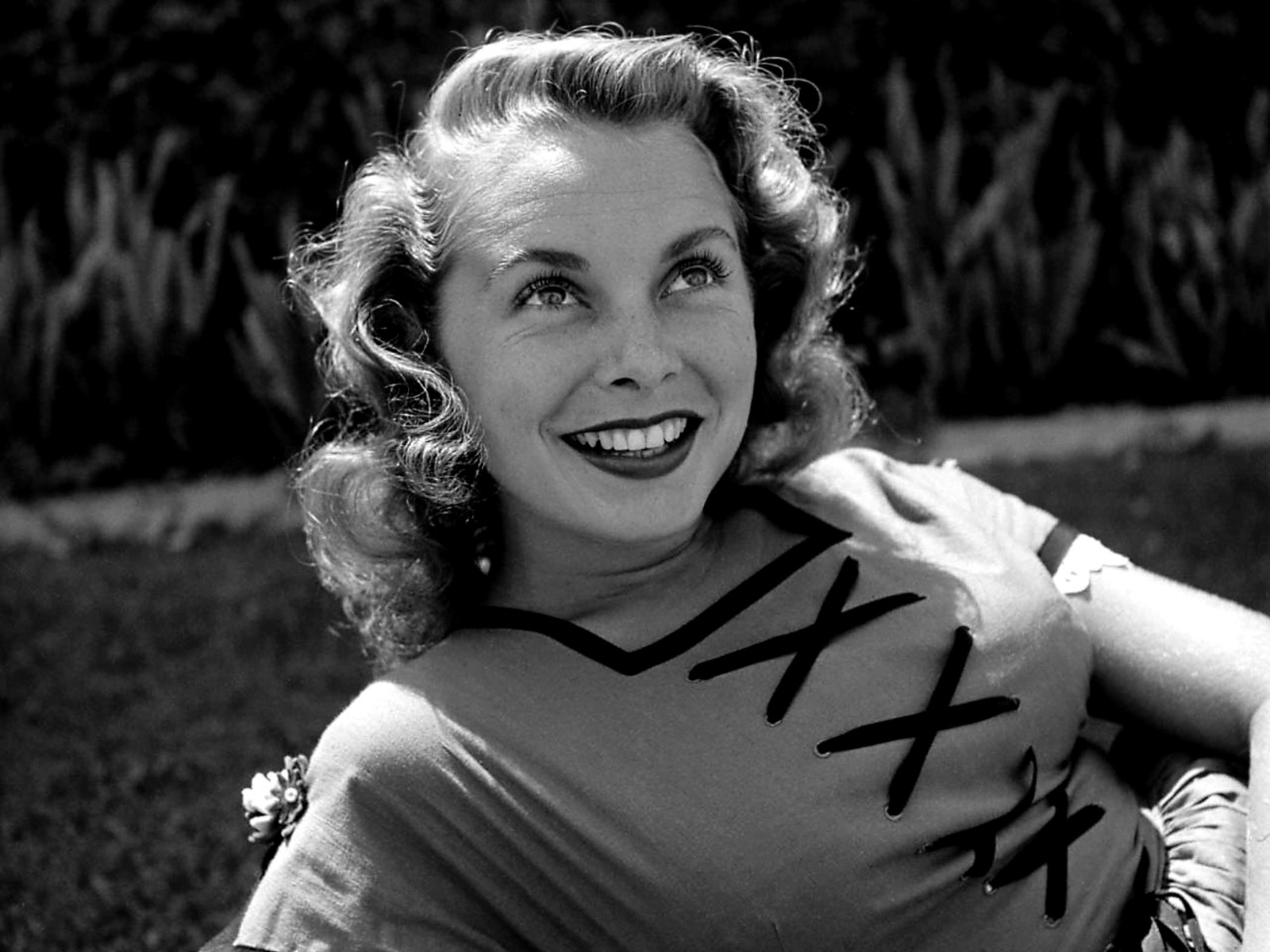
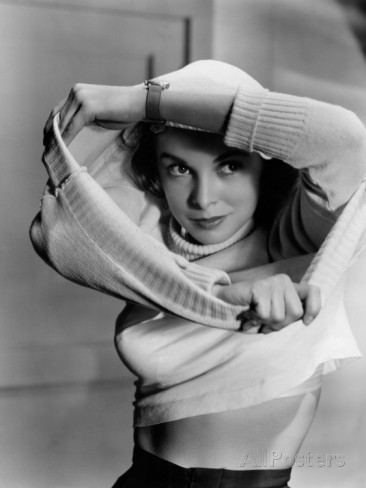
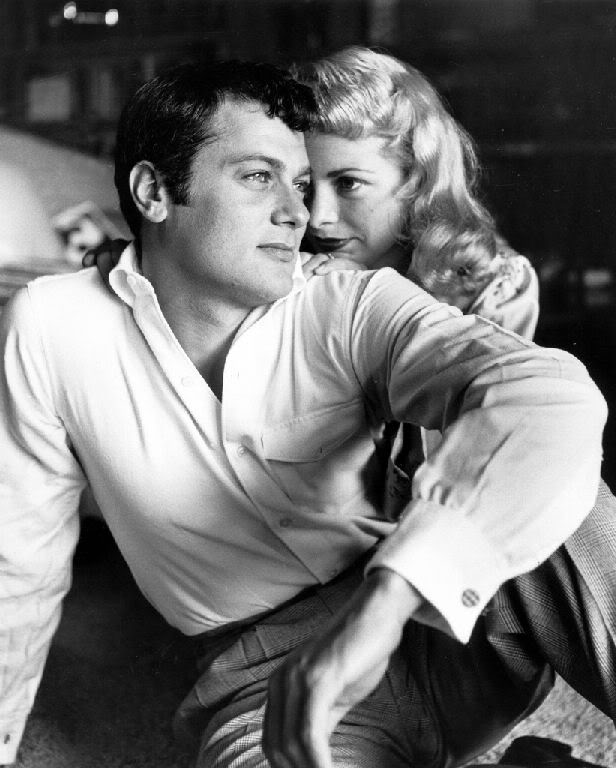



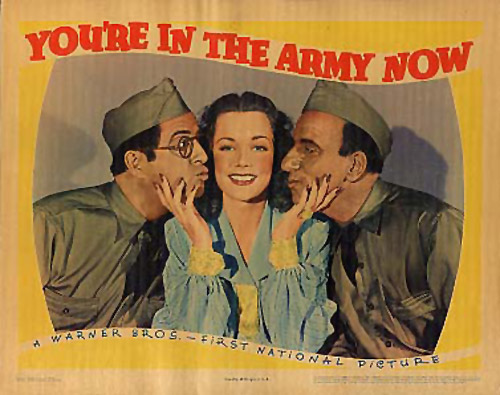




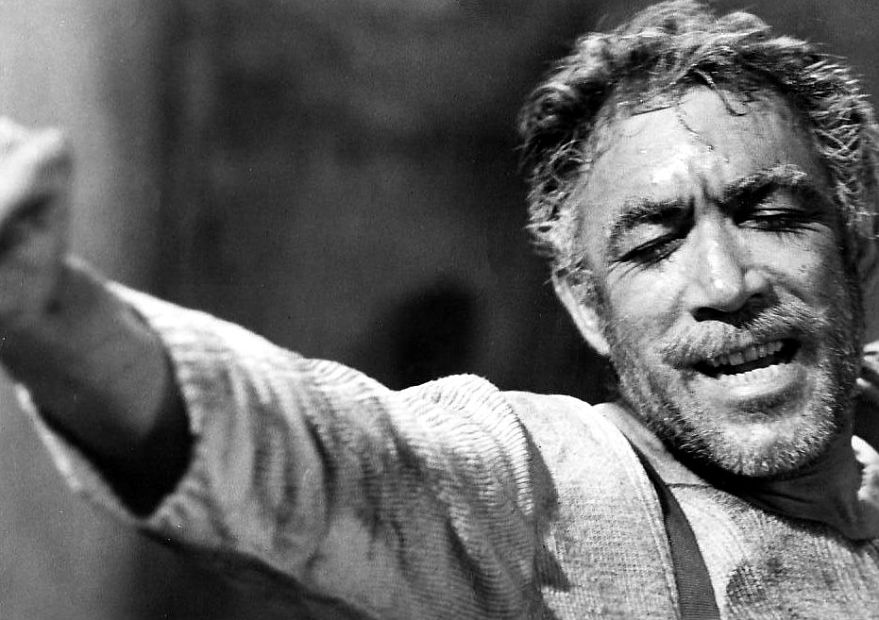


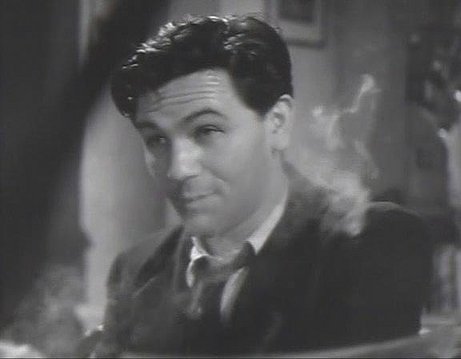


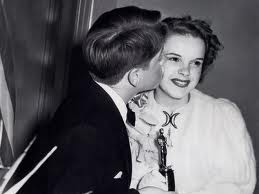

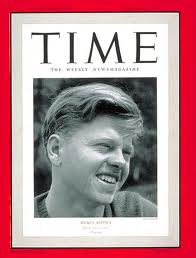
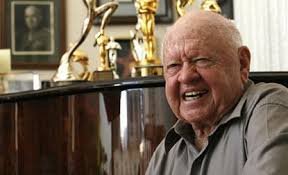
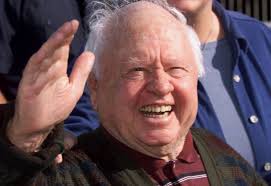






 Jess Waid