Currently, I write police procedural novels with the stories taking place in Hollywood during the early 1960s; a period when I was a street cop there. I've moved to Mexico to be closer to my hobby of studying Mexican history. My friend and fellow author, Professor Michael Hogan, is my mentor.
I am planning to write a three-part epic story that takes place in the mid-nineteenth century. What has inspired me was hearing about Los Ninos Heroes, martyrs of the Battle of Chapultepec. Also, my father was born in Concordia, Mexico and knowing his family history is an added incentive.
View all posts by jesswaid →
Susan Hayward(June 30, 1917 – March 14, 1975), an American actress.
After working as a fashion model in New York, Hayward traveled to Hollywood in 1937. She secured a film contract, and played several small supporting roles over the next few years.
After Hayward’s second marriage and subsequent move to Georgia, her film appearances became infrequent, although she continued acting in film and television until 1972. She died in 1975 of brain cancer.
Early life
Hayward was born Edythe Marrenner inBrooklyn, the youngest of three children born to Ellen (née Pearson) and Walter Marrenner. Her paternal grandmother was an actress, Kate Harrigan, from County Cork, Ireland. Her mother was of Swedish descent. She had an older sister Florence (born May 1910) and an older brother Walter, Jr. (born December 1911).
Hayward was educated at Public School 181, and later attended The Girls’ Commercial High School (later renamed Prospect Heights High School). During her high school years, she acted in various school plays and was named “Most Dramatic” by her class. She graduated in June 1935.
Coincidentally, entertainer Lena Horne was born on exactly the same day (June 30, 1917) as Susan Hayward and also born in Brooklyn, N.Y.
Hayward began her career as a photographer’s model, going to Hollywood in 1937, aiming to secure the role of Scarlett O’Hara in Gone with the Wind. Although she did not win the role, Hayward found employment playing bit parts until she was cast in Beau Geste (1939) opposite Gary Cooper. During the war years, she acted with John Wayne twice, as a second lead in Reap the Wild Wind (1942), and as his leading lady in The Fighting Seabees (1944). She also starred in the film version of The Hairy Ape (1944). Later, in 1956, she was cast by Howard Hughes to play Bortai in the historical epic The Conqueror, as John Wayne’s leading lady.
During the 1950s she won acclaim for her dramatic performances as President Andrew Jackson‘s melancholic wife in The President’s Lady (1953); the alcoholic actress Lillian Roth in I’ll Cry Tomorrow (1955), based on Roth’s best-selling autobiography of the same name, for which she received a Cannes award; and the real-life California murderer Barbara Graham in I Want to Live! (1958). Hayward’s portrayal of Graham won her the Academy Award for Best Actress. In 1959, she played the lead, Mary Sharron, in Woman Obsessed.
Though Hayward never truly became known as a singer because she hated her own singing, she acted out roles as singers in several films. In I’ll Cry Tomorrow, however, though a “ghost singer” was actually recruited, it is her own voice that is actually heard on the soundtrack. Susan Haward performed in the musical biography of Jane Froman in the 1952 film, With a Song in My Heart, a role that won her the Golden Globe for Best Actress Comedy film. Jane Froman’s voice was dubbed as Hayward acted out the songs.
In 1961, Hayward starred as a working girl who becomes the wife of the state’s next governor (Dean Martin) and ultimately takes over that office herself in Ada. The same year, she played Rae Smith in Ross Hunter‘s lavish remake of Back Street, which also starred John Gavin and Vera Miles. In 1967, Hayward replaced Judy Garland as Helen Lawson in the film adaptation of Jacqueline Susann‘s Valley of the Dolls. She received good reviews for her performance in a Las Vegas production of Mame, but left the production. She was replaced by Celeste Holm.
She continued to act into the early 1970s, when she was diagnosed with brain cancer. Her final film role was as Dr. Maggie Cole in the 1972 made-for-TV drama Say Goodbye, Maggie Cole. (The film was intended to be a pilot for a weekly television series, but because of Hayward’s cancer diagnosis and failing health, the series was never produced). Her last public appearance was at the Academy Awards telecast in 1974 to present the Best Actress award despite being very ill. With Charlton Heston‘s support, she was able to present the award.
Personal life
Hayward was married to actor Jess Barker for ten years and they had two children, fraternal twin sons named Gregory and Timothy, born February 19, 1945. The marriage was described in Hollywood gossip columns as turbulent. They divorced in 1954. Hayward survived a subsequent suicide attempt after the divorce. During the contentious divorce proceedings, Hayward felt it necessary to stay in the United States and not join the Hong Kong location shooting for the film Soldier of Fortune. She shot her scenes with co-star Clark Gable indoors in Hollywood. A few brief, distant scenes of Gable and a Hayward double walking near landmarks in Hong Kong were combined with the indoor shots.
In 1957, Hayward married Floyd Eaton Chalkley, commonly known as Eaton Chalkley. He was a Georgia rancher and businessman who had formerly worked as a federal agent. Though he was an unusual husband for a Hollywood movie star, the marriage was a happy one. She lived with him on a farm near Carrollton, Ga. The couple also owned property across the state line in Cleburne County, just outside of Heflin, Alabama. She became a popular figure in an area that in the 1950s was off the beaten path for most celebrities. In December 1964, she and her husband were baptized Catholic by Father McGuire at SS Peter and Paul’s Roman Catholic Church on Larimar Avenue, in the East Liberty section of Pittsburgh. She had met McGuire while in China and promised him that if she ever converted, he would be the one to baptize her. Chalkley died on January 9, 1966. Hayward went into mourning and did little acting for several years, and took up residence in Florida, because she preferred not to live in her Georgia home without her husband.
Hayward was a proponent of astrology. She particularly relied on the advice of Carroll Righter, who called himself “the Gregarious Aquarius” and the self-proclaimed “Astrologer to the Stars”, who informed her that the optimum time to sign a film contract was exactly 2:47 a.m., causing her to set her alarm for 2:45 so that she could be sure to obey his instructions.
Death
Hayward was diagnosed with brain cancer in 1973. On March 14, 1975, she suffered a seizure in her Beverly Hills home and died at age 57. Her two sons survived her from Hayward’s marriage with Barker. Her funeral was held on March 16 at Our Lady of Perpetual Help Roman Catholic Church in Carrollton. Susan Hayward was buried in the church’s cemetery next to Chalkley.
There is speculation that Hayward may have developed cancer from radioactive fallout from atmospheric atomic bomb tests while making The Conqueror with John Wayne. Several production members, as well as Wayne himself, Agnes Moorehead, Pedro Armendáriz and its director Dick Powell, later succumbed to cancer and cancer-related illnesses.
For her contribution to the film industry, Susan Hayward has a star on the Hollywood Walk of Fame at 6251 Hollywood Boulevard.
Jeff Chandler (December 15, 1918 – June 17, 1961) an American film actor and singer in the 1950s, best remembered for playing Cochise in Broken Arrow (1950), and for being one of Universal International‘s most popular male stars of the decade.
Early life
Chandler was born Ira Grossel to a Jewish family in Brooklyn, the only child of Anna (née Herman) and Phillip Grossel. His mother raised him after his parents separated when he was a child.
He attended Erasmus Hall High School, the alma mater of many stage and film personalities. His father was connected with the restaurant business and got his son a job as a restaurant cashier. Chandler said he always wanted to act, but courses for commercial art were cheaper, so he studied art for a year and worked as a layout artist for a mail order catalogue.
Chandler eventually saved up enough money to take a drama course at the Feagin School of Dramatic Art in New York. He worked briefly in radio, and then got a job in a stock company on Long Island as an actor and stage manager. He worked for two years in stock companies, acting in a performance of The Trojan Horse with Gordon MacRae and his wife.
Chandler formed his own company, the Shady Lane Playhouse, in Illinois in 1941. This toured the Midwest with some success before the war came along.
He served in World War II for four years, mostly in the Aleutians, finishing with the rank of lieutenant. His enlistment record for the Cavalry on November 18, 1941 gave his height as six foot four inches and his weight as 210 pounds.
Radio
After being discharged from the military, Chandler moved to Los Angeles with $3,000 he had saved and soon found work as a radio actor. He appeared in episodes of anthology drama series such as Escape and Academy Award Theater, and became well known for playing the lead in Michael Shayne and bashful biology teacher Phillip Boynton on Our Miss Brooks. Chandler was the first actor to portray Chad Remington in Frontier Town. In 1945 he was involved in a serious car accident on the way to a screen test which resulted in a large scar on his forehead.
Chandler had acted on radio in Rogue’s Gallery with Dick Powell, who was impressed enough to give the actor his first film role, a one-line part as a gangster in Johnny O’Clock (1947).
His performance as Boynton in Our Miss Brooks brought him to the attention of executives at Universal, who were looking for someone to play an Israeli leader in Sword in the Desert (1948). Chandler was cast and impressed the studio so much he ended up being signed to Universal for a seven-year contract.
Stardom
Chandler’s first movie for Universal under his new contract was Abandoned (1949), and then he was borrowed by 20th Century Fox to play Cochise in Broken Arrow (1950). This film was a considerable hit, earning Chandler an Oscar nomination and establishing him as a star. He later reprised the role as the legendary Apache chief in The Battle at Apache Pass (1952) and in a cameo in Taza, Son of Cochise (1954). He was the first actor nominated for an Academy Award for portraying an American Indian.
Chandler’s success in Broken Arrow led to him being cast as a variety of nationalities from different historical periods, such as an Arab chief in Flame of Araby (1951) and a Polynesian in Bird of Paradise (1951). He also played an embittered Union cavalryman in Two Flags West (1950). In 1952 exhibitors voted him the 22nd most popular star in the US and he signed a fresh contract with Universal.
In 1957, Chandler left Universal and signed a contract with United Artists. Having long desired to be an executive he formed his own company, Earlmar Productions, with agent Meyer Mishkin. Together they produced the film Drango (1957), which Chandler also directed for a few weeks.
Chandler was due to star in Operation Petticoat (1959) but fell ill and had to pull out. He later formed another production company, August, for which he made The Plunderers, at Allied Artists.
Singing
Chandler had a concurrent career as a singer and recording artist, releasing several albums and playing nightclubs. In 1955 he became only the second star to play at the Riviera, after Liberace was the featured headliner. In her autobiography Hold the Roses (2002), Rose Marie wrote, “Jeff Chandler was a great guy, but he was no singer. He put together an act and we opened at the Riviera. He came with a conductor, piano player, light man, press agent, and manager. None of it helped”. And “Everybody raved about Jeff’s singing, but let’s face it: he really didn’t sing very well. He definitely had guts to open in Vegas.” He left to work on a movie after three and a half weeks.
Personal life
Chandler married actress Marjorie Hoshelle (1918–1989) in 1946. The couple had two daughters, Jamie Tucker (1947–2003) and Dana Grossel (1949–2002), before separating in 1954. They reconciled but his wife applied for divorce again in 1957.
Both of Chandler’s daughters died of cancer, as did his mother, maternal aunt, uncle and grandfather.
When his friend Sammy Davis, Jr. lost an eye in an accident and was in danger of losing the other, Chandler offered to give Davis one of his own eyes. Chandler himself had nearly lost an eye and had been visibly scarred in an auto accident years earlier.
He was romantically linked with Esther Williams, who claimed in her 1999 autobiography Chandler was a cross dresser and she broke off the relationship. According to the Los Angeles Times, many friends and colleagues of Chandler’s rejected Williams’ claims. Jane Russell commented, “I’ve never heard of such a thing. Cross-dressing is the last thing I would expect of Jeff. He was a sweet guy, definitely all man.”
His public support for Israel’s 1956 attack on Egypt prompted the United Arab Republic to ban his films in Arab countries in 1960.
Death
Shortly after completing his role in Merrill’s Marauders in 1961, Chandler injured his back while playing baseball with U.S. Army Special Forces soldiers who served as extras in the movie. He entered a Culver City hospital and had surgery for a spinal disc herniation, on May 13, 1961. There were severe complications; an artery was damaged and Chandler hemorrhaged. In a seven-and-a-half-hour emergency operation over-and-above the original surgery, he was given 55 pints of blood. Another operation followed, date unknown, where he received an additional 20 pints of blood. He died on June 17, 1961. His death was deemed malpractice and resulted in a large lawsuit and settlement for his children. He is buried at Hillside Memorial Park Cemetery in Culver City.
For his contribution to the motion picture industry, Jeff Chandler has a star on the Hollywood Walk of Fame, at 1770 Vine Street.
Critical appraisal
Film historian David Shipman once wrote this analysis of Chandler:
Jeff Chandler looked as though he had been dreamed up by one of those artists who specialize in male physique studies or, a mite further up the artistic scale, he might have been plucked bodily from some modern mural on a biblical subject. For that he had the requisite Jewishness (of which he was very proud) – and he was not quite real. Above all, he was impossibly handsome. He would never have been lost in a crowd, with that big, square, sculpted 20th-century face and his prematurely grey wavy hair. If the movies had not found him the advertising agencies would have done – and in fact, whenever you saw a still of him you looked at his wristwatch or pipe before realizing that he wasn’t promoting something. In the colored stills and on posters his studio always showed his hair as blue, heightening the unreality. His real name was Ira Grossel and his film-name was exactly right.
An obituary of Chandler stated: “Known for his careful attention to detail in making pictures, Chandler was often described as introverted. But colleagues who worked with him closely said he had an easy, light-hearted approach on the set that helped ease some of the strain of production.
As a “bonus,” here’s a brief trailer for Broken Arrow. It’s focus is James Stewart, but it both gives a nice taste of the film’s style, and provides a good look at Jeff Chandler as Cochise in the final frames…
Leigh died in 2004 at the age of 77, following a year-long battle with vasculitis, an inflammation of the blood vessels. She was survived by her fourth husband of 42 years, Robert Brandt, and her two daughters.
Early Life
The only child of Helen Lita (née Westergaard) and Frederick Robert Morrison, Leigh was born Jeanette Helen Morrison in Merced, California, and grew up in Merced. Her maternal grandparents were immigrants from Denmark. In winter 1945, she was discovered by actress Norma Shearer, whose late husband Irving Thalberg had been a senior executive at Metro-Goldwyn-Mayer. Shearer showed talent agent Lew Wasserman a photograph she had seen of Leigh while vacationing at Sugar Bowl, the ski resort where the girl’s parents worked. Shearer later recalled that “that smile made it the most fascinating face I had seen in years. I felt I had to show that face to somebody at the studio.” Leigh left the University of the Pacific, where she was studying music and psychology, after Wasserman secured a contract with MGM, despite having no acting experience. She was placed under the tutelage of drama coach Lillian Burns.
Life and Career
Prior to beginning her movie career, Leigh was a guest star on the radiodramaticanthologyThe Cresta Blanca Hollywood Players. Her initial appearance on radio[4] at age 19 was in the program’s production “All Through the House,” December 24, 1946.
Leigh made her film debut in the big budget film The Romance of Rosy Ridge in 1947, as the romantic interest of Van Johnson‘s character. She got the role when performing Phyllis Thaxter‘s long speech in Thirty Seconds Over Tokyo (1944) for the head of the studio talent department in 1946. During the shooting, Leigh’s name was first changed to “Jeanette Reames”, then to “Janet Leigh” and finally back to her birth name “Jeanette Morrison”, because “Janet Leigh” resembled Vivien Leigh too much. However, Johnson did not like the name and it was finally changed back to “Janet Leigh”. Leigh initially left college for a film career, but enrolled in night school at the University of Southern California in 1947.
Immediately after the film’s release, Leigh was cast opposite Walter Pidgeon and Deborah Kerr in If Winter Comes (1947) in the summer of 1947. Furthermore, due to the box office success of The Romance of Rosy Ridge, Leigh and Johnson were teamed up again in a film project called The Life of Monty Stratton in August 1947. The project was eventually shelved and released in 1949 as The Stratton Story, starring James Stewart and June Allyson. Another film that Leigh was set to star in, before being replaced, was Alias a Gentleman, in which she was cast in April 1947. By late 1947, Leigh was occupied with the shooting of the Lassie film Hills of Home (1948), the first film in which she received star billing.
In late 1948, Leigh was hailed the “No. 1 glamor girl” of Hollywood, although known for her polite, generous and down-to-earth persona.
Many movies followed, notably the 1949 box-office hits Little Women, based on the novel by Louisa May Alcott, and Holiday Affair with Robert Mitchum. In October 1949, Leigh began filming the Cold War action film Jet Pilot with John Wayne. The film had a notoriously troubled production, with several directorial changes and a filming schedule that dragged on until May 1953. Its release was then delayed another four years due to the extensive (and obsessive) re-editing process by producer Howard Hughes, before finally hitting theaters in 1957.
Her initial roles were ingenues based on characters from historical literature, for example in Scaramouche opposite Stewart Granger. By 1958, she moved to more complex roles, such as the role of Linda Latham in Safari opposite Victor Mature.
Her most famous performance was as Marion Crane in the Alfred Hitchcock film Psycho (1960). The fact that the star died early in the movie violated narrative conventions of the time. She received a Golden Globe Award for Best Supporting Actress and was nominated for the Academy Award for Best Supporting Actress. Leigh was so traumatized by the film’s iconic shower scene that she went to great lengths to avoid showers for the rest of her life.
Leigh had starring roles in many other films, including The Manchurian Candidate (1962) with Frank Sinatra, and Bye Bye Birdie (1963) based on the hit Broadway show. Following those two films, Leigh scaled back her acting work and turned down several roles, including the role of Simone Clouseau in The Pink Panther, because she didn’t want to go off on location and away from her family.
Her many guest appearances on TV series include The Man From U.N.C.L.E. two-part episode, “The Concrete Overcoat Affair”, in which she played a sadistic Thrush agent named Miss Dyketon, a highly provocative part for mainstream TV at the time. The two-part episode was released in Europe as a feature film in 1967, entitled The Spy in the Green Hat. She also appeared in the title role in the 1970 episode “Jenny” of The Virginian, the Murder, She Wrote 1987 episode, “Doom with a View”, as “Barbara LeMay” in an episode of The Twilight Zone in 1989 and the Touched by an Angel episode, “Charade”, in 1997. She guest-starred twice as different characters on both Fantasy Island and The Love Boat. In 1973, she appeared in the episode “Beginner’s Luck” of the romantic anthology series Love Story.
Leigh is also the author of four books. Her first, the memoir There Really Was a Hollywood (1984), became a New York Times bestseller. In 1995, she published the non-fiction book Psycho: Behind the Scenes of the Classic Thriller. In 1996, she published her first novel, House of Destiny, which explored the lives of two friends who forged an empire that would change the course of Hollywood’s history. The book’s success spawned a follow-up novel, The Dream Factory (2002), which was set in Hollywood during the height of the studio system.
Jane Wyman (born Sarah Jane Mayfield; January 5, 1917 – September 10, 2007) was an American singer, dancer, and film/television actress. She began her film career in the 1932 and her work in television lasted into 1993. She was considered a prolific performer for two decades. She received an Academy Award for Best Actress for her performance in Johnny Belinda (1948), and later in life achieved a new level of success in the 1980s as the aging wine country matriarch Angela Channing on Falcon Crest.
She was the first wife of Ronald Reagan; they married in 1940 and divorced in 1949.
Wyman was born in St. Joseph, Missouri. Although her birth date has been widely reported for many years as January 4, 1914, research by biographers and genealogists indicates she was born on January 5, 1917. The most likely reason for the 1914 year of birth is that she added to her age so as to be able to work and act while still a minor. She may have moved her birthday back by one day to January 4 so as to share the same birthday as her daughter, Maureen (born January 4, 1941). The 1920 census, on the other hand, has her at 3 and living in Philadelphia, Pa. After Wyman’s death, a release posted on her official website confirmed these details.
Her parents were Manning Jefferies Mayfield (c.1885–1922), a meal-company laborer, and Gladys Hope Christian (c.1891–1960), a doctor’s stenographer and office assistant. In October 1921, her mother filed for divorce, and her father died unexpectedly the following year at age 37. After her father’s death, her mother moved to Cleveland, Ohio, leaving her to be reared by foster parents, Emma (1866–1951) and Richard D. Fulks (1862–1928), the chief of detectives in Saint Joseph. She took their surname unofficially, including in her school records and, apparently, her first marriage certificate.
Her unsettled family life resulted in few pleasurable memories. Wyman later said, “I was raised with such strict discipline that it was years before I could reason myself out of the bitterness I brought from my childhood. In 1928, aged 11, she moved to southern California with her foster mother, but it is not known for certain if she attempted a career in motion pictures at this time, or if the relocation was due to the fact that some of Fulks’ children also lived in the area. In 1930, the two moved back to Missouri, where Sarah Jane attended Lafayette High School in Saint Joseph. That same year she began a radio singing career, calling herself “Jane Durrell” and adding years to her birth date to work legally since she would have been under age.
After dropping out of Lafayette in 1932, at age 15, she returned to Hollywood, taking on odd jobs as a manicurist and a switchboard operator, before obtaining small parts in such films as The Kid from Spain (as a “Goldwyn Girl”; 1932), My Man Godfrey (1936) and Cain and Mabel (1936). After changing her name from Jane Durrell to Jane Wyman, she began her career as a contract player with Warner Bros. in 1936 at age 19. Her big break came the following year, when she received her first starring role in Public Wedding.
In 1939, Wyman starred in Torchy Plays With Dynamite. In 1941, she appeared in You’re in the Army Now, in which she and Regis Toomey had the longest screen kiss in cinema history: 3 minutes and 5 seconds.
She hosted an anthology television series, Jane Wyman Presents the Fireside Theater, for which she was nominated for an Emmy Award in 1957. During her tenure as host, however, ratings steadily declined, and the show ended after three seasons. She was later cast in two unsold pilots during the 1960s and 1970s. After those pilots were not picked up, Wyman went into semi-retirement and remained there for most of the 1970s, although she did make guest appearances on Charlie’s Angels and The Love Boat.
Falcon Crest
In the spring of 1981, Wyman’s career enjoyed a resurgence when she was cast as the scheming Californian vintner and matriarch Angela Channing in The Vintage Years, which was retooled as the primetime soap operaFalcon Crest. The series, which ran from December 1981 to May 1990, was created by Earl Hamner, who had created The Waltons a decade earlier. Also starring on the show was an already established character actress, Susan Sullivan, as Angela’s niece-in-law, Maggie Gioberti, and the relatively unknown actor Lorenzo Lamas as Angela’s irresponsible grandson, Lance Cumson. The on- and off-screen chemistry between Wyman and Lamas helped fuel the series’ success. In its first season, Falcon Crest was a ratings hit, behind other 1980s prime-time soap operas, such as Dallas and Knots Landing, but initially ahead of rival soap opera Dynasty. Cesar Romero appeared from 1985 to 1987 on Falcon Crest as the romantic interest of Angela Channing.
For her role as Angela Channing, Wyman was nominated for a Soap Opera Digest Award five times (for Outstanding Actress in a Leading Role and for Outstanding Villainess: Prime Time Serial), and was also nominated for a Golden Globe Award in 1983 and 1984. Her 1984 Golden Globe nomination resulted in a win for Wyman, who took home the award for Best Performance By an Actress in a TV Series. Later in the show’s run, Wyman suffered several health problems. In 1986, she had abdominal surgery which caused her to miss two episodes (her character simply “disappeared” under mysterious circumstances). In 1988, she missed another episode due to ill health and was told by her doctors to avoid work. However, she wanted to continue working, and she completed the rest of the 1988-1989 season while her health continued to deteriorate. Months later in 1989, Wyman collapsed on the set and was hospitalized due to problems with diabetes and a liver ailment. Her doctors told her that she should end her acting career. Wyman was absent for most of the ninth and final season of Falcon Crest in 1989-1990 (her character was written out of the series by making her comatose in a hospital bed following an attempted murder).
Against her doctor’s advice, she returned for the final three episodes in 1990, even writing a soliloquy for the series finale. Wyman ultimately appeared in almost every episode up until the beginning of the ninth and final season, for a total of 208 of the show’s 227 episodes. After Falcon Crest, Wyman acted only once more, playing Jane Seymour‘s screen mother in a 1993 episode of Dr. Quinn, Medicine Woman. Following this, she retired from acting permanently. Wyman had starred in 83 movies, two successful TV series, and was nominated for an Academy Award four times, winning once.
Later life
Wyman spent her retirement painting and entertaining friends. A recluse, she made only a few public appearances in her last years in part due to suffering from diabetes and arthritis, although she did attend her daughter Maureen’s funeral in 2001 after the latter’s death from cancer. (Ronald Reagan was unable to attend due to his Alzheimer’s disease). She also attended the funeral of her long-time friend Loretta Young in 2000. Wyman broke her silence about her ex-husband upon his death in 2004, attending his funeral and issuing an official statement that read “America has lost a great president and a great, kind, and gentle man.”
Death
Wyman died at the age of 90 at her Rancho Mirage home on September 10, 2007. Wyman’s son, Michael Reagan, released a statement saying: I have lost a loving mother, my children Cameron and Ashley have lost a loving grandmother, my wife Colleen has lost a loving friend she called Mom and Hollywood has lost the classiest lady to ever grace the silver screen.
Anthony Quinn was born Antonio Rudolfo Oaxaca Quinn on April 21, 1915, in Chihuahua, Mexico, to an Irish-Mexican father and a Mexican mother. After starting life in extremely modest circumstances in Mexico, his family moved to Los Angeles, California, where he grew up in the Boyle Heights and the Echo Park neighborhoods. In Los Angeles he attended Polytechnic High School, and later Belmont High, but he eventually dropped out. The young Quinn boxed (which stood him in good stead as a stage actor, when he played Stanley Kowalski to rave reviews in Chicago), then later studied architecture under Frank Lloyd Wright at the great architect’s studio, Taliesin, in Arizona. Quinn was close to Wright, who encouraged him when Quinn decided to give acting a try. After a brief apprenticeship in theatre, Quinn hit Hollywood in 1936 and picked up a variety of small roles in several films at Paramount, including as an Indian warrior in The Plainsman (1936), which was directed by the man who later became his father-in-law, Cecil B. DeMille.
As a contract player at Paramount, Quinn mainly played villains and ethnic types, such as an Arab chieftain in the Bing Crosby-‘Bob Hope’ vehicle Road to Morocco (1942). As a Mexican national (he did not become an American citizen until 1947), he was exempt from the draft. With many actors in the service fighting World War II, Quinn was able to move up into better supporting roles. He had married DeMille’s daughter Katherine DeMille, which enabled him to move in the top circles of Hollywood society.
He became disenchanted with his career and did not renew his Paramount contract despite the advice of others, including his father-in-law (whom Quinn felt never accepted him due to his Mexican roots). Instead, he returned to the stage to hone his craft. His portrayal of Stanley Kowalski in “A Streetcar Named Desire” in Chicago and on Broadway (where he replaced the legendary Marlon Brando, who is forever associated with the role) made his reputation and boosted his film career when he returned to the movies.
Brando and Elia Kazan, who directed “Streetcar” on Broadway and on film, were crucial to Quinn’s future success. Kazan, knowing the two were potential rivals due to their acclaimed portrayals of Kowalski, cast Quinn as Brando’s brother in his biographical film of Mexican revolutionary Emiliano Zapata, Viva Zapata! (1952). Quinn won the Best Supporting Actor Academy Award for 1952, making him the first Mexican-American to win an Oscar. It was not to be his lone appearance in the winner’s circle: he won his second Supporting Actor Oscar in 1957 for his portrayal of Paul Gauguin in Vincente Minnelli‘s biographical film of Vincent van Gogh, Lust for Life (1956), opposite Kirk Douglas. Over the next decade Quinn lived in Italy and became a major figure in world cinema, as many studios shot films in Italy to take advantage of the lower costs (“runaway production” had buffeted the industry since its beginnings in the New York / New Jersey area since the 1910s). He appeared in several Italian films, giving one of his greatest performances as the circus strongman who brutalizes the sweet soul played by Giulietta Masina in her husband Federico Fellini‘s masterpiece The Road(1954). Alternating between Europe and Hollywood, Quinn built his reputation and entered the front-rank of character actors and character leads. He received his third Oscar nomination (and first for Best Actor) for George Cukor‘s Wild Is the Wind (1957). He played a Greek resistance fighter against the Nazi occupation in the monster hit The Guns of Navarone (1961) and received kudos for his portrayal of a once-great boxer on his way down in Rod Serling‘s Requiem for a Heavyweight (1962).
He went back to playing ethnic parts, such as an Arab warlord in David Lean‘s masterpiece Lawrence of Arabia (1962), and he played the eponymous lead in the “sword-and-sandal” blockbuster Barabbas (1961). Two years later he reached the zenith of his career, playing Zorba the Greek in the 1964 film of the same name (a.k.a. Zorba the Greek(1964)), which brought him his fourth, and last, Oscar nomination as Best Actor. The 1960s were kind to him: he played character leads in such major films as The Shoes of the Fisherman (1968) and The Secret of Santa Vittoria (1969). However, his appearance in the title role in the film adaptation of John Fowles‘ novel, The Magus (1968), did nothing to save the film, which was one of that decade’s notorious turkeys.
In the 1960s Quinn told Life magazine that he would fight against typecasting. Unfortunately, the following decade saw him slip back into playing ethnic types again, in such critical bombs as The Greek Tycoon (1978). He starred as the Hispanic mayor of a southwestern city in the short-lived 1971 TV series The Man and the City (1971), but his career lost its momentum during the 1970s. Aside from playing a thinly disguised Aristotle Onassis in the cinematic roman-a-clef “The Greek Tycoon”, his other major roles of the decade was as Hamza in the controversial 1977 movie The Message(1977) (a.k.a. “Mohammad, Messenger of God”, as the Italian patriarch in The Inheritance (1976), yet another Arab in Caravans (1978) and a Mexican patriarch in The Children of Sanchez (1978). In 1983 he reprised his most famous role, Zorba the Greek, t on Broadway in the revival of the musical “Zorba”, for 362 performances. Though his film career slowed during the 1990s, he continued to work steadily in films and television.
Quinn lived out the latter years of his life in Bristol, Rhode Island, where he operated a restaurant. He died in hospital in Boston from pneumonia and respiratory failure linked to his battle with throat cancer. He was 86 years old.
Natalie Wood was born on July 20, 1938, in San Francisco, California, as Natalia Nikolaevna Zakharenko. Her parents were Russian-born émigrés, of Ukrainian and Russian descent, who spoke barely comprehensible English; they changed the family name to Gurdin after becoming US citizens. When she was just four years old, Natalie appeared in her first film, Happy Land (1943). A production company had come to Santa Rosa, California, where the Gurdins were living and Natalie won a bit part of a crying little girl who had just dropped her ice cream cone. With stars in her eyes for her daughter, Mrs. Gurdin packed the family and moved south to Los Angeles in the hopes that more films would come her daughter’s way. Unfortunately they did not, at least not at first, and the family continued to scrape by much as they had done in Santa Rosa. In 1946 Natalie tested for a role in Tomorrow Is Forever (1946). She was only seven at the time, and flunked the screen test. Natalie’s mother convinced the studio heads to give her another test, and this time she was convincing enough that they gave Natalie the role.
In 1947’s Miracle on 34th Street (1947), she won the hearts of movie patrons around the country as Susan Walker in a film that is considered a Christmas classic to this day.
Natalie stayed very busy as a child actress, appearing in no less than 18 films in the late 1940s and early 1950s. When she was 16 Natalie appeared in Rebel Without a Cause (1955) with James Dean, Sal Mineo and Dennis Hopper. She played Judy, a rebellious high school student who was more concerned with hanging out with the wrong crowd than being a sweet teenager like her contemporaries. The result was her first Academy Award nomination and a defining moment in her development as an adult actress. She appeared in Splendor in the Grass (1961), West Side Story (1961), Gypsy(1962), and Love with the Proper Stranger (1963).
While Natalie was reported to be unhappy making “West Side Story,” the film won Oscars for Best Picture, Best Direction, Best Supporting Actor, and Best Supporting Actress. In short, it was a smash hit.
Although she wasn’t nominated for an Academy Award in that one, she did receive nominations for her roles in “Splendor in the Grass” and “Love with the Proper Stranger.” After This Property Is Condemned (1966) in 1966, Natalie stayed away from Hollywood for three years to have time for herself and to consider where she was going. When she did return, her star quality had not diminished, as evidenced by her playing Carol Sanders in the hit Bob & Carol & Ted & Alice(1969). From that point on Natalie didn’t work as much. She made a few television appearances, but nothing of substance with the exception of the TV mini-series From Here to Eternity (1979).
After making The Last Married Couple in America (1980), Natalie began work on Brainstorm (1983) in the fall of 1981 with Christopher Walken. She did not live to see it released. On November 29, 1981, she was sailing on the yacht she shared with her husband, Robert Wagner, and their friend Walken, when she fell in the ocean while trying to board the dinghy tied up alongside the yacht and drowned. She was 43 years old. Natalie had made 56 films for TV and the silver screen. “Brainstorm” was finally released in 1983.
Carl Lee Perkins (April 9, 1932 – January 19, 1998) was an Americanrockabilly musician who recorded most notably at Sun Records Studio in Memphis, Tennessee, beginning in 1954. His best-known song is “Blue Suede Shoes“. According to Charlie Daniels, “Carl Perkins’ songs personified the rockabilly era, and Carl Perkins’ sound personifies the rockabilly sound more so than anybody involved in it, because he never changed.” Perkins’ songs were recorded by artists (and friends) as influential as Elvis Presley, the Beatles, Jimi Hendrix, and Johnny Cash, which further cemented his place in the history of popular music. Paul McCartney even claimed that “if there were no Carl Perkins, there would be no Beatles.” Called “the King of Rockabilly”, he was inducted into the Rock and Roll, the Rockabilly, and the Nashville Songwriters Halls of Fame; and was a Grammy Hall of Fame Award recipient.
Perkins was the son of poor sharecroppers, Buck and Louise Perkins (misspelled on his birth certificate as “Perkings”) near Tiptonville, Tennessee. He grew up hearing Southern gospel music sung by whites in church, and by African American field workers when he started working in the cotton fields at age six. During spring and autumn, the school day would be followed by several hours of work in the fields. During the summer, workdays were 12–14 hours, “from can to can’t.” Carl and his brother Jay together would earn 50 cents a day. With all family members working and not having any credit, there was enough money for beans and potatoes, some tobacco for Carl’s father Buck, and occasionally the luxury of a five-cent bag of hard candy.
During Saturday nights Carl would listen to the radio with his father and hear the Grand Ole Opry, and Roy Acuff‘s broadcasts on the Opry inspired him to ask his parents for a guitar. Because they could not afford a real guitar, Carl’s father fashioned one from a cigar box and a broomstick. When a neighbor in tough straits offered to sell his dented and scratched Gene Autry model guitar with worn-out strings, Buck purchased it for a couple of dollars.
For the next year Carl taught himself parts of Acuff’s “Great Speckled Bird” and “The Wabash Cannonball“, which he had heard on the Opry. He also cited the fast playing and vocals of Bill Monroe as an early influence. Carl began learning more about playing his guitar from a fellow field worker named John Westbrook who befriended him. “Uncle John,” as Carl called him, was an African American in his sixties who played blues and gospel on his battered acoustic guitar. Most famously, “Uncle John” advised Carl when playing the guitar to “Get down close to it. You can feel it travel down the strangs, come through your head and down to your soul where you live. You can feel it. Let it vib-a-rate.” Because Carl could not afford new strings when they broke, he retied them. The knots would cut into his fingers when he tried to slide to another note, so he began bending the notes, stumbling onto a type of “blue note.”
Carl was recruited to be a member of the Lake County Fourth Grade Marching Band, and because of the Perkins’s limited finances, was given a new white shirt, cotton pants, white band cap and red cape by Miss Lee McCutcheon, who was in charge of the band. In January 1947, Buck Perkins moved his family from Lake County, Tennessee to Madison County, Tennessee. A new radio that ran on house current rather than a battery and the proximity of Memphis made it possible for Carl to hear a greater variety of music. At age fourteen years, using the I IV V chord progression common to country songs of the day, he wrote what came to be known around Jackson as “Let Me Take You To the Movie, Magg” (the song would convince Sam Phillips to sign Perkins to his Sun Records label).
Perkins and his brother Jay had their first paying job (in tips) as entertainers at the Cotton Boll tavern on Highway 45 some twelve miles south of Jackson, starting on Wednesday nights during late 1946. Carl was only 14 years old. One of the songs they played was an uptempo, country blues shuffle version of Bill Monroe’s “Blue Moon of Kentucky“. Free drinks were one of the perks of playing in a tavern, and Carl drank four beers that first night. Within a month Carl and Jay began playing Friday and Saturday nights at the Sand Ditch tavern near the western boundary of Jackson. Both places were the scene of occasional fights, and both of the Perkins Brothers gained a reputation as fighters.
During the next couple of years the Perkins Brothers began playing other taverns, including El Rancho, the Roadside Inn, and the Hilltop around Bemis and Jackson as they became well known. Carl persuaded his brother Clayton to play the bass fiddle to complete the sound of the band. Perkins began performing regularly on WTJS-AM in Jackson during the late 1940s as a sometime member of the Tennessee Ramblers. He also appeared on Hayloft Frolic where he performed two songs, sometimes including “Talking Blues” as done by Robert Lunn on the Grand Ole Opry. Perkins and then his brothers began appearing on The Early Morning Farm and Home Hour. Overwhelmingly positive listener response resulted in a 15-minute segment sponsored by Mother’s Best Flour. By the end of the 1940s, the Perkins Brothers were the best-known band in the Jackson area.
Perkins had day jobs during most of these early years, working first at picking cotton, then at Day’s Dairy in Malesus, then at a mattress factory and in a battery plant. He then worked as a pan greaser for the Colonial Baking Company from 1951 through 1952. During January 1953, Perkins married a woman he had known for a number of years, Valda Crider. When his job at the bakery was reduced to part-time, Valda, who had her own job, encouraged Carl to begin working the taverns full-time. He began playing six nights a week. Late the same year he added W.S. “Fluke” Holland to the band as a drummer, who had not any previous experience as a musician but had a good sense of rhythm.
Malcolm Yelvington remembered the Perkins brothers from 1953 when they played in Covington, Tennessee. He noted that Carl had a very unusual blues-like style all his own. By 1955 Carl had made tapes of his material with a borrowed tape recorder, and had sent them to companies such as Columbia and RCA with addresses such as “Columbia Records, New York City.” “I had sent tapes to RCA and Columbia and had never heard a thing from ’em.”
Early Elvis
During July 1954, Perkins and his wife heard a new release of “Blue Moon of Kentucky” by Elvis Presley, Scotty Moore and Bill Black on the radio, and Valda told Carl that someone in Memphis understood what he was doing and he should go see him. Later, Presley told Perkins that he had traveled to Jackson and seen Perkins and his group playing at El Rancho. As “Blue Moon of Kentucky faded out, Carl said, “There’s a man in Memphis who understands what we’re doing. I need to go see him.”
Years later fellow musician Gene Vincent told an interviewer that, rather than “Blue Moon of Kentucky” being a “new sound”, “a lot of people were doing it before that, especially Carl Perkins.”
Perkins successfully auditioned for Sam Phillips at Sun Records during early October 1954. “Movie Magg” and “Turn Around” were released on the Phillips-owned Flip label (151) March 19, 1955, with “Turn Around” becoming a regional success. With the song getting airplay across the South and Southwest, Perkins was booked to appear along with Elvis Presley at theaters in Marianna and West Memphis, Arkansas. Commenting on the audience reaction to both Presley and himself Perkins said, “When I’d jump around they’d scream some, but they were gettin’ ready for him. It was like TNT, man, it just exploded. All of a sudden the world was wrapped up in rock.”
Johnny Cash and the Tennessee Two were the next musicians to be added to the performances by Sun musicians. During the summer of 1955 there were junkets to Little Rock, Forrest City, Arkansas, Corinth and Tupelo, Mississippi. Again performing at El Rancho, the Perkins brothers were involved in an automobile accident. A friend, who had been driving, was pinned by the steering wheel. Perkins managed to drag him from the car, which had begun burning. Clayton had been thrown from the car, but was not injured seriously.
Another Perkins tune, “Gone Gone Gone”, released in October 1955 by Sun, was also a regional success. It was a “bounce blues in flavorsome combined country and r.&b. idioms”. It was backed by the more traditional “Let the Jukebox Keep On Playing,” complete with fiddle, “Western Boogie” bass line, steel guitar and weepy vocal. Commenting on Perkins’s playing, Sam Phillips has been quoted as saying that, “I knew that Carl could rock and in fact he told me right from the start that he had been playing that music before Elvis came out on record … I wanted to see whether this was someone who could revolutionize the country end of the business.
That same autumn, Perkins wrote “Blue Suede Shoes” after seeing a dancer get angry with his date for scuffing up his shoes. Several weeks later, on December 19, 1955, Perkins and his band recorded the song during a session at Sun Studio in Memphis. Phillips suggested changes to the lyrics (“Go, cat, go”) and the band changed the end of the song to a “boogie vamp.” Presley left Sun for a larger opportunity with RCA in November, and on December 19, 1955, Phillips, who had begun recording Perkins in late 1954, told Perkins, “Carl Perkins, you’re my rockabilly cat now.” Released on January 1, 1956, “Blue Suede Shoes” was a massive chart success. In the United States, it scored No. 1 on Billboard magazine’scountry music charts (the only No. 1 success he would have) and No. 2 on Billboard’s Best Sellers popular music chart. On March 17, Perkins became the first country artist to score No. 3 on the rhythm & blues charts. That night, Perkins performed the song during his television debut on ABC-TV’s Ozark Jubilee (Presley performed it for the second time that same night on CBS-TV’s Stage Show; he’d first sung it on the program on February 11).
In the United Kingdom, the song became a Top Ten success, scoring No. 10 on the British charts. It was the first record by a Sun label artist to sell a million copies. The B side, “Honey Don’t,” was covered by the Beatles, Wanda Jackson and (in the 1970s) T. Rex. John Lennon sang lead on the song when the Beatles performed it before it was given to Ringo Starr to sing. Lennon also performed the song on the Lost Lennon Tapes.
After playing a show in Norfolk, Virginia on March 21, 1956, the Perkins Brothers Band headed to New York City for a March 24 appearance on NBC-TV’sPerry Como Show. Shortly before sunrise on March 22 on Route 13 between Dover and Woodside in Dover, Delaware, Stuart Pinkham (a.k.a. Richard Stuart and Poor Richard) assumed duties as driver. After hitting the back of a pickup truck, their car went into a ditch of water about a foot deep, and Perkins was lying face down in the water. Drummer Holland rolled Perkins over, saving him from drowning. He had suffered three fractured vertebrae in his neck, a severe concussion, a broken collar bone, and lacerations all over his body in the crash. Perkins remained unconscious for an entire day. The driver of the pickup truck, Thomas Phillips, a 40-year old farmer, died when he was thrown into the steering wheel. Carl’s brother Jay had a fractured neck along with severe internal injuries, later dying from these complications.
On March 23, Bill Black, Scotty Moore and D.J. Fontana visited Perkins on their way to New York to appear with Presley the next day. D.J. Fontana recalled Perkins saying, “Of all the people, I looked up and there you guys are. You looked like a bunch of angels coming to see me.” Black told him, “Hey man, Elvis sends his love,” and lit a cigarette for him, even though the patient in the next bed was in an oxygen tent. A week later, Perkins was given a telegram from Presley (which had arrived on March 23), wishing him a speedy recovery.
Sam Philips had planned to surprise Perkins with a gold record on The Perry Como Show. “Blue Suede Shoes” had already sold more than 500,000 copies by March 22. Now, while Carl recuperated from the accident, “Blue Suede Shoes” scored No. 1 on most popular, R&B, and country regional music charts. It also scored No. 2 on the Billboard Hot 100 and country charts. Elvis Presley’s “Heartbreak Hotel” scored number one on the pop and country charts, while “Blue Suede Shoes” did better than “Heartbreak” on the R&B charts. By mid-April, more than one million copies of “Blue Suede Shoes” had been sold.
On April 3, while still recuperating in Jackson, Perkins would see Presley perform “Blue Suede Shoes” on his first appearance on The Milton Berle Show appearance, which was his third performance of the song on national television. He also made references to it twice during an appearance on The Steve Allen Show. Although his version became more famous than Perkins’s, it only scored No. 20 on Billboard’s popular music chart.
Perkins returned to live performances on April 21, 1956, beginning with an appearance in Beaumont, Texas, with the “Big D Jamboree” tour. Before resuming touring, Sam Phillips arranged a recording session at Sun with Ed Cisco filling in for the still- recuperating Jay. By mid-April, “Dixie Fried,” “Put Your Cat Clothes On,” “Right String, Wrong Yo-Yo,” “You Can’t Make Love to Somebody,” “Everybody’s Trying to Be My Baby,” and “That Don’t Move Me” had been recorded.
Beginning during early summer, Perkins was paid $1,000 to play just two songs a night on the extended tour of “Top Stars of ’56.” Other performers on the tour were Chuck Berry and Frankie Lymon and the Teenagers. When Perkins and the group entered the stage in Columbia, South Carolina, he was appalled to see a teenager with a bleeding chin pressed against the stage by the crowd. During the first guitar intermission of “Honey Don’t” they were waved offstage and into a vacant dressing room behind a double line of police officers. Perkins was quoted as saying, “It was dangerous. Lot of kids got hurt. There was a lot of rioting going on, just crazy, man! The music drove ’em insane.” Appalled by what he had seen and experienced, Perkins left the tour. Appearing with Gene Vincent and Lillian Briggs in a “rock ‘n’ roll show”, he helped pull 39,872 people to the Reading Fair in Pennsylvania on a Tuesday night in late September. A full grandstand and one thousand people stood in a heavy rain to hear Perkins and Briggs at the Brockton Fair in Mass.
Sun issued more Perkins songs in 1956: “Boppin’ the Blues“/”All Mama’s Children” (Sun 243), the B side co-written with Johnny Cash, “Dixie Fried“/”I’m Sorry, I’m Not Sorry” (Sun 249). “Matchbox“/”Your True Love” (Sun 261) came out in February 1957. “Boppin’ the Blues” reached No. 47 on the Cashbox pop singles chart, No. 9 on the Billboard country and western chart, and No. 70 on the Billboard Top 100 chart.
“Matchbox” is considered a rockabilly classic. The day it was recorded, Elvis Presley visited the studio. Along with Johnny Cash (who left early), Perkins, Jerry Lee Lewis and Presley spent more than an hour singing gospel, country and rhythm-and-blues songs while a tape rolled.[5] The casual session was called The Million Dollar Quartet by a local newspaper the next day, and it was eventually released on CD in 1990. On February 2, 1957, Perkins again appeared on Ozark Jubilee, singing “Matchbox” and “Blue Suede Shoes”. He also made at least two appearances on Town Hall Party in Compton, California in 1957 singing both songs. Those performances were included in the Western Ranch Dance Party series filmed and distributed by Screen Gems.
He released “That’s Right,” co-written with Johnny Cash, backed with the ballad “Forever Yours,” as Sun single 274 in August, 1957. Both sides failed to chart. The 1957 film Jamboree included a Perkins performance of “Glad All Over” (not to be confused with the Dave Clark Five song of the same name), that ran 1:55. “Glad All Over,” written by Aaron Schroeder, Sid Tepper, and Roy Bennett, was released by Sun in January 1958.
During 1958, Perkins moved to Columbia Records where he recorded songs such as “Jive After Five”, “Rockin’ Record Hop,” “Levi Jacket (And a Long Tail Shirt),” “Pop, Let Me Have the Car,” “Pink Pedal Pushers,” “Any Way the Wind Blows,” “Hambone,” “Pointed Toe Shoes,” “Sister Twister,” and “L-O-V-E-V-I-L-L-E.” In 1959, he wrote the country and western song “The Ballad of Boot Hill” for Johnny Cash who released the song as part of an EP on Columbia Records.
He performed often in the Golden Nugget Casino in Las Vegas during 1962 and 1963, and also in nine Midwestern states and a tour of Germany.
During May 1964, Perkins toured Britain along with Chuck Berry. Perkins had been reluctant at first to undertake the tour, convinced that as forgotten as he was in America, he would be even more obscure in the U.K., and he was afraid of being humiliated by drawing meager audiences to the performances. It was Berry who convinced him that they had remained much more popular in Britain since the 1950s than they had in the United States, and that there would be large crowds of fans at every show. The Animals backed the two performers. On the last night of the tour, Perkins attended a party that turned out to be for him, and ended up sitting on the floor sharing stories, playing guitar, and singing songs while surrounded by the Beatles. Ringo Starr asked if he could record “Honey Don’t”. Perkins answered, “Man, go ahead, have at it.” The Beatles would cover “Matchbox,” “Honey Don’t” and “Everybody’s Trying to Be My Baby” recorded by Perkins but adapted from a song originally recorded by Rex Griffin during 1936 with new music composed by Carl Perkins, a song with the same title also recorded by Roy Newman in 1938. The Beatles recorded two versions of “Glad All Over” in 1963. Another tour to Germany followed in the autumn. He released “Big Bad Blues” backed with “Lonely Heart” as a single on Brunswick Records with the Nashville Teens in June 1964.
Although he had been trying to rehabilitate himself during 1968 by drinking only beer (but large amounts of it), while on tour with the Johnny Cash troupe, Perkins began a four-day bender in Tulsa, Oklahoma, starting with a bottle of Early Times. Nevertheless, with the urging of Cash, he opened a show in San Diego, California, by playing four songs after seeing “four or five of me in the mirror,” and while being able to see “nothin’ but a blur.” After drinking yet another pint of Early Times, he passed out on the tour bus. By morning he started hallucinating “big spiders, and dinosaurs, huge, and they were gonna step on me.” The bus was parked on a beach at the ocean. He was tempted by yet another pint of whiskey that he had hidden. He took the bottle with him onto the beach and fell on his knees and said, “Lord … I’m gonna throw this bottle. I’m gonna show You that I believe in You. I sailed it into the Pacific … I got up, I knew I had done the right thing.” Perkins and Cash, who had his own problems with drugs, then gave each other support to refrain from their drug of choice.
A Kraft Music Hall episode hosted by Cash on April 16, 1969 had Perkins singing his song “Restless.” Country music fans may recognize The Statler Brothers’ song, “Flowers on the Wall,” which was also featured on the show. During February 1969, Perkins joined with Bob Dylan to write “Champaign, Illinois.” Dylan was recording in Nashville from February 12 to February 21 for an album that would be titled Nashville Skyline, and met Perkins when he appeared on The Johnny Cash Show on June 7. Dylan had written one verse of a song, but was stuck. After Perkins worked out a loping rhythm and improvised a verse ending lyric, Dylan said, “Your song. Take it. Finish it.” The co-authored song was included in Perkins’s 1969 album On Top.
Perkins was also united in 1969 by Columbia’s Murray Krugman with a rockabilly group based in New York’s Hudson Valley, the New Rhythm and Blues Quartet. Carl and NRBQ recorded “Boppin’ the Blues” which featured the group backing him on songs like his staples “Turn Around” and “Boppin’ the Blues” and included songs recorded separately by Perkins and NRBQ. One of his TV appearances with Cash was on the popular country series Hee Haw on February 16, 1974.
Johnny Cash’s brother Tommy Cash had a Top Ten country gospel hit in 1970 with a recording of the song “Rise and Shine” which was written by Carl Perkins. Tommy Cash reached no. 9 on the Billboard country chart and no. 8 on the Canadian country chart with his version of the song. Arlene Harden had a Top 40 country hit in 1971 with the Carl Perkins composition “True Love is Greater Than Friendship” from the film Little Fauss and Big Halsy (1971) which reached no. 22 on the Billboard country chart and no. 33 on the Billboard Adult Contemporary chart for Al Martino that same year.
After a long legal struggle with Sam Phillips over royalties, Perkins gained ownership of his songs during the 1970s. During 1981 Perkins recorded the song “Get It” with Paul McCartney, providing vocals and playing guitar with the former Beatle. This recording was included on the chart-topping album Tug Of War released in 1982. This track also comprised the B-side of the title track single in a slightly edited form. One source states that Perkins “wrote the song with Paul McCartney.” The song ends with a fade-out of Perkins’s impromptu laughter.
The rockabilly revival of the 1980s helped bring Perkins back into the limelight. During 1985, he re-recorded “Blue Suede Shoes” with Lee Rocker and Jim Phantom of the Stray Cats, as part of the soundtrack for the film, Porky’s Revenge.
In October 1985, George Harrison, Eric Clapton, Dave Edmunds, Lee Rocker, Rosanne Cash and Ringo Starr appeared with him on stage for a television special that was taped live at the Limehouse Studios in London called Blue Suede Shoes: A Rockabilly Session. The show was later shown on Channel 4 on 1 January 1986. Perkins performed 16 songs with 2 encores in an extraordinary performance. Perkins and his friends ended the session by singing his most famous song, 30 years after its writing, which brought Perkins to tears. The concert special was a memorable highlight of Perkins’s later career and has been highly praised by fans for the spirited performances delivered by Perkins and his famous guests. The concert was released for DVD by Snapper Music in 2006.
Perkins’s only notable film performance as an actor was in John Landis‘ 1985 film Into the Night, a cameo-laden film that includes a scene where characters played by Perkins and David Bowie die at each other’s hand.
As a guitarist Perkins used finger picking, imitations of the pedal steel guitar, right-handed damping (muffling strings near the bridge with the palm), arpeggios, advantageous use of open strings, single and double string bending (pushing strings across the neck to raise their pitch), chromaticism (using notes outside of the scale), country and blue licks, and tritone and other tonality clashing licks (short phrases that include notes from other keys and move in logical, often symmetric patterns). A rich vocabulary of chords including sixth and thirteenth chords, ninth and add nine chords, and suspensions, show up in rhythm parts and solos. Free use of syncopations, chord anticipations (arriving at a chord change before the other players, often by a 1/8 note) and crosspicking (repeating a three 1/8 note pattern so that an accent falls variously on the upbeat or downbeat) are also in his bag of tricks.
During 1986, he returned to the Sun Studio in Memphis, joining Cash, Jerry Lee Lewis and Roy Orbison on the album Class of ’55. The record was a tribute to their early years at Sun and, specifically, the Million Dollar Quartet jam session involving Perkins, Presley, Cash, and Lewis in 1956. During 1989, Perkins co-wrote and played guitar on the Judds‘ No. 1 country success, “Let Me Tell You About Love.” During 1989, Perkins also signed a record deal with Platinum Records LTD for an album with the title Friends, Family, and Legends, featuring performances by Chet Atkins, Travis Tritt, Steve Wariner, Joan Jett and Charlie Daniels, along with Paul Shaffer and Will Lee. During 1992, during the production of this CD, Perkins developed throat cancer.
He returned to Sun Studios to record with Scotty Moore, Presley’s first guitar player. The CD was called 706 ReUNION, released on Belle Meade Records, and featured D.J. Fontana, Marcus Van Storey and the Jordanaires. During 1993, Perkins performed with the Kentucky Headhunters in a music video remake, filmed in Glasgow, Kentucky, of his song “Dixie Fried.” In 1994, Perkins teamed up with Duane Eddy and the Mavericks to contribute “Matchbox” to the AIDS benefit album Red Hot + Country produced by the Red Hot Organization.
Perkins’ last album, Go Cat Go!, was released during 1996, and featured new collaborations with many of the above artists, as well as George Harrison, Paul Simon, John Fogerty, Tom Petty, and Bono. It was released by the independent label Dinosaur Records and distributed by BMG.His last major concert performance was the Music for Montserrat all-star charity concert at London’s Royal Albert Hall on September 15, 1997.
A strong advocate for the prevention of child abuse, Carl Perkins worked with the Jackson Exchange Club to establish the first center for the prevention of child abuse in Tennessee and the fourth in the nation. Proceeds from a concert planned by Perkins were combined with a grant from the National Exchange Club to establish the Prevention of Child Abuse in October 1981. For years its annual Circle of Hope Telethon generated one quarter of the center’s annual operating budget.
Carl Perkins had one daughter, Debbie, and three sons, Stan, Greg, and Steve. His first-born son, Stan Perkins, is a recording artist as well. In 2010, Stan joined forces with Jerry Naylor to record a duet tribute to Carl, “To Carl; Let it Vibrate.” Stan Perkins has been inducted into the Rockabilly Hall of Fame. Perkins’ widow, Valda deVere Perkins, died November 15, 2005 in Jackson.
Perkins collaborated on a 1996 biography, Go, Cat, Go, with New York–based music writer David McGee. Plans for a biographical film were announced by Santa Monica-based production company Fastlane Entertainment was slated for release in 2009. During 2004, Rolling Stone ranked Perkins number 99 on its list of the 100 Greatest Artists of All Time. His version of “Blue Suede Shoes” was included by the National Recording Preservation Board in the Library of CongressNational Recording Registry in 2006.
Peggy Lee Peggy Lee (May 26, 1920 – January 21, 2002) was an American jazz and popular music singer, songwriter, composer and actress, in a career spanning six decades. From her beginning as a vocalist on local radio to singing with Benny Goodman’s big band, she forged a sophisticated persona, evolving into a multi-faceted artist and performer. She wrote music for films, acted, and created conceptual record albums—encompassing poetry, jazz, chamber pop, and art songs.
Lee was born Norma Deloris Egstrom in Jamestown, North Dakota, the seventh of eight children of Marvin Olof Egstrom, a station agent for the Midland Continental Railroad, and his wife Selma Amelia (Anderson) Egstrom. She and her family were Lutherans. Her father was Swedish American and her mother was Norwegian American. Her mother died when Lee was just four years old. Afterward, her father married Min Schaumber, who treated her with great cruelty while her alcoholic father did little to stop it. As a result, she developed her musical talent and took several part-time jobs so that she could be away from home.
Lee first sang professionally over KOVC radio in Valley City, North Dakota. She later had her own series on a radio show sponsored by a local restaurant that paid her a salary in food. Both during and after her high school years, Lee sang for small sums on local radio stations. Radio personality Ken Kennedy, of WDAY in Fargo, North Dakota (the most widely heard station in North Dakota), changed her name to Peggy Lee. Miss Lee moved to Los Angeles at the age of 17.
She returned to North Dakota for a tonsillectomy, and was noticed by hotel owner Frank Beringin while working at the Doll House in Palm Springs, California. It was here that she developed her trademark sultry purr – having decided to compete with the noisy crowd with subtlety rather than volume. Beringin offered her a gig at The Buttery Room, a nightclub in the Ambassador Hotel East in Chicago. There, she was noticed by bandleader Benny Goodman. According to Lee, “Benny’s then-fiancée, Lady Alice Duckworth, came into The Buttery, and she was very impressed. So the next evening she brought Benny in, because they were looking for a replacement for Helen Forrest. And although I didn’t know, I was it. He was looking at me strangely, I thought, but it was just his preoccupied way of looking. I thought that he didn’t like me at first, but it just was that he was preoccupied with what he was hearing.” She joined his band in 1941 and stayed for two years.
In 1942 Lee had her first No. 1 hit, “Somebody Else Is Taking My Place”, followed by 1943’s “Why Don’t You Do Right?” (Originally sung by Lil Green). It sold over a million copies and made her famous. She sang with Goodman’s orchestra in two 1943 films, Stage Door Canteen and The Powers Girl.
In March 1943 Lee married Dave Barbour, a guitarist in Goodman’s band. Peggy said, “David joined Benny’s band and there was a ruling that no one should fraternize with the girl singer. But I fell in love with David the first time I heard him play, and so I married him. Benny then fired David, so I quit, too. Benny and I made up, although David didn’t play with him anymore. Benny stuck to his rule. I think that’s not too bad a rule, but you can’t help falling in love with somebody.”
When Lee and Barbour left the band, the idea was that he would work in the studios and she would keep house and raise their daughter, Nicki. But she drifted back to songwriting and occasional recording sessions for the fledgling Capitol Records in 1947, for whom she produced a long string of hits, many of them with lyrics and music by Lee and Barbour, including “I Don’t Know Enough About You” (1946) and “It’s a Good Day” (1947). With the release of the US No. 1-selling record of 1948, “Mañana,” her “retirement” was over. In 1948 Lee joined Perry Como and Jo Stafford as a rotating host of the NBC Radio musical program The Chesterfield Supper Club. She was also a regular on NBC’s Jimmy Durante Show and appeared frequently on Bing Crosby’s radio shows throughout the late 1940s and early 1950s.
She left Capitol for Decca Records in 1952, but returned to Capitol in 1957. She is most famous for her cover version of the Little Willie John hit “Fever” written by Eddie Cooley and John Davenport, to which she added her own, un-copyrighted lyrics (“Romeo loved Juliet,” “Captain Smith and Pocahontas”) and her rendition of Leiber and Stoller’s “Is That All There Is?”. Her relationship with the Capitol label spanned almost three decades, aside from her brief but artistically rich detour (1952–1956) at Decca Records, where in 1953 she recorded one of her most acclaimed albums, Black Coffee. While recording for Decca, Lee had hit singles with the songs Lover and Mister Wonderful.
In her 60-year-long career, Peggy was the recipient of three Grammy Awards (including the Lifetime Achievement Award), an Academy Award nomination, The American Society of Composers, Authors and Publishers (ASCAP) Award, the President’s Award, the Ella Award for Lifetime Achievement, and the Living Legacy Award from the Women’s International Center. In 1999 Lee was inducted into the Songwriters Hall of Fame.
Lee was a successful songwriter, with songs from the Disney movie Lady and the Tramp, for which she also supplied the singing and speaking voices of four characters. Her collaborators included Laurindo Almeida, Harold Arlen, Sonny Burke, Cy Coleman, Duke Ellington, Dave Grusin, Quincy Jones, Francis Lai, Jack Marshall, Johnny Mandel, Marian McPartland, Willard Robison, Lalo Schifrin and Victor Young. She wrote the lyrics for popular songs that include, “It’s A Good Day,” “The Heart Is A Lonely Hunter,” “Mañana (Is Soon Enough for Me),” and “The Shining Sea.” Her first published song was in 1941, “Little Fool.” “What More Can a Woman Do?” was recorded by Sarah Vaughan with Dizzy Gillespie and Charlie Parker. “Mañana (Is Soon Enough for Me)” was No.1 for 9 weeks on the Billboard singles chart in 1948, from the week of March 13 to May 8.
Lee was a mainstay of Capitol Records when rock and roll came onto the American music scene. She was among the first of the “old guard” to recognize this new genre, as seen by her recording music from The Beatles, Randy Newman, Carole King, James Taylor, and other up-and-coming songwriters. From 1957 until her final disc for the company in 1972, she produced a steady stream of two or three albums per year that usually included standards (often arranged quite differently from the original), her own compositions, and material from young artists.
In 1952 Lee starred opposite Danny Thomas in The Jazz Singer (1952), a Technicolor remake of the early Al Jolson part-talkie film The Jazz Singer (1927 film). In 1955, she played an alcoholic blues singer in Pete Kelly’s Blues (1955 film), for which she received an Academy Award nomination for Best Supporting Actress. In 1955 Lee did the speaking and singing voices for several characters in Disney’s Lady and the Tramp. In 1957, Lee guest starred on the short-lived ABC variety program, The Guy Mitchell Show.
Lee continued to perform into the 1990s, sometimes in a wheelchair. After years of poor health, she died of complications from diabetes and a heart attack at age 81. She was buried in Westwood Village Memorial Park Cemetery in Los Angeles’ Westwood, Los Angeles, California neighborhood. On her marker in a garden setting is inscribed, “Music is my life’s breath.”
John Garfield John Garfield (March 4, 1913 – May 21, 1952) was an American actor adept at playing brooding, rebellious, working-class characters. He grew up in poverty in Depression-era New York City and in the early 1930’s became an important member of the Group Theater.
In 1937, he moved to Hollywood, eventually becoming one of Warner Bros.’ major stars. Called to testify before the U.S. Congressional House Committee on Un-American Activities (HUAC), he denied Communist affiliation and refused to “name names,” effectively ending his film career. Some have claimed that the stress of this incident led to his premature death at 39 from a heart attack.
Garfield is acknowledged as a predecessor of such Method actors as Montgomery Clift, Marlon Brando, and James Dean. Garfield was born Jacob Julius Garfinkle in a small apartment on Rivington Street in Manhattan’s Lower East Side, to David and Hannah Garfinkle, Russian Jewish immigrants, and grew up in the heart of the Yiddish Theater District. In early infancy a middle name—Julius—was added, and for the rest of his life those who knew him well called him Julie. His father, a clothes presser and part-time cantor, struggled to make a living and to provide even marginal comfort for his small family. When Garfield was five, his brother Max was born, and their mother never fully recovered from what was described as a “difficult” pregnancy. She died two years later, and the young boys were sent to live with various relatives, all poor, scattered across the boroughs of Brooklyn, Queens, and the Bronx.
Several of these relatives lived in tenements in a section of East Brooklyn called Brownsville, and Garfield lived there in one house and slept in another. At school he was judged a poor reader and speller, deficits that were aggravated by irregular attendance. He would later say of his time on the streets there, that he learned “all the meanness, all the toughness it’s possible for kids to acquire. If I hadn’t become an actor, I might have become Public Enemy Number One.” His father remarried and moved to the West Bronx, where Garfield joined a series of gangs. Much later he would recall: “Every street had its own gang. That’s the way it was in poor sections… the old safety in numbers.” He soon became gang leader.
At this time people started to notice his ability to mimic well-known performers, both bodily and facially. He also began to hang out and eventually spar at a boxing gym on Jerome Avenue. At some point he contracted scarlet fever, (it was diagnosed later in adulthood), causing permanent damage to his heart and causing him to miss a lot of school. After being expelled three times and expressing a wish to quit school altogether, his parents sent him to P.S. 45, a school for difficult children. It was under the guidance of the school’s principal—the noted educator Angelo Patri—that he was introduced to acting. Noticing Garfield’s tendency to stammer, Patri assigned him to a speech therapy class taught by a charismatic teacher named Margaret O’Ryan. She gave him acting exercises and made him memorize and deliver speeches in front of the class and, as he progressed, in front of school assemblies. O’Ryan thought he had natural talent and cast him in school plays. She encouraged him to sign up for a city-wide debating competition sponsored by the New York Times. To his own surprise, he took second prize.
With Patri and O’Ryan’s encouragement he began to take acting lessons at a drama school that was part of The Heckscher Foundation, and began to appear in their productions. At one of the latter he received back-stage congratulations and an offer of support from the Yiddish actor Jacob Ben-Ami who recommended him to the American Laboratory Theater. Funded by the Theatre Guild, “the Lab” had contracted with Richard Boleslavski to stage its experimental productions, and with Russian actress and expatriate Maria Ouspenskaya, to supervise classes in acting. Former members of the Moscow Art Theater, they were the first proponents of Stanislavsky’s “system” in the United States.
Garfield took morning classes and began volunteering time at the Lab after hours, auditing rehearsals, building and painting scenery, and doing crew work. He would later view this time as beginning his apprenticeship in the theater. Among the people becoming disenchanted with the Guild and turning to the Lab for a more radical, challenging environment were Stella Adler, Lee Strasberg, Franchot Tone, Cheryl Crawford and Harold Clurman. In varying degrees, all would become influential in Garfield’s later career. After a stint with Eva Le Gallienne’s Civic Repertory Theater and a short period of vagrancy involving hitchhiking, freight hopping, picking fruit, and logging in the Pacific Northwest (Preston Sturges conceived the film Sullivan’s Travels after hearing Garfield tell of his hobo adventures), Garfield made his Broadway debut in 1932, in a play called Lost Boy. It ran for only two weeks but gave Garfield something critically important for an actor struggling to break into the theater: a credit.
Garfield received feature billing in his next role, that of Henry the office boy, in Elmer Rice’s play Counsellor-at-Law starring Paul Muni. The play ran for three months, made an eastern tour and returned for an unprecedented second return engagement, only closing when Muni was contractually compelled to return to Hollywood to make a film for Warner’s. At this point the Warner company expressed an interest in Garfield and sought to arrange a screen test. He turned them down. Garfield’s former colleagues Crawford, Clurman, and Strasburg had begun a new theater collective, calling it simply “the Group,” and Garfield lobbied his friends hard to get in. After months of rejection he began frequenting the inside steps of the Broadhurst Theater where the Group had its offices. Cheryl Crawford noticed him one day and greeted him warmly. Feeling encouraged, he made his request for apprenticeship. Something intangible impressed her and she recommended him to the other directors. They made no dissent.
Clifford Odets
Clifford Odets had been a close friend of Garfield from the early days in the Bronx. After Odets’ one-act play Waiting for Lefty became a surprise hit, the Group announced it would mount a production of his full length drama Awake and Sing. At the playwright’s insistence, Garfield was cast as Ralph, the sensitive young son who pled for “a chance to get to first base.” The play opened in February 1935 and Garfield was singled out by critic Brooks Atkinson for having a “splendid sense of character development.” Garfield’s apprenticeship was officially over; he was voted full membership by the company.
Odets was the man of the moment and he claimed to the press that Garfield was his “find”; that he would soon write a play just for him. That play would turn out to be Golden Boy, and when Luther Adler was cast in the lead role instead, a disillusioned Garfield began to take a second look at the overtures being made by Hollywood.
Garfield had been approached by Hollywood studios before—both Paramount and Warners offering screen tests—but talks had always stalled over a clause he wanted inserted in his contract, one that would allow him time off for stage work. Now Warner Bros. acceded to his demand and Garfield signed a standard feature-player agreement—seven years with options—in Warner’s New York office. Many in the Group were livid over what they considered his betrayal. Elia Kazan’s reaction was different, suggesting that the Group did not so much fear that Garfield would fail, but that he would succeed.
Garfield in Four Daughters
Jack Warner’s first order of business was a change of name, to John Garfield. After many false starts he was finally cast in a supporting, yet crucial role as a tragic young composer in a Michael Curtiz film titled Four Daughters. After the picture’s release in 1938, he received wide critical acclaim and a nomination for the Academy Award for Best Supporting Actor. The studio quickly revised Garfield’s contract—designating him a star player rather than a featured one—for seven years without options. They also created a name-above-the-title vehicle for him, titled: They Made Me a Criminal. Before the breakout success of Daughters, Garfield had made a B movie feature called Blackwell’s Island. Not wanting their new star to appear in a low-budget film, Warner’s ordered an A movie upgrade by adding an additional $100,000 to its budget and recalling its director Michael Curtiz to shoot newly scripted scenes.
Garfield’s debut had a cinematic impact difficult to conceive in retrospect. As biographer Lawrence Swindell put it: “Garfield’s work was spontaneous, non-actory; it had abandon. He didn’t recite dialogue, he attacked it until it lost the quality of talk and took on the nature of speech. The screen actor had been dialogue’s servant, but now Julie had switched those roles. Like Cagney, he was an exceptionally mobile performer from the start of his screen career. These traits were orchestrated with his physical appearance to create a screen persona innately powerful in the sexual sense. What Warner’s saw immediately was that Garfield’s impact was felt by both sexes. This was almost unique.”
His “honeymoon” with Warner’s over, Garfield entered a protracted period of conflict with the studio, they attempting to cast him in crowd-pleasing melodramas like Dust Be My Destiny, and he insisting on quality scripts that would offer a challenge and highlight his versatility. The result was often a series of suspensions, Garfield refusing an assigned role and Warner’s refusing to pay him. Garfield’s problem was the same one shared by any actor working in the studio system of the 1930’s: by contract the studio had the right to cast him in any project they wanted to. But, as Robert Nott explains, “To be fair, most of the studios had a team of producers, directors, and writers who could pinpoint a particular star’s strengths and worked to capitalize on those strengths in terms of finding vehicles that would appeal to the public – and hence make the studio money. The forces that prevented him from getting high quality roles were really the result of the combined willpower of Warner Bros., the studio system in general, and the general public, which also had its own perception of how Garfield (or Cagney or Bogart for that matter) should appear on screen.”
A notable exception to this trend was Daughters Courageous, a not-quite-sequel (same cast, different story and characters) to his debut film. The film did well critically but failed to find an audience, the public dissatisfied that it was not a true sequel (hard to pull off, since the original character, Mickey Borden, died in the first picture). The director Curtiz called the film “my obscure masterpiece.”
At the onset of World War II, Garfield immediately attempted to enlist in the armed forces, but was turned down because of his heart condition. Frustrated, he turned his energies to supporting the war effort. He and actress Bette Davis were the driving forces behind the opening of the Hollywood Canteen, a club offering food and entertainment for American servicemen. He traveled overseas to help entertain the troops, made several bond selling tours, and starred in a string of popular, patriotic films like Air Force, Destination Tokyo, and Pride of the Marines (all box office successes). He was particularly proud of that last film based on the life of Al Schmid, a war hero blinded in combat. In preparing for the role Garfield lived for several weeks with Schmid and his wife in Philadelphia and would blindfold himself for hours at a time.
Pride of the Marines
After the war Garfield starred in a series of successful films such as The Postman Always Rings Twice (1946) with Lana Turner, Humoresque (1946) with Joan Crawford, and the Oscar-winning Best Picture, Gentleman’s Agreement (1947). In Gentleman’s Agreement, Garfield took a featured, but supporting, part because he believed deeply in the film’s exposé of anti-semitism in America. In 1948, he was nominated for the Academy Award for Best Actor for his starring role in Body and Soul (1947).
That same year, Garfield returned to Broadway in the play Skipper Next to God. A strong-willed and often verbally combative individual, Garfield did not hesitate to venture out on his own when the opportunity arose. In 1946, when his contract with Warner Bros. expired, Garfield decided not to renew it, and opted to start his own independent production company, one of the first Hollywood stars to take this step.
“I have nothing to hide and nothing to be ashamed of. My life is an open book. I am no Red. I am no ‘pink.’ I am no fellow traveler. I am a Democrat by politics, a liberal by inclination, and a loyal citizen of this country by every act of my life.” —From Garfield’s statement read before the HUAC.
Long involved in liberal politics, Garfield was caught up in the Communist scare of the late 1940’s and early 1950’s. He supported the Committee for the First Amendment, which opposed governmental investigation of political beliefs. When called to testify before the House Committee on Un-American Activities, which was empowered to investigate purported communist infiltration in America, Garfield refused to name Communist Party members or followers, testifying that, indeed, he knew none in the film industry.
Garfield rejected Communism, and just prior to his death in hopes of redeeming himself in the eyes of the “blacklisters,” wrote that he had been duped by Communist ideology, in an unpublished article called “I Was a Sucker for a Left Hook,” a reference to Garfield’s movies about boxing. However, his forced testimony before the committee had severely damaged his reputation. He was blacklisted in Red Channels, and barred from future employment as an actor by Hollywood movie studio bosses for the remainder of his career.
With film work scarce because of the blacklist, Garfield returned to Broadway and starred in a 1952 revival of Golden Boy, finally being cast in the lead role denied him years before. He was in 35 feature films, five short subjects, and one documentary: The John Garfield Story (2003) (available on Warner Home Video’s 2004 DVD of The Postman Always Rings Twice).
Garfield moved out of his New York apartment for the last time, indicating to friends it was not a temporary separation. He confided to columnist Earl Wilson that he would soon be divorced. Close friends speculated that it was his wife’s opposition to his plotted confession in Look magazine that triggered the separation. He heard that a HUAC investigator was reviewing his testimony for possible perjury charges. His agent reported that 20th Century-Fox wanted him for a film called Taxi but would not even begin talks unless the investigation concluded in his favor. Three actor friends, Canada Lee, Mady Christians, and J. Edward Bromberg, had all recently died after being listed by the committee.
The morning of May 20, 1952, Garfield, against his doctor’s strict orders, played several strenuous sets of tennis with a friend, mentioning the fact that he had not been to bed the night before. He met actress Iris Whitney for dinner and afterward became suddenly ill, complaining that he felt chilled. She took him to her apartment where he refused to let her call a doctor and instead went to bed. The next morning she found him dead. Long-term heart problems, allegedly aggravated by the stress of his blacklisting, had led to his death at the age of 39.
The funeral was the largest in New York since Rudolph Valentino, with over ten thousand persons crowding the streets outside. His estate, valued at “more than $100,000,” was left entirely to his wife. Shortly afterward, ironically, the HUAC closed its investigation of John Garfield, leaving him in the clear. Garfield is interred at Westchester Hills Cemetery in Hastings-on-Hudson, Westchester County, New York. In 1954, the widowed Roberta Garfield married attorney Sidney Cohn, who died in 1991. She died in January 2004.
He and Roberta Seidman married in February 1935. Though his wife had been a member of the Communist Party, there was no evidence that Garfield himself was ever a Communist. They had three children: Katherine (1938–1945), who died of an allergic reaction on March 18, 1945; David (1943–1994); and Julie (born 1946), the latter two later becoming actors themselves. Garfield was nominated for the Academy Award for Best Supporting Actor for Four Daughters in 1939 , and Best Actor for Body and Soul in 1948. He was given a star on the Hollywood Walk of Fame at 7065 Hollywood Boulevard.
May 1st… The Dayton Hudson Corporation opened the first of its TARGET discount stores in the St. Paul suburb of Roseville, Minnesota.
… The National Bowling League rolled its last game, with the Detroit Thunderbirds defeating the Twin Cities Skippers in three straight matches.
May 4th… Dr. Masaki Watanabe of Japan performed the very first arthroscopic surgery to repair a meniscus tear, a common injury for athletes. The patient, a 17-year-old basketball player who returned to playing six weeks later.
May 5th… Twelve East Germans escaped through a tunnel under the Berlin Wall.
May 6th… The USS Ethan Allen fired an armed Polaris A-2 ballistic missile, causing the first nuclear explosion from a ship. It occurred on Christmas Island, 1,200 miles from the launch site.
May 7th… Three officials of the Central Intelligence Agency met with U.S. Attorney General Robert F. Kennedy, and implored him to stop investigation of Mafia crime boss Sam Giancana. For the first time, the CIA revealed that it had offered $150,000 to several organized criminals to carry out a “hit” against Cuban dictator Fidel Castro. The secret meeting would become public in 1975, with the release of the Rockefeller Commission’s report on an investigation of the CIA.
… Detroit became the first city in the United States to use traffic cameras and electronic signs to regulate the flow of traffic. The pilot program began with 14 television cameras along a 3.2-mile stretch of the John C. Lodge Freeway, between the Davison Expressway and Interstate 94.
May 9th… The Sikorsky S-64 Skycrane helicopter, capable of lifting 20,000 pounds (over 9,000 kg), made its first flight.
… The Beatles signed their first recording contract, with Parlophone, after Brian Epstein persuaded George Martin to sign them, sight unseen.
… At the request of the U.S. Department of State, the Immigration and Naturalization Service agreed to issue a United States visa to Marina Oswald so that her husband Lee Harvey Oswald could return to the U.S.
May 11th… In accepting the Sylvanus Thayer Award, retired General Douglas MacArthur delivered his memorable “Duty, Honor, Country” speech to West Point cadets. The 82-year-old MacArthur delivered the 30-minute address from memory and without notes, and a recording of the remarks would be released as a record album later.
May 12th… Archie Moore gave up his world light heavyweight boxing title to move up to the heavyweight class. His successor was Harold Johnson.
… Born: Emilio Estévez, American actor, to Martin and Janet Sheen, in Staten Island, New York.
May 14th… Prince Juan Carlos of Spain married Princess Sophie of Greece in Athens. The two would become King and Queen when the monarchy was restored in Spain in 1975.
May 15th… American reconnaissance satellite FTV-1126 was launched from Vandenberg Air Force Base.
May 16th… Thalidomide was withdrawn from sale in Japan, bringing an end to the worldwide distribution of the morning sickness drug that had caused birth defects. Dainippon Pharmaceutical halted further shipments; about 1,200 “thalidomide babies” were born in Japan.
… Plácido Domingo played the role of Maurizio in Cilea’s Adriana Lecouvreur for the first time, at the Palacio de Bellas Artes, Mexico City.
May 18th… Al Oerter became the first person to throw the discus more than 200 feet, setting a mark of 61.10 m (200’5″) at Los Angeles.
May 19th… Marilyn Monroe made her last significant public appearance, singing “Happy Birthday, Mr. President” at a birthday party for President John F. Kennedy at Madison Square Garden. The event was part of a fundraiser to pay off the Democratic Party’s four million-dollar debt remaining from Kennedy’s 1960 presidential campaign. Monroe was stitched into a $12,000 dress “made of nothing but beads,” and wore nothing underneath as she appeared at the request of Peter Lawford; President Kennedy thanked her afterward, joking, “I can now retire from politics after having had ‘Happy Birthday’ sung to me in such a sweet, wholesome way.”
May 21st… Soviet leader Nikita Khrushchev accepted the recommendation from his Defense Council to place nuclear missiles in Cuba.
May 22nd… Continental Airlines Flight 11 crashed on a farm near Unionville, Missouri, after the in-flight detonation of a bomb near the rear lavatory. All 45 passengers and crew on the Boeing 707 jet flight from Chicago to Kansas City, were killed. Contact was lost at 9:15 pm and the plane had disappeared from radar at 9:40 after leaving behind a 60-mile line of debris, including a briefcase with the initials “T.G.D.”; Thomas G. Doty, one of the passengers, who had been on his way to Kansas City to face criminal charges for armed robbery, had taken out $300,000 in insurance payable to his wife, and had bought sticks of dynamite at a hardware store, before carrying out the murder-suicide.
May 23rd… The first successful reattachment (replantation) of a severed limb was accomplished by Dr. Ronald A. Malt at Massachusetts General Hospital in Boston. Everett Knowles, a 12-year-old boy, had had his right arm severed at the shoulder by a freight train. A year after the limb was saved, Everett could move all five fingers and bend his wrist, and by 1965, he was again playing baseball and tennis.
May 24th… Project Mercury: Scott Carpenter orbited the Earth three times in the Aurora 7 space capsule, then splashed down 250 miles off course. He was located and rescued by the aircraft carrier USS Intrepid. Carpenter’s rocket lifted off from Cape Canaveral at 7:45 am local time, went around the Earth three times, then began its return at 1:30. Instead of being tilted 34° toward the horizon, the capsule was inclined at 25° and overshot its mark, landing at 1:41 pm. Carpenter deployed a rubber raft and stayed afloat for another three hours before being spotted.
… The U.S. Embassy in Moscow renewed the passport of Lee Harvey Oswald and approved the entry of his wife and daughter into the United States.
May 31st… Died: Adolf Eichmann, 56, German Nazi and SS Obersturmbannführer (Lieutenant Colonel) and one of the major organizers of the Holocaust, was hanged for his role in the extermination of 6,000,000 European Jews. The first execution in the history of modern Israel took place at 11:58 pm local time “on an improvised scaffold in a third story storeroom” at the Ramleh prison near Tel Aviv. The body was cremated soon afterward and Eichmann’s ashes scattered over the Mediterranean Sea.
And that’s the way it was, May, 52 years ago. And now for a video treat, here’s a young comedian by the name of Woody Allen, appearing on the popular American TV show, What’s My Line?


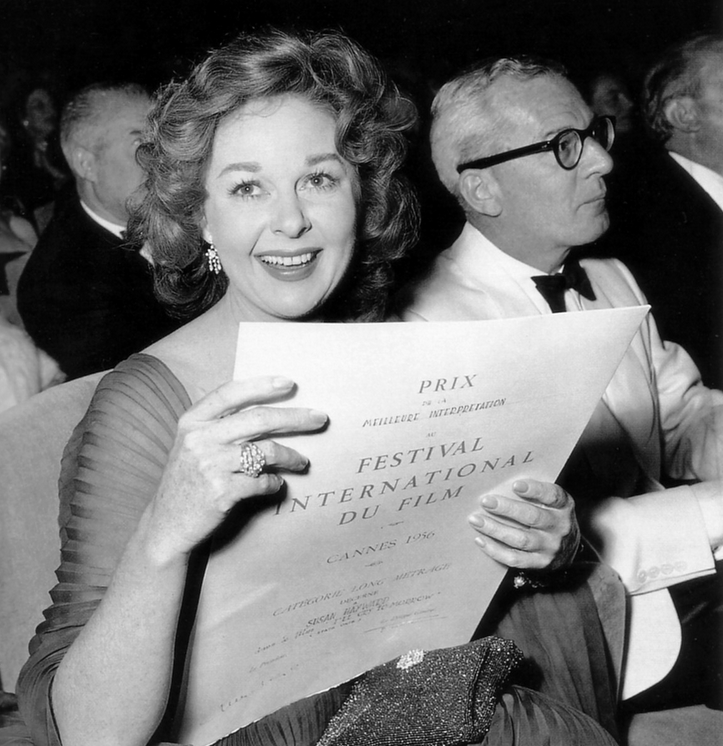
 Hayward was married to actor Jess Barker for ten years and they had two children, fraternal twin sons named Gregory and Timothy, born February 19, 1945. The marriage was described in Hollywood gossip columns as turbulent. They divorced in 1954. Hayward survived a subsequent suicide attempt after the divorce. During the contentious divorce proceedings, Hayward felt it necessary to stay in the United States and not join the Hong Kong location shooting for the film Soldier of Fortune. She shot her scenes with co-star Clark Gable indoors in Hollywood. A few brief, distant scenes of Gable and a Hayward double walking near landmarks in Hong Kong were combined with the indoor shots.

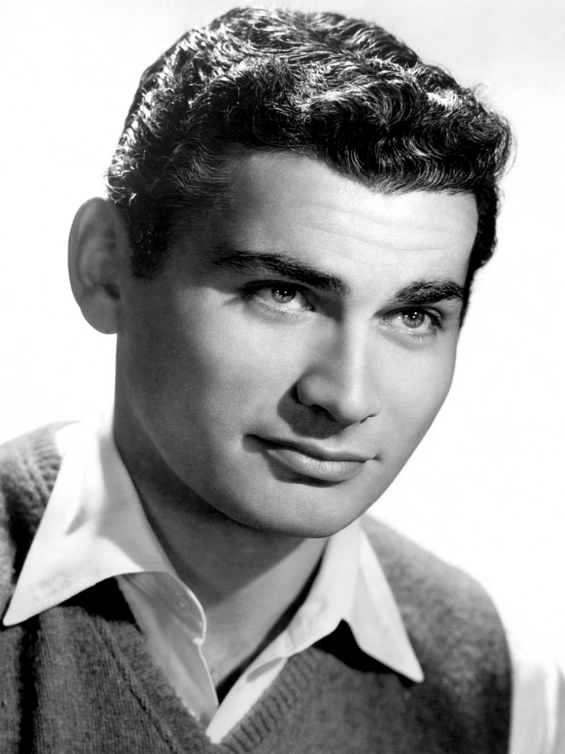

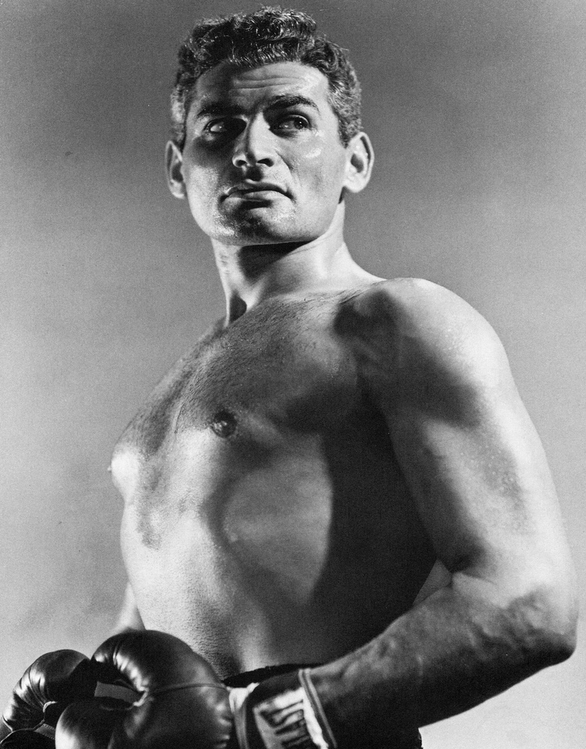

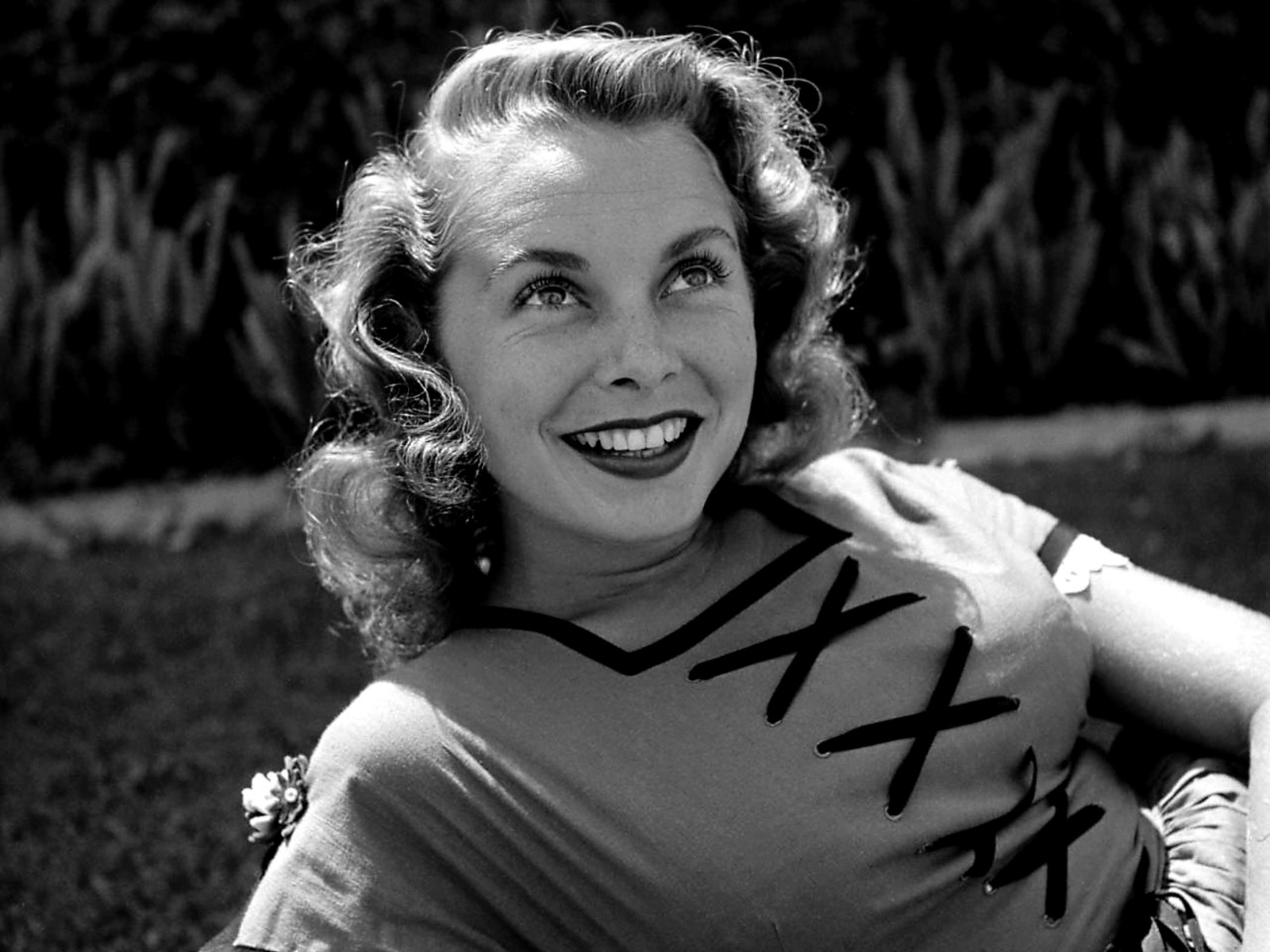
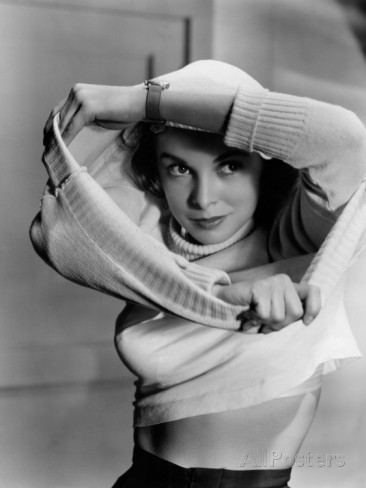
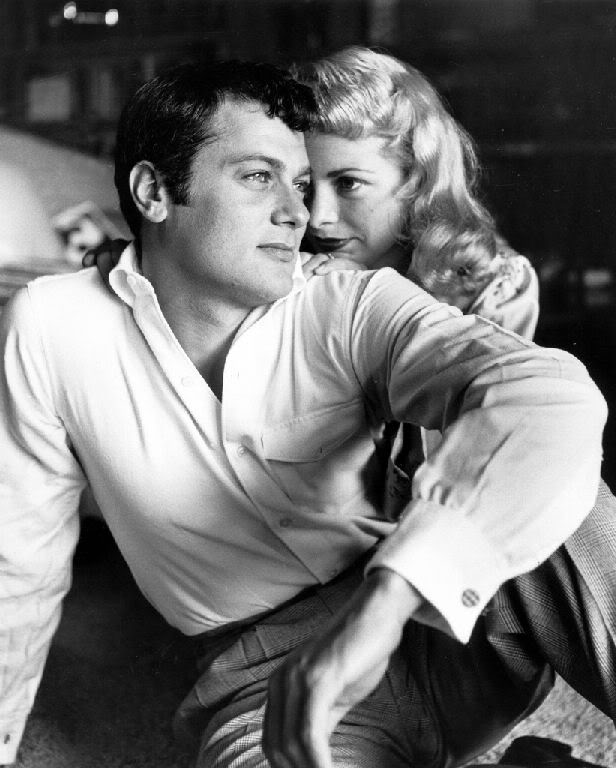


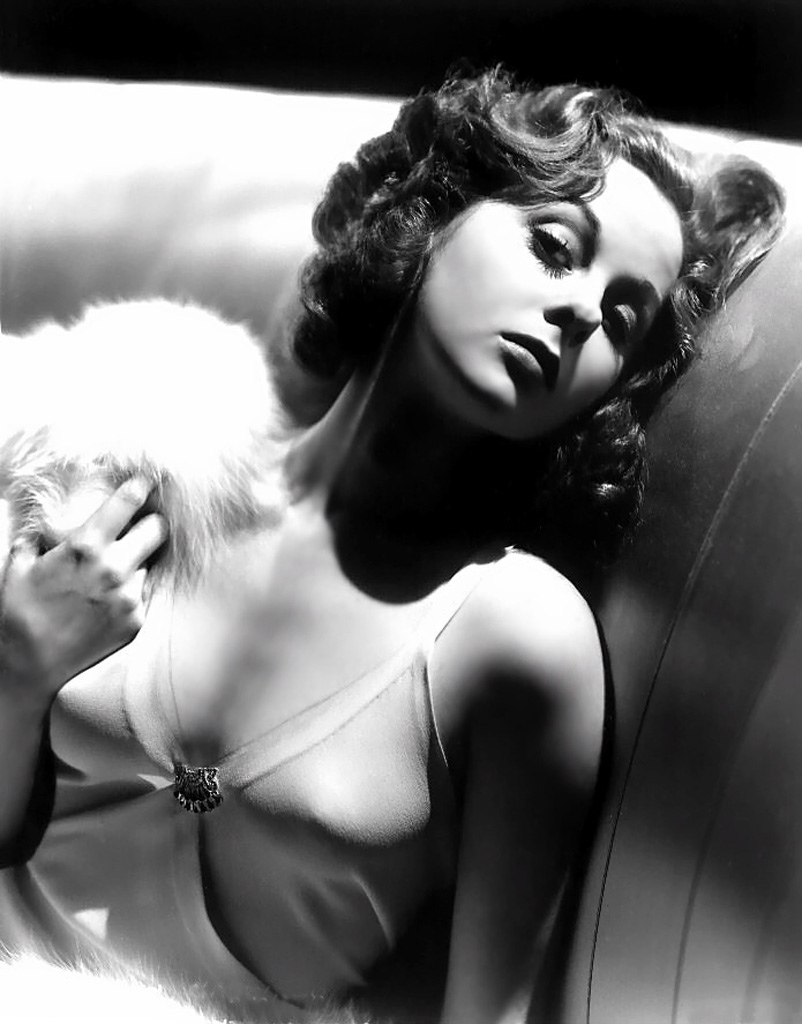
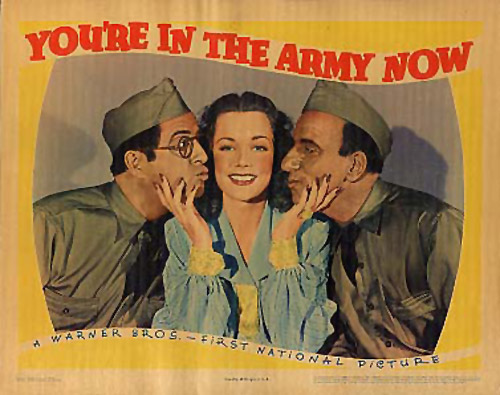


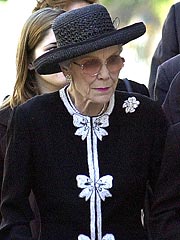


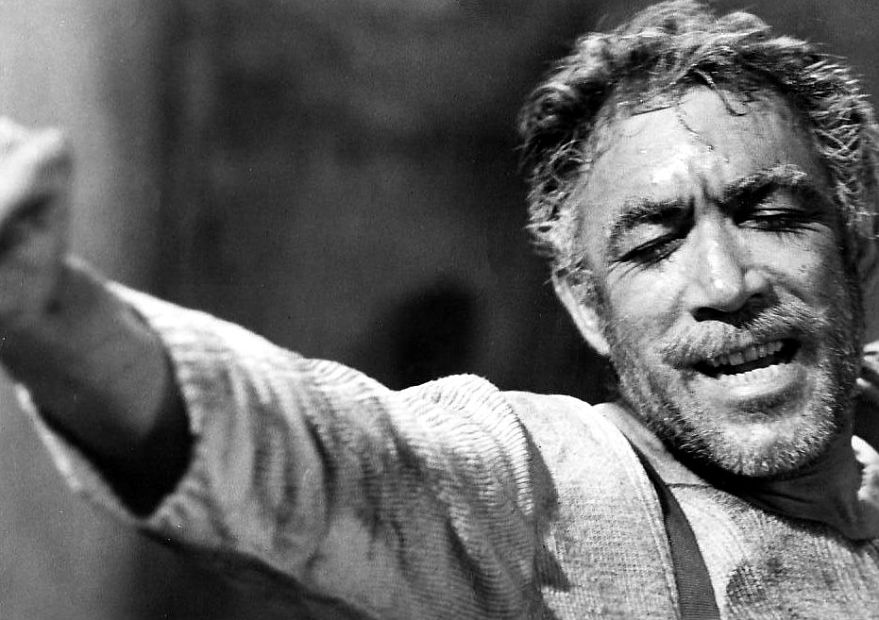


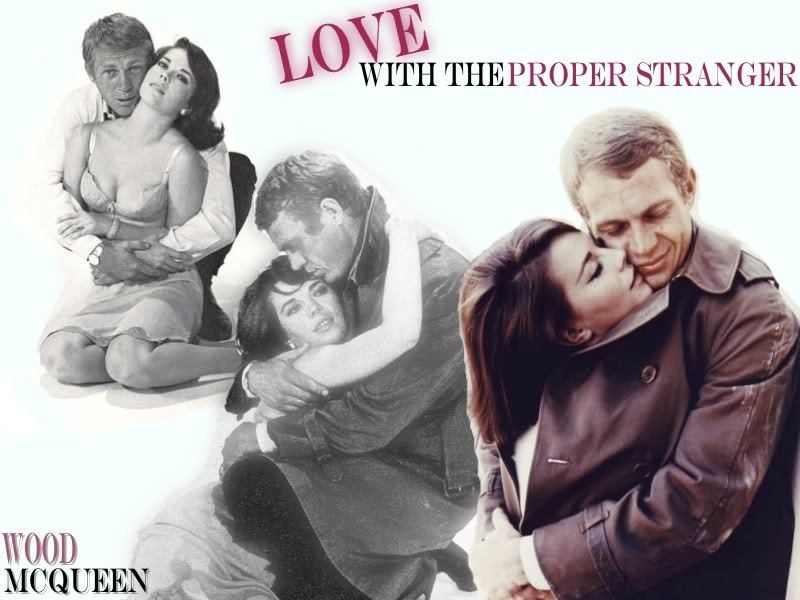


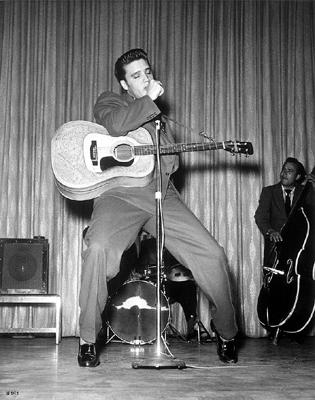


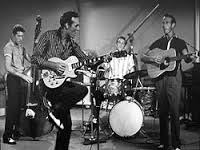


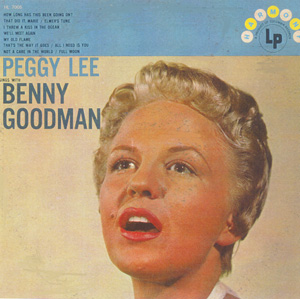


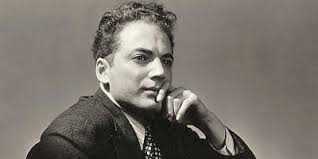
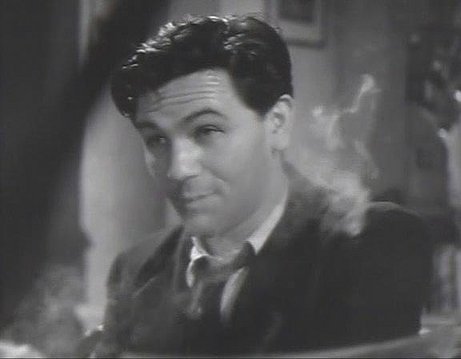


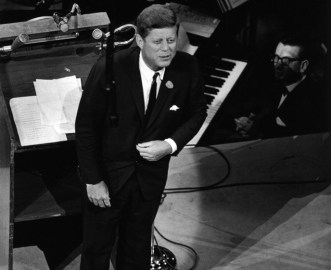


 Jess Waid