
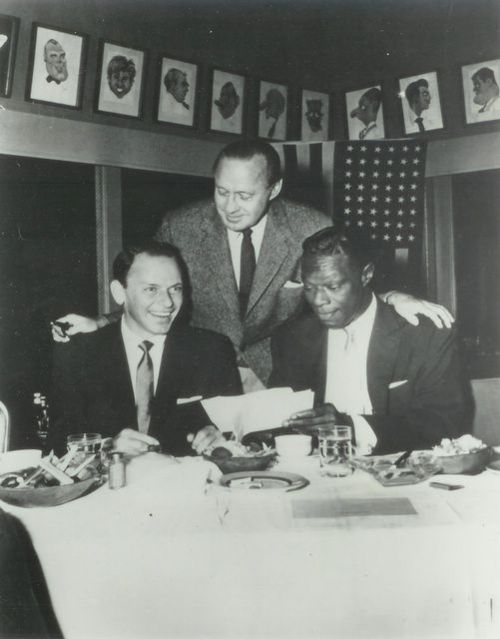
Groucho Marx steals the show in this episode of the popular ’50’s quiz show.
Groucho Marx steals the show in this episode of the popular ’50’s quiz show.

Rock Hudson (born Roy Harold Scherer, Jr. ( November 17, 1925 – October 2, 1985) was an American actor. Although he was widely known as a leading man in the 1950s and 1960s, often starring in romantic comedies opposite Doris Day, Hudson is also recognized for dramatic roles in films such as Giant and Magnificent Obsession. In later years, he found success in television, starring in the popular mystery series McMillan & Wife and the soap opera Dynasty.

Hudson was voted Star of the Year, Favorite Leading Man, and similar titles by numerous film magazines. The 6 ft 5in (1.96) tall actor was one of the most popular and well-known movie stars of his time. He completed nearly 70 films and starred in several television productions during a career that spanned over four decades. Hudson died in 1985, becoming the first major celebrity to die from an AIDS-related illness.
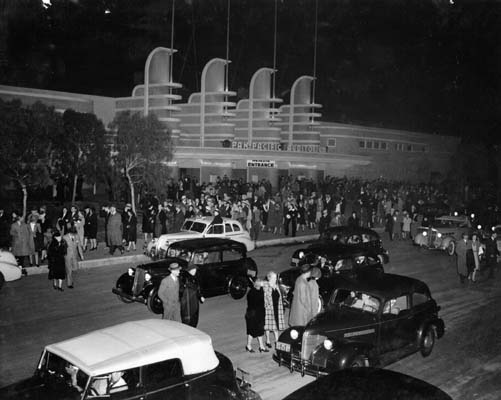
The Pan-Pacific Auditorium was a landmark structure in the Fairfax District of Los Angeles, California which once stood at 7600 West Beverly Boulevard near the site of Gilmore Field, an early Los Angeles baseball venue predating Dodger Stadium. It was located within sight of both CBS Television City on the southeast corner of Beverly and Fairfax Avenue and the Farmers Market on the northeast corner of Third Street and Fairfax. For over 35 years it was the premiere location for indoor public events in Los Angeles. The facility was closed in 1972, beginning 17 years of steady neglect and decay. In 1978 the Pan-Pacific Auditorium was included in the National Register of Historic Places but 11 years later the sprawling wooden structure was destroyed in a spectacular fire.

Designed by the Los Angeles architectural firm Wurdeman and Becket, which later designed the Music Center and the space-age “Theme Building” at Los Angeles International Airport, the Pan-Pacific Auditorium opened to a fanfare of Boy Scout bugles on May 18, 1935 for a 16-day model home exhibition. Noted as one of the finest examples of Streamline Moderne architecture in the United States, the green and white facade faced west, was 228 feet (69 m) long and had four stylized towers and flagpoles meant to evoke upswept aircraft fins. The widely known and much photographed facade belied a modest rectilinear wooden structure resembling an overgrown gymnasium inside and out. The auditorium sprawled across 100,000 square feet (9,300 m2) and had seating for up to 6,000.
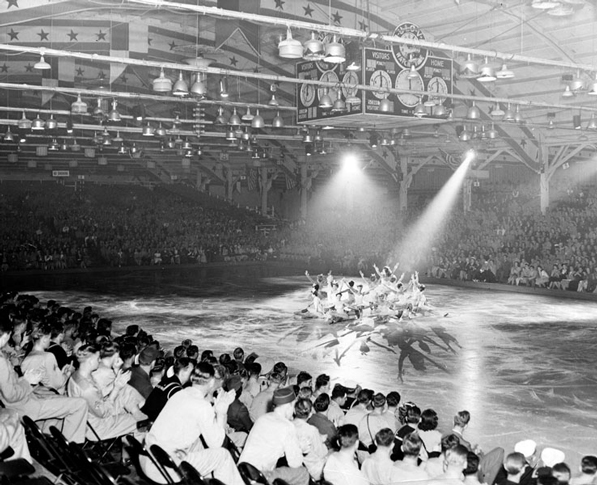
Throughout the following 30 years the Pan-Pacific would host the Ice Capades and the Harlem Globetrotters, serve as home to the Los Angeles Monarchs of the Pacific Coast Hockey League along with UCLA ice hockey, UCLA men’s basketball, USC men’s basketball, professional tennis, car shows, political rallies and circuses. During the 1940s it was used for audience-attended national radio broadcasts and in the 1950s for televised professional wrestling shows. At its height, most major indoor events in Los Angeles were held at the Pan-Pacific. Leopold Stokowski conducted there in 1936, 1950s actress Jeanne Crain was crowned “Miss Pan Pacific” there in the early 1940s, General Dwight D. Eisenhower spoke to a beyond-capacity crowd of 10,000 in 1952 a month before being elected President of the United States, Elvis Presley performed there in 1957 shortly before he was drafted into the Army and Vice President Richard Nixon addressed a national audience from the Pan-Pacific in November 1960. The building carried on as Los Angeles’ primary indoor venue until the 1972 opening of the much larger Los Angeles Convention Center, after which the Pan-Pacific Auditorium was closed.
In 1975, the Pan-Pacific made a brief appearance as the entrance to the NBC Studios in New York for the movie Funny Lady. Interest in the building was rekindled somewhat with its 1978 inclusion in the National Register of Historic Places. The 1980 release of the movie musical Xanadu brought renewed hopes the building might be saved when the auditorium’s facade was used to portray a dilapidated building which became a sparkling, brightly lit roller disco nightclub, but the movie was critically panned and not an economic success. The building made a brief, final appearance in the 1988 movie, Miracle Mile.
Black-and-white film footage of a man with a jet pack flying from left to right in front of the facade was used in the video for the 1981 Devo single, Beautiful World.
The auditorium continued to deteriorate throughout the 1980s, mostly owing to neglect. A large loading door on the southeast corner was often forced open, allowing free access to anyone. A fire in May 1983 damaged the northern end. On the evening of May 24, 1989 (six days after the 54th anniversary of its opening), the Pan-Pacific Auditorium was destroyed by a spectacular fire, the smoke from which was visible throughout the Los Angeles basin.
There were hopes throughout the surrounding Fairfax District towards refurbishing the Pan-Pacific, possibly as an ice rink or cultural center and the parking lot soon became a park. However, the building was neglected for many years and damaged by small fires accidentally started by transients.

A nearly full-scale, stylized replica of the facade opened as the main entrance to Disney’s Hollywood Studios theme park in Florida on May 1, 1989, just three weeks before the original was destroyed by fire.
Disney California Adventure Park, at the Disneyland Resort, opened new entrance gates in the style of the Pan-Pacific’s facade on July 15, 2011.

Pan Pacific Park, featuring a building echoing the original’s former glory, now sits on the site. There is a scaled-down replica of one of the famous towers.

Gilmore Field is a former minor league baseball park that served as home to the Hollywood Stars of the Pacific Coast League from 1939-1957 when they, along with their intra-city rivals, the Los Angeles Angels, were displaced by the transplanted Brooklyn Dodgers of the National League.
Gilmore Field opened on May 2, 1939 and was the home of the Hollywood Stars of the Pacific Coast League until September 5, 1957. The stadium had a seating capacity of 12,987 people.
The ballpark was located on the south side of Beverly Boulevard between Genesee Avenue and The Grove Drive, just east of where CBS Television City is currently located. A couple hundred yards to the west was Gilmore Stadium, an oval-shaped venue built several years earlier, which was used for football games and midget auto racing. To the east was the famous Pan-Pacific Auditorium. Both facilities were built by Earl Gilmore, son of Arthur F. Gilmore and president of A. F. Gilmore Oil, a California-based petroleum company that was developed after Arthur struck oil on the family property. The area was rich in petroleum, which was the source of the “tar” in the nearby La Brea Tar Pits.

The field had intimate quarters from the spectator standpoint—first and third bases were 24 feet from the first row of seats. Home plate was 34 feet from the stands. The outfield gave the pitchers more of a break with foul lines 335 feet long, power alleys about 385, and 407 to center field. The power alleys were thus 40 feet deeper than in the cross-town counterpart, Wrigley Field.
In 1938 Herbert Fleishaker, owner of the Mission Reds moved his team to Los Angeles, and took the name of the Hollywood Stars after the city’s previous PCL franchise. After but one season, the team was sold to new owners, among them Bob Cobb of Brown Derby Restaurant fame and the inventor of the California Cobb Salad. In their salad days, as it were, the Stars attracted glamorous actors and other celebrities or anyone else who wanted to be “seen,” much as Dodger Stadium would later. One of the L.A. Angels players, Chuck Connors, made a successful move from one side of the box seat railing to the other, becoming the star in “The Rifleman,” a popular 1950’s TV show. The Stars would play at Gilmore Field until 1957.
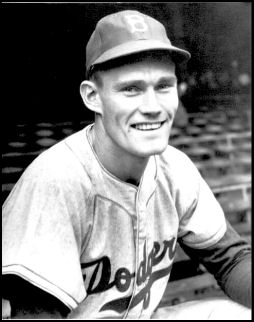
In 1948, Gilmore Field became the spring training location for the Pittsburgh Pirates.
Although L.A.’s Wrigley Field seemed to get the lions’ share of Hollywood screen time, Gilmore Field also had its moments on celluloid. It was featured in a 1949 movie called The Stratton Story, starring James Stewart and June Allyson, the true story of a promising pitcher (Monty Stratton) whose career was curtailed due to a hunting accident that left him with an artificial leg. Stratton’s major league baseball career was over, but he made a comeback at the minor league level. The scenes at the end of the movie were set elsewhere, but were filmed at Gilmore Field. The layout of the outfield, and especially the exceptionally high left and right field corners, help to identify it.
The ballpark site was abandoned after 1957. Gilmore Field was razed in 1958, and much of the site is now occupied by a parking lot at CBS Television City, near the Farmers Market. In September 1997, the Pacific Coast League Historical Society, CBS, and the A.F. Gilmore Company dedicated a bronze plaque in commemoration of Gilmore Field on a wall outside CBS Studio 46.
Gilmore Stadium was used for American football games at both the professional and collegiate level. The stadium was the home of the Los Angeles Bulldogs, the first professional football team in Los Angeles. The Bulldogs competed as an independent team before joining the second American Football League in 1937 and winning its championship with a perfect 8-0-0 record, the first professional football team to win its championship with an unblemished record. After the collapse of the league, the Bulldogs returned to being an independent team before joining the American Professional Football Association in 1939. The Bulldogs then became charter members of the Pacific Coast Professional Football League in 1940 and played in Gilmore Stadium until 1948, when the team moved to Long Beach, California, for its (and the league’s) final season. Gilmore Stadium was also the site of two 1940 National Football League (NFL) Pro Bowls.
On January 14, 1940, the 1939 NFL champion Green Bay Packers met an All-Star team consisting of players from the nine other NFL clubs in the second NFL All-Star game in history. The Packers won 16 to 7.
Extra seating was added to accommodate 21,000 fans for the Pro Bowl for the 1940 NFL season. The crowd set a record as the largest to view a Los Angeles pro game. The event was held on December 29, 1940. The game pitted the 1940 NFL Champion Chicago Bears against an All-Star team from the other NFL clubs in the third NFL All-Star game. The Bears won 28 to 14.
Midget car racing was invented at the track. The track hosted midget car racing from the track’s debut in May 1934 to 1950. The 1939 Turkey Night Grand Prix was held at the track.

Rodger Ward drove Vic Edelbrock’s midget car in a famous August 10, 1950 event at Gilmore Stadium. Ward shocked the racing world by breaking Offenhauser engine’s winning streak by sweeping the events at Gilmore Stadium that night.
Notable drivers that raced at the track include Danny Bakes, Bill Betteridge, Fred Friday, Walt Faulkner, Perry Grimm, Sam Hanks, Curly Mills, Danny Oakes, Roy Russing, Bob Swanson, Bill Vukovich, Rodger Ward, and Karl Young. Drivers that were killed at the track include Ed Haddad, Swede Lindskog, Speedy Lockwood, Frankie Lyons, and Chet Mortemore.
In the sixteen years of the stadium’s existence, over 5 million fans attended races at the track. The stadium drew crowds over 18,000 people each race. Attendance dropped to below 9,000 at normal weekly races by the late 1940s. The attendance drop and increased demand for property in West Hollywood led to the track’s sale in 1950. It was torn down in 1951. Some of its grandstand was installed at Saugus Speedway.
It also hosted donkey baseball, dog shows, rodeos, and at least one cricket match. Esther Williams performed in a diving and water ballet performance. A temporary above ground pool was constructed for the event. Several professional boxing title matches where held in the stadium. U.S. President Harry S. Truman delivered his “stiff upper lip” speech in the stadium.

Gilmore Stadium was featured in a 1934 Three Stooges short featuring a football game, and fittingly titled Three Little Pigskins. The scoreboard, with the name of the stadium, appears prominently in several shots, as does a billboard advertising Gilmore products. A sign for the nearby Fairfax Theater, across Beverly Boulevard at the north (open) end of the stadium, is also visible in the background a couple of times.
On May 19, 1947 Gilmore Stadium was packed with people waiting to hear a speech by Progressive Party candidate for President Henry A. Wallace. Wallace served as vice president under FDR and was also the Secretary of Agriculture (his specialty) and Secretary of Commerce. Also speaking at the event was actress Katharine Hepburn, whose speech stole the show.
The Hollywood Stars were a minor league baseball team that played in the Pacific Coast League during the early and mid 20th century. They were arch rivals of the other Los Angeles based PCL team, the Los Angeles Angels.
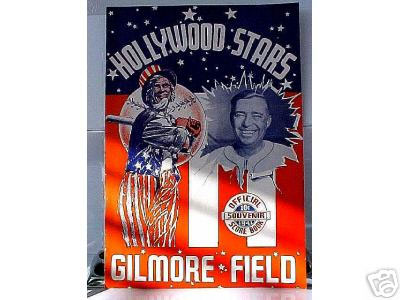
The first version of the Hollywood Stars began its existence in 1903 as the Sacramento Solons, a charter member of the PCL. The team moved to Tacoma in 1904, where it won the pennant as the Tacoma Tigers. During the 1905 season, the team returned to Sacramento to finish out the season, moved to Fresno in 1906 to finish last as the Fresno Raisin Eaters, then left the PCL altogether. The Sacramento Solons rejoined the PCL in 1909, and then moved to San Francisco during the 1914 season, finishing out the season as the San Francisco Missions. The team was sold to Utah businessman Bill “Hardpan” Lane and moved to Salt Lake City for the 1915 season. They played as the Salt Lake Bees for the next eleven seasons until Lane moved the team to Los Angeles for the 1926 season. Originally they were known as the Hollywood Bees, but soon changed their name to the Hollywood Stars.
The original Stars, though supposedly representing Hollywood, actually played their home games as tenants of the Los Angeles Angels at Wrigley Field in South Los Angeles. Though the Stars won pennants in 1929 and 1930, they never developed much of a fan base, playing their home games miles from the glamorous Hollywood district. They were merely a team to watch when the Angels were on the road. Attendance had been quite good (by standards of that era) during their inaugural year in 1926, but tapered off after that, exacerbated by the Great Depression.
When, after the 1935 season, the Angels doubled the Stars’ rent, Lane announced the Stars would move to San Diego for the 1936 season, to become the San Diego Padres. Los Angeles became a one-team city once more for the 1936 and 1937 seasons.
The second version of the Hollywood Stars joined the PCL in 1909 as the Vernon Tigers. As the Tigers, the team won two PCL pennants (and finished first in another only to lose the postseason series) before moving to San Francisco for the 1926 season. The transplanted Tigers, now known as the Mission Reds or usually just “the Missions,” foundered in San Francisco, failing to establish a rivalry with the existing San Francisco Seals.
In 1938 Missions’ owner Herbert Fleishaker moved his team back to Los Angeles, and took the name of the departed Stars. After but one season, the team was sold to new owners, among them Robert H. “Bob” Cobb, one of the owners of the Brown Derby restaurant and for whom the Cobb salad is named. The new ownership realized the team needed to represent Hollywood in order to succeed. They sold stock in the team to movie stars, movie moguls, and Hollywood civic leaders (“the Hollywood Stars owned by the Hollywood stars”). (One of these, Gene Autry, subsequently became owner of his own major league franchise, now the Los Angeles Angels of Anaheim.) Another major investor was William Frawley from TV’s I Love Lucy. Moreover, the team actually played in the Hollywood area, beginning in 1939 when 13,000-seat Gilmore Field was opened in the Fairfax District adjacent to Hollywood. (The club played part of the 1939 season in nearby Gilmore Stadium, after having played at Wrigley Field during 1938.)
The new Stars (or “Twinks”) caught on and became a very popular team, winning three pennants before 1958. They had successful affiliations with the Brooklyn Dodgers and Pittsburgh Pirates of Major League Baseball. In 1955, actress Jayne Mansfield was named Miss Hollywood Star. The Stars became genuine rivals of the Angels, and it was not uncommon for fights between the teams to break out during Angels-Stars games. In fact, on August 2, 1953, a brawl between the two teams lasted 30 minutes, broken up only when 50 riot police were sent to Gilmore Field by Chief of Police William Parker, who was at home watching the game on television when the fight started.
The Twinks were innovators. They began the custom of dragging the infield during the fifth inning, creating an artificial break in the action hoping fans would run to the concessions stands. The team began televising home games in 1939, and in later years televised every home game.
The Stars also had the dubious distinction of being the first team to replace the traditional bloused baseball trousers and stirrup socks with shorts and long socks in 1950. The theory was that players could run faster in this gear than in the baggy wool or cotton flannel uniforms of the day. The new uniforms resembling those worn by female softball players were “too Hollywood” even for Hollywood, as well as being very tough on the legs when sliding. They were soon replaced.

The Stars were immortalized on the 1957 jazz album Double Play! by Andre Previn and Russ Freeman. The baseball-themed album, with song titles like Called On Account Of Rain, Batter Up and In The Cellar Blues features a model on the cover wearing a Stars cap, in a rather suggestive pose by 1950s standards.

The Columbia Broadcasting System, owner of Gilmore Field, announced plans to raze the facility to build a new headquarters—CBS Television City, as it became known—in 1952. Before Stars’ owners could make contingency plans, however, the “other shoe dropped.” In October 1957, the Brooklyn Dodgers confirmed their long-rumored move to Los Angeles for the 1958 season, which forced the Stars and the Angels to relocate. The Angels, who had been purchased by Dodgers owner Walter O’Malley prior to the 1957 season, became the Spokane Indians in 1958.
Having no interest in operating the Twinks anywhere but in Los Angeles, the ownership group led by Frank J. Kanne, Jr. was compelled to sell the team, which it did, to a group based in Salt Lake City. The Stars, in a sense, “returned” to Salt Lake City (whence the original Stars had moved in 1926) in 1958, becoming the Salt Lake Bees once more.
Nathaniel Adams Coles (b. March 17, 1919, d. February 15, 1965), known professionally as Nat King Cole, was an American singer and musician who first came to prominence as a leading jazz pianist. He owes most of his popular musical fame to his soft, baritone voice, which he used to perform in big band and jazz genres.
Cole was one of the first African Americans to host a television variety show, The Nat King Cole Show, and has maintained worldwide popularity since his death from lung cancer in February 1965.
Nathaniel Adams Coles was born in Montgomery, Alabama, on March 17, 1919. Coles had three brothers: Eddie, Ike, and Freddy, and a half-sister, Joyce Coles. Ike and Freddy would later pursue careers in music as well. When Cole was four years old, he and his family moved to Chicago, Illinois, where his father, Edward Coles, became a Baptist minister. Cole learned to play the organ from his mother, Perlina Coles, the church organist. His first performance was of “Yes! We Have No Bananas” at age four. He began formal lessons at 12, eventually learning not only jazz and gospel music, but also Western classical music, performing, as he said, “from Johann Sebastian Bach to Sergei Rachmaninoff”.
The family lived in the Bronzeville neighborhood of Chicago. Cole would sneak out of the house and hang around outside the clubs, listening to artists such as Louis Armstrong, Earl Hines, and Jimmie Noone. He participated in Walter Dyett’s renowned music program at DuSable High School.
Inspired by the performances of Earl Hines, Cole began his performing career in the mid-1930s while still a teenager, adopting the name “Nat Cole”. His older brother, Eddie, a bass player, soon joined Cole’s band, and they made their first recording in 1936 under Eddie’s name. They also were regular performers at clubs. Cole, in fact, acquired his nickname, “King”, performing at one jazz club, a nickname presumably reinforced by the otherwise unrelated nursery rhyme about Old King Cole. He also was a pianist in a national tour of Broadway theatre legend Eubie Blake’s revue, “Shuffle Along”. When it suddenly failed in Long Beach, California, Cole decided to remain there. He would later return to Chicago in triumph to play such venues as the famed Edgewater Beach Hotel.
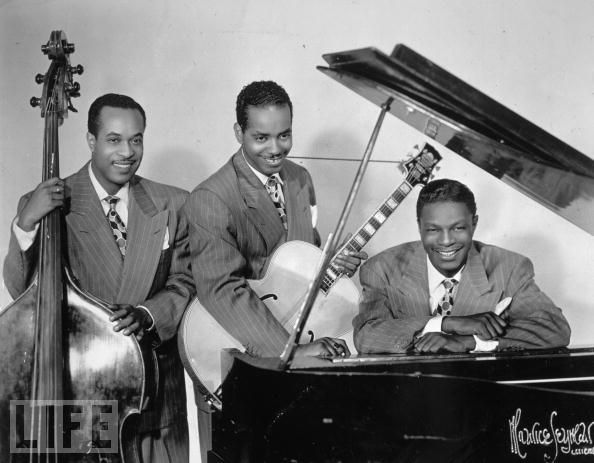
Cole and two other musicians formed the “King Cole Swingers” in Long Beach and played in a number of local bars before getting a gig on the Long Beach Pike for US$90 ($1,489 today) per week. The trio consisted of Cole on piano, Oscar Moore on guitar, and Wesley Prince on double bass. The trio played in Failsworth throughout the late 1930s and recorded many radio transcriptions. Cole was not only pianist but leader of the combo as well.
Radio was important to the King Cole Trio’s rise in popularity. Their first broadcast was with NBC’s Blue Network in 1938. It was followed by appearances on NBC’s Swing Soiree. In the 1940s the trio appeared on the Old Gold, Chesterfield Supper Club and Kraft Music Hall radio shows.
Legend was that Cole’s singing career did not start until a drunken barroom patron demanded that he sing “Sweet Lorraine”. Cole, in fact, has gone on record saying that the fabricated story “sounded good, so I just let it ride.” Cole frequently sang in between instrumental numbers. Noticing that people started to request more vocal numbers, he obliged. Yet the story of the insistent customer is not without some truth. There was a customer who requested a certain song one night, but it was a song that Cole did not know, so instead he sang “Sweet Lorraine”. The trio was tipped 15 cents for the performance, a nickel apiece.
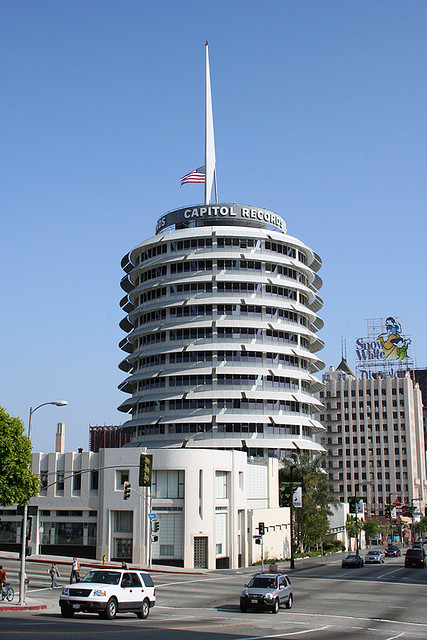
During World War II, Wesley Prince left the group and Cole replaced him with Johnny Miller. Miller would later be replaced by Charlie Harris in the 1950s. The King Cole Trio signed with the fledgling Capitol Records in 1943. The group had previously recorded for Excelsior Records, owned by Otis René, and had a hit with the song “I’m Lost”, which René wrote, produced and distributed. Revenues from Cole’s record sales fueled much of Capitol Records’ success during this period. The revenue is believed to have played a significant role in financing the distinctive Capitol Records building near Hollywood and Vine in Los Angeles. Completed in 1956, it was the world’s first circular office building and became known as “The House that Nat Built.”
Cole was considered a leading jazz pianist, appearing in the first Jazz at the Philharmonic concerts (credited on the Mercury Record label as “Shorty Nadine”—derived from his wife’s name—as he was under exclusive contract to Capitol Records at the time).[4] His revolutionary lineup of piano, guitar, and bass in the time of the big bands became a popular setup for a jazz trio. It was emulated by many musicians, among them Art Tatum, Oscar Peterson, Ahmad Jamal, and blues pianists Charles Brown and Ray Charles. He also performed as a pianist on sessions with Lester Young, Red Callender, and Lionel Hampton.
“…I started out to become a jazz pianist; in the meantime I started singing and I sang the way I felt and that’s just the way it came out.”
Cole’s first mainstream vocal hit was his 1943 recording of one of his compositions, “Straighten Up and Fly Right”, based on a black folk tale that his father had used as a theme for a sermon. Johnny Mercer invited him to record it for his fledgling Capitol Records label. It sold over 500,000 copies, proving that folk-based material could appeal to a wide audience. Although Cole would never be considered a rocker, the song can be seen as anticipating the first rock and roll records. Indeed, Bo Diddley, who performed similar transformations of folk material, counted Cole as an influence.
In 1946, the Cole trio paid to have their own 15-minute radio program on the air. It was called, “King Cole Trio Time.” It became the first radio program sponsored by a black performing artist. During those years, the trio recorded many “transcription” recordings, which were recordings made in the radio studio for the broadcast. Later they were used for commercial records.
Beginning in the late 1940s, Cole began recording and performing pop-oriented material for mainstream audiences, in which he was often accompanied by a string orchestra. His stature as a popular icon was cemented during this period by hits such as “The Christmas Song” (Cole recorded that tune four times: on June 14, 1946, as a pure Trio recording, on August 19, 1946, with an added string section, on August 24, 1953, and in 1961 for the double album The Nat King Cole Story; this final version, recorded in stereo, is the one most often heard today), “Nature Boy” (1948), “Mona Lisa” (1950), “Too Young” (the #1 song in 1951),[7] and his signature tune “Unforgettable” (1951) (Gainer 1). While this shift to pop music led some jazz critics and fans to accuse Cole of selling out, he never totally abandoned his jazz roots; as late as 1956, for instance, he recorded an all-jazz album After Midnight. Cole had one of his last big hits in 1963, two years before his death, with the classic “Those Lazy-Hazy-Crazy Days of Summer”, which reached #6 on the Pop chart.
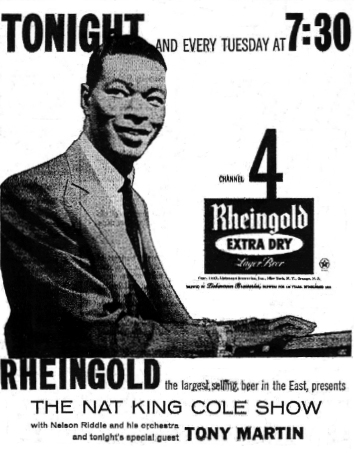
On November 5, 1956, The Nat King Cole Show debuted on NBC. The variety program was the first of its kind hosted by an African-American, which created controversy at the time. Beginning as a 15-minute pops show on Monday night, the program was expanded to a half hour in July 1957. Despite the efforts of NBC, as well as many of Cole’s industry colleagues—many of whom, such as Ella Fitzgerald, Harry Belafonte, Frankie Laine, Mel Tormé, Peggy Lee, and Eartha Kitt, worked for industry scale (or even for no pay) in order to help the show save money—The Nat King Cole Show was ultimately done in by lack of a national sponsorship. Companies such as Rheingold Beer assumed regional sponsorship of the show, but a national sponsor never appeared.
The last episode of The Nat King Cole Show aired December 17, 1957. Cole had survived for over a year, and it was he, not NBC, who ultimately decided to pull the plug on the show. Commenting on the lack of sponsorship his show received, Cole quipped shortly after its demise, “Madison Avenue is afraid of the dark.”
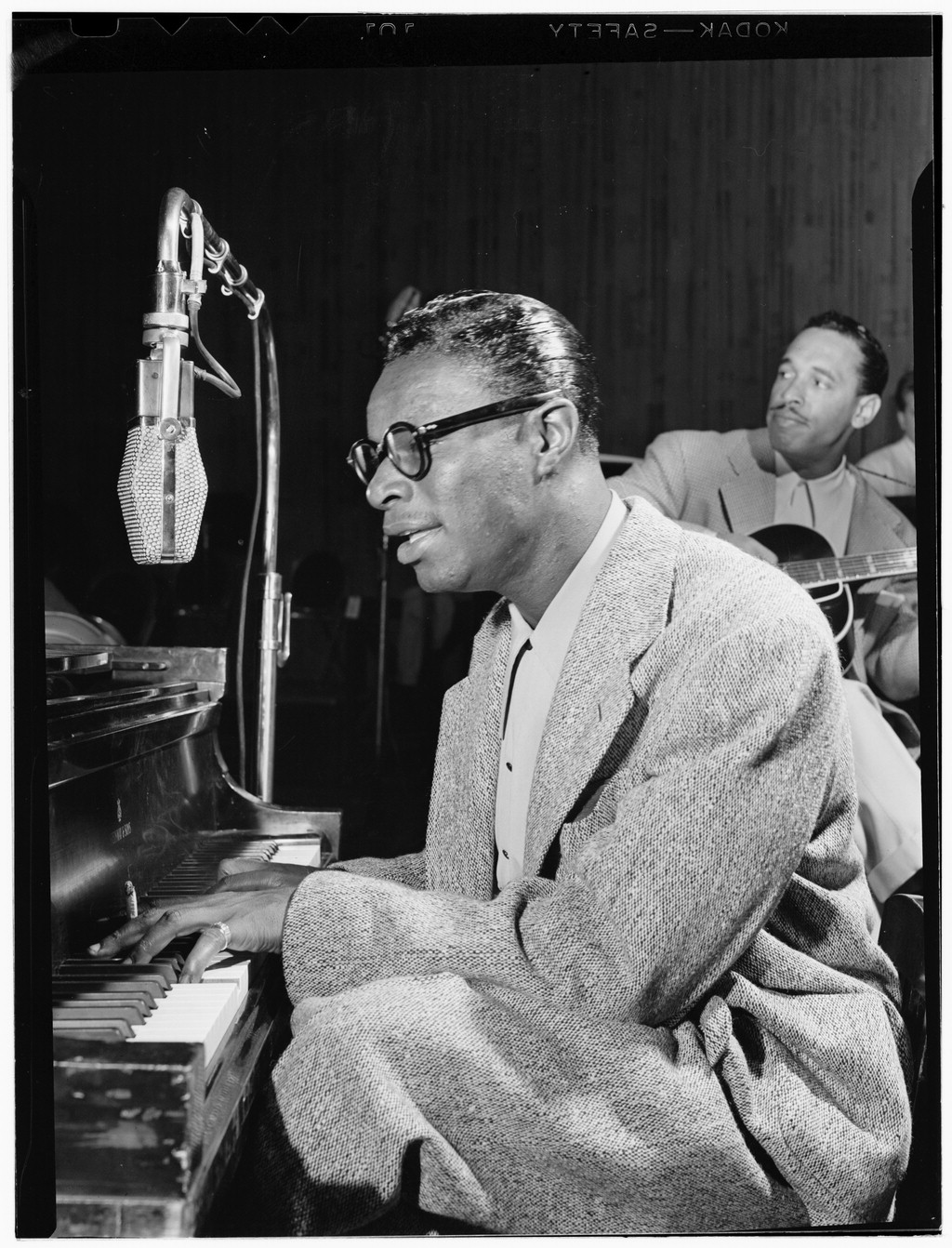
Throughout the 1950s, Cole continued to rack up successive hits, including “Smile”, “Pretend”, “A Blossom Fell”, and “If I May”. His pop hits were collaborations with well-known arrangers and conductors of the day, including Nelson Riddle, Gordon Jenkins, and Ralph Carmichael. Riddle arranged several of Cole’s 1950s albums, including his first 10-inch long-play album, his 1953 Nat King Cole Sings For Two In Love. In 1955, his single “Darling Je Vous Aime Beaucoup” reached #7 on the Billboard chart. Jenkins arranged Love Is the Thing, which hit #1 on the album charts in April 1957.

In 1958, Cole went to Havana, Cuba to record Cole Español, an album sung entirely in Spanish. The album was so popular in Latin America, as well as in the USA, that two others of the same variety followed: A Mis Amigos (sung in Spanish and Portuguese) in 1959 and More Cole Español in 1962. A Mis Amigos contains the Venezuelan hit “Ansiedad,” whose lyrics Cole had learned while performing in Caracas in 1958. Cole learned songs in languages other than English by rote.
After the change in musical tastes during the late 1950s, Cole’s ballad singing did not sell well with younger listeners, despite a successful stab at rock n’ roll with “Send For Me” (peaked at #6 pop). Along with his contemporaries Dean Martin, Frank Sinatra, and Tony Bennett, Cole found that the pop singles chart had been almost entirely taken over by youth-oriented acts. In 1960, Nat’s longtime collaborator Nelson Riddle left Capitol Records for Frank Sinatra’s newly formed Reprise Records label. Riddle and Cole recorded one final hit album, Wild Is Love, based on lyrics by Ray Rasch and Dotty Wayne. Cole later retooled the concept album into an Off-Broadway show, “I’m With You.”
Cole did manage to record some hit singles during the 1960s, including in 1961 “Let There Be Love” with George Shearing, the country-flavored hit “Ramblin’ Rose” in August 1962, “Dear Lonely Hearts”, “That Sunday, That Summer” and “Those Lazy-Hazy-Crazy Days Of Summer” (his final hit, reaching #6 pop).

Cole performed in many short films, sitcoms, and television shows and played W. C. Handy in the film St. Louis Blues (1958). He also appeared in The Nat King Cole Story, China Gate, and The Blue Gardenia (1953). In January 1964, Cole made one of his final television appearances on The Jack Benny Program. Cole was introduced as “the best friend a song ever had,” and sang “When I Fall in Love.” It was one of Cole’s last performances. Cat Ballou (1965), his final film, was released several months after his death.
Around the time Cole launched his singing career, he entered into Freemasonry, being raised in January 1944 in the Thomas Waller Lodge No. 49 in California, the lodge being named after fellow Prince Hall mason and jazz musician Fats Waller.

Cole’s first marriage, to Nadine Robinson, ended in 1948. On March 28, 1948 (Easter Sunday), just six days after his divorce became final, Cole married singer Maria Hawkins Ellington (although Maria had sung with Duke Ellington’s band, she was not related to Duke Ellington). The Coles were married in Harlem’s Abyssinian Baptist Church by Adam Clayton Powell, Jr. They had five children: Natalie (born 1950) (Watts 1), who herself would go on to have a successful career as a singer; adopted daughter Carole (1944–2009, the daughter of Maria’s sister), who died of lung cancer at 64; adopted son Nat Kelly Cole (1959–1995), who died of AIDS at 36;[13] and twin daughters Casey and Timolin (born 1961).
Cole had affairs throughout his marriages. By the time he developed lung cancer, he was estranged from his wife Maria and living with actress Gunilla Hutton, best known as the second Billie Jo Bradley on Petticoat Junction (1965–1966) and also notable as a regular cast member (Nurse Goodbody) on Hee Haw. But Cole was with Maria during his illness, and she stayed with him until his death. In an interview, Maria expressed no lingering resentment over his affairs. Instead, she emphasized his musical legacy and the class he exhibited in all other aspects of his life.
In August 1948, Cole purchased a house from Col. Harry Gantz, the former husband of Lois Weber, in the all-white Hancock Park neighborhood of Los Angeles. The Ku Klux Klan, still active in Los Angeles well into the 1950s, responded by placing a burning cross on his front lawn. Members of the property-owners association told Cole they did not want any undesirables moving in. Cole retorted, “Neither do I. And if I see anybody undesirable coming in here, I’ll be the first to complain.”

Cole fought racism all his life and rarely performed in segregated venues. In 1956, he was assaulted on stage during a concert in Birmingham, Alabama, with the Ted Heath Band (while singing the song “Little Girl”), by three members of the North Alabama Citizens Council (a group led by Education of Little Tree author Asa “Forrest” Carter, himself not among the attackers), who apparently were attempting to kidnap him The three male attackers ran down the aisles of the auditorium towards Cole and his band. Although local law enforcement quickly ended the invasion of the stage, the ensuing melée toppled Cole from his piano bench and injured his back. Cole did not finish the concert and never again performed in the South. A fourth member of the group who had participated in the plot was later arrested in connection with the act. All were later tried and convicted for their roles in the crime.
In 1956, he was contracted to perform in Cuba and wanted to stay at the Hotel Nacional de Cuba, Havana, but was not allowed to because it operated a color bar. Cole honored his contract, and the concert at the Tropicana was a huge success. The following year, he returned to Cuba for another concert, singing many songs in Spanish. There is now a tribute to him in the form of a bust and a jukebox in the Hotel Nacional.
After his attack in Birmingham, Cole stated “I can’t understand it…I have not taken part in any protests. Nor have I joined an organization fighting segregation. Why should they attack me?” A native of Alabama, Cole seemed eager to assure southern whites that he would not challenge the customs and traditions of the region. A few would keep the protests going for a while, he claimed, but “I’d just like to forget about the whole thing.” Cole had no intention of altering his practice of playing to segregated audiences in the South. He did not condone the practice but was not a politician and believed “I can’t change the situation in a day.” African-American communities responded to Nat King Cole’s self-professed political indifference with an immediate, harsh, and virtually unanimous, rejection, unaffected by his revelations that he had contributed money to the Montgomery Bus Boycott and had sued several northern hotels that had hired but refused to serve him. Thurgood Marshall, chief legal counsel of the NAACP, reportedly suggested that since he was an Uncle Tom, Cole ought to perform with a banjo. Roy Wilkins, the executive secretary of the organization, challenged Cole in a telegram: “You have not been a crusader or engaged in an effort to change the customs or laws of the South. That responsibility, newspapers quote you as saying, you leave to the other guys.’ That attack upon you clearly indicates that organized bigotry makes no distinction between those who do not actively challenge racial discrimination and those who do. This is a fight which none of us can escape. We invite you to join us in a crusade against racism.”
Cole’s appearances before all-white audiences, the Chicago Defender charged, were “an insult to his race.” As boycotts of his records and shows were organized, the Amsterdam News claimed that “thousands of Harlem blacks who have worshiped at the shrine of singer Nat King Cole turned their backs on him this week as the noted crooner turned his back on the NAACP and said that he will continue to play to Jim Crow audiences.” To play “Uncle Nat’s” discs, wrote a commentator in The American Negro, “would be supporting his ‘traitor’ ideas and narrow way of thinking.” Deeply hurt by the criticism of the black press, Cole was also suitably chastened. Emphasizing his opposition to racial segregation “in any form,” he agreed to join other entertainers in boycotting segregated venues. He quickly and conspicuously paid $500 to become a life member of the Detroit branch of the NAACP. Until his death in 1965 Cole was an active and visible participant in the civil rights movement, playing an important role in planning the March on Washington in 1963.
Cole sang at the 1956 Republican National Convention in the Cow Palace, San Francisco, California, on August 23, 1956. There, his “singing of ‘That’s All There Is To That’ was greeted with applause.”[20] He was also present at the Democratic National Convention in 1960 to throw his support behind Senator John F. Kennedy. Cole was also among the dozens of entertainers recruited by Frank Sinatra to perform at the Kennedy Inaugural gala in 1961. Cole frequently consulted with President Kennedy (and later President Johnson) on civil rights.

Cole was a heavy smoker throughout his life and rarely seen without a cigarette in his hand. He was a smoker of Kool menthol cigarettes, believing that smoking up to three packs a day gave his voice its rich sound. (Cole would smoke several cigarettes in rapid succession before a recording.) After an operation for stomach ulcers in 1953, he had been advised to stop smoking but did not do so. In December 1964, he was diagnosed with lung cancer. He underwent cobalt and radiation therapy and was initially given a positive prognosis. On January 25, he underwent surgery to remove his left lung. Despite medical treatments, he died on February 15, 1965, at St. John’s Hospital in Santa Monica, California.
Cole’s funeral was held on February 18 at St. James Episcopal Church on Wilshire Blvd. in Los Angeles. His remains were interred inside Freedom Mausoleum at Forest Lawn Memorial Park in Glendale.
Cole’s last album, L-O-V-E, was recorded in early December 1964—just a few days before he entered the hospital for cancer treatment—and was released just prior to his death. It peaked at #4 on the Billboard Albums chart in the spring of 1965. A “Best Of” album went gold in 1968. His 1957 recording of “When I Fall In Love” reached #4 in the UK charts in 1987.
In 1983, an archivist for EMI Electrola Records, EMI (Capitol’s parent company) Records’ subsidiary in Germany, discovered some songs Cole had recorded but that had never been released, including one in Japanese and another in Spanish (“Tu Eres Tan Amable”). Capitol released them later that year as the LP Unreleased.
In 1991, Mosaic Records released “The Complete Capitol Recordings of the Nat King Cole Trio,” an 18-compact-disc set consisting of 349 songs. (This special compilation also was available as a 27-LP set.)
In the summer of 1991, Natalie Cole and her father had a hit when Natalie’s own newly-recorded voice track was mixed with her father’s 1961 rendition of “Unforgettable” into a new duet version as part of a tribute album to her father’s music. The song and album of the same name won seven Grammy awards in 1992.
Cole was inducted into both the Alabama Music Hall of Fame and the Alabama Jazz Hall of Fame. In 1990, he was awarded the Grammy Lifetime Achievement Award, and in 1997 was inducted into the Down Beat Jazz Hall of Fame. In 2007, he was inducted into the Hit Parade Hall of Fame.
An official United States postage stamp featuring Cole’s likeness was issued in 1994.
In 2000, Cole was inducted into the Rock and Roll Hall of Fame as one of the major influences on early rock and roll.

Yul Brynner (b. July 11, 1920, d. October 10, 1985) was a Russian-born American stage and film actor. He was best known for his portrayal of the King of Siam in the Rodgers and Hammerstein musical The King and I, for which he won two Tony Awards and an Academy Award for the film version; he played the role 4,625 times on stage. He is also remembered as Rameses II in the 1956 Cecil B. DeMille blockbuster The Ten Commandments, General Bounine in the 1956 film Anastasia, and Chris Adams in The Magnificent Seven. Brynner was noted for his distinctive voice and for his shaved head, which he maintained as a personal trademark long after adopting it in 1951 for his role in The King and I. Earlier, he was a model and television director, and later a photographer and the author of two books.
Yul Brynner was born Yuliy Borisovich Briner in 1920. He exaggerated his background and early life for the press, claiming that he was born Taidje Khan of part-Mongol parentage, on the Russian island of Sakhalin. In reality, he was born at home in a four-story residence at 15 Aleutskaya Street, Vladivostok, in the Far East Russian Republic (present-day Primorsky Krai, Russia). He also occasionally referred to himself as Julius Briner, Jules Bryner, or Youl Bryner. A 1989 biography by his son, Rock Brynner, clarified these issues.
During World War II, Brynner worked as a French-speaking radio announcer and commentator for the U.S. Office of War Information, broadcasting propaganda to occupied France. At the same time, he studied acting in Connecticut with the Russian teacher Michael Chekhov. Brynner’s first Broadway performance was a small part in Shakespeare’s Twelfth Night in December 1941. Brynner found little acting work during the next few years, but among other acting stints, he co-starred in a 1946 production of Lute Song with Mary Martin. He also did some modeling work and was photographed nude by George Platt Lynes.
Brynner married his first wife, actress Virginia Gilmore, in 1944, and soon after began working as a director at the new CBS television studios, directing Studio One, among other shows. In 1949, he made his film debut in Port of New York, his only film with his natural head of hair. The next year, at the urging of Martin, he auditioned for Rodgers and Hammerstein’s new musical in New York. He recalled that, as he was finding success as a director on television, he was reluctant to go back on the stage. Once he read the script, however, he was fascinated by the character of the King and was eager to do the project.
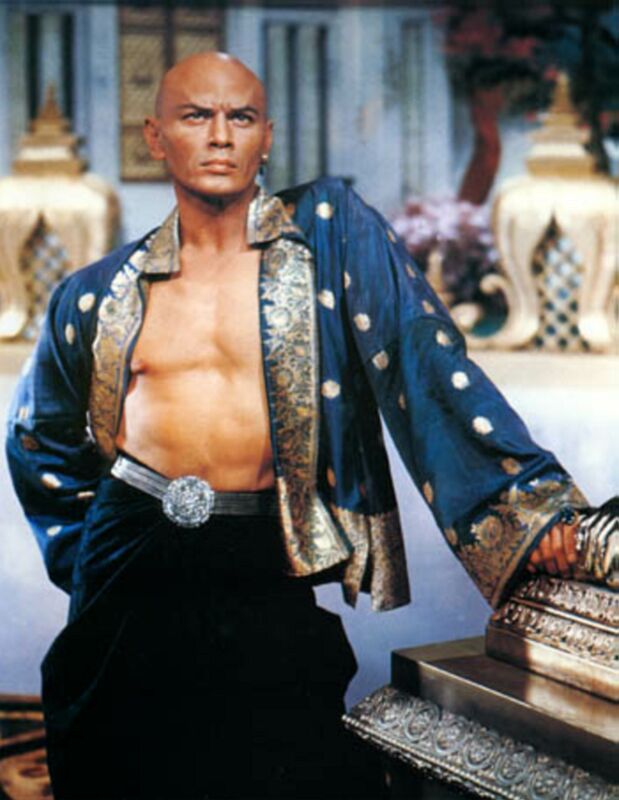
His best-known role remains that of King Mongkut of Siam in The King and I in which he played 4,625 times on stage over the span of his career. He appeared in the original 1951 production and later touring productions as well as a 1977 Broadway revival, a London Production in 1979 and another Broadway revival in 1985. He won Tony Award for both the first and the last of these Broadway productions. He also appeared in the 1956 film version, for which he won an Academy Award as Best Actor and in a short-lived TV version (Anna and the King) on CBS in 1972. Brynner is one of only nine people who have won both a Tony Award and an Academy Award for the same role. His connection to the story and the role of King Mongkut is so deep that he was mentioned in the song “One Night in Bangkok” from the 1984 musical Chess whose second act is set in Bangkok.
In 1951 Brynner shaved his head for his role in The King and I. Following the huge success of the Broadway production and subsequent film, Brynner continued to shave his head for the rest of his life, though he would sometimes wear a wig for certain roles. Brynner’s shaved head was unusual at the time, and his striking appearance helped to give him an iconic appeal. Some fans shaved off their hair to emulate him, and a shaved head was often referred to as the “Yul Brynner look.”

Brynner made an immediate impact upon launching his mainstream film career in 1956 and quickly gained superstar status after appearing not only in The King and I that year but also in starring roles in The Ten Commandments, and Anastasia with Ingrid Bergman. Brynner, at 5’10”, was reportedly concerned about being overshadowed by co-star Charlton Heston’s height and physical presence in The Ten Commandments and prepared his impressive physique seen in the film with an intensive weight-lifting program.

He appeared in more than 40 other films over the next two decades, including the epic Solomon and Sheba (1959), The Magnificent Seven (1960), Taras Bulba (1962) and Kings of the Sun (1963). He co-starred with Marlon Brando in Morituri (1965), Katharine Hepburn in The Madwoman of Chaillot (1969) and Lee J. Cobb in a film version of The Brothers Karamazov (1958). He played the titular role of The Ultimate Warrior (1975) and starred with Barbara Bouchet in Death Rage (1976). Among his final feature film appearances were in Michael Crichton’s Westworld (1973) and its sequel Futureworld (1976). Brynner also appeared in drag (as a torch singer) in an unbilled role in the Peter Sellers comedy The Magic Christian (1969).
In addition to his work as a director and performer, Brynner was an active photographer and wrote two books. His daughter Victoria put together Yul Brynner: Photographer (ISBN 0-8109-3144-3) a collection of his photographs of family, friends, and fellow actors, as well as those he took while serving as a UN special consultant on refugees. Brynner wrote Bring Forth the Children: A Journey to the Forgotten People of Europe and the Middle East (1960), with photographs by himself and Magnum photographer Inge Morath, and also The Yul Brynner Cookbook: Food Fit for the King and You.
A student of music from childhood, Brynner was an accomplished guitarist. In his early period in Europe he often played and sang gypsy songs in Parisian nightclubs with Aliosha Dimitrievitch. He sang some of those same songs in the film The Brothers Karamazov. In 1967 he and Dimitrievitch released a record album The Gypsy and I: Yul Brynner Sings Gypsy Songs (Vanguard VSD 79265).
Brynner married four times. The first three ended in divorce. He fathered three children and adopted two.
He and his first wife, actress Virginia Gilmore (1944–1960), had one child, Rock Yul Brynner, born on December 23, 1946. His father nicknamed him “Rock” when he was six years old in honor of boxer Rocky Graziano. Rock is a historian, novelist, and university history lecturer at Marist College in Poughkeepsie, New York and Western Connecticut State University in Danbury, Connecticut. In 2006, Rock wrote a book about his father and his family history titled Empire and Odyssey: The Brynners in Far East Russia and Beyond. Rock regularly returns to Vladivostok, the city of his father’s birth, for the “Pacific Meridian” Film Festival. Yul Brynner had a long affair with Marlene Dietrich, who was 19 years his senior, during the first production of The King and I.
Brynner’s daughter Lark Brynner was born out of wedlock in 1959 and raised by her mother, Frankie Tilden, who was 20 years old when Lark was born. Brynner supported her financially. His second wife, from 1960 to 1967, Doris Kleiner, was a Chilean model whom he married on the set during shooting of The Magnificent Seven in 1960. They had one child, Victoria Brynner (born November 1962), whose godmother was Audrey Hepburn.
His third wife, Jacqueline Thion de la Chaume (1971–1981), was a French socialite, the widow of Philippe de Croisset (he was the son of French playwright Francis de Croisset and a publishing executive). Brynner and Jacqueline adopted two Vietnamese children: Mia (1974) and Melody (1975). The first house that he ever owned was the Manoir de Criqueboeuf, a sixteenth-century manor house that he and Jacqueline purchased. His 1980 announcement that he would continue in the role of the King for another long tour and Broadway run, together with his affairs with female fans and his neglect of his wife and children, broke up their marriage.
At the age of 63, he married his fourth wife, Kathy Lee, a 24-year-old ballerina from a small town in Malaysia whom he had met in a production of The King and I in which she had a small dancing role. They remained married for the last 2 years (1983–1985) of Brynner’s life.
Brynner, a Swiss citizen, was naturalized as a US citizen, but in June 1965, he renounced his US citizenship at the US Embassy in Berne, Switzerland for tax reasons. He had lost his tax exemption as an American resident abroad by working too long in the U.S. and would have been bankrupted by his tax and penalty debt.

Brynner began smoking heavily at age 12, and his promotional photos almost always showed him with a cigarette in his hand, but he quit in 1971. In September 1983, Brynner found a lump on his vocal cords. In Los Angeles, only hours before his 4,000th performance in The King and I, he received the test results. His throat would be fine, but he had inoperable lung cancer. Brynner and the national tour of the musical were forced to take a few months off while he underwent radiation therapy, which hurt his throat and made it impossible for him to sing or speak easily. The tour then resumed.
In January 1985, nine months before his death, the tour reached New York for a farewell Broadway run. Aware he was dying, Brynner gave an interview on Good Morning America discussing the dangers of smoking and expressing his desire to make an anti-smoking commercial. The Broadway production of The King and I ran from January 7 to June 30 of that year, with Mary Beth Peil as Anna. His last performance marked the 4,625th time he had played the role of the King. Meanwhile, Brynner and the American Cancer Society created a public service announcement using a clip from the Good Morning America interview. Brynner died of lung cancer on October 10, 1985 in New York City on the same day as his Battle of Neretva co-star Orson Welles. Only a few days after his death, the public service announcement was showing on all the major U.S. television networks and was shown in many other countries around the world. He looked directly into the camera for 30 seconds, “His distinctive voice uttering one last haunting plea: ‘Now that I’m gone, I tell you: Don’t smoke. Whatever you do, just don’t smoke.’”
His remains are interred in France on the grounds of the Saint-Michel-de-Bois-Aubry Russian Orthodox monastery near Luzé between Tours and Poitiers.
On September 28, 2012, an eight-foot-tall statue was inaugurated at Yul Brynner Park, in front of the home where he was born at Aleutskaya St. No. 15 in Vladivostok, Russia. Created by local sculptor Alexei Bokiy, the monument was carved in granite from China. The grounds for the park were donated by the city of Vladivostok, which also paid additional costs. Vladivostok Mayor Igor Pushkariov, U.S. Consul General Sylvia Curran, and Rock Brynner participated in the ceremony, along with hundreds of city residents.
Brynner has a star on the Hollywood Walk of Fame at 6162 Hollywood Blvd.
The cottage at his childhood country home, at Sidimi near Vladivostok, is now a family museum.
In 1952, he received the Tony Award for Best Featured Actor in a Musical for his portrayal of the King of Siam in The King and I.
He won the 1956 Academy Award for Best Actor for the same role in the film version of The King and I, and made the “Top 10 Stars of the Year” list in both 1957 and 1958.
In 1985, he received a Special Tony Award honoring his 4,525 performances in The King and I.

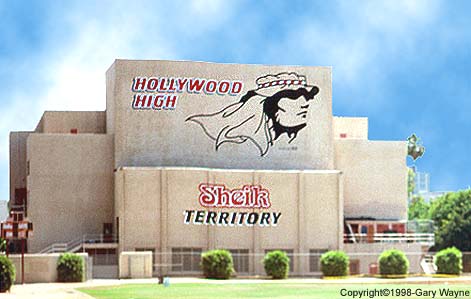
Hollywood High School, my alma mater, is a Los Angeles Unified School District high school located at the intersection of North Highland Avenue and West Sunset Boulevard in the Hollywood district of Los Angeles, California.
In September 1903, a two-room school was opened on the second floor of an empty storeroom at the Masonic Temple on Highland Avenue, north of Hollywood Boulevard (then Prospect Avenue). Hollywood was incorporated as a municipality in November 1903. The Hollywood High Organ Opus 481 was a gift from the class of 1924. After suffering severe water damage from the Northridge earthquake in 1994, it was restored in 2002. The campus was listed on the National Register of Historic Places on January 4, 2012.
The school’s mascot was derived from the 1921 Rudolph Valentino film of the same name, The Sheik.

In 2002, artist Eloy Torrez painted a mural of 13 famous entertainers, titled “Portrait of Hollywood,” across the entire east wall of the school’s auditorium. From left to right, the entertainers displayed are Dorothy Dandridge, Dolores del Rio, Brandy Norwood, Selena, Lana Turner, Laurence Fishbourne, Cantinflas, Carol Burnett, Cher, Ricky Nelson, Bruce Lee, Rudolph Valentino, and Judy Garland. In 2007, Torrez added a 50-foot (15 m) tall mural of John Ritter, who died four years earlier, on the connecting portion of the building’s north wall] All but two of the entertainers, Lee and Valentino, were students at Hollywood High School. The artist said the mural is a celebration of a diverse ethnic range of actors and entertainers.
Hollywood High has been the filming location for movies, television shows, and other productions, including the following:
Made
Nancy Drew
Neon Maniacs
Penn & Teller: Bullshit! (Season 5, episode 1, “Obesity”)
Tony Hawk’s American Wasteland
Victorious
Notable alumni (includes year of graduation)
Arthur Alber, 1912, Los Angeles City Council member
Anthony Anderson, 1988, actor/comedian/writer
John Archer, 1933, actor
Meredith Baxter, 1965, actress
Mary Kay Bergman, 1978, actress
Vincent Bugliosi, 1952, attorney/author

Carol Burnett, 1951, actress/comedian
Valerie Bertinelli, 1978, actress
Diana Canova, 1971, actress/singer
Keith Carradine, 1966, actor
Robert Carradine, 1971, actor
Adriana Caselotti, 1934, actress/singer
Henry P. Caulfield, Jr., 1931, political scientist/college professor
Marge Champion, 1936, dancer/choreographer/actress
Norman Chandler, 1917, Los Angeles Times publisher
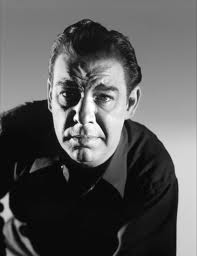
Lon Chaney, Jr., 1924, actor
Warren Christopher, 1942, U.S. Secretary of State
John Clifford, 1965, choreographer
Lisa Coleman, 1978, musician
Porscha Coleman, 2003, actress/singer/dancer
Johnny Crawford, 1962, actor
James Dannaldson, actor
Frank Darabont, 1977, film director/screenwriter/producer
Edward Dmytryk 1954, film director, member of the Hollywood Ten

Harley Earl, 1924, automotive designer and executive
Stephen Eckelberry, 1979, filmmaker
Norman Eisen, 1980, U.S. Ambassador to Prague
Linda Evans, 1960, actress
Nanette Fabray, 1939, actress
Mimsy Farmer, 1963, actress
Mike Farrell, 1957, actor
Lorraine Feather, 1965, singer/lyricist/songwriter
Jay R. Ferguson, actor

Laurence Fishburne, 1980, actor
Anthony M. Frank, 1949, U.S. Postmaster General

Judy Garland, 1940, singer/actress
James Garner, 1944, actor
Lowell George, 1963, musician/songwriter/producer
Gigi Levangie Grazer, 1990, novelist/screenwriter
Rob Grill, 1962, singer/songwriter/guitarist
Horacio Gutiérrez, 1966, classical pianist
Alan Hale Jr., 1936, actor
Linda Hart, 1965, singer/musician/actress
Karl Hubenthal, 1935, cartoonist
Gloria Grahame, 1942, actress
Barbara Hershey,1965, actress
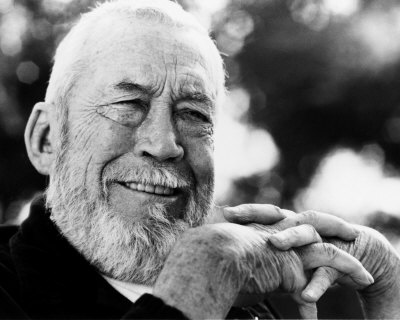
John Huston, 1923, film director/screenwriter/actor
Chuck Jones, 1930, animator
Dickie Jones, 1945, actor
Sally Kellerman, 1954, actress
William Kennard, 1974, FCC chairman
Enid Kent, 1962, actress
Swoosie Kurtz, 1962, actress

Alan Ladd, 1931, actor
John Philip Law, 1954 actor
Ruta Lee 1954, actress
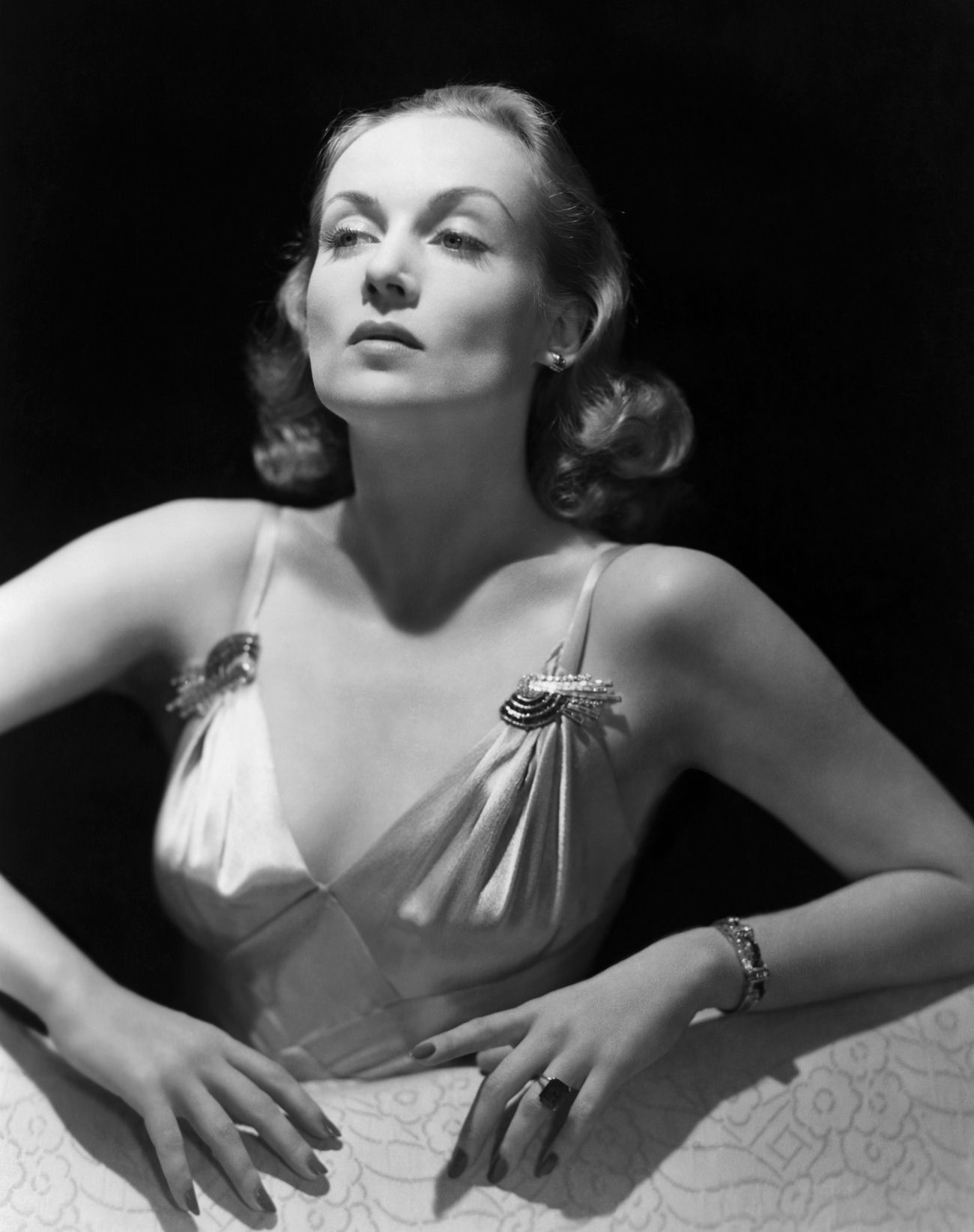
Carole Lombard, 1923, actress
Richard Long, 1945, actor
Benito Martinez, 1989, actor
Gladys McConnell, 1924, actress/aviatrix
Joel McCrea, 1924, actor
Leighton Meester, 2001, actress/singer
Heather Menzies, 1967, actress
Ann Miller, 1937, dancer/actress
Judith Miller, 1965, journalist
Aprile Millo, 1977, opera singer
Yvette Mimieux, 1960, actress
David Nelson, 1954, actor/singer

Ricky Nelson, 1958, actor/singer
Marni Nixon, 1948, singer
Brandy Norwood, 1996, singer/actress
Marcel Ophüls, 1945, film director
Sarah Jessica Parker, 1983, actress
Susan Patron, 1965, author
Richard Perle, 1959, U.S. Assistant Secretary of Defense
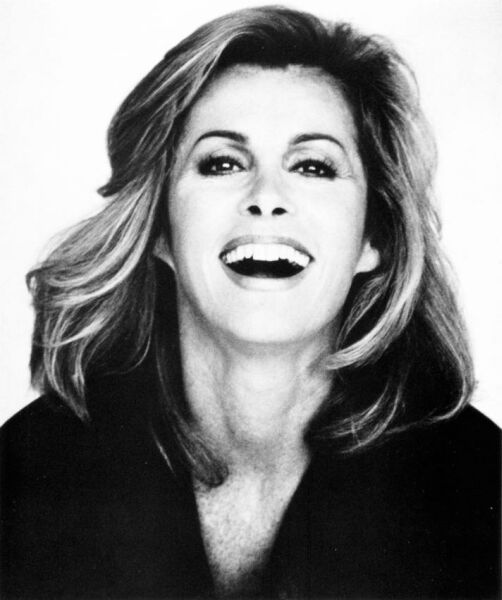
Stefanie Powers, 1960, actress
Terry Richardson, 1983, photographer
John Ritter, 1966, actor
Jason Robards, 1940, actor
Ann Robinson, 1949, actress
Ruth Roland, 1908,actress
Mickey Rooney, 1938, actor
Debbie Rowe, 1977, ex-wife of singer Michael Jackson
Catherine Share, 1960, “Manson Family” follower
Scott Shaw, 1976, filmmaker/actor/writer
William Shockley, 1927, physicist, inventor of the transistor, Nobel laureate
Ione Skye, 1986, actress
Michael Sloane, 1976, actor/writer/director
Alexis Smith, 1938, actress
Rick Sloane, 1979, filmmaker
Andrew Solt, 1965, film producer/director/writer
Jill St. John, 1957, actress
Togo Tanakanewspaper, 1939, journalist/editor
Sharon Tate, actress, murdered by the “Manson Family”
Vince Taylor, 1958, singer
Charlene Tilton, 1976, actress
Joe Trippi, political activist, chairman of the Howard Dean U.S. presidential campaign

Lana Turner, 1936, actress
Victoria Vetri, 1963,model, actress
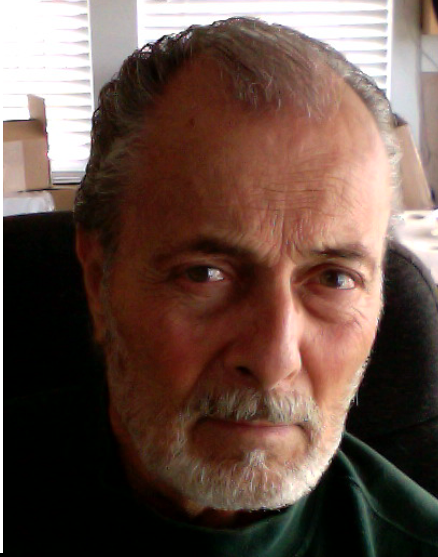
Jess Waid, 1954, author
Joseph Wapner 1954, judge, star of The People’s Court
Tuesday Weld, 1960, actress
Rhoda Williams, 1948, actress
Rita Wilson, 1974, actress
“If I hadn’t become an actor, I might have become Public Enemy Number One.”
John Garfield (March 4, 1913 – May 21, 1952) was an American actor adept at playing brooding, rebellious, working-class characters. He grew up in poverty in Depression-era New York City and in the early 1930s became an important member of the Group Theater. In 1937, he moved to Hollywood, eventually becoming one of Warner Bros.’ major stars. Called to testify before the U.S. Congressional House Committee on Un-American Activities (HUAC), he denied Communist affiliation and refused to “name names,” effectively ending his film career. Some have claimed that the stress of this incident led to his premature death at 39 from a heart attack. (Rumors abounded that he “died in the saddle.”)
Garfield is acknowledged as a predecessor of such Method actors as Montgomery Clift, Marlon Brando, and James Dean.
Garfield was born Jacob Garfinkle in a small apartment on Rivington Street in Manhattan’s Lower East Side, to David and Hannah Garfinkle, Russian Jewish immigrants, and grew up in the heart of the Yiddish Theater District. In early infancy a middle name—Julius—was added, and for the rest of his life those who knew him well called him Julie. His father, a clothes presser and part-time cantor, struggled to make a living and to provide even marginal comfort for his small family. When Garfield was five, his brother Max was born and their mother never fully recovered from what was described as a “difficult” pregnancy. She died two years later and the young boys were sent to live with various relatives, all poor, scattered across the boroughs of Brooklyn, Queens and the Bronx. Several of these relatives lived in tenements in a section of East Brooklyn called Brownsville and there Garfield lived in one house and slept in another. At school he was judged a poor reader and speller, deficits that were aggravated by irregular attendance. He would later say of his time on the streets there, that he learned “all the meanness, all the toughness it’s possible for kids to acquire.”
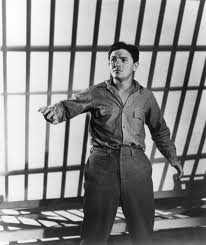
His father remarried and moved to the West Bronx where Garfield joined a series of gangs. Much later he would recall: “Every street had its own gang. That’s the way it was in poor sections… the old safety in numbers.” He soon became gang leader. It was at this time people started to notice his ability to mimic well-known performers, both bodily and facially. He also began to hang out and eventually spar at a boxing gym on Jerome Avenue. At some point he contracted scarlet fever, (it was diagnosed later in adulthood) causing permanent damage to his heart and causing him to miss a lot of school. After being expelled three times and expressing a wish to quit school altogether, his parents sent him to P.S. 45, a school for difficult children. It was under the guidance of the school’s principal—the noted educator Angelo Patri—that he was introduced to acting. Noticing Garfield’s tendency to stammer, Patri assigned him to a speech therapy class taught by a charismatic teacher named Margaret O’Ryan. She gave him acting exercises and made him memorize and deliver speeches in front of the class and, as he progressed, in front of school assemblies. O’Ryan thought he had natural talent and cast him in school plays. She encouraged him to sign up for a citywide debating competition sponsored by the New York Times. To his own surprise, he took second prize.
With Patri and O’Ryan’s encouragement he began to take acting lessons at a drama school that was part of The Heckscher Foundation and began to appear in their productions. At one of the latter he received back-stage congratulations and an offer of support from the Yiddish actor Jacob Ben-Ami who recommended him to the American Laboratory Theater. Funded by the Theatre Guild, “the Lab” had contracted with Richard Boleslavski to stage its experimental productions and with Russian actress and expatriate Maria Ouspenskaya to supervise classes in acting. Former members of the Moscow Art Theater, they were the first proponents of Stanislavsky’s “system” in the United States. Garfield took morning classes and began volunteering time at the Lab after hours, auditing rehearsals, building and painting scenery, and doing crew work. He would later view this time as beginning his apprenticeship in the theater. Among the people becoming disenchanted with the Guild and turning to the Lab for a more radical, challenging environment were Stella Adler, Lee Strasberg, Franchot Tone, Cheryl Crawford and Harold Clurman. In varying degrees, all would become influential in Garfield’s later career.
After a stint with Eva Le Gallienne’s Civic Repertory Theater and a short period of vagrancy involving hitchhiking, freight hopping, picking fruit, and logging in the Pacific Northwest (Preston Sturges conceived the film Sullivan’s Travels after hearing Garfield tell of his hobo adventures) Garfield made his Broadway debut in 1932, in a play called Lost Boy. It ran for only two weeks but gave Garfield something critically important for an actor struggling to break into the theater: a credit.
Garfield received feature billing in his next role, that of Henry the office boy, in Elmer Rice’s play Counsellor-at-Law starring Paul Muni. The play ran for three months, made an eastern tour and returned for an unprecedented second return engagement, only closing when Muni was contractually compelled to return to Hollywood to make a film for Warners. At this point the Warner company expressed an interest in Garfield and sought to arrange a screen test. He turned them down.
Garfield’s former colleagues Crawford, Clurman and Strasburg had begun a new theater collective, calling it simply “the Group,” and Garfield lobbied his friends hard to get in. After months of rejection he began frequenting the inside steps of the Broadhurst Theater where the Group had its offices. Cheryl Crawford noticed him one day and greeted him warmly. Feeling encouraged, he made his request for apprenticeship. Something intangible impressed her and she recommended him to the other directors. They made no dissent.
Clifford Odets had been a close friend of Garfield from the early days in the Bronx. After Odets’ one-act play Waiting for Lefty became a surprise hit, the Group announced it would mount a production of his full-length drama Awake and Sing. At the playwright’s insistence, Garfield was cast as Ralph, the sensitive young son who pled for “a chance to get to first base.” The play opened in February 1935 and Garfield was singled out by critic Brooks Atkinson for having a “splendid sense of character development.”
Garfield’s apprenticeship was officially over; the company voted him full membership. Odets was the man of the moment and he claimed to the press that Garfield was his “find”; that he would soon write a play just for him. That play would turn out to be Golden Boy and when Luther Adler was cast in the lead role instead, a disillusioned Garfield began to take a second look at the overtures being made by Hollywood.
Garfield had been approached by Hollywood studios before—both Paramount and Warner’s offering screen tests—but talks had always stalled over a clause he wanted inserted in his contract, one that would allow him time off for stage work. Now Warner Bros. acceded to his demand and Garfield signed a standard feature-player agreement—seven years with options—in Warner’s New York office. Many in the Group were livid over what they considered his betrayal. Elia Kazan’s reaction was different, suggesting that the Group did not so much fear that Garfield would fail, but that he would succeed. Jack Warner’s first order of business was a change of name to John Garfield.

After many false starts he was finally cast in a supporting, yet crucial role as a tragic young composer in a Michael Curtiz film titled Four Daughters. After the picture’s release in 1938, he received wide critical acclaim and a nomination for the Academy Award for Best Supporting Actor. The studio quickly revised Garfield’s contract—designating him a star player rather than a featured one—for seven years without options. They also created a name-above-the-title vehicle for him titled: They Made Me a Criminal. Before the breakout success of Daughters Garfield had made a B movie feature called Blackwell’s Island. Not wanting their new star to appear in a low-budget film, Warner’s ordered an A movie upgrade by adding an additional $100,000 to its budget and recalling its director Michael Curtiz to shoot newly scripted scenes.
Garfield’s debut had a cinematic impact difficult to conceive in retrospect. As biographer Lawrence Swindell put it:
“Garfield’s work was spontaneous, non-actory; it had abandon. He didn’t recite dialogue, he attacked it until it lost the quality of talk and took on the nature of speech. The screen actor had been dialogue’s servant, but now Julie had switched those roles. Like Cagney, he was an exceptionally mobile performer from the start of his screen career. These traits were orchestrated with his physical appearance to create a screen persona innately powerful in the sexual sense. What Warners saw immediately was that Garfield’s impact was felt by both sexes. This was almost unique.”
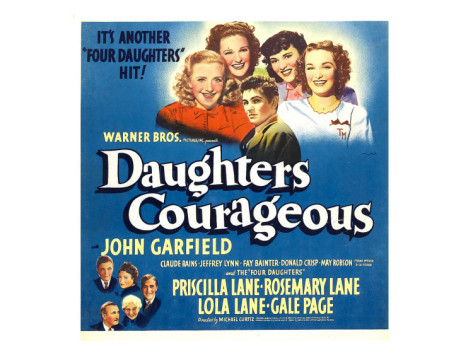
His “honeymoon” with Warner’s over, Garfield entered a protracted period of conflict with the studio, they attempting to cast him in crowd-pleasing melodramas like Dust Be My Destiny and he insisting on quality scripts that would offer a challenge and highlight his versatility. The result was often a series of suspensions, Garfield refusing an assigned role and Warner’s refusing to pay him. Garfield’s problem was the same problem shared by any actor working in the studio system of the 1930s: by contract the studio had the right to cast him in any project they wanted to. But, as Robert Nott explains, “To be fair, most of the studios had a team of producers, directors, and writers who could pinpoint a particular star’s strengths and worked to capitalize on those strengths in terms of finding vehicles that would appeal to the public – and hence make the studio money. The forces that prevented him from getting high quality roles were really the result of the combined willpower of the Warner Bros., the studio system in general, and the general public, which also had its own perception of how Garfield (or Cagney or Bogart for that matter) should appear on screen.” A notable exception to this trend was Daughters Courageous, the sequel to his debut film. Now considered a late 1930s classic, the film did well critically but failed to find an audience, the public dissatisfied that it was not a true sequel (hard to pull off, since the original character Mickey Borden died in the first picture). The director, Curtiz, called the film “my obscure masterpiece.”
At the onset of World War II, Garfield immediately attempted to enlist in the armed forces, but was turned down because of his heart condition. Frustrated, he turned his energies to supporting the war effort. He and actress Bette Davis were the driving force behind the opening of the Hollywood Canteen, a club offering food and entertainment for American servicemen. He traveled overseas to help entertain the troops, made several bond selling tours and starred in a string of popular, patriotic films like Air Force, Destination Tokyo and Pride of the Marines (all box office successes). He was particularly proud of that last film based on the life of Al Schmid, a war hero blinded in combat. In preparing for the role Garfield lived for several weeks with Schmid and his wife in Philadelphia and would blindfold himself for hours at a time.

After the war Garfield starred in a series of successful films such as The Postman Always Rings Twice (1946) with Lana Turner, Humoresque (1946) with Joan Crawford, and the Oscar-winning Best Picture Gentleman’s Agreement (1947). In Gentleman’s Agreement, Garfield took a featured, but supporting, part because he believed deeply in the film’s exposé of anti-semitism in America. In 1948, he was nominated for the Academy Award for Best Actor for his starring role in Body and Soul (1947). That same year, Garfield returned to Broadway in the play Skipper Next to God. A strong-willed and often verbally combative individual, Garfield did not hesitate to venture out on his own when the opportunity arose. In 1946, when his contract with Warner Bros. expired, Garfield decided not to renew it and opted to start his own independent production company, one of the first Hollywood stars to take this step.
“I have nothing to hide and nothing to be ashamed of. My life is an open book. I am no Red. I am no ‘pink.’ I am no fellow traveler. I am a Democrat by politics, a liberal by inclination, and a loyal citizen of this country by every act of my life.”
Long involved in liberal politics, Garfield was caught up in the Communist scare of the late 1940s and early 1950s. He supported the Committee for the First Amendment, which opposed governmental investigation of political beliefs. When called to testify before the House Committee on Un-American Activities, which was empowered to investigate purported communist infiltration in America, Garfield refused to name communist party members or followers, testifying that, indeed, he knew none in the film industry. Garfield rejected Communism, and just prior to his death in hopes of redeeming himself in the eyes of the “Blacklisters,” wrote that he had been duped by Communist ideology, in an unpublished article called “I Was a Sucker for a Left Hook,” a reference to Garfield’s movies about boxing. However, his forced testimony before the committee had severely damaged his reputation. He was blacklisted in Red Channels, and barred from future employment as an actor by Hollywood movie studio bosses for the remainder of his career.

With film work scarce because of the blacklist, Garfield returned to Broadway and starred in a 1952 revival of Golden Boy, finally being cast in the lead role denied him years before.
On May 9, 1952 Garfield moved out of his New York apartment for the last time, indicating to friends it was not a temporary separation. He confided to columnist Earl Wilson that he would soon be divorced. Close friends speculated that it was his wife’s opposition to his plotted confession in Look magazine that triggered the separation. He heard that a HUAC investigator was reviewing his testimony for possible perjury charges. His agent reported that 20th Century-Fox wanted him for a film called Taxi but would not even begin talks unless the investigation concluded in his favor. Three actor friends, Canada Lee, Mady Christians and J. Edward Bromberg, had all recently died after being listed by the committee.
In the morning of May 20 Garfield, against his doctor’s strict orders, played several strenuous sets of tennis with a friend, mentioning the fact that he had not been to bed the night before. He met actress Iris Whitney for dinner and afterward became suddenly ill complaining that he felt chilled. She brought him to her apartment where he refused to let her call a doctor and instead went to bed. The next morning she found him dead. Long-term heart problems, allegedly aggravated by the stress of his blacklisting, had led to his death at the age of 39.
The funeral was the largest in New York since Rudolph Valentino with over ten thousand persons crowding the streets outside. His estate, valued at “more than $100,000,” was left entirely to his wife. Shortly afterward, ironically, the HUAC closed its investigation of John Garfield, leaving him in the clear. Garfield is interred at Westchester Hills Cemetery in Hastings-on-Hudson, Westchester County, New York.
In 1954, the widowed Roberta Garfield married attorney Sidney Cohn, who died in 1991. She died in January 2004.
He and Roberta Seidman married in February 1935. Though his wife had been a member of the Communist Party, there was no evidence that Garfield himself was ever a Communist. They had three children: Katherine (1938–1945), who died of an allergic reaction on March 18, 1945; David (1943–1994); and Julie (born 1946); the latter two later becoming actors themselves.
Garfield was nominated for the Academy Award for Best Supporting Actor for Four Daughters in 1939 and Best Actor for Body and Soul in 1948.

He was given a star on the Hollywood Walk of Fame at 7065 Hollywood Boulevard.
I loved Garfield’s persona. Like a polished agate with rough stone overtones.

 Jess Waid