Mario Lanza (born Alfred Arnold Cocozza; January 31, 1921 – October 7, 1959) was an American tenor, actor and Hollywood film star of the late 1940s and the 1950s.
Lanza began studying to be a professional singer at the age of 16. After appearing at the Hollywood Bowl in 1947, Lanza signed a seven-year film contract with Louis B. Mayer, the head of Metro-Goldwyn-Mayer who saw his performance and was impressed by his singing. Prior to this, the adult Lanza had sung only two performances of an opera. The following year (1948), however, he would sing the role of Pinkerton in Puccini’s Madama Butterfly in New Orleans.
His film debut was in That Midnight Kiss (1949) with Kathryn Grayson and Ethel Barrymore. The following year, in The Toast of New Orleans, his featured popular song “Be My Love” became his first million-selling hit. In 1951, he played the role of Enrico Caruso (1873–1921), his tenor idol, in the biopic, The Great Caruso, which produced another million-seller with “The Loveliest Night of the Year” (a song which used the melody of Sobre las Olas). The Great Caruso was the top-grossing film that year.
The title song of his next film, Because You’re Mine, was his final million-selling hit song. The song went on to receive an Academy Award nomination for Best Original Song. After recording the soundtrack for his next film, The Student Prince, he embarked upon a protracted battle with Studio Head Dore Schary arising from artistic differences with director Curtis Bernhardt, and was eventually dismissed by MGM.
Lanza was known to be “rebellious, tough, and ambitious,” and during most of his film career, he suffered from addictions to overeating and alcohol that had a serious effect on his health and his relationships with directors, producers and, occasionally, other cast members. Hollywood columnist Hedda Hopper wrote, “his smile, which was as big as his voice, was matched with the habits of a tiger cub, impossible to housebreak.” She adds that he was the “last of the great romantic performers.” He made three more films before dying of an apparent pulmonary embolism at the age of 38. At the time of his death in 1959 he was still “the most famous tenor in the world.” Author Eleonora Kimmel concludes that Lanza “blazed like a meteor whose light lasts a brief moment in time.”
Early years
Born Alfred Arnold Cocozza in Philadelphia, Pennsylvania, he was exposed to classical singing at an early age by his Abruzzese-Molisan Italian parents. His mother, Maria Lanza, was from Tocco da Casauria a province of Pescara in the region of Abruzzo. His father, Antonio Cocozza, was from the town of Filignano a province of Isernia in the region of Molise. By age 16, his vocal talent had become apparent. Starting out in local operatic productions in Philadelphia for the YMCA Opera Company while still in his teens, he later came to the attention of longtime (1924–49) principal Boston Symphony conductor Serge Koussevitzky. In 1942, Koussevitzky provided young Cocozza with a full student scholarship to the Berkshire Music Center at Tanglewood, Massachusetts. Reportedly, Koussevitzky would later tell him, “Yours is a voice such as is heard once in a hundred years.”
Opera career
His opera debut, as Fenton in Otto Nicolai’s The Merry Wives of Windsor (in English), came at the Berkshire Music Festival in Tanglewood on August 7, 1942, after a period of study with conductors Boris Goldovsky and Leonard Bernstein. This was when Cocozza adopted the stage name Mario Lanza, for its similarity to his mother’s maiden name, Maria Lanza.
His performances at Tanglewood won him critical acclaim, with Noel Straus of The New York Times hailing the 21-year-old tenor as having “few equals among tenors of the day in terms of quality, warmth and power”. Herbert Graf subsequently wrote in Opera News (October 5, 1942), “A real find of the season was Mario Lanza […] He would have no difficulty one day being asked to join the Metropolitan Opera.” Lanza sang Nicolai’s Fenton twice at Tanglewood, in addition to appearing there in a one-off presentation of Act III of Puccini’s La Bohème with the noted Mexican soprano Irma González, baritone James Pease and mezzo-soprano Laura Castellano. Music critic Jay C. Rosenfeld wrote in The New York Times of August 9, 1942, “Irma González as Mimì and Mario Lanza as Rodolfo were conspicuous by the beauty of their voices and the vividness of their characterizations.” In an interview shortly before her own death in 2008, González recalled that Lanza was “very correct, likeable, with a powerful and beautiful voice.”
Lanza as Giuseppe Verdi’s Otello
His budding operatic career was interrupted by World War II, when he was assigned to Special Services in the U.S. Army Air Corps. He appeared in the wartime shows On the Beam and Winged Victory. He also appeared in the film version of the latter (albeit as an unrecognizable member of the chorus). He resumed his singing career with a concert in Atlantic City with the NBC Symphony Orchestra in September 1945 under Peter Herman Adler, subsequently his mentor. The following month, he replaced tenor Jan Peerce on the live CBS radio program Great Moments in Music on which he made six appearances in four months, singing extracts from various operas and other works.
He studied with Enrico Rosati for fifteen months, and then embarked on an 86-concert tour of the United States, Canada and Mexico between July 1947 and May 1948 with bass George London and soprano Frances Yeend. Reviewing his second appearance at Chicago’s Grant Park in July 1947 in the Chicago Sunday Tribune, Claudia Cassidy praised Lanza’s “superbly natural tenor” and observed that “though a multitude of fine points evade him, he possesses the things almost impossible to learn. He knows the accent that makes a lyric line reach its audience, and he knows why opera is music drama.”
In April 1948, Lanza sang two performances as Pinkerton in Puccini’s Madama Butterfly for the New Orleans Opera Association conducted by Walter Herbert with stage director Armando Agnini. Reviewing the opening-night performance in the St. Louis News (April 9, 1948), Laurence Oden wrote, “Mario Lanza performed … Lieutenant Pinkerton with considerable verve and dash. Rarely have we seen a more superbly romantic leading tenor. His exceptionally beautiful voice helps immeasurably.” Following the success of these performances, he was invited to return to New Orleans in 1949 as Alfredo in Verdi’s La traviata. But, as biographer Armando Cesari wrote, Lanza by 1949 “was already deeply engulfed in the Hollywood machinery and consequently never learned [that key mid-Verdi tenor] role.”
At the time of his death, Lanza was preparing to return to the operatic stage. Conductor Peter Herman Adler, with whom Lanza had previously worked both in concert and on the soundtrack of The Great Caruso, visited the tenor in Rome during the summer of 1959 and later recalled that, “[Lanza] was working two hours a day with an operatic coach, and intended to go back to opera, his only true love.” Adler promised the tenor “all possible help” in his “planning for his operatic future.” In the October 14, 1959, edition of Variety, it was reported that Lanza had planned to make his return to opera in the role of Canio in Leoncavallo’s Pagliacci during the Rome Opera’s 1960–61 season. This was subsequently confirmed by Riccardo Vitale, Artistic Director of the Rome Opera. Variety also noted that preparations had been underway at the time of Lanza’s death for him to participate in recording a series of complete operas for RCA Italiana.
Film career
A concert at the Hollywood Bowl in August 1947 had brought Lanza to the attention of Louis B. Mayer, who promptly signed Lanza to a seven-year film contract with Metro-Goldwyn-Mayer. The contract required him to commit to the studio for six months, and at first Lanza believed he would be able to combine his film career with his operatic and concert one. In May 1949, he made his first commercial recordings with RCA Victor. His rendition of the aria “Che gelida manina” (from La Bohème) from that session was subsequently awarded the prize of Operatic Recording of the Year by the (United States) National Record Critics Association.
The Toast of New Orleans
Lanza’s first two starring films, That Midnight Kiss and The Toast of New Orleans, both opposite top-billed Kathryn Grayson, were commercial successes, and in 1950 his recording of “Be My Love” from the latter became the first of three million-selling singles for the young singer, earning him enormous fame in the process. While at MGM, Lanza worked closely with the Academy Award-winning conductor, composer, and arranger Johnny Green.
In a 1977 interview with Lanza biographer Armando Cesari, Green recalled that the tenor was insecure about the manner in which he had become successful, and was keenly aware of the fact that he had become a Hollywood star before first having established himself on the operatic stage.
“Had [Lanza] been already a leading tenor, if not the leading tenor at the Metropolitan Opera House], and come to Hollywood in between seasons to make a picture, he would have had [the security of having] the Met as his home,” Green remarked. According to Green, Lanza possessed “the voice of the next Caruso. [Lanza] had an unusual, very unusual quality…a tenor with a baritone color in the middle and lower registers, and a great feeling for the making of music. A great musicality. I found it fascinating, musically, to work with [him].”
The Great Caruso
In 1951, Lanza portrayed Enrico Caruso in The Great Caruso, which proved a success. At the same time, Lanza’s increasing popularity exposed him to intense criticism by some music critics, including those who had praised his work years earlier. His performance earned him compliments from the subject’s son, Enrico Caruso Jr., a tenor in his own right. Shortly before his own death in 1987, Enrico Jr. wrote in Enrico Caruso: My Father and My Family (posthumously published by Amadeus in 1990) that:
“I can think of no other tenor, before or since Mario Lanza, who could have risen with comparable success to the challenge of playing Caruso in a screen biography… Lanza was born with one of the dozen or so great tenor voices of the century, with a natural voice placement, an unmistakable and very pleasing timbre, and a nearly infallible musical instinct.”
The Student Prince
In 1952, Lanza was dismissed by MGM after he had pre-recorded the songs for The Student Prince. The reason most frequently cited in the tabloid press at the time was that his recurring weight problem had made it impossible for him to fit into the costumes of the Prince. However, as his biographers Cesari and Mannering have established, Lanza was not overweight at the beginning of the production, and it was, in fact, a disagreement with director Curtis Bernhardt over Lanza’s singing of one of the songs in the film that led to Lanza walking off the set. MGM refused to replace Bernhardt, and the film was subsequently made with English actor Edmund Purdom, who was dubbed to Lanza’s recorded voice.
Depressed by his dismissal, and with his self-confidence severely undermined, Lanza became a virtual recluse for more than a year, frequently seeking refuge in alcoholic binges. During this period, Lanza also came very close to bankruptcy as a result of poor investment decisions by his former manager, and his lavish spending habits left him owing about $250,000 in back taxes to the IRS.
Serenade
Lanza returned to an active film career in 1955 in Serenade, released by Warner Bros. However the film was not as successful as his previous films, despite its strong musical content, including arias from Der Rosenkavalier, Fedora, L’arlesiana, and Otello, as well as the Act III duet from Otello with soprano Licia Albanese. Ms. Albanese said of Lanza in 1980: I had heard all sorts of stories about Mario [Lanza]. That his voice was too small for the stage, that he couldn’t learn a score, that he couldn’t sustain a full opera; in fact, that he couldn’t even sing a full aria, that his recordings were made by splicing together various portions of an aria. None of it is true! He had the most beautiful lirico spinto voice. It was a gorgeous, beautiful, powerful voice. I should know because I sang with so many tenors. He had everything that one needs. The voice, the temperament, perfect diction. . . . Vocally he was very secure. All he needed was coaching. Everything was so easy for him. He was fantastic!
He then moved to Rome, Italy in May 1957, where he worked on the film Seven Hills of Rome, and returned to live performing in November of that year, singing for Queen Elizabeth II at the Royal Variety Show at the London Palladium. From January to April 1958, Lanza gave a concert tour of the UK, Belgium, the Netherlands, France and Germany. He gave a total of 22 concerts on this tour, receiving mostly positive reviews for his singing. Despite a number of cancellations, which resulted from his failing health during this period, Lanza continued to receive offers for operatic appearances, concerts, and films.
In September 1958, he made a number of operatic recordings at the Rome Opera House for the soundtrack of what would turn out to be his final film, For the First Time. It was then that he came to the attention of that opera house’s artistic director, Riccardo Vitale, who promptly offered the tenor carte blanche in his choice of operatic roles. Lanza also received offers to sing in any opera of his choosing from the San Carlo in Naples. At the same time, however, his health continued to decline, with the tenor suffering from a variety of ailments, including phlebitis and acute high blood pressure. His old habits of overeating and crash dieting, coupled with binge drinking, compounded his problems.
Death
In April 1959, Lanza reportedly suffered a minor heart attack followed in August by double pneumonia. On September 25, 1959, he entered Rome’s Valle Giulia clinic for the purpose of losing weight for an upcoming film. While in the clinic, he underwent a controversial weight loss program colloquially known as “the twilight sleep treatment,” which required its patients to be kept immobile and sedated for prolonged periods. On October 7, a day before his scheduled discharge, he died at the age of 38. No autopsy was performed. He was buried at the Holy Cross Cemetery in Culver City, California. Maria Caniglia, Franco Fabrizi and Enzo Fiermonte attended the funeral. Frank Sinatra sent his condolences by telegram.
Legacy
Lanza was the first RCA Victor Red Seal artist to win a gold disc and the first artist to sell 2 1/2 million albums. Lanza was referred to by some sources as the “new Caruso” after his “instant success” in Hollywood films, while MGM hoped he would become the movie studio’s “singing Clark Gable” for his good looks and powerful voice.
In 1994, outstanding tenor José Carreras paid tribute to Lanza during a worldwide concert tour, saying of him, “If I’m an opera singer, it’s thanks to Mario Lanza.” His equally outstanding colleague Plácido Domingo echoed these comments in a 2009 CBS interview with, “Lanza’s passion and the way his voice sounds are what made me sing opera. I actually owe my love for opera … to a kid from Philadelphia.”
Even today “the magnitude of his contribution to popular music is still hotly debated,” and because he appeared on the operatic stage only twice, many critics feel that he needed to have had more “operatic quality time” in major theaters before he could be considered a star of that art form. His films, especially The Great Caruso, influenced numerous future opera stars, including Joseph Calleja, José Carreras, Plácido Domingo and Luciano Pavarotti. According to opera historian Clyde McCants, “Of all the Hollywood singers who performed operatic music… the one who made the greatest impact was Mario Lanza.” Hollywood gossip columnist Hedda Hopper concluded “there had never been anyone like Mario, and I doubt whether we shall ever see his like again.”
In 1998, a Golden Palm Star on the Palm Springs, California, Walk of Stars was dedicated to him. Mario Lanza has been awarded two Stars on the Hollywood Walk of Fame: a Star for Recording at 1751 Vine Street, and a Star at 6821 Hollywood Boulevard for Motion Pictures.
Portrayal on stage
In October 2007, Charles Messina directed the big budget musical Be My Love: The Mario Lanza Story, written by Richard Vetere, about Lanza’s life, which was produced by Sonny Grosso and Phil Ramone, and which premiered at The Tilles Center for the Performing Arts in Greenvale, New York.
Taylor was married to actress Barbara Stanwyck from 1939 to 1951. He married actress Ursula Thiess in 1954, and they had two children. A chain smoker, Taylor was diagnosed with lung cancer in October 1968. He died of the disease in June 1969 at the age of 57.
Early life
Born Spangler Arlington Brugh Taylor in Filley, Nebraska, he was the son of Ruth Adaline (née Stanhope) and Spangler Andrew Brugh, who was a farmer turned doctor. During his early life, the family moved several times, living in Muskogee, Oklahoma;, Kirksville, Missouri, and Fremont, Nebraska. By September 1917, the Brughs had moved to Beatrice, Nebraska, where they remained for 16 years.
As a teenager, Brugh was a track star and played the cello in his high school orchestra. Upon graduation, he enrolled at Doane College in Crete, Nebraska. While at Doane, he took cello lessons from Professor Herbert E. Gray, a man whom he admired and idolized. After Professor Gray announced he was accepting a new position at Pomona College in Los Angeles, Brugh moved to California and enrolled at Pomona. He joined the campus theatre group and was eventually spotted by an MGM talent scout in 1932 after production of Journey’s End.
Career
He signed a seven-year contract with Metro-Goldwyn-Mayer with an initial salary of $35 a week, which rose to $2500 by 1936. The studio changed his name to Robert Taylor. He made his film debut in the 1934 comedy, Handy Andy, starring Will Rogers (on a loan-out to 20th Century Fox). His first leading role was in an MGM short subject called Buried Loot. Irene Dunne requested him for her leading man in Magnificent Obsession. This was followed by Camille, oppositeGreta Garbo.
After being given the nickname “The Man with the Perfect Profile,” Taylor began breaking away from his perfect leading man image and began appearing in darker roles beginning in 1941. That year he portrayed Billy Bonney (better known as Billy the Kid) in Billy the Kid. The next year, he played the title role in the film noirJohnny Eager oppositeLana Turner. After playing a tough sergeant in Bataan in 1943, Taylor contributed to the war effort by becoming a flying instructor in U.S. Naval Air Corps. During this time, he also starred in instructional films and narrated the 1944 documentary The Fighting Lady.
By the mid-1950s, Taylor began to concentrate on westerns, his preferred genre. He starred in a comedy western in 1955 co-starring Eleanor Parker, Many Rivers To Cross. In 1958 he shared the lead with Richard Widmark in the edgy John Sturges western, The Law and Jake Wade. In 1958, he left MGM and formed his own production company, Robert Taylor Productions, and the following year starred in the ABC hit television series The Detectives Starring Robert Taylor (1959–1962). Following the end of the series in 1962, Taylor continued to appear in films and television including A House Is Not a Home and two episodes of Hondo.
Robert Taylor received the 1953 World Film Favorite – Male, award at the Golden Globes (tied with Alan Ladd).
In 1963, NBC filmed, but never aired, four episodes of what was to have been The Robert Taylor Show, a series based on case files from the United States Department of Health, Education and Welfare. The project was suddenly dropped, and Warner Brothers studio boss Jack Webb sold the network a replacement series, Temple Houston, starring Jeffrey Hunter as frontier lawyerTemple Lea Houston, an actual historical figure. WB had only six weeks to get the first episode of Temple Houston on the air, and the pilot was unusable. The series ran for only 26 weeks.
In 1964, Taylor co-starred with his former wife, Barbara Stanwyck, in William Castle‘s psychological horror film The Night Walker. In 1965, after filming Johnny Tiger in Florida, Taylor took over the role of narrator in the television series Death Valley Days, when Ronald Reagan left to pursue a career in politics. Taylor would remain with the series until his death in 1969.
Taylor was dubbed “the man with the perfect profile.” His beautiful granddaughter, actress Mary Taylor (b. August 7, 1990 Santa Monica, California), was dubbed “the perfect profile of a woman” and “the blonde of angelic face.”
Personal life
After three years of dating, Taylor married Barbara Stanwyck on May 14, 1939 in San Diego, California. Zeppo Marx‘s wife, Marion, was Stanwyck’s matron of honor and her godfather, actor Buck Mack, was Taylor’s best man. Stanwyck divorced Taylor (reportedly at his request) in February 1951. The couple had no children.
Taylor met German actress Ursula Thiess in 1952. They married in Jackson Hole, Wyoming on May 23, 1954. They had two children together, son Terrance (born 1955) and daughter Tessa (born 1959). Taylor was also stepfather to Thiess’ two children from her previous marriage, Manuela and Michael Thiess. On May 29, 1968, shortly before Taylor’s death from lung cancer, Ursula Thiess found her son Michael’s body in a West Los Angeles motel room. He died from what was later determined to be a drug overdose. One month before his death, Michael had been released from a mental hospital. In 1964, he spent a year in a reformatory for attempting to poison his natural father with insecticide.
Politics
In February 1944, Taylor helped found the Motion Picture Alliance for the Preservation of American Ideals. In October 1947, Taylor was called to testify before the House Committee on Un-American Activities regarding Communism in Hollywood. He did this reluctantly, regarding the hearings as a “circus” and refusing to appear unless subpoenaed. In his testimony concerning the Screen Actors Guild (SAG), delivered on October 22, 1947, Taylor stated: “It seems to me that at meetings, especially meetings of the general membership of the Guild, there was always a certain group of actors and actresses whose every action would indicate to me that, if they are not Communists, they are working awfully hard to be Communists,” becoming the first witness to “name names” by singling out actors Howard Da Silva and Karen Morley.
Taylor alleged that at meetings of the SAG, Da Silva “always had something to say at the wrong time,” and these remarks ultimately resulted in Da Silva being hounded out of Hollywood and blacklisted on Broadway and New York radio, while Morley never worked again after her name surfaced at the hearings. Taylor went on to declare that he would refuse to work with anyone who was even suspected of being a Communist: “I’m afraid it would have to be him or me, because life is too short to be around people who annoy me as much as these fellow-travellers and Communists do.”
Taylor also labeled screenwriter Lester Cole “reputedly a Communist,” while adding, “I would not know personally.” In consequence, Cole was sent to prison and was never able to write again under his own name. After the hearings, Taylor’s films were banned in Hungary and in Czechoslovakia and there were calls to boycott his films in France.
Flying
In 1952, Taylor starred in the film Above and Beyond, a biopic of Enola Gay pilot Paul Tibbets. The two men met and found that they had much in common. Both had considered studying medicine, and were avid skeet-shooters and fliers. Taylor learned to fly in the mid-1930s, and served as a United States Navy flying instructor during World War II. His private aircraft was a Twin Beech called “Missy” (his then-wife Stanwyck’s nickname) which he used on hunting and fishing trips.
Death
In October 1968, Taylor underwent surgery to remove a portion of his right lung after doctors suspected that he had contracted coccidioidomycosis (known as “valley fever”). During the surgery, doctors discovered that he had lung cancer. Taylor, who had smoked three packs of cigarettes a day since he was a boy, quit smoking shortly before undergoing surgery. During the final months of his life, he was hospitalized seven times due to infections and complications related to the disease. He died of lung cancer on June 8, 1969, at Saint John’s Health Center in Santa Monica, California.
Glenn Ford (May 1, 1916 – August 30, 2006) was a Canadian-born American actor from Hollywood’s Golden Era with a career that lasted over 50 years. Despite his versatility, Ford was best known for playing ordinary men in unusual circumstances.
Early life and career
Born Gwyllyn Samuel Newton Ford at Jeffrey Hale Hospital in Quebec City, Ford was the son of Anglo-Quebecers Hannah Wood Mitchell and Newton Ford, a railway conductor. Through his father, Ford was a great-nephew of Canada’s first Prime Minister, Sir John A. Macdonald. Ford moved to Santa Monica, California, with his family at the age of eight. He became a naturalized citizen of the United States in 1939.
After Ford graduated from Santa Monica High School, he began working in small theatre groups. While in high school, he took odd jobs including working for Will Rogers who taught him horsemanship. Ford later commented that his railroad executive father had no objection to his growing interest in acting, but told him, “It’s all right for you to try to act, if you learn something else first. Be able to take a car apart and put it together. Be able to build a house, every bit of it. Then you’ll always have something.” Ford heeded the advice and during the 1950s, when he was one of Hollywood’s most popular actors, he regularly worked on plumbing, wiring, and air conditioning at home. At times, he worked as a roofer and installer of plate-glass windows.
Ford acted in West Coast stage companies before joining Columbia Pictures in 1939. His stage name came from his father’s hometown of Glenford, Alberta. His first major movie part was in the 1939 film, Heaven with a Barbed Wire Fence.
Military service
Ford interrupted his film career to volunteer for duty in World War II with the United States Marine Corps Reserve on December 13, 1942. He was assigned in March 1943 to active duty at the Marine Corps Base in San Diego. He was sent to Marine Corps Schools Detachment (Photographic Section) in Quantico, Virginia, three months later, with orders as a motion-picture production technician. Promoted to sergeant, Ford returned to the San Diego base in February 1944 and was next assigned to the radio section of the Public Relations Office, Headquarters Company, Base Headquarters Battalion. There he staged and broadcast the radio program Halls of Montezuma. Ford was honorably discharged from the Marines on December 7, 1944, for duodenal ulcers that had him hospitalized for several months.
In 1958, Ford joined the U.S. Naval Reserve and was commissioned as a lieutenant commander and made a public affairs officer – a position he had portrayed the previous year in the comedy Don’t Go Near the Water. During his annual training tours, he promoted the Navy through radio and television broadcasts, personal appearances, and documentary films. He was promoted to commander in 1963, and captain in 1968.
Ford went to Vietnam in 1967 for a month’s tour of duty as a location scout for combat scenes in a training film entitled Global Marine. He traveled with a combat camera crew from the demilitarized zone south to the Mekong Delta. For his service in Vietnam, the Navy awarded him a Navy Commendation Medal. His World War II decorations are as follows: American Campaign Medal, Asiatic-Pacific Campaign Medal, World War II Victory Medal, Rifle Marksman Badge, and the US Marine Corps Reserve Medal. He retired from the Naval Reserve in the 1970s at the rank of captain.
Acting career
Following military service, Ford’s breakthrough role was in 1946, starring alongside Rita Hayworth in the noir classic Gilda. The New York Times movie reviewer Bosley Crowther praised Ford’s “stamina and poise in a thankless role” despite the movie’s poor direction. He went on to be a leading man opposite Hayworth in a total of five films.
Ford’s film career flourished in the 1950s and 1960s and continued into the 1980s with many television roles. His major roles in thrillers, dramas and action films include A Stolen Life with Bette Davis, The Secret of Convict Lake with Gene Tierney, The Big Heat, Blackboard Jungle, Framed, and Interrupted Melody with Eleanor Parker, Experiment in Terror with Lee Remick, Don’t Go Near The Water with Gia Scala, Four Horsemen of the Apocalypse and westerns such as Jubal, The Fastest Gun Alive, 3:10 to Yuma and Cimarron. Ford’s versatility also allowed him to star in a number of popular comedies, such as The Teahouse of the August Moon, Don’t Go Near the Water, The Gazebo, Cry for Happy and The Courtship of Eddie’s Father.
In 1971, Ford signed with CBS to star in his first television series, a half hour comedy/drama titled The Glenn Ford Show. However, CBS head Fred Silverman noticed that many of the featured films being shown at a Glenn Ford film festival were westerns. He suggested doing a western series instead, which resulted in the “modern day western” series, Cade’s County. Ford played southwestern Sheriff Cade for one season (1971–1972) in a mix of police mystery and western drama. In The Family Holvak (1975–1976), Ford portrayed a depression era preacher in a family drama, reprising the same character he had played in the TV film, The Greatest Gift.
In 1978, Ford had a supporting role in Superman, as Clark Kent’s adoptive father, Jonathan Kent, a role that introduced Ford to a new generation of film audiences. In Ford’s final scene in the film, the theme song from Blackboard Jungle, “Rock Around the Clock,” is heard on a car radio.
In 1981, Ford co-starred with Melissa Sue Anderson in the slasher film Happy Birthday to Me.
In 1991, Ford agreed to star in a cable network series, African Skies. However, prior to the start of the series, he developed blood clots in his legs which required a lengthy stay in Cedars-Sinai Medical Center. Eventually he recovered, but at one time his situation was so severe that he was listed in critical condition. Ford was forced to drop out of the series and was replaced by Robert Mitchum.
The 2006 movie Superman Returns includes a scene where Ma Kent (played by Eva Marie Saint) stands next to the living room mantel after Superman returns from his quest to find remnants of Krypton. On that mantel is a picture of Glenn Ford as Pa Kent.
Personal life
Ford’s first wife was actress and dancer Eleanor Powell (1943–1959), with whom he had his only child, Peter (born 1945). The couple appeared together on screen just once, in a short subject produced in the 1950s entitled Have Faith in Our Children. When they married, Powell was more famous than Ford. Ford subsequently married actress Kathryn Hays (1966–1969), Cynthia Hayward (1977–1984), and Jeanne Baus (1993–1994). All four marriages ended in divorce. Ford was not on good terms with his ex-wives, except for Cynthia Hayward with whom he remained close until his death. He also had a long-term relationship with actress Hope Lange in the early 1960s, although they never married.
For the first half of his life, Glenn Ford supported the U.S. Democratic Party – in the 1950s he supported Adlai Stevenson for President – and in later years became a supporter of the Republican Party, campaigning for his friend Ronald Reagan in the 1980 and 1984 presidential elections.
Ford attempted to purchase the Atlanta Flames in May 1980 with the intention of keeping the team in the city. He was prepared to match a $14 million offer made by Byron and Daryl Seaman, but was outbid by an investment group led by Nelson Skalbania and included the Seaman brothers which acquired the franchise for $16 million on May 23 and eventually moved it to Calgary.
Ford lived in Beverly Hills, California, where he illegally raised 140 leghorn chickens, until he was stopped by the Beverly Hills Police Department.
Awards
After being nominated in 1957 and 1958, in 1962, Ford won a Golden Globe Award as Best Actor for his performance in Frank Capra’s Pocketful of Miracles. He was listed in Quigley’s Annual List of Top Ten Box Office Champions in 1956, 1958, and 1959, topping the list at number one in 1958.
For his contribution to the motion picture industry, Ford has a star on the Hollywood Walk of Fame at 6933 Hollywood Blvd. In 1978, he was inducted into the Western Performers Hall of Fame at the National Cowboy & Western Heritage Museum in Oklahoma City, Oklahoma. In 1987 he received the Donostia Award in the San Sebastian International Film Festival, and in 1992 he was awarded the Légion d’honneur medal for his actions in the Second World War.
Ford was scheduled to make his first public appearance in 15 years at a 90th birthday tribute gala in his honor hosted by the American Cinematheque at Grauman’s Egyptian Theatre in Hollywood on May 1, 2006, but at the last minute, he had to bow out. Anticipating that his health might prevent his attendance, Ford had the previous week recorded a special filmed message for the audience, which was screened after a series of in-person tributes from friends including Martin Landau, Shirley Jones, Jamie, Farr and Debbie Reynolds.
Death
Ford suffered a series of minor strokes which left him in frail health in the years leading up to his death. He died in his Beverly Hills home on August 30, 2006, at the age of 90.
Classical Hollywood cinema or the classical Hollywood narrative, are terms used in film history which designate both a visual and sound style for making motion pictures and a mode of production used in the American film industry between 1927 and 1963. This period is often referred to as the “golden age of Hollywood.” An identifiable cinematic form emerged during this period called classical Hollywood style.
Classical style is fundamentally built on the principle of continuity editing or “invisible” style. That is, the camera and the sound recording should never call attention to themselves (as they might in films from earlier periods, other countries or in a modernist or postmodernist work).
The Golden Age
During the golden age of Hollywood, which lasted from the end of the silent era in American cinema in the late 1920s to the early 1960s, films were prolifically issued by the Hollywood studios. The start of the golden age was arguably marked by the release of The Jazz Singer in 1927, and increased box-office profits for films as sound was introduced to feature films. Most Hollywood pictures adhered closely to a genre—Western, slapstick comedy, musical, animated cartoon, biopic (biographical picture)—and the same creative teams often worked on films made by the same studio. For instance, Cedric Gibbons and Herbert Stothart always worked on MGM films, Alfred Newman worked at Twentieth Century Fox for twenty years, Cecil B. DeMille’s films were almost all made at Paramount, director Henry King’s films were mostly made for Twentieth-Century Fox, etc.
After The Jazz Singer was released in 1927, Warner Brothers gained huge success and was able to acquire its own string of movie theatres, after purchasing Stanley Theatres and First National Productions in 1928. MGM had also owned a string of theatres since forming in 1924, known as Loews Theatres, and the Fox film Corporation owned the Fox Theatre string as well. Also, RKO, another company that owned theatres, formed in 1928, the result of a merger with Keith-Orpheum
Theaters and the Radio Corporation of America
RKO formed in response to the monopoly Western Electric’s ERPI had over sound in films, and began to use their own method, known as Photophone. Paramount, who had acquired Balaban and Katz in 1926, answered Warner Bros. and RKO by buying a number of theaters in the late 1920s. Paramount made its final purchase in 1929, acquiring the individual theaters belonging to the Cooperative Box Office, located in Detroit, in the process dominating the Detroit theater market.
Filmmaking is of course a business, and motion picture companies made money by operating under the studio system. The major studios kept thousands of people on salary— actors, producers, directors, writers, stunt men, crafts-persons, and technicians, in addition to the hundreds of theaters they owned across America, theaters that showed their films and that were always in need of fresh material.
Throughout the early 1930s, risqué films and salacious advertising became widespread in the short period known as Pre-Code Hollywood. In 1930, MPDDA President Will Hays created the Hays (Production) Code, which followed censorship guidelines and went into effect after government threats of censorship expanded by 1930. However the code was not enforced until 1934, after the new Catholic Church organization, The Legion of Decency, appalled by Mae West’s very sexual (and successful ) appearances in She Done Him Wrong and I’m No Angel, threatened a boycott of motion pictures if the code did not go into effect. Those films that failed to obtain a seal of approval from the Production Code Administration had to pay a $25,000 fine and could not profit in the theaters, as the MPDDA effectively controlled every theater in the country through the Big Five studios.
MGM dominated the industry at this time. The studio boasted the top stars in Hollywood, and was credited for creating the Hollywood star system. MGM’s contracted actors and actresses, including those on loan from other studios, included Clark Gable, Joan Fontaine, Norma Shearer, Greta Garbo, Joan Crawford, Jean Harlow, William Powell, Myrna Loy, Gary Cooper, Mary Pickford, Carmen Miranda, Henry Fonda, Rita Hayworth, Marilyn Monroe, Elizabeth Taylor, Judy Garland, Ava Gardner, James Stewart, Doris Day, Frank Sinatra, Katharine Hepburn, Spencer Tracy, Vivien Leigh, Grace Kelly, Gene Kelly, Gloria Stuart, Fred Astaire, Ginger Rogers, John Wayne, Mickey Rooney, Barbara Stanwyck, John Barrymore, Audrey Hepburn, Lauren Bacall, Humphrey Bogart, Kirk Douglas, Anna May Wong, and Buster Keaton.
Another great achievement of American cinema during this era came via Walt Disney’s animation efforts. In 1937, Disney created the most successful film of its time, Snow White and the Seven Dwarfs.
Film historians have remarked upon the many great works of cinema that emerged from this period of highly regimented filmmaking. One reason this was possible is that, with so many being made, not every film needed to be a big hit. A studio could gamble on a medium-budget feature with a good script and relatively unknown actors. Citizen Kane, directed by Orson Welles and regarded by some as the greatest film of all time, fits that description. In other cases, strong-willed directors like Howard Hawks, Alfred Hitchcock, and Frank Capra battled the studios in order to achieve their artistic visions. The apogee of the studio system may have been the year 1939, which saw the release of such classics as The Wizard of Oz, Gone with the Wind, Stagecoach, Mr. Smith Goes to Washington, Destry Rides Again, Young Mr. Lincoln, Wuthering Heights, Only Angels Have Wings, Ninotchka, Beau Geste, Babes in Arms, Gunga Din, Goodbye, Mr. Chips, and The Roaring Twenties.
Other films from the golden age now considered to be classics include Casablanca, The Adventures of Robin Hood, It’s a Wonderful Life, It Happened One Night, King Kong, Citizen Kane, Swing Time, Some Like It Hot, A Night at the Opera, Sergeant York, All About Eve, Mildred Pierce, The Maltese Falcon, The Searchers, Breakfast At Tiffany’s, Laura, North by Northwest, Dinner at Eight, Morocco, Rebel Without a Cause, Rear Window, Double Indemnity, Mutiny on the Bounty, City Lights, Red River, Suspicion, High Noon, The Manchurian Candidate, Bringing Up Baby, Meet John Doe, Singin’ in the Rain, Ben-Hur, To Have and Have Not, Roman Holiday, Giant, Jezebel, A Streetcar Named Desire, East of Eden, From Here To Eternity, and On the Waterfront.
Style
The style of classical Hollywood cinema, as elaborated by David Bordwell, was heavily influenced by the ideas of the Renaissance and its focus on humanity.
Classical narration always progresses through psychological motivation, i.e. by the will of a human character and his or her struggle with obstacles toward a defined goal. Space and time are subordinated to the narrative element which is usually composed of two lines of action: a romance intertwined with a more generic thread, such as a business deal or, in the case of Alfred Hitchcock films, solving a crime.
Time in classical Hollywood is continuous, since non-linearity calls attention to the illusory workings of the medium. The only permissible manipulation of time in this format is the flashback. It is mostly used to introduce a character’s memory sequence , such as Bogart’s in Casablanca.
Similarly, the treatment of space in classic Hollywood strives to overcome or conceal the two-dimensionality of film (“invisible style”), and is strongly centered on the human body. The majority of shots in a classical film focus on gestures or facial expressions (medium-long and medium shots). André Bazin once compared classical film to a photographed play in that the events seem to exist objectively, with cameras simply serving to give us the best view of the entirety of the play.
This treatment of space consists of four main aspects: centering, balancing, “frontality,” and depth. Persons or objects of significance are mostly in the center of the frame and are never out of focus. Balancing refers to visual composition, i.e. characters are evenly distributed throughout the frame. Action is subtly addressed toward the spectator (frontality), and set, lighting (mostly three-point lighting), and costumes are designed to separate foreground from the background (depth).
Narrative
The classic Hollywood narrative is structured with an unmistakable beginning, middle, and end. There is usually a distinct resolution at the end. Utilizing actors, events, causal effects, main points, and secondary points are basic characteristics of this type of narrative. The characters in classical Hollywood cinema have clearly definable traits, are active, and very goal oriented. They are causal agents motivated by psychological rather than social concerns.
Production
The mode of film production during this period came to be known as the “Hollywood studio system” as well as “the star system,” an approach that standardized the way movies were produced. All film workers (actors, directors, etc.) were employees of a particular film studio. This resulted in a certain uniformity to film style. Directors were encouraged to think of themselves as employees rather than artists, and hence “auteurs” did not flourish (although some directors, such as Alfred Hitchcock, John Ford, and Howard Hawks worked within this system and still managed to fulfill their artistic visions).
Director John Ford
The “Big Eight” studios controlled the Hollywood studio system, however among these the Big Five fully integrated studios — MGM, Warner Brothers, 20th Century Fox, Paramount, and RKO — were the most powerful. They operated their own theater chains, and produced and distributed films as well. The “Little Three” studios (Universal Studios, Columbia Pictures, and United Artists) were also full-fledged film factories, but they lacked the financial resources of the Big Five and therefore produced fewer A-class features that were the foundation of the studio system.
Periodization
Hollywood classicism gradually declined with the collapse of the studio system, the advent of television, the growing popularity of auteurism among directors and the increasing influence of foreign films and independent filmmaking.
The 1948 U.S. Supreme Court decision, which outlawed the practice of block booking and the above-mentioned ownership and operation of theater chains by the major film studios (as it was believed to constitute anti-competitive and monopolistic trade practices) was a major blow to the studio system. The way was cleared for a growing number of independent producers (some of them the actors) and other studios to produce their film product free of major studio interference. The decision effectively killed the original business model and left studios struggling to adapt.
At the time of the Court decision, the assumption was the quality, consistency, and availability of movies would go up and prices would fall. Quite the opposite happened. By 1955, the number of produced films had fallen by 25 percent. More than 4,200 theaters (or 23 percent of the total) had shut their doors. More than half of those remaining were unable to earn a profit. They could not afford to rent and exhibit the best and most costly films, the ones most likely to compete with television. The classical period was at an end.
Leonard Simon Nimoy (March 26, 1931 – February 27, 2015) was an American actor, film director, poet, singer-songwriter, and photographer. He was known for his role as Mr. Spock of the Star Trek franchise.
Nimoy began his career in his early twenties, teaching acting classes in Hollywood and making minor film and television appearances through the 1950s, as well as playing the title role in Kid Monk Baroni. Foreshadowing his fame as a semi-alien, he played Narab, one of three Martian invaders in the 1952 movie serial Zombies of the Stratosphere.
In 1965, he made his first appearance in the rejected Star Trek pilot “The Cage,” and went on to play the character of Spock until 1969, followed by eight feature films and guest slots in the various spin-off series. The character has had a significant cultural impact and garnered Nimoy three Emmy Award nominations; TV Guide named Spock one of the 50 greatest TV characters. After the original Star Trek series, Nimoy starred in Mission: Impossible for two seasons, hosted the documentary series In Search of…, narrated Civilization IV, and made several well-received stage appearances. He also had a recurring role in the science fiction series Fringe.
Nimoy’s fame as Spock was such that both of his autobiographies, I Am Not Spock (1975) and I Am Spock (1995), were written from the viewpoint of sharing his existence with the character. Nimoy has a star on the Hollywood Walk of Fame.
Early life
Leonard Simon Nimoy was born on March 26, 1931 in the West End of Boston, Massachusetts, the son of Yiddish-speaking Orthodox Jewish immigrants from Iziaslav, Soviet Union (now Ukraine). His parents left Iziaslav separately—his father first walking over the border into Poland—and reunited in the United States. His mother, Dora (née Spinner), was a homemaker, and his father, Max Nimoy, owned a barbershop in the Mattapan section of Boston. He had an elder brother, Melvin.
Nimoy began acting at the age of 8 in a children’s and neighborhood theater. His parents wanted him to attend college and pursue a stable career, or even learn to play the accordion—with which, his father advised, Nimoy could always make a living—but his grandfather encouraged him to become an actor. His first major role was at 17, as Ralphie in an amateur production of Clifford Odets’ Awake and Sing!, which dealt with the struggles of a matriarchal Jewish family during the Great Depression. Nimoy said the role “lit a passion” that led him to pursue an acting career. “I never wanted to do anything else.”
Nimoy took drama classes at Boston College and, after saving $600 from selling vacuum cleaners, at the Pasadena Playhouse, where he became a devotee of Konstantin Stanislavsky’s Method acting concepts. Nimoy said that the stage allowed him to explore the “psychological, emotional, and physical territories of life that can’t be done anywhere else,” which he said led him into acting. He took method actor Marlon Brando as a role model, and like him, wore jeans and T-shirt. Between studies, to have some income, he took a job at an ice cream parlor on the Sunset Strip.
After two years of part-time study, in 1977 Nimoy earned a MA in Education from Antioch College. He received an honorary doctorate from Antioch University in Ohio, awarded for activism in Holocaust remembrance, the arts, and the environment, and an honorary doctorate of humane letters from Boston University.
In 1953, Nimoy enlisted in the United States Army Reserve at Fort McPherson Georgia, serving for 18 months until 1955, leaving as a sergeant. Part of Nimoy’s time in the military was spent with the Army Special Services, putting on shows which he wrote, narrated, and emceed. During that period, he also directed and starred in A Streetcar Named Desire, with the Atlanta Theater Guild.
Nimoy spent over a decade receiving only small parts in low quality movies and the lead in one, along with a minor TV role. He believed that playing the title role in the 1952 film Kid Monk Baroni would make him a star, but the film failed after playing briefly. While serving in the military the film gained a larger audience on television, and after his discharge he got steadier work playing a “heavy,” where his character used street weapons like switchblades and guns, or had to threaten, hit or kick people. Despite overcoming his Boston accent, because of his lean appearance Nimoy realized that becoming a star was not likely. He played more than 50 small parts in B movies, television series such as Perry Mason and Dragnet, and serials such as Republic Pictures’ Zombies of the Stratosphere (1952), which Nimoy played Narab, a Martian. To support a wife and two children he often did other work, such as delivering newspapers, working in a pet shop, and driving cabs.
Nimoy played an Army sergeant in the 1954 science fiction thriller Them! and a professor in the 1958 science fiction movie The Brain Eaters, and had a role in The Balcony (1963), a film adaptation of the Jean Genet play. With Vic Morrow, he co-produced a 1966 version of Deathwatch, an English-language film version of Genet’s play Haute Surveillance, adapted and directed by Morrow and starring Nimoy. The story dealt with three prison inmates. Partly as a result of his role, he then taught drama classes to members of Synanon, a drug rehab center, explaining: “Give a little here and it always comes back.”
On television, Nimoy appeared as “Sonarman” in two episodes of the 1957–1958 syndicated military drama The Silent Service, based on actual events of the submarine section of the United States Navy. He had guest roles in the Sea Hunt series from 1958 to 1960 and a minor role in the 1961 The Twilight Zone episode “A Quality of Mercy.” He also appeared in the syndicated Highway Patrol starring Broderick Crawford.
In 1959, Nimoy was cast as Luke Reid in the “Night of Decision” episode of the ABC/Warner Bros. Western series, Colt .45, starring Wayde Preston and directed by Leslie H. Martinson.
Nimoy appeared four times in ethnic roles on NBC’s Wagon Train, the No. 1 program of 1962. He portrayed Bernabe Zamora in “The Estaban Zamora Story” (1959), “Cherokee Ned” in “The Maggie Hamilton Story” (1960), Joaquin Delgado in “The Tiburcio Mendez Story” (1961) and Emeterio Vasquez in “The Baylor Crowfoot Story” (1962).
Nimoy appeared in Bonanza (1960), The Rebel (1960), Two Faces West (1961), Rawhide (1961), The Untouchables (1962), The Eleventh Hour (1962), Perry Mason (1963; playing murderer Pete Chennery in “The Case of the Shoplifter’s Shoe,” episode 13 of season 6), Combat! (1963, 1965), Daniel Boone, The Outer Limits (1964), The Virginian (1963–1965; first working with Star Trek co-star DeForest Kelley in “Man of Violence”, episode 14 of season 2, in 1963), Get Smart (1966) and Mission: Impossible (1969–1971). He appeared again in the 1995 Outer Limits series. He appeared in Gunsmoke in 1962 as Arnie and in 1966 as John Walking Fox.
Nimoy and Star Trek co-star William Shatner first worked together on an episode of The Man from U.N.C.L.E., “The Project Strigas Affair” (1964). Their characters were from opposite sides of the Iron Curtain, though with his saturnine looks, Nimoy was the villain, with Shatner playing a reluctant U.N.C.L.E. recruit.
On the stage, Nimoy played the lead role in a short run of Gore Vidal’s Visit to a Small Planet in 1968 (shortly before the end of the Star Trek series) at the Pheasant Run Playhouse in St. Charles, Illinois.
Star Trek
His legacy as that character is key to the enjoyment of Star Trek. The way that Spock was used as a device for the writers to examine humanity and examine what it meant to be human, that’s really what Star Trek was all about. And in finding Leonard Nimoy, they found the perfect person to portray that. Matt Atchity, Editor-in-Chief, Rotten Tomatoes.
Nimoy’s greatest prominence came from his role as Spock, the half-Vulcan, half-human alien hybrid on Star Trek series. It is considered one of the most popular alien characters ever portrayed on television. Biographer Dennis Fischer notes that television viewers admired Spock’s “coolness, his intelligence,” and his ability to take on successfully any task. As a result, he adds, Nimoy’s character “took the public by storm,” nearly eclipsing the star of the show, William Shatner’s Captain Kirk.
Nimoy and Shatner, who portrayed his commanding officer, became close friends during the years the show was on television, and were “like brothers,” said Shatner. Star Trek was broadcast from 1966 to 1969. Nimoy earned three Emmy Award nominations for his work on the program.
Among Spock’s recognized and unique symbols that he incorporated into the series was the Vulcan salute, which became identified with him. Nimoy created the sign himself from his childhood memories of the way kohanim (Jewish priests) hold their hand when giving blessings. During an interview, he translated the Priestly Blessing from Numbers 6:24–26 which accompanies the sign and described it during a public lecture:
“May the Lord bless and keep you and may the Lord cause his countenance to shine upon you. May the Lord be gracious unto you and grant you peace. The accompanying spoken blessing, Live long and prosper.”
Nimoy also came up with the concept of the “Vulcan Nerve Pinch,” which he suggested as a replacement for the scripted knock out method of using the butt of his phaser. He wanted a more sophisticated way of rendering a person unconscious. Nimoy explained to the show’s director that Spock had, per the story, gone to the Vulcan Institute of Technology and had studied human anatomy. Spock also had the ability to project a unique form of energy through his fingertips. Nimoy explained the idea of putting his hand on his neck and shoulder to Shatner, and they rehearsed it. Nimoy credits Shatner’s acting during the “pinch” that sold the idea and made it work on screen.
He went on to reprise the Spock character in Star Trek: The Animated Series and two episodes of Star Trek: The Next Generation. When a new Star Trek series was planned in the late 1970s, Nimoy was to be in only two out of eleven episodes, but when the show was elevated to a feature film, he agreed to reprise his role. The first six Star Trek movies feature the original Star Trek cast including Nimoy, who also directed two of the films. He played the elder Spock in the 2009 Star Trek movie and reprised the role in a brief appearance in the 2013 sequel, Star Trek Into Darkness, both directed by J. J. Abrams.
After Star Trek
Following Star Trek in 1969, Nimoy immediately joined the cast of the spy series Mission: Impossible, which was seeking a replacement for Martin Landau. Nimoy was cast in the role of Paris, an IMF agent who was an ex-magician and make-up expert, “The Great Paris.” He played the role during seasons four and five (1969–1971). Nimoy had strongly been considered as part of the initial cast for the show, but remained in the Spock role on Star Trek.
He co-starred with Yul Brynner and Richard Crenna in the Western movie Catlow (1971). He also had roles in two episodes of Rod Serling’s Night Gallery (1972 and 1973) and Columbo (1973) where he played a murderous doctor who was one of the few criminals with whom Columbo became angry. Nimoy appeared in various made for television films such as Assault on the Wayne (1970), Baffled! (1972), The Alpha Caper (1973), The Missing Are Deadly (1974), Seizure: The Story Of Kathy Morris (1980) and Marco Polo (1982). He received an Emmy Award nomination for best supporting actor for the television film A Woman Called Golda (1982), for playing the role of Morris Meyerson, Golda Meir’s husband opposite Ingrid Bergman as Golda in her final role.
In 1975, Leonard Nimoy filmed an opening introduction to Ripley’s World of the Unexplained museum located at Gatlinburg, Tennessee and Fisherman’s Wharf at San Francisco, California. In the late 1970s, he hosted and narrated the television series In Search of…, which investigated paranormal or unexplained events or subjects. He also had a character part as a psychiatrist in Philip Kaufman’s remake of Invasion of the Body Snatchers.
Stage
Nimoy also won acclaim for a series of stage roles. In 1971 he played the starring role of Tevye in Fiddler on the Roof, which toured for eight weeks. Nimoy, who had performed in the Yiddish theater as a young man, said the part was like a “homecoming” for him, explaining that his parents, like Tevya, also came from a shtetl in Russia and could relate to the play when they saw him in it. Later that year he starred as Arthur Goldman in The Man in the Glass Booth at the Old Globe Theater in San Diego.
He starred as Randle McMurphy in One Flew Over the Cuckoo’s Nest in 1974, a year prior to its release as a feature film, with Jack Nicholson in the same role. During the run of the play, Nimoy took over as its director and wanted his character to be “rough and tough,” and insisted on having tattoos. The costumer for the show, Sharon White, was amused: “That was sort of an intimate thing. . . . Here I am with Mr. Spock, for god’s sakes, and I am painting pictures on his arms.”
In 1975 he toured with and played the title role in the Royal Shakespeare Company’s Sherlock Holmes. A number of authors have noted parallels between the rational Holmes and the character of Spock, and it became a running theme in Star Trek fan clubs. Star Trek writer Nicholas Meyer said that “the link between Spock and Holmes was obvious to everyone.” Meyer gives a few examples, including a scene in Star Trek VI: The Undiscovered Country, in which Spock quotes directly from a Conan Doyle book and credits Holmes as a forefather to the logic he was espousing. In addition, the connection was implied in Star Trek: The Next Generation, which paid homage to both Holmes and Spock.
By 1977, when Nimoy played Martin Dysart in Equus on Broadway, he had played 13 important roles in 27 cities, including Tevye, Malvolio in Twelfth Night, and Randle McMurphy in One Flew Over the Cuckoo’s Nest. In 1981 he starred in Vincent, a one man show which Nimoy wrote and published as a book in 1984. The audio recording of the play is available on DVD under the title, Van Gogh Revisited. It was based on the life of artist Vincent van Gogh, in which Nimoy played Van Gogh’s brother Theo. Other plays included Oliver!, at the Melody Top Theater in Malwaukee, 6 Rms Riv Vu opposite Sandy Dennis, in Florida, Full Circle with Bibi Anderson in Washington, D.C., and later in Full Circle. He was in Camelot, The King and I, Caligula, The Four Poster, and My Fair Lady.
Star Trek films
After directing a few television show episodes, Nimoy started film directing in 1984 with the third installment of the film series. Nimoy would go on to direct the second most successful film (critically and financially) in the franchise after the 2009 Star Trek film, Star Trek IV: The Voyage Home (1986), and Three Men and a Baby, the highest grossing film of 1987. These successes made him a star director. At a press conference promoting the 2009 Star Trek movie, however, Nimoy said he had no further plans or ambition to direct, although he enjoyed directing when he did it.
Other work after Star Trek
Nimoy lent his voice as narrator to the 1994 IMAX documentary film, Destiny in Space, showcasing film-footage of space from nine Space Shuttle missions over four years time.
In 1999, he voiced the narration of the English version of the Sega Dreamcast game Seaman and promoted Y2K educational films.
Together with John de Lancie, another actor from the Star Trek franchise, Nimoy created Alien Voices, an audio-production venture that specializes in audio dramatizations. Among the works jointly narrated by the pair are The Time Machine, Journey to the Center of the Earth, The Lost World, The Invisible Man and The First Men in the Moon, as well as several television specials for the Sci-Fi Channel. In an interview published on the official Star Trek website, Nimoy said that Alien Voices was discontinued because the series did not sell well enough to recoup costs.
In 2001, Nimoy voiced the role of the Atlantean King Kashekim Nedakh in the Disney animated feature Atlantis: The Lost Empire which featured Michael J. Fox voicing the lead role.
Nimoy provided a comprehensive series of voice-overs for the 2005 computer game Civilization IV. He did the television series Next Wave where he interviewed people about technology. He was the host in the documentary film The Once and Future Griffith Observatory, currently running in the Leonard Nimoy Event Horizon Theater at the Griffith Observatory in Los Angeles. Nimoy and his wife, Susan Bay-Nimoy, were major supporters of the Observatory’s historic 2002–2004 expansion.
In 2009 he voiced the part of “The Zarn,” an Altrusian, in the television-based movie Land of the Lost, starring Will Ferrell.
Nimoy also provided voiceovers for the Star Trek Online massive multiplayer online game, released in February 2010, as well as Kingdom Hearts Birth by Sleep as Master Xehanort, the series’ leading villain. Tetsuya Nomura, the director of Birth by Sleep, stated that he chose Nimoy for the role specifically because of his role as Spock.
Nimoy was also a frequent and popular reader for “Selected Shorts”, an ongoing series of programs at Symphony Space in New York City (that also tours around the country) which features actors, and sometimes authors, reading works of short fiction. The programs are broadcast on radio and available on websites through Public Radio International, National Public Radio and WNYC radio. Nimoy was honored by Symphony Space with the renaming of the Thalia Theater as the Leonard Nimoy Thalia Theater.
Special appearances
From 1982 to 1987, Nimoy hosted the children’s educational show Standby: Lights, Camera, Action on Nickelodeon. He worked occasionally as a voice actor in animated feature films, including the character of Galvatron in The Transformers: The Movie in 1986. Nimoy also provided the narration for the 1991 CBS paranormal series Haunted Lives: True Ghost Stories.
In 1994, Nimoy performed as Dr. Jekyll and Mr. Hyde in The Pagemaster. In 1998, he had a leading role as Mustapha Mond in Brave New World, a TV-movie version of Aldous Huxley’s novel.
The handprints of Leonard Nimoy in front of The Great Movie Ride at Walt Disney World’s Disney’s Hollywood Studios theme park
From 1994 until 1997, Nimoy narrated the Ancient Mysteries series on A&E including “The Sacred Water of Lourdes” and “Secrets of the Romanovs.” He also appeared in advertising in the United Kingdom for the computer company Time Computers in the late 1990s. In 1997, Nimoy played the prophet Samuel, alongside Nathaniel Parker, in The Bible Collection movie David. Nimoy also appeared in several popular television series, including Futurama and The Simpsons, as both himself and Spock.
In 2000, he provided on-camera hosting and introductions for 45 half-hour episodes of an anthology series entitled Our 20th Century on the AEN TV Network. The series covers world news, sports, entertainment, technology, and fashion using original archive news clips from 1930 to 1975 from the National Archives in Washington, D.C. and other private archival sources.
Nimoy played the reoccurring enigmatic character of Dr. William Bell on the television show Fringe. Nimoy opted for the role after previously working with Abrams, Roberto Orci and Alex Kurtzman on the 2009 Star Trek film and offered another opportunity to work with this production team again. Nimoy also was interested in the series, which he saw was an intelligent mixture of science and science fiction, and continued to guest star through the show’s fourth season, even after his stated 2012 retirement from acting. Nimoy’s first appearance as Bell was in the Season 1 finale, “There’s More Than One of Everything,” which explored the possible existence of a parallel universe.
In the May 9, 2009 episode of Saturday Night Live, Nimoy appeared as a surprise guest in the “Weekend Update” segment with Zachary Quinto and Chris Pine, who play the young Spock and Kirk in the Star Trek that had just premiered days earlier. In the sketch, Quinto and Pine attempt to appease long-time Trekkers by assuring them that the new film would be true to the original Star Trek
Producer
In 1991, Nimoy starred in Never Forget, which he co-produced with Robert B. Radnitz. The movie was about a pro bono publico lawsuit by an attorney on behalf of Mel Mermelstein, played by Nimoy as an Auschwitz survivor, against a group of organizations engaged in Holocaust denial. Nimoy said he experienced a strong “sense of fulfillment” from doing the film.
In 2007, he produced the play, Shakespeare’s Will by Canadian playwright Vern Thiessen. The one-woman show starred Jeanmarie Simpson as Shakespeare’s wife, Anne Hathaway. The production was directed by Nimoy’s wife, Susan Bay.
Retirement
In April 2010, Leonard Nimoy announced that he was retiring from playing Spock, citing both his advanced age and the desire to give Zachary Quinto the opportunity to enjoy full media attention with the Spock character. Kingdom Hearts: Birth by Sleep was to be his final performance; however, in February 2011, he announced his intent to return to Fringe and reprise his role as William Bell. Nimoy continued voice acting despite his retirement; his appearance in the third season of Fringe included his voice (his character appeared only in animated scenes), and he provided the voice of Sentinel Prime in Transformers: Dark of the Moon.
In May 2011, Nimoy made a cameo appearance in the alternate version music video of Bruno Mars’ “The Lazy Song.” Aaron Bay-Schuck, the Atlantic Records executive who signed Bruno Mars to the label, is Nimoy’s stepson.
Nimoy provided the voice of Spock as a guest star in a Season 5 episode of the CBS sitcom The Big Bang Theory titled “The Transporter Malfunction,” which aired on March 29, 2012. Also in 2012, Nimoy reprised his role of William Bell in Fringe for the fourth season episodes “Letters of Transit” and “Brave New World” parts 1 & 2. Nimoy reprised his role as Master Xehanort in the 2012 video game Kingdom Hearts 3D: Dream Drop Distance. On August 30, 2012, Nimoy narrated a satirical segment about Mitt Romney’s life on Comedy Central’s The Daily Show with Jon Stewart. In 2013, Nimoy reprised his role as Ambassador Spock in a cameo appearance in Star Trek Into Darkness, becoming the only actor from the original series to appear in Abrams’ Star Trek films.
Other career work
Nimoy’s interest in photography began in childhood; for the rest of his life, he owned a camera that he rebuilt at the age of 13. In the 1970s studied photography at the University of California, Los Angeles. His photography studies at UCLA occurred after Star Trek and Mission: Impossible, when Nimoy seriously considered changing careers. His work has been exhibited at the R. Michelson Galleries in Northampton, Massachusetts and the Massachusetts Museum of Contemporary Art.
Nimoy made his directorial debut in 1973, with the “Death on a Barge” segment for an episode of Night Gallery during its final season. It was not until the early 1980s that Nimoy resumed directing on a consistent basis, ranging from television shows to motion pictures. Nimoy directed Star Trek III: The Search for Spock in 1984 and Star Trek IV: The Voyage Home in 1986. He also directed the 1987 film Three Men and a Baby. His final directorial credit was in 1995 for the episode “Killshot,” the pilot for the television series Deadly Games.
Nimoy authored two volumes of autobiography. The first was called I Am Not Spock (1975) and was controversial, as many fans incorrectly assumed that Nimoy was distancing himself from the Spock character. In the book, Nimoy conducts dialogues between himself and Spock. The contents of this first autobiography also touched on a self-proclaimed “identity crisis” that seemed to haunt Nimoy throughout his career. It also related to an apparent love/hate relationship with the character of Spock and the Trek franchise.
I went through a definite identity crisis. The question was whether to embrace Mr. Spock or to fight the onslaught of public interest. I realize now that I really had no choice in the matter. Spock and Star Trek were very much alive and there wasn’t anything that I could do to change that.
The second volume, I Am Spock (1995), saw Nimoy communicating that he finally realized his years of portraying the Spock character had led to a much greater identification between the fictional character and himself. Nimoy had much input into how Spock would act in certain situations, and conversely, Nimoy’s contemplation of how Spock acted gave him cause to think about things in a way that he never would have thought if he had not portrayed the character. As such, in this autobiography Nimoy maintains that in some meaningful sense he has merged with Spock while at the same time maintaining the distance between fact and fiction.
Nimoy also composed several volumes of poetry, some published along with a number of his photographs. A later poetic volume entitled A Lifetime of Love: Poems on the Passages of Life was published in 2002. His poetry can be found in the Contemporary Poets index of The HyperTexts. Nimoy adapted and starred in the one-man play Vincent (1981), based on the play Van Gogh (1979) by Phillip Stephens.
In 1995, Nimoy was involved in the production of Primortals, a comic book series published by Tekno Comix about first contact with aliens, which had arisen from a discussion he had with Isaac Asimov. There was a novelization by Steve Perry.
During and following Star Trek, Nimoy also released five albums of musical vocal recordings on Dot Records. On his first album, Mr. Spock’s Music from Outer Space, and half of his second album Two Sides of Leonard Nimoy, science fiction-themed songs are featured where Nimoy sings as Spock. On his final three albums, he sings popular folk songs of the era and cover versions of popular songs, such as “Proud Mary” and Johnny Cash’s “I Walk the Line”. There are also several songs on the later albums that were written or co-written by Nimoy. He described how his recording career got started:
Charles Grean of Dot Records had arranged with the studio to do an album of space music based on music from Star Trek, and he has a teenage daughter who’s a fan of the show and a fan of Mr. Spock. She said, ‘Well, if you’re going to do an album of music from Star Trek, then Mr. Spock should be on the album.’ So Dot contacted me and asked me if I would be interested in either speaking or singing on the record. I said I was very interested in doing both. … That was the first album we did, which was called Mr. Spock’s Music from Outer Space. It was very well received and successful enough that Dot then approached me and asked me to sign a long-term contract.
Nimoy’s voice appeared in sampled form on a song by the pop band Information Society in the late Eighties. The song, “What’s on Your Mind (Pure Energy)” (released in 1988), reached No. 3 on the US Pop charts, and No. 1 on the Dance charts.
Nimoy played the part of the chauffeur in the 1985 music video of The Bangles’ cover version of “Going Down to Liverpool.” He also appeared in the alternate music video for the song “The Lazy Song” by pop artist Bruno Mars.
Personal life
Nimoy had long been active in the Jewish community. He could speak and read Yiddish, his first language. In 1997, he narrated the documentary A Life Apart: Hasidism in America, about the various sects of Hasidic Orthodox Jews. In October 2002, Nimoy published The Shekhina Project, a photographic study exploring the feminine aspect of God’s presence, inspired by Kabbalah. Reactions have varied from enthusiastic support to open condemnation. Nimoy said that objections to Shekhina did not bother or surprise him, but he smarted at the stridency of the Orthodox protests, and was saddened at the attempt to control thought.
Nimoy was married twice. In 1954, he married actress Sandra Zober (1927–2011), whom he divorced in 1987. On New Year’s Day of 1989, he married actress Susan Bay, cousin of director Michael Bay.
In a 2001 DVD, Nimoy revealed that he became an alcoholic while working on Star Trek and ended up in drug rehabilitation. William Shatner, in his 2008 book Up Till Now: The Autobiography, spoke about how later in their lives, Nimoy tried to help Shatner’s alcoholic wife, Nerine Kidd.
Nimoy has said that the character of Spock, which he played twelve to fourteen hours a day, five days a week, influenced his personality in private life. Each weekend during the original run of the series, he would be in character throughout Saturday and into Sunday, behaving more like Spock than himself—more logical, more rational, more thoughtful, less emotional and finding a calm in every situation. It was only on Sunday in the early afternoon that Spock’s influence on his behavior would fade off and he would feel more himself again—only to start the cycle over again on Monday morning. Years after the show he observed Vulcan speech patterns, social attitudes Vulcan patterns of logic and emotional suppression in his own behavior.
Nimoy was a private pilot and had owned an airplane. The Space Foundation named Nimoy as the recipient of the 2010 Douglas S. Morrow Public Outreach Award for creating a positive role model that inspired untold numbers of viewers to learn more about the universe.
In 2009, Nimoy was honored by his childhood hometown when the Office of Mayor Thomas Menino proclaimed the date of November 14, 2009, as Leonard Nimoy Day in the City of Boston.
In 2014, Walter Koenig revealed in a Las Vegas Sun interview that Leonard Nimoy personally and successfully advocated equal pay for both his and Nichelle Nichols’ work on Star Trek to the show’s producers. This incident was confirmed by Nimoy in a Trekmovie interview and happened during his years at Desilu.”
Illness and death
In February 2014, Nimoy revealed publicly that he had been diagnosed with chronic obstructive pulmonary disease (COPD), a condition he attributed to a smoking habit he had given up about 30 years earlier. On February 19, 2015, having been in and out of hospitals for the past several months, Nimoy was taken to UCLA Medical Center for chest pain.
Nimoy died of complications of COPD on February 27, 2015, at the age of 83, in his Bel Air home. He was survived by his wife; two children; six grandchildren; a great-grandchild; and his elder brother, Melvin. A few days before his death, Nimoy shared some of his poetry on social media website Twitter:
A life is like a garden. Perfect moments can be had, but not preserved, except in memory.
Nimoy’s remains were buried during a service in Los Angeles on March 1, 2015. The service was restricted to family and close friends, including Nimoy’s wife, their two children, and his stepson.
Personal tributes
Cast members of Star Trek who had worked alongside Nimoy gave personal tributes after his death. William Shatner wrote of Nimoy, “I loved him like a brother. … We will all miss his humor, his talent, and his capacity to love.” George Takei called him an “extraordinarily talented man” and a very decent human being. Walter Koenig said that after working with Nimoy, he discovered his “compassion, his intelligence and his humanity.” Nichelle Nichols noted that Nimoy’s integrity, passion and devotion as an actor “helped transport Star Trek into television history.” Zachary Quinto, who portrayed Spock as a young man in Star Trek and Star Trek Into Darkness, wrote, “My heart is broken. I love you profoundly my dear friend. And I will miss you every day.”
U.S. President Barack Obama, who had met Nimoy in 2007, remembered him as “a lifelong lover of the arts and humanities, a supporter of the sciences, generous with his talent and his time.” Former NASA astronaut Buzz Aldrin called Nimoy “a fellow space traveler because he helped make the journey into the final frontier accessible to us all.”
James Cagney (July 17, 1899 – March 30, 1986) was an American actor and dancer, both on stage and in film, though he had his greatest impact in film.
Known for his consistently energetic performances, distinctive vocal style, and deadpan comic timing, he won acclaim and major awards for a wide variety of performances. He is best remembered for playing multi-faceted tough guys in movies like The Public Enemy (1931), Taxi! (1932), Angels with Dirty Faces (1938) and White Heat (1949), and was often typecast or limited by this view earlier in his career. In 1999, the American Film Institute ranked him eighth among its 50 Greatest American Screen Legends. Orson Welles said of Cagney that he was “maybe the greatest actor who ever appeared in front of a camera.”
In his first professional acting performance, Cagney danced costumed as a woman in the chorus line of the 1919 revue Every Sailor. He spent several years in vaudeville as a dancer and comedian, until he got his first major acting part in 1925. He secured several other roles, receiving good notices, before landing the lead in the 1929 play Penny Arcade. After rave reviews, Warner Bros. signed him for an initial $500-a-week, three-week contract to reprise his role; this was quickly extended to a seven-year contract.
Cagney’s seventh film, The Public Enemy, became one of the most influential gangster movies of the period. Notable for a famous scene in which Cagney pushes a grapefruit against his co-star’s face, the film thrust him into the spotlight. He became one of Hollywood’s biggest stars and one of Warner Brothers’ biggest contracts. In 1938, he received his first Academy Award for Best Actor nomination, for Angels with Dirty Faces for his subtle portrayal of the tough guy/man-child Rocky Sullivan. In 1942, Cagney won the Oscar for his energetic portrayal of George M. Cohan in Yankee Doodle Dandy. He was nominated a third time in 1955 for Love Me or Leave Me. Cagney retired from acting and dancing in 1961 to spend time on his farm with his family. He exited retirement, twenty years later, for a part in the 1981 movie Ragtime, mainly to aid his recovery from a stroke.
Cagney walked out on Warner Brothers several times over the course of his career, each time returning on much improved personal and artistic terms. In 1935, he sued Warners for breach of contract and won. This was one of the first times an actor prevailed over a studio on a contract issue. He worked for an independent film company for a year while the suit was being settled—and established his own production company, Cagney Productions, in 1942, before returning to Warners four years later. Jack Warner called him “The Professional Againster,” in reference to Cagney’s refusal to be pushed around. Cagney also made numerous morale-boosting troop tours before and during World War II, and was president of the Screen Actors Guild for two years.
Early life
Cagney was born on the Lower East Side of Manhattan in New York City. His biographers disagree as to the actual location: either on the corner of Avenue D and 8th Street or in a top floor apartment at 391 East Eighth. His father, James Francis Cagney, Sr., was of Irish descent. By the time of his son’s birth, he was a bartender and amateur boxer, though on Cagney’s birth certificate, he is listed as a telegraphist. His mother was Carolyn (née Nelson); her father was a Norwegian ship captain while her mother was Irish.
Cagney was the second of seven children, two of whom died within months of birth. He was sickly as a young child—so much so that his mother feared he would die before he could be baptized. He later attributed his sickness to the poverty his family had to endure. The family moved twice while he was still young, first to East 79th Street, and then to East 96th Street. He was confirmed at St. Francis de Sales Roman Catholic Church in Manhattan, where he would eventually have his funeral service.
The red-haired, blue-eyed Cagney graduated from Stuyvesant High School in New York City in 1918, and attended Columbia College of Columbia University where he intended to major in art. He also took German and joined the Student Army Training Corps, but dropped out after one semester, returning home upon the death of his father during the 1918 flu pandemic.
Cagney held a variety of jobs early in his life, giving all his earnings to his family: junior architect, copy boy for The New York Sun, book custodian at the New York Public Library, bellhop, draughtsman, and night doorman. While Cagney was working for the New York Public Library, he met Florence James, who helped him into an acting career. Cagney believed in hard work, later stating, “It was good for me. I feel sorry for the kid who has too cushy a time of it. Suddenly he has to come face-to-face with the realities of life without any mama or papa to do his thinking for him.”
He started tap dancing as a boy (a skill that eventually contributed to his Academy Award) and was nicknamed “Cellar-Door Cagney” after his habit of dancing on slanted cellar doors. He was a good street fighter, defending his older brother Harry, a medical student, when necessary. He engaged in amateur boxing, and was a runner-up for the New York State lightweight title. His coaches encouraged him to turn professional, but his mother would not allow it. He also played semi-professional baseball for a local team, and entertained dreams of playing in the Major Leagues.
His introduction to films was unusual. When visiting an aunt who lived in Brooklyn opposite Vitagraph Studios, Cagney would climb over the fence to watch the filming of John Bunny movies. He became involved in amateur dramatics, starting as a scenery boy for a Chinese pantomime at Lenox Hill Neighborhood House, one of the first settlement houses in the nation, where his brother Harry performed and his soon-to-be friend, Florence James, directed. He was initially content working behind the scenes and had no interest in performing. One night, however, Harry became ill, and although Cagney was not an understudy, his photographic memory of rehearsals enabled him to stand in for his brother without making a single mistake. Therefore, Florence James has the unique distinction of being the first director to put him on a stage. Afterward, he joined a number of companies as a performer in a variety of roles.
While working at Wanamaker’s Department Store in 1919, Cagney learned, from a colleague who had seen him dance, of a role in the upcoming production Every Sailor. A wartime play in which the chorus was made up of servicemen dressed as women, it was originally titled Every Woman. Cagney auditioned for the role of a chorus girl, despite considering it a waste of time; he only knew one dance step, the complicated Peabody, but he knew it perfectly. This was enough to convince the producers that he could dance, and he copied the other dancers’ moves while waiting to go on. He did not find it odd to play a woman, nor was he embarrassed. He later recalled how he was able to shed his own natural shy persona when he stepped onto the stage: “For there I am not myself. I am not that fellow, Jim Cagney, at all. I certainly lost all consciousness of him when I put on skirts, wig, paint, powder, feathers and spangles.”
Had Cagney’s mother had her way, his stage career would have ended when he quit Every Sailor after two months; proud as she was of his performance, she preferred that he get an education. Cagney appreciated the $35 a week he was paid, which he called “a mountain of money for me in those worrisome days.” In deference to his mother’s worries, he got employment as a brokerage house runner. This did not stop him looking for more stage work, however, and he went on to successfully audition for a chorus part in the William B. Friedlander musical Pitter Patter, for which he earned $55 a week—he sent $40 to his mother each week. So strong was his habit of holding down more than one job at a time, he also worked as a dresser for one of the leads, portered the casts’ luggage, and understudied for the lead. Among the chorus line performers was sixteen-year-old Frances Willard “Billie” Vernon, whom he married in 1922.
The show began Cagney’s ten-year association with vaudeville and Broadway. Cagney and his wife were among the early resident of Free Acres, a social experiment established by Bolton Hall in Berkeley Heights, New Jersey.
Pitter Patter was not hugely successful, but it did well enough to run for 32 weeks, enabling Cagney to join the vaudeville circuit. He and Vernon toured separately with a number of different troupes, reuniting as “Vernon and Nye” to do simple comedy routines and musical numbers. “Nye” was a rearrangement of the last syllable of Cagney’s surname. One of the troupes Cagney joined was Parker, Rand and Leach, taking over the spot vacated when Archie Leach—who later changed his name to Cary Grant—left.
After years of touring and struggling to make money, Cagney and Vernon moved to Hawthorne, California in 1924, partly for Cagney to meet his new mother-in-law, who had just moved there from Chicago, and partly to investigate breaking into the movies. Their train fares were paid for by a friend, the press officer of Pitter Patter, who was also desperate to act. They were not successful at first; the dance studio Cagney set up had few clients and folded, and he and Vernon toured the studios, but garnered no interest. Eventually, they borrowed some money and headed back to New York via Chicago and Milwaukee, enduring failure along the way when they attempted to make money on the stage.
Cagney secured his first significant non-dancing role in 1925. He played a young tough guy in the three-act play Outside Looking In by Maxwell Anderson, earning $200 a week. As with Pitter Patter, Cagney went to the audition with little confidence he would get the part. He had no experience with drama at this point. Cagney felt that he only got the role because his hair was redder than that of Alan Bunce, the only other redheaded performer in New York. Both the play and Cagney received good reviews; Life magazine wrote, “Mr. Cagney, in a less spectacular role [than his co-star] makes a few minutes silence during his mock-trial scene something that many a more established actor might watch with profit.” Burns Mantle wrote that it “…contained the most honest acting now to be seen in New York.”
Following the show’s four-month run, Cagney went back to vaudeville for the next couple of years. He achieved varied success, but after appearing in Outside Looking In, the Cagneys were more financially secure. During this period, he met George M. Cohan, whom he later portrayed in Yankee Doodle Dandy, though they never spoke.
Cagney secured the lead role in the 1926–27 season West End production of Broadway by George Abbott. The show’s management insisted that he copy Broadway lead Lee Tracy’s performance, despite Cagney’s discomfort in doing so, but the day before the show sailed for England, they decided to replace him. This was a devastating turn of events for Cagney; apart from the logistical difficulties this presented—the couple’s luggage was in the hold of the ship and they had given up their apartment. He almost quit show business. As Vernon recalled, “Jimmy said that it was all over. He made up his mind that he would get a job doing something else.”
The Cagneys had run-of-the-play contracts, which lasted as long as the play did. Vernon was in the chorus line of the show, and with help from the Actors’ Equity Association, Cagney understudied Tracy on the Broadway show, providing them with a desperately needed steady income. Cagney also established a dance school for professionals, then landed a part in the play Women Go On Forever, directed by John Cromwell, which ran for four months. By the end of the run, Cagney was exhausted from acting and running the dance school.
He had built a reputation as an innovative teacher, so when he was cast as the lead in Grand Street Follies of 1928, he was also appointed the choreographer. The show received rave reviews and was followed by Grand Street Follies of 1929. These roles led to a part in George Kelly’s Maggie the Magnificent, a play the critics disliked, though they like Cagney’s performance. Cagney saw this role (and Women Go on Forever) as significant because of the talented directors he met. He learned “…what a director was for and what a director could do. They were directors who could play all the parts in the play better than the actors cast for them.”
Warner Bros. (1930–1935)
Playing opposite Cagney in Maggie the Magnificent was Joan Blondell, who starred again with him a few months later in Marie Baumer’s new play Penny Arcade. While the critics panned Penny Arcade, they praised Cagney and Blondell. Al Jolson, sensing film potential, bought the rights for $20,000. He then sold the play to Warner Brothers, with the stipulation that they cast Cagney and Blondell in the film version. Re-titled Sinners’ Holiday, the film was released in 1930. Cagney was given a $500-a-week, three-week contract. In the fjilm, he portrays Harry Delano, a tough guy who becomes a killer, but generates sympathy because of his unfortunate upbringing. This role of the sympathetic “bad” guy was a recurring character type for Cagney throughout his career. During filming of Sinners’ Holiday, he also demonstrated the stubbornness that characterized his work attitude. He later recalled an argument he had with director John Adolfi about a line: “There was a line in the show where I was supposed to be crying on my mother’s breast… [The line] was ‘I’m your baby, ain’t I?’ I refused to say it. Adolfi said ‘I’m going to tell Zanuck.’ I said ‘I don’t give a shit what you tell him, I’m not going to say that line.'” They took the line out.
Despite this outburst, the studio liked him, and before his three-week contract was up—while the film was still shooting—they gave Cagney a three-week extension, which was followed by a full seven-year contract at $400 a week. The contract, however, allowed Warners to drop him at the end of any 40-week period, effectively only guaranteeing him 40 weeks income at a time. As when he was growing up, Cagney shared his income with his family. Cagney received good reviews, and immediately starred in another gangster role in The Doorway to Hell. The film was a financial hit, helping cement Cagney’s growing reputation. He made four more movies before his breakthrough role.
Warner Brothers′ succession of gangster movie hits, in particular Little Caesar with Edward G. Robinson, culminated with the 1931 film The Public Enemy. Due to the strong reviews in his short film career, Cagney was cast as nice-guy Matt Doyle, opposite Edward Woods as Tom Powers. However, after the initial rushes, each was reassigned the other’s part. The film cost only $151,000 to make, but it became one of the first low-budget films to gross $1 million.
Cagney received widespread praise for his role. The New York Herald Tribune described his performance as “…the most ruthless, unsentimental appraisal of the meanness of a petty killer the cinema has yet devised.” He received top billing after the film, but while he acknowledged the importance of the role to his career, he always disputed that it changed the way heroes and leading men were portrayed; he cited Clark Gable’s slapping of Barbara Stanwyck six months earlier (in Night Nurse) as more important. Night Nurse was actually released three months after The Public Enemy, and Gable punched Stanwyck in the film, knocking her character unconscious, then carried her across the hall, where she woke up later.
Many critics view the scene in which Cagney pushes a grapefruit into Mae Clarke’s face as one of the most famous moments in movie history. The scene itself was a late addition, and who thought of the idea is a matter of debate. Producer Darryl Zanuck claimed he thought of it in a script conference, director William Wellman claimed that the idea came to him when he saw the grapefruit on the table during the shoot, and writers Glasmon and Bright claimed it was based on the real life of gangster Hymie Weiss, who threw an omelet into his girlfriend’s face. Cagney himself usually cited the writers’ version, but the fruit’s victim, Clarke, agreed that it was Wellman’s idea, saying, “I’m sorry I ever agreed to do the grapefruit bit. I never dreamed it would be shown in the movie. Director Bill Wellman thought of the idea suddenly. It wasn’t even written into the script.”
However, according to Turner Classic Movies (TCM), the grapefruit scene was a practical joke that Cagney and co-star Mae Clarke decided to play on the crew while the cameras were rolling. Wellman liked it so much that he left it in. TCM also notes that the scene made Clarke’s ex-husband, Lew Brice, very happy. “He saw the film repeatedly just to see that scene, and was often shushed by angry patrons when his delighted laughter got too loud.”
Filmmakers have mimicked it many times, such as Lee Marvin’s character splashing scalding coffee in the face of Gloria Grahame in The Big Heat. Cagney himself was offered grapefruit in almost every restaurant he visited for years after, and Clarke claimed it virtually ruined her career because of typecasting.
Cagney’s stubbornness became well known behind the scenes, not least after his refusal to join in a 100 percent participation free charity drive pushed by Douglas Fairbanks, Jr. Cagney did not object to donating money to charity, but rather to being forced to. Already he had acquired the nickname “The Professional Againster.”
Along with George Raft, Edward G. Robinson and Humphrey Bogart, all of whom were Warner Bros. actors, Cagney defined what a movie gangster was. In G Men (1934), though, he played a lawyer who joins the FBI.
Warners was quick to team its two rising gangster stars—Edward G. Robinson and Cagney—for the 1931 film Smart Money. So keen was the studio to follow up the success of Robinson’s Little Caesar that Cagney actually shot Smart Money (for which he received second billing in a supporting role) at the same time as The Public Enemy. As in The Public Enemy, Cagney was required to be physically violent to a woman on screen, a signal that Warners was keen to keep Cagney in the public eye. This time, he slapped co-star Evalyn Knapp.
With the introduction of the United States Motion Picture Production Code of 1930, and particularly its edicts concerning on-screen violence, Warners allowed Cagney a change of pace. They cast him in the comedy Blonde Crazy, again opposite Blondell. As he completed filming, The Public Enemy was filling cinemas with all-night showings. Cagney began to compare his pay with his peers, thinking his contract allowed for salary adjustments based on the success of his films. Warners disagreed, however, and refused to give him a raise. The studio heads also insisted that Cagney continue promoting their films, even ones he was not in, which he opposed. Cagney moved back to New York, leaving his apartment to his brother Bill to look after.
While Cagney was in New York, his brother, who had effectively become his agent, angled for a substantial pay rise and more personal freedom for his brother. The success of The Public Enemy and Blonde Crazy forced Warners’ hand. They eventually offered Cagney a contract for $1000 a week. Cagney’s first film upon returning from New York was 1932’s Taxi!. The film is notable for not only being the first time that Cagney danced on screen, but it was also the last time he allowed himself to be shot at with live ammunition (a relatively common occurrence at the time, as blank cartridges and squibs were considered too expensive and hard to find to use in most motion picture filming). He had been shot at in The Public Enemy, but during filming for Taxi!, he was almost hit.
In his opening scene, Cagney spoke fluent Yiddish, a language he had picked up during his boyhood in New York City. Critics praised the film. Taxi! was the source of one of Cagney’s most misquoted lines; he never actually said, “MMMmmm, you dirty rat!”, a line commonly used by impressionists. The closest he got to it in the film was, “Come out and take it, you dirty, yellow-bellied rat, or I’ll give it to you through the door!” The film was swiftly followed by The Crowd Roars and Winner Take All.
Despite his success, Cagney remained dissatisfied with his contract. He wanted more money for his successful films, but he also offered to take a smaller salary should his star wane. Warners refused, and so Cagney once again walked out. He held out for $4000 a week, the same salary as Edward G. Robinson, Douglas Fairbanks, Jr., and Kay Francis. Warners refused to cave in this time, and suspended Cagney. Cagney announced that he would do his next three pictures for free if Warners canceled the five years remaining on his contract. He also threatened to quit Hollywood and go back to Columbia University to follow his brothers into medicine. After six months of suspension, Frank Capra brokered a deal that increased Cagney’s salary to around $3000 a week, and guaranteed top billing and no more than four films a year.
Having learned about the block-booking studio system that almost guaranteed the studios huge profits, Cagney was determined to spread the wealth. He regularly sent money and goods to old friends from his neighborhood, though he did not generally make this known. His insistence on no more than four films a year was based on his having witnessed actors—even teenagers—regularly being worked 100 hours a week to turn out more films. This experience was an integral reason for his involvement in forming the Screen Actors Guild in 1933.
Cagney returned to the studio and made Hard to Handle in 1933. This was followed by a steady stream of films, including the highly regarded Footlight Parade, which gave Cagney the chance to return to his song-and-dance roots. The film includes show-stopping scenes with Busby Berkeley-choreographed routines. His next notable film was 1934’s Here Comes the Navy, which paired him with Pat O’Brien for the first time. The two would have an enduring friendship.
In 1935, Cagney was listed as one of the Top Ten Moneymakers in Hollywood for the first time, and was cast more frequently in non-gangster roles; he played a lawyer who joins the FBI in G-Men, and he also took on his first, and only, Shakespearean role, as top-billed Nick Bottom in A Midsummer Night’s Dream alongside Joe E. Brown as Flute and Mickey Rooney as Puck.
Cagney’s last movie in 1935 was Ceiling Zero, his third film with Pat O’Brien. O’Brien received top billing, which was a clear breach of Cagney’s contract. This, combined with the fact that Cagney had made five movies in 1934, again against his contract terms, caused him to bring legal proceedings against Warners for breach of contract. The dispute dragged on for several months. Cagney received calls from David Selznick and Sam Goldwyn, but neither felt in a position to offer him work while the dispute went on. Meanwhile, while being represented by his brother William in court, Cagney went back to New York to search for a country property where he could indulge his passion for farming.
Independent years (1936–1937)
Cagney spent most of the next year on his farm, and went back to work only when Edward L. Alperson from Grand National Films, a newly established, independent studio, approached him to make movies for $100,000 a film and 10% of the profits. Cagney made two films for Grand National: Great Guy and Something to Sing About. He received good reviews for both,] but overall the production quality was not up to Warners standards, and the films did not do well. A third film, Dynamite, was planned, but Grand National ran out of money.
Cagney also became involved in political causes, and in 1936, agreed to sponsor the Hollywood Anti-Nazi League] Unknown to Cagney, the League was in fact a front organization for the Communist International (Comintern), which sought to enlist support for the Soviet Union and its foreign policies.
The courts eventually decided the Warner Brothers lawsuit in Cagney’s favor. He had done what many thought unthinkable: taking on the studios and winning. Not only did he win, Warners knew that he was still a star and invited him back for a five-year, $150,000 a film deal, with no more than two pictures a year. Cagney would also have full say over what films he did and did not make. Additionally, William Cagney was guaranteed the position of assistant producer for the movies his brother starred in.
Cagney had demonstrated the power of the walkout in keeping the studios to their word. He later explained his reasons, saying, “I walked out because I depended on the studio heads to keep their word on this, that or other promise, and when the promise was not kept, my only recourse was to deprive them of my services.” Cagney himself acknowledged the importance of the walkout for other actors in breaking the dominance of the studio system. Normally, when a star walked out, the time he or she were absent was added onto the end of an already long contract, as happened with Olivia de Havilland and Bette Davis. Cagney, however, walked out and came back to a better contract. Many in Hollywood watched the case closely for hints of how future contracts might be handled.
Artistically, the Grand National experiment was a success for Cagney, who was able to move away from his traditional Warners tough guy roles to more sympathetic characters. How far he could have experimented and developed will never be known, but back in the Warners fold, he was once againplaying tough guys.
Return to Warner Bros. (1938–1942)
Cagney’s two films of 1938, Boy Meets Girl and Angels with Dirty Faces, both costarred Pat O’Brien. The former saw Cagney in a comedy role, and received mixed reviews. Warners had allowed Cagney his change of pace, but was keen to get him back to playing tough guys, which was more lucrative. Ironically, the script for Angels was one that Cagney had hoped to do while with Grand National, but the studio had been unable to secure funding.
Cagney starred as Rocky Sullivan, a gangster fresh out of jail and looking for his former associate, played by Humphrey Bogart, who owes him money. While revisiting his old haunts, he runs into his old friend Jerry Connolly, played by O’Brien, who is now a priest concerned about the Dead End Kids’ futures, particularly as they idolize Rocky. After a messy shootout, Sullivan is eventually captured by the police and sentenced to death in the electric chair. Connolly pleads with Rocky to “turn yellow” on his way to the chair so that the Kids will lose their admiration for him, and hopefully avoid turning to crime. Sullivan refuses, but on his way to his execution, he breaks down and begs for his life. It is unclear whether this cowardice is real or just feigned for the Kids’ benefit. Cagney himself refused to say, insisting he liked the ambiguity. The film is regarded by many as one of Cagney’s finest, and garnered him an Academy Award for Best Actor nomination for 1938. He lost to Spencer Tracy in Boys Town. Cagney had been considered for the role, but lost out on it due to his typecasting. (He also lost the role of Notre Dame football coach Knute Rockne in Knute Rockne, All American to his friend Pat O’Brien for the same reason.) Cagney did, however, win that year’s New York Film Critics Circle Award for Best Actor.
His earlier insistence on not filming with live ammunition proved to be a good decision. Having been told while filming Angels with Dirty Faces that he would be doing a scene with real machine gun bullets (a common practice in the Hollywood of the time), Cagney refused and insisted the shots be added afterwards. As it turned out, a ricocheting bullet passed through exactly where his head would have been.
During his first year back at Warners, Cagney became the studio’s highest earner, making $324,000. He completed his first decade of movie-making in 1939 with The Roaring Twenties, his first film with Raoul Walsh and his last with Bogart. After The Roaring Twenties it would be a decade before Cagney made another gangster film. Cagney again received good reviews; Graham Greene stated that “Mr. Cagney, of the bull-calf brow, is as always a superb and witty actor.” The Roaring Twenties was the last film in which Cagney’s character’s violence was explained by poor upbringing, or their environment, as was the case in The Public Enemy. From that point on, violence was attached to mania, as in White Heat. In 1939, Cagney was second to only Gary Cooper in the national acting wage stakes, earning $368,333.
His next notable role was George M. Cohan in Yankee Doodle Dandy, a film Cagney “took great pride in” and considered his best. Producer Hal Wallis said that having seen Cohan in I’d Rather Be Right, he never considered anyone other than Cagney for the part. Cagney, on the other hand, insisted that Fred Astaire had been the first choice, but turned it down.
Filming began the day after the attack on Pearl Harbor, and the cast and crew worked in a “patriotic frenzy” as the United States’ involvement in World War II gave the cast and crew a feeling that “they might be sending the last message from the free world,” according to actress Rosemary DeCamp. Cohan was given a private showing of the film shortly before his death, and thanked Cagney “for a wonderful job.” A paid première, with seats ranging from $25 to $25,000, raised $5,750,000 for war bonds for the US treasury.
“Smart, alert, hard-headed, Cagney is as typically American as Cohan himself… It was a remarkable performance, probably Cagney’s best, and it makes Yankee Doodle a dandy”
Time magazine
Many critics of the time and since have declared it Cagney’s best film, drawing parallels between Cohan and Cagney; they both began their careers in vaudeville, struggled for years before reaching the peak of their profession, were surrounded with family and married early, and both had a wife who was happy to sit back while he went on to stardom. The film was nominated for eight Academy Awards and won three, including Cagney’s for Best Actor. In his acceptance speech, Cagney said, “I’ve always maintained that in this business, you’re only as good as the other fellow thinks you are. It’s nice to know that you people thought I did a good job. And don’t forget that it was a good part, too.”
Independent again (1942–1948)
Cagney announced in March 1942 that he and brother William were setting up Cagney Productions to release films though United Artists. Free of Warners again, Cagney spent some time relaxing on his farm in Martha’s Vineyard before volunteering to join the USO. He spent several weeks touring the US, entertaining troops with vaudeville routines and scenes from Yankee Doodle Dandy. In September 1942, he was elected president of the Screen Actors Guild.
Almost a year after the creation of his new production company, Cagney Productions produced its first film, Johnny Come Lately, in 1943. While the major studios were producing patriotic war movies, Cagney was determined to continue dispelling his tough guy image, so he produced a movie that was a “complete and exhilarating exposition of the Cagney ‘alter-ego’ on film.” According to Cagney, the film “made money but it was no great winner,” and reviews varied from excellent (Time) to poor (New York’s PM).
“I’m here to dance a few jigs, sing a few songs, say hello to the boys, and that’s all.”
Cagney to British reporters
Following the film’s completion, Cagney went back to the USO and toured US military bases in the UK. He refused to give interviews to the British press, preferring to concentrate on rehearsals and performances. He gave several performances a day for the Army Signal Corps of The American Cavalcade of Dance, which consisted of a history of American dance, from the earliest days to Fred Astaire, and culminated with dances from Yankee Doodle Dandy.
The second movie Cagney’s company produced was Blood on the Sun. Insisting on doing his own stunts, Cagney required judo training from expert Ken Kuniyuki and Jack Halloran, a former policeman. The Cagneys had hoped that an action film would appeal more to audiences, but it fared worse at the box office than Johnny Come Lately. At this time, Cagney heard of young war hero Audie Murphy, who had appeared on the cover of Life magazine. Cagney thought that Murphy had the looks to be a movie star, and suggested that he come to Hollywood. Cagney felt, however, that Murphy could not act, and his contract was loaned out and then sold.
While negotiating the rights for his third independent film, Cagney starred in 20th Century Fox’s 13 Rue Madeleine for $300,000 for two months of work. The wartime spy film was a success, and Cagney was keen to begin production of his new project, an adaptation of William Saroyan’s Broadway play The Time of Your Life. Saroyan himself loved the film, but it was a commercial disaster, costing the company half a million dollars to make; audiences again struggled to accept Cagney in a non-tough guy role.
Cagney Productions was in serious trouble; poor returns from the produced films, and a legal dispute with Sam Goldwyn Studio over a rental agreement forced Cagney back to Warners. He signed a distribution-production deal with the studio for the film White Heat, effectively making Cagney Productions a unit of Warner Brothers.
Back to Warners (1949–1955)
Cagney’s portrayal of Cody Jarrett in the 1949 film White Heat is one of his most memorable. Cinema had changed in the ten years since Walsh last directed Cagney (in The Strawberry Blonde), and the actor’s portrayal of gangsters had also changed. Unlike Tom Powers in The Public Enemy, Jarrett was portrayed as a raging lunatic with few if any sympathetic qualities. In the 18 intervening years, Cagney’s hair had begun to gray, and he developed a paunch for the first time. He was no longer a romantic commodity, and this was reflected in his performance. Cagney himself had the idea of playing Jarrett as psychotic; he later stated that “it was essentially a cheapie one-two-three-four kind of thing, so I suggested we make him nuts. It was agreed so we put in all those fits and headaches.”
Cagney’s final lines in the film – “Made it, Ma! Top of the world!” – was voted the 18th greatest movie line by the American Film Institute. Likewise, Jarrett’s explosion of rage in prison on being told of his mother’s death is widely hailed as one of Cagney’s most memorable performances. Some of the extras on set actually became terrified of the actor because of his violent portrayal. Cagney attributed the performance to his father’s alcoholic rages, which he had witnessed as a child, as well as someone that he had seen on a visit to a mental hospital.
“[A] homicidal paranoiac with a mother fixation”
Warner Bros. publicity description of Cody Jarrett in White Heat
The film was a critical success, though some critics wondered about the social impact of a character that they saw as sympathetic. Cagney was still struggling against his gangster typecasting. He said to a journalist, “It’s what the people want me to do. Some day, though, I’d like to make another movie that kids could go and see.” However, Warners, perhaps searching for another Yankee Doodle Dandy, assigned Cagney a musical for his next picture, 1950’s The West Point Story with Doris Day, an actress he admired.
His next film, Kiss Tomorrow Goodbye, was another gangster movie, which was the first by Cagney Productions since its acquisition by Warners. While compared unfavorably to White Heat by critics, it was fairly successful at the box office, with $500,000 going straight to Cagney Productions’ bankers to pay off their losses. Cagney Productions was not a great success, however, and in 1953, after William Cagney produced his last film, A Lion Is in the Streets, the company came to an end.
Cagney’s next notable role was the 1955 film Love Me or Leave Me, his third with Day. Cagney played Martin “Moe the Gimp” Snyder, a lame Jewish-American gangster from Chicago, a part Spencer Tracy had turned down. Cagney described the script as “that extremely rare thing, the perfect script.” When the film was released, Snyder reportedly asked how Cagney had so accurately copied his limp, but Cagney himself insisted he had not, having based it on personal observation of other people when they limped: “What I did was very simple. I just slapped my foot down as I turned it out while walking. That’s all.”
His performance earned him another Best Actor Academy Award nomination, 17 years after his first. Reviews were strong, and the film is considered one of the best of his later career. In Day, he found a co-star he could build a rapport with, such as he had had with Blondell at the start of his career. Day herself was full of praise for Cagney, stating that he was “the most professional actor I’ve ever known. He was always ‘real’. I simply forgot we were making a picture. His eyes would actually fill up when we were working on a tender scene. And you never needed drops to make your eyes shine when Jimmy was on the set.”
Cagney’s next film was Mister Roberts, directed by John Ford and slated to star Spencer Tracy. It was Tracy’s involvement that ensured that Cagney accepted a supporting role, although in the end, Tracy did not take part. Cagney had worked with Ford before on What Price Glory?, and they had gotten along fairly well. However, as soon as Ford met Cagney at the airport, the director warned him that they would “tangle asses,” which caught Cagney by surprise. He later said, “I would have kicked his brains out. He was so goddamned mean to everybody. He was truly a nasty old man.” The next day, Cagney was slightly late on set, incensing Ford. Cagney cut short his imminent tirade, saying “When I started this picture, you said that we would tangle asses before this was over. I’m ready now – are you?” Ford walked away, and they had no more problems, even though Cagney never particularly liked Ford.
Cagney’s skill at noticing tiny details in other actors’ performances became apparent during the shooting of Mister Roberts. While watching the Kraft Music Hall anthology television show some months before, Cagney had noticed Jack Lemmon performing left-handed. The first thing that Cagney asked Lemmon when they met was if he was still using his left hand. Lemmon was shocked; he had done it on a whim, and thought no one else had noticed. He said of his co-star, “his powers of observation must be absolutely incredible, in addition to the fact that he remembered it. I was very flattered.”
The film was a success, securing three Oscar nominations, including Best Picture, Best Sound Recording and Best Supporting Actor for Lemmon, who won. While Cagney was not nominated, he had thoroughly enjoyed the production. Filming on Midway Island and in a more minor role meant that he had time to relax and engage in his hobby of painting. He also drew caricatures of the cast and crew.
Later career (1955–1961)
Cagney worked with MGM on the Western film Tribute to a Bad Man, a role that had originally been written for Spencer Tracy. He received praise for his performance, and the studio liked his work enough to offer him These Wilder Years with Barbara Stanwyck. The two stars got on well; they had both previously worked in vaudeville, and they entertained the cast and crew off-screen by singing and dancing.
In 1956, Cagney undertook one of his very rare television roles, starring in Robert Montgomery’s Soldiers From the War Returning. This was a favor to Montgomery, who needed a strong fall season opener to stop the network from dropping his series. Cagney’s appearance ensured that it was a success. The actor made it clear to reporters afterwards that television was not his medium: “I do enough work in movies. This is a high-tension business. I have tremendous admiration for the people who go through this sort of thing every week, but it’s not for me.”
The following year, Cagney appeared in Man of a Thousand Faces, in which he played Lon Chaney. He received excellent reviews, with the New York Journal American rating it one of his best performances, and the film, made for Universal, was a box office hit. Cagney’s skill at mimicry, combined with a physical similarity to Chaney, helped him generate empathy for his character.
Later in 1957, Cagney ventured behind the camera for the first and only time to direct Short Cut to Hell, a remake of the 1941 Alan Ladd film This Gun for Hire, which in turn was based on the Graham Greene novel A Gun for Sale. Cagney had long been told by friends that he would make an excellent director, so when he was approached by his friend, producer A. C. Lyles, he instinctively said yes. He refused all offers of payment, saying he was an actor, not a director. The film was low budget, and shot quickly. As Cagney recalled, “We shot it in twenty days, and that was long enough for me. I find directing a bore, I have no desire to tell other people their business.”
In 1959, Cagney played a labor leader in what proved to be his final musical, Never Steal Anything Small, which featured a comical song and dance duet with Cara Williams, who played his girlfriend.
For Cagney’s next film, he traveled to Ireland for Shake Hands with the Devil, directed by Michael Anderson. Cagney had hoped to spend some time tracing his Irish ancestry, but time constraints and poor weather meant that he was unable to do so. The overriding message of violence inevitably leading to more violence attracted Cagney to the role of an Irish Republican Army commander, and resulted in what some critics would regard as the finest performance of his final years.
Cagney’s career began winding down, and he made only one film in 1960, the critically acclaimed The Gallant Hours, in which he played Admiral William F. “Bull” Halsey. The film, although set during the Guadalcanal Campaign in the Pacific Theater during World War II, was not a war film, but instead focused on the impact of command. Cagney Productions, which shared the production credit with Robert Montgomery’s company, made a brief return, though in name only. The film was a success, and The New York Times’ Bosley Crowther singled its star out for praise: “It is Mr. Cagney’s performance, controlled to the last detail, that gives life and strong, heroic stature to the principal figure in the film. There is no braggadocio in it, no straining for bold or sharp effects. It is one of the quietest, most reflective, subtlest jobs that Mr. Cagney has ever done.”
“I never had the slightest difficulty with a fellow actor. Not until One, Two, Three. In that picture, Horst Buchholz tried all sorts of scene-stealing didoes. I came close to knocking him on his ass.”
James Cagney on the filming of One, Two, Three
Cagney’s penultimate film was a comedy. He was handpicked by Billy Wilder to play a hard-driving Coca-Cola executive in the film One, Two, Three. Cagney had concerns with the script, remembering back 23 years to Boy Meets Girl, in which scenes were re-shot to try to make them funnier by speeding up the pacing, with the opposite effect. Cagney received assurances from Wilder that the script was balanced. Filming did not go well, though, with one scene requiring 50 takes, something Cagney was unaccustomed to. In fact, it was one of the worst experiences of his long career. For the first time, Cagney considered walking out of a film. He felt he had worked too many years inside studios, and combined with a visit to Dachau concentration camp during filming, he decided that he had had enough, and retired afterward. One of the few positive aspects was his friendship with Pamela Tiffin, to whom he gave acting guidance, including the secret that he had learned over his career: “You walk in, plant yourself squarely on both feet, look the other fella in the eye, and tell the truth.”
Later years and retirement (1961–1986)
Cagney remained in retirement for twenty years, conjuring up images of Jack Warner every time he was tempted to return, which soon dispelled the notion. After he had turned down an offer to play Alfred Doolittle in My Fair Lady, he found it easier to rebuff others, including a part in The Godfather Part II. He made few public appearances, preferring to spend winters in Los Angeles, and summers either at his Martha’s Vineyard farm or at Verney Farms in New York State. When in New York, he and Billie Vernon held numerous parties at the Silver Horn restaurant, where they got to know Marge Zimmerman, the proprietress.
Cagney was diagnosed with glaucoma and began taking eye drops, but continued to have vision problems. On Zimmerman’s recommendation, he visited a different doctor, who determined that glaucoma had been a misdiagnosis, and that Cagney was actually diabetic. Zimmerman then took it upon herself to look after Cagney, preparing his meals to reduce his blood triglycerides, which had reached alarming levels. Such was her success that, by the time Cagney made a rare public appearance at his American Film Institute Lifetime Achievement award ceremony in 1974, he had lost 20 pounds (9.1 kg) and his vision had improved. Charlton Heston opened the ceremony, and Frank Sinatra introduced Cagney. So many Hollywood stars attended—said to be more than for any event in history—that one columnist wrote at the time that a bomb in the dining room would have ended the movie industry. In his acceptance speech, Cagney lightly chastised the impressionist Frank Gorshin, saying, “Oh, Frankie, just in passing, I never said ‘MMMMmmmm, you dirty rat!’ What I actually did say was ‘Judy, Judy, Judy!'”—a joking reference to a similar misquotation attributed to Cary Grant.
“I think he’s some kind of genius. His instinct, it’s just unbelievable. I could just stay at home. One of the qualities of a brilliant actor is that things look better on the screen than the set. Jimmy has that quality.”
Director Miloš Forman
While at Coldwater Canyon in 1977, Cagney had a minor stroke. After two weeks in the hospital, Zimmerman became his full-time caregiver, traveling with him and Billie Vernon wherever they went. After the stroke, Cagney was no longer able to undertake many of his favorite pastimes, including horseback riding and dancing, and as he became more depressed, he even gave up painting. Encouraged by his wife and Zimmerman, Cagney accepted an offer from the director Miloš Forman to star in a small but pivotal role in the film Ragtime (1981).
This film was shot mainly at Shepperton Studios in Surrey, England, and on his arrival at Southampton aboard the Queen Elizabeth 2, Cagney was mobbed by hundreds of fans. Cunard Line officials, who were responsible for the security at the dock, said they had never seen anything like it, although they had experienced past visits by Marlon Brando and Robert Redford.
Despite the fact that Ragtime was his first film in twenty years, Cagney was immediately at ease: Flubbed lines and miscues were committed by his co-stars, often simply through sheer awe. Howard Rollins, who received a Best Supporting Actor Oscar nomination for his performance, said, “I was frightened to meet Mr. Cagney. I asked him how to die in front of the camera. He said ‘Just die!’ It worked. Who would know more about dying than him?” Cagney also repeated the advice he had given to Pamela Tiffin, Joan Leslie, and Lemmon. As filming progressed, Cagney’s sciatica worsened, but he finished the nine-week filming, and reportedly stayed on the set after completing his scenes to help the other actors with their dialogue.
Cagney’s frequent co-star, Pat O’Brien, appeared with him on the British chat show Parkinson in the early 1970s and they both made a surprise appearance at the Queen Mother’s command birthday performance at the London Palladium in 1980. His appearance on stage prompted the Queen Mother to rise to her feet, the only time she did so during the whole show, and she later broke protocol to go backstage to speak with Cagney directly.
Cagney made a rare TV appearance in the lead role of the movie Terrible Joe Moran in 1984. This was his last role. His health was fragile and more strokes had confined him to a wheelchair. The producers, however, worked his real-life disabilities into the role. The film made use of fight clips from Cagney’s boxing movie Winner Take All (1932), despite the fact that the TV-movie is about an entirely different character.
Personal life
In 1920, Cagney was a member of the chorus for the show Pitter Patter, where he met Frances Willard “Billie” Vernon. They married on September 28, 1922, and the marriage lasted until his death in 1986. Frances Cagney died in 1994. In 1941, they adopted a son whom they named James Cagney, Jr., and later a daughter, Cathleen “Casey” Cagney. Cagney was a very private man, and while he was very willing to give the press opportunities for photographs, he generally spent his time out of the public eye.
Cagney’s son married Jill Lisbeth Inness in 1962. The couple had two children, James III and Cindy. Cagney Jr. died from a heart attack on January 27, 1984 in Washington, D.C., two years before his father’s death. He had become estranged from his father and had not seen or talked to him since 1982.
Cagney’s daughter Cathleen married Jack W. Thomas in 1962. She too was estranged from her father during the final years of his life. She died on August 11, 2004.
As a young man, Cagney became interested in farming – sparked by a soil conservation lecture he had attended – to the extent that during his first walkout from Warners, he help to found a 100-acre (0.40 km2) farm in Martha’s Vineyard. Cagney loved that there were no concrete roads surrounding the property, only dirt tracks. The house was rather run-down and ramshackle, and Billie was initially reluctant to move in, but soon came to love the place as well. After being inundated by movie fans, Cagney sent out a rumor that he had hired a gunman for security. The ruse proved so successful that when Spencer Tracy came to visit, his taxi driver refused to drive up to the house, saying, “I hear they shoot!” Tracy had to go the rest of the way on foot.
In 1955, having shot three films, Cagney bought a 120-acre (0.49 km2) farm in Stanfordville, Dutchess County, New York, for $100,000. Cagney named it Verney Farm, taking the first syllable from Billie’s maiden name and the second from his own surname. He turned it into a working farm, selling some of the dairy cattle and replacing them with beef cattle. He expanded it over the years to 750 acres (3.0 km2). Such was Cagney’s enthusiasm for agriculture and farming that his diligence and efforts were rewarded by an honorary degree from Florida’s Rollins College. Rather than just “turning up with Ava Gardner on my arm,” to accept his honorary degree, Cagney turned the tables upon the college’s faculty by writing and submitting a paper on soil conservation.
Cagney, born in 1899 (prior to widespread use of automobiles) loved horses from childhood. As a child, he often sat on the horses of local deliverymen, and rode in horse-drawn streetcars with his mother. As an adult, well after horses were replaced by automobiles as the primary mode of transportation, Cagney raised horses on his farms, specializing in Morgans, a breed he was particularly fond of.
Cagney was a keen sailor and owned boats harbored on both US coasts, His joy in sailing, however, did not protect him from occasional seasickness—becoming ill, sometimes, on a calm day while weathering rougher, heavier seas] at other times. Cagney greatly enjoyed painting, and claimed in his autobiography that he might have been happier, if somewhat poorer, as a painter than a movie star. The renowned painter Sergei Bongart taught Cagney in his later life and owned two of Cagney’s works. Cagney often gave away his work but refused to sell his paintings, considering himself an amateur. He signed and sold only one painting, purchased by Johnny Carson to benefit a charity.
Political views
In his autobiography, Cagney said that as a young man, he had no political views, since he was more concerned with where the next meal was coming from. However the emerging labor movement of the twenties and thirties soon forced him to take sides. The first version of the National Labor Relations Act was passed in 1935 and growing tensions between labor and management fueled the movement. Fanzines in the 1930s, however, described his politics as “radical.” This somewhat exaggerated view was enhanced by his public contractual wranglings with Warners at the time, his joining of the Screen Actors Guild in 1933, and his involvement in the revolt against the so-called “Merriam tax“. The “Merriam Tax” was an underhanded method of funneling studio funds to politicians: during the 1934 Californian gubernatorial campaign, the studio executives would ‘tax’ their actors, automatically taking a day’s pay from their biggest-earners, ultimately sending nearly half a million dollars to the gubernatorial campaign of Frank Merriam. Cagney (as well as Jean Harlow) publicly refused to pay and Cagney even threatened that, if the studios took a day’s pay for Merriam’s campaign, he would give a week’s pay to Upton Sinclair, Merriam’s opponent in the race.
He supported political activist and labor leader Thomas Mooney’s defense fund, but was repelled by the behavior of some of Mooney’s supporters at a rally. Around the same time, he gave money for a Spanish Republican Army ambulance during the Spanish Civil War, which he put down to being “a soft touch.” This donation enhanced his liberal reputation. He also became involved in a “liberal group…with a leftist slant,” along with Ronald Reagan. However, when he and Reagan saw the direction the group was heading in, they resigned on the same night.
Cagney was accused of being a communist sympathizer in 1934, and again in 1940. The accusation in 1934 stemmed from a letter police found from a local Communist official that alleged that Cagney would bring other Hollywood stars to meetings. Cagney denied this, and Lincoln Steffens, husband of the letter’s writer, backed up this denial, asserting that the accusation stemmed solely from Cagney’s donation to striking cotton workers in the San Joaquin Valley. William Cagney claimed this donation was the root of the charges in 1940. Cagney was cleared by U.S. Representative Martin Dies, Jr., on the House Un-American Activities Committee.
Cagney became president of the Screen Actors Guild in 1942 for a two-year term. He took a role in the Guild’s fight against the Mafia, which had begun to take an active interest in the movie industry. His wife, Billie Vernon once received aphone call telling her that Cagney was dead. Cagney alleged that, having failed to scare him and the Guild off, they sent a hit man to kill him by dropping a heavy light onto his head. Upon hearing of the rumor of a hit, George Raft made a call, and the hit was supposedly canceled.
During World War II, Cagney raised money for war bonds by taking part in racing exhibitions at the Roosevelt Raceway and selling seats for the premiere of Yankee Doodle Dandy. He also let the Army practice maneuvers at his Martha’s Vineyard farm.
After the war, Cagney’s politics started to change. He had worked on Democrat Franklin D. Roosevelt’s presidential campaigns, including the 1940 presidential election against Wendell Willkie. However, by the time of the 1948 election, he had become disillusioned with Harry S. Truman, and voted for Thomas E. Dewey, his first non-Democratic vote. By 1980, Cagney was contributing financially to the Republican Party, supporting his friend Ronald Reagan’s bid for the presidency in the 1980 election. As he got older, he became more and more conservative, referring to himself in his autobiography as “arch-conservative.” He regarded his move away from liberal politics as “…a totally natural reaction once I began to see undisciplined elements in our country stimulating a breakdown of our system… Those functionless creatures, the hippies … just didn’t appear out of a vacuum.”
Death
Cagney died at his Dutchess County farm in Stanfordville, New York, on Easter Sunday 1986, of a heart attack. He was 86 years old. A funeral Mass was held at Manhattan’s St. Francis de Sales Roman Catholic Church. The eulogy at the funeral was given by his close friend, who was also the President of the United States at the time, Ronald Reagan. His pallbearers included the boxer Floyd Patterson, the dancer Mikhail Baryshnikov (who had hoped to play Cagney on Broadway), actor Ralph Bellamy, and the director Miloš Forman.
Cagney’s body is interred in the Cemetery of the Gate of Heaven in Hawthorne, New York.
Honors and legacy
In 1974, Cagney received the American Film Institute’s Life Achievement Award. Charlton Heston, in announcing that Cagney was to be honored, called him “…one of the most significant figures of a generation when American film was dominant, Cagney, that most American of actors, somehow communicated eloquently to audiences all over the world …and to actors as well.”
He received the Kennedy Center Honors in 1980. In 1984, Ronald Reagan awarded him the Presidential Medal of Freedom.
In 1999, the U.S. Postal Service issued a 33-cent stamp honoring Cagney.
Cagney was among the most favored actors for the director Stanley Kubrick and the actor Marlon Brando, and was considered by Orson Welles to be “…maybe the greatest actor to ever appear in front of a camera.” Warner Brothers would arrange private screenings of Cagney films for Winston Churchill.
Taylor was born on 11 January 1930 in Lidcombe, a suburb of Sydney, the only child of William Sturt Taylor, a steel construction contractor and commercial artist, and Mona Taylor (née Thompson), a writer of more than a hundred short stories and children’s books. His middle name comes from his great-great grand uncle, Captain Charles Sturt, a British explorer of the Australian Outback in the 19th century.
Taylor acquired extensive radio and stage experience in Australia, where his radio work included a period on Blue Hills and a role as Tarzan. Earlier in his career he had to support himself by working at Sydney’s Mark Foy’sdepartment store designing and painting window and other displays during the day. In 1951 he took part in a re-enactment of Charles Sturt’s voyage down the Murrumbidgee and Murray rivers, playing Sturt’s offsider, George Macleay. A short documentary, Inland with Sturt (1951), was based on it. Taylor also appeared in a number of theater productions for Australia’s Mercury Theatre.
Taylor made his feature film debut in the Australian Lee Robinson film King of the Coral Sea (1954), playing an American. He later played Israel Hands in a Hollywood-financed film shot in Sydney, Long John Silver (1954), an unofficial sequel to Treasure Island. Following these two films, Taylor was awarded the 1954 Rola Show Australian Radio Actor of the Year Award, which included a ticket to London via Los Angeles, but Taylor did not continue on to London.
Hollywood
Taylor soon landed roles in television shows such as Studio 57 and the films Hell on Frisco Bay (1955) and Giant (1956). In 1955 he guest-starred in the third episode (“The Argonauts”) of the first hour-long western television series, Cheyenne, an ABC program starring Clint Walker. Taylor and Edward Andrews played gold seekers Clancy and Duncan, respectively, who are best friends until they strike it rich, only to see native Americans release their gold dust to the wind. The episode was a remake of the film The Treasure of the Sierra Madre (1948). Taylor was considered for one of the leads in Warner Bros. Television’s Maverick.
Taylor’s first leading role in a feature film was in The Time Machine (1960), George Pal’s adaptation of the science-fiction classic by H. G. Wells with Taylor as the time traveler who, thousands of years in the future, falls for a woman played by Yvette Mimieux. Taylor played a character not unlike that of his Twilight Zone episode of a year earlier.
Yvette Mimieux was born on January 8, 1942 in Hollywood, California, as Yvette Carmen Mimieux. She appeared in The Time Machine (1960) with Rod Taylor, as well as Where the Boys Are (1960), The Black Hole (1979) and Dark of the Sun (1968).
He began to change his image toward the end of the decade to more tough-guy roles, such as Chuka (1967), which he also produced, and starred in Dark of the Sun (a.k.a. The Mercenaries, 1968) again with Yvette Mimieux; Nobody Runs Forever (1968) where he played Scobie Malone, Taylor’s first feature film role as an Australian; and Darker than Amber (1970) as Travis McGee.
He was also reportedly up for the role of martial artist Roper in the Bruce Lee vehicle Enter the Dragon (1973). The film was directed by Robert Clouse; who had also directed Taylor in the film Darker than Amber (1970). Taylor was supposedly deemed too tall for the part, and the role instead went to John Saxon.
In the 1970s, Taylor turned again to television. He starred in Bearcats! (1971) on CBS and in The Oregon Trail (1976) on NBC. He had a regular role in the short-lived spy drama series Masquerade (1983), and played one of the leads in the equally short-lived series Outlaws (1986). From 1988 to 1990, Taylor appeared in the CBS drama series Falcon Crest as Frank Agretti, playing opposite Jane Wyman. In the mid 1990s, he appeared in several episodes of Murder, She Wrote and Walker, Texas Ranger.
In 1993 he hosted the documentary Time Machine: The Journey Back. At the end of the special came a mini-sequel, written by David Duncan, the screenwriter of the George Pal film. Taylor recreated his role as George, reuniting him with Filby (Alan Young).
Taylor returned to Australia several times over the years to make films, playing a 1920s traveling showman in The Picture Show Man (1977), and a paid killer in On the Run (1983). In the black comedy Welcome to Woop Woop (1997) he played the foul-mouthed redneck Daddy-O.
By the late 1990s he had moved into semi-retirement. He appeared in the horror telemovie KAW in 2007, which revisits the idea of marauding birds turning on their human tormentors. In this version, however, the cause of the disturbance was discovered by Taylor, who plays the town doctor. He appeared in Quentin Tarantino’s Inglourious Basterds in 2009, portraying Winston Churchill in a cameo.
Personal life
Taylor married his third wife, Carol Kikumura, on 15 October 1980. He is the father of CNNfinancial reporterFelicia Taylor (born 1964), from his second marriage to model Mary Hilem (1 June 1963–18 September 1969). His first wife was model Peggy Williams (1951–1954).
Death
Taylor suffered a heart attack and died on 7 January 2015 in Los Angeles, California, at the age of 84, four days shy of his 85th birthday.
Kerstin Anita Marianne Ekberg (29 September 1931 – 11 January 2015) was a Swedish actress, model, and sex symbol. She is best known for her role as Sylvia in the Federico Fellini film La Dolce Vita (The Sweet Life, 1960), which features a scene of her cavorting in Rome’s Trevi Fountain alongside Marcello Mastroianni.
EARLY LIFE
Ekberg was born on 29 September 1931, in Malmö, Skåne, the eldest girl and the sixth of eight children. In her teens, she worked as a fashion model. In 1950, Ekberg entered the Miss Malmö competition at her mother’s urging, leading to the Miss Sweden contest that she won. She consequently went to the United States to compete for the Miss Universe 1951 title (an unofficial pageant at that time, the pageant became official in 1952) despite speaking little English.
Though she did not win Miss Universe, as one of six finalists she did earn a starlet’s contract with Universal Studios, as was the rule at the time. In America, Ekberg met Howard Hughes, who at the time was producing films and wanted her to change her nose, teeth and name (Hughes said “Ekberg” was too difficult to pronounce). She refused to change her name, saying that if she became famous people would learn to pronounce it, and if she did not become famous it would not matter.
As a starlet at Universal, Ekberg received lessons in drama, elocution, dancing, horse riding and fencing. She appeared briefly in the 1953 Universal films, Abbott and Costello Go to Mars and The Golden Blade. Ekberg skipped many of her drama lessons, restricting herself to horse riding in the Hollywood Hills. She later admitted she was spoiled by the studio system and played instead of pursuing bigger film roles.
MAINSTREAM CAREER
The combination of a colorful private life and a striking physique gave her appeal to gossip magazines such as Confidential and to the new type of men’s magazine that proliferated in the 1950s. She soon became a major 1950s pin-up. In addition, Ekberg participated in publicity stunts. Famously, she admitted that an incident where her dress burst open in the lobby of London’s Berkeley Hotel was prearranged with a photographer.
By the mid-1950s, after several modelling jobs, Ekberg finally broke into the film industry. She guest-starred in the short-lived TV series Casablanca (1955) and Private Secretary. She had a small part in the film Blood Alley (1955) starring John Wayne and Lauren Bacall. She appeared alongside the Dean Martin and Jerry Lewis comedy act in Artists and Models (1955) and Hollywood or Bust (1956) both for Paramount Pictures. For a while she was publicized as “Paramount’s Marilyn Monroe.”
Paramount cast her in War and Peace (1956) that was shot in Rome, alongside Mel Ferrer and Audrey Hepburn. Meanwhile, RKO gave the actress her first leading role in Back from Eternity (also 1956). Ekberg featured in five films released during 1956, the last two being Man in the Vault and Zarak. These other productions were minor and had a limited impact on her career. In 1957, she starred in the British drama Interpol with Victor Mature, and Valerie, also in 1957 with Sterling Hayden.
In 1958, she appeared in two high-profile movies, where she co-starred with Bob Hope in Paris Holiday and starred with Philip Carey and Gypsy Rose Lee in Screaming Mimi. A European film, Sheba and the Gladiator (1959), followed.
Federico Fellini gave Ekberg her greatest role in La Dolce Vita (1960), in which she played the unattainable “dream woman” of the character played by Marcello Mastroianni. The film has been released in English, French, German and Italian. After this, she accepted a fairly good role in The Dam of the Yellow River in 1960.
She then appeared in Boccaccio ’70 (1962), a film that also featured Sophia Loren and Romy Schneider. Soon thereafter, Ekberg was being considered to play the first Bond girl, Honey Ryder in Dr. No, but the role went to an unknown Ursula Andress. In 1963, Ekberg would go on to costar with Andress, Frank Sinatra, and Dean Martin in the western-comedy, 4 for Texas. Fellini would call her back for two more films: I clowns (1972), and Intervista (1987), where she played herself in a reunion scene with Mastroianni.
PERSONAL LIFE
Both Ekberg’s marriages were to actors. She was married to Anthony Steel from 1956 to 1959, and to Rik Van Nutter from 1963 until their divorce in 1975. In an interview, she said she wished she’D had a child, but stated the opposite on another occasion.
Ekberg was often outspoken in interviews, naming famous people she couldn’t bear. And she was frequently quoted as saying it was Fellini who owed his success to her, not the other way around. “They would like to keep up the story that Fellini made me famous, Fellini discovered me,” she said in a 1999 interview with The New York Times.
Ekberg did not live in Sweden after the early 1950s and rarely visited the country. However, she welcomed Swedish journalists into her house outside Rome, and in 2005 appeared in the popular radio program Sommar (“Summer”), where she talked about her life. She stated in an interview that she would not move back to Sweden before her death since she would be buried there. Ekberg said the Swedish people and media had not appreciated her sufficiently. Nevertheless, her personal and radio appearances were popular in Sweden.
On 19 July 2009, she was admitted to the San Giovanni Hospital in Rome after falling ill in her home in Genzano according to a medical official in its neurosurgery department. She had been living in Italy for many years. Despite her condition not being serious, Ekberg was put under observation in the facility.[
In December 2011, it was reported that the 80-year-old Ekberg was “destitute” following three months in a hospital with a broken thigh in Rimini, during which her home was robbed and badly damaged in a fire. Ekberg applied for help from the Fellini Foundation, itself in difficult financial straits.
Ekberg died on 11 January 2015 at the age of 83 at the clinic San Raffaele in Rocca di Papa, in Castelli Romani, Italy. Her death was caused by complications from a longtime illness.
Betty Grable (born Elizabeth Ruth Grable; December 18, 1916 – July 2, 1973) was an American actress, dancer, and singer and popular contract star for 20th Century-Fox during the 1940s and 1950s.
Grable began her film career in 1929 at age twelve, after which she was fired from a contract when it was learned she signed up under false identification. She had contracts with RKO and Paramount Pictures during the 1930s, and appeared in a string of B-movies, mostly portraying co-eds. Grable came to prominence in the Broadway musical Du Barry Was a Lady (1939), which brought her to the attention of 20th Century-Fox. She replaced Alice Faye in Down Argentine Way (1940), her first major Hollywood film, and became Fox’s biggest film star throughout the remaining decade. Fox cast Grable in a succession of Technicolor musicals during the decade that were immensely popular, co-starring with such leading men as Victor Mature, Don Ameche, John Payne, and Tyrone Power. In 1943, she was the number one box office draw in the world and in 1947 she was the highest-paid entertainer in the United States. Two of her biggest film successes were the musical Mother Wore Tights (1947) and the comedy How to Marry a Millionaire (1953), one of her last films. Grable retired from screen acting in 1955 after she withdrew from her Fox contract, although she continued to perform on the stage and on television.
Grable in Mother Wore Tights
Throughout her career, Grable was celebrated for having the most beautiful legs in Hollywood and studio publicity often photographed her featuring them. Her iconic bathing suit poster made her the number one pin-up girl of World War II, surpassing Rita Hayworth. It was later included in the Life magazine project “100 Photographs that Changed the World”. Hosiery specialists of the era often noted the ideal proportions of her legs as thigh (18.5 inches (47 cm)), calf (12 inches (30 cm)), and ankle (7.5 inches (19 cm)). Grable’s legs were famously insured by her studio for $1 million with Lloyds of London.
Early Life
Elizabeth Ruth Grable was born in St. Louis, Missouri to John Conn Grable (1883–1954) and Lillian Rose Hofmann (1889–1964). She was the youngest of three children. Most of her immediate ancestors were American, but her distant heritage was of Dutch, Irish, German and English stock.
Grable was propelled into the acting profession by her mother, making her debut at 12 years of age as a chorus girl in the film Happy Days (1929). Her mother soon gave her a makeover, which included bleaching her hair platinum blonde.
Early Career (1930–1939)
For her next film, her mother got her a contract using false identification. When this deception was discovered, Grable was fired. She finally obtained a role as a Goldwyn Girl in Whoopee! (1930), starring Eddie Cantor. Though Grable received no billing, she led the opening number, “Cowboys.” She then worked in small roles at different studios for the rest of the decade, including the Academy Award-winning The Gay Divorcee (1934), starring Fred Astaire and Ginger Rogers, where she was prominently featured in the number “Let’s K-nock K-nees”.
In the late 1930s, Grable signed a contract with Paramount Pictures, starring in several B-movies, mostly portraying college students. These films included Pigskin Parade (1936), This Way Please (1937), College Swing (1938), and Man About Town (1939). Despite playing leads, the typecasting proved to hurt her career.
In 1939, Grable appeared with her husband Jackie Coogan in Million Dollar Legs, a low-budget B-movie from whose title Grable’s nickname was taken. Grable and Coogan divorced later that same year. When her contract at Paramount expired, Grable decided to quit acting, having grown tired of appearing in college films.
Film Stardom at Twentieth Century-Fox (1940–1949)
In a 1940 interview, Grable stated that she was “sick and tired” of show business and had decided to retire. Later she received an unsolicited offer to go on a personal appearance tour, which she accepted. The tour led to Darryl F. Zanuck’s offering her a long-term contract with Twentieth Century-Fox. “If that’s not luck I don’t know what you’d call it” Grable said. “I’ve had contracts with four studios in ten years and each time I left one or was dropped, I stepped into something better.” She played a part in Buddy DeSylva’s Broadway show Du Barry Was a Lady (with Ethel Merman) and a part replacing Fox’s suddenly ill leading musical star, Alice Faye, in Down Argentine Way.
Following Down Argentine Way’s positive reviews and major success, Grable was cast opposite Alice Faye in Tin Pan Alley. Over the years, there have been rumors that there was a rivalry between Faye and Grable and that Grable ultimately replaced Faye as the studio’s top musical star. In reality, the two actresses got along right away and became lifelong friends. Grable never actually replaced Faye; Faye chose to leave because she was dissatisfied with the studio’s treatment of her and ultimately Grable became the studio’s leading musical star.
In 1941, she was cast in the Technicolor musical Moon Over Miami with Don Ameche. The film was a major success. Grable’s next film was A Yank in the RAF, a World War II film, in which she co-starred with Tyrone Power, in her first serious leading role in a major Hollywood film. Following the success of this film, Grable was assigned to I Wake Up Screaming, in 1941, a black-and-white film noir co-starring Carole Landis and Victor Mature. Despite receiving critical acclaim especially for Grable’s performance, the film was only mildly successful.
In 1942, Grable made three back-to-back musicals: Song of the Islands, Footlight Serenade and her biggest hit to date, Springtime in the Rockies. This film musical teamed Grable with her future husband, Harry James, and also featured Carmen Miranda in a supporting role. 1943 proved even more successful as Grable starred in two of her best-known Technicolor musicals, Sweet Rosie O’Grady and Coney Island. Coney Island was one of the five most successful films of the year.
In 1943, Grable was named by movie exhibitors as the most popular box-office draw in the country. She was 20th Century Fox’s top money-maker, and Darryl F. Zanuck (Fox’s chief) named Grable his “favorite” contract player. When Alice Faye left the studio in 1945, she became the studio’s undisputed “queen of the lot.”
Also in 1943, Grable’s pin-up picture was taken and resulted in her being cast in Pin Up Girl. The film showcased Grable’s photo in several brief glimpses. Pin Up Girl received poor reviews but was a tremendous box-office success. In 1945, she made Diamond Horseshoe with Dick Haymes. The film was a success, and Grable’s next film The Dolly Sisters, co-starring June Haver, was one of Fox’s biggest hits of the year.
In 1946, Grable appeared as herself in a cameo role in Do You Love Me, her only film appearance that year. Grable came back into the spotlight with the 1947 film, The Shocking Miss Pilgrim. The film was not a huge success, but her next project Mother Wore Tights, with one of her most frequent co-stars, Dan Dailey, was Fox’s most successful film of 1947 and came to be known as Grable’s “signature film”.
Her next film, That Lady in Ermine (1948), co-starred Douglas Fairbanks, Jr. and was only a moderate success. However, Grable’s next film, When My Baby Smiles at Me (1948) (again co-starring Dan Dailey), was very successful. In 1949, Grable’s film The Beautiful Blonde from Bashful Bend was released but was a critical and box-office failure, and Grable’s film career began to falter.
Motion Picture Decline & Retirement (1950–1955)
In 1950, Grable made two successful films, Wabash Avenue and My Blue Heaven. Wabash Avenue was a remake of Grable’s 1943 film Coney Island, and she again co-starred with Dan Dailey in My Blue Heaven.
In 1951, Grable made a film version of Call Me Mister, the 1946 Broadway revue about World War II servicemen preparing to return to civilian life. A plot was added and new songs by Sammy Fain and Mack Gordon supplemented three Harold Rome songs retained from the revue. This was the last time Grable appeared in a film with Dan Dailey. Call Me Mister had only moderate box-office success. After the release of the 1951 musical Meet Me After the Show, for which she received good reviews for her comedic talent, Grable took a break from acting; she turned down the lead role in The Girl Next Door, a role that eventually went to June Haver.
In late 1952, Grable returned to acting, hoping to star with Jane Russell in Fox’s film version of the Broadway musical comedy Gentlemen Prefer Blondes. However, Fox decided not to use Grable for the picture, in favor of newcomer Marilyn Monroe. She was then placed in a remake of The Farmer Takes a Wife, with Dale Robertson, a critically panned box-office failure.
Grable’s last mainstream success for Fox was in How to Marry a Millionaire (1953), with Marilyn Monroe and Lauren Bacall. Some thought Grable and Monroe wouldn’t get along, believing Grable was angered that Monroe had replaced her in Gentlemen Prefer Blondes. However, Grable and Monroe got along extremely well. Grable was quoted as saying (to Monroe): “Go and get yours honey! I’ve had mine!” The picture had unusual billing: Grable was first in the film credits, Monroe first in the advertising.
Grable’s last musical film appearance was in Three for the Show (1955) with Jack Lemmon. Three for the Show was released by Columbia Pictures, making the film Grable’s first motion picture away from Fox since she signed with them fifteen years earlier.
Grable’s final film role was in the comedy How to Be Very, Very Popular (1955) with newcomer Sheree North. This film was meant to reunite Grable with Marilyn Monroe, but Monroe turned it down, complaining the script was poor. Afterwards, Grable wanted the role of Miss Adelaide in the 1956 film Guys and Dolls, but it went to Vivian Blaine.
Personal Life
Grable married former child actor Jackie Coogan in 1937. He was under considerable stress from a lawsuit against his parents over his childhood earnings and the couple divorced in 1939.
In 1943, she married trumpeter Harry James. The couple had two daughters, Victoria and Jessica. Their marriage, which lasted for twenty-two years, was rife with alcoholism and infidelity before they divorced in 1965. Grable entered into a relationship with dancer Bob Remick, several years her junior, with whom she remained until she died in 1973.
Death
Grable died of lung cancer at age 56 in Los Angeles, California, on July 2, 1973. Her funeral was held two days later and attended by her ex-husband Harry James and Hollywood stars Dorothy Lamour, Shirley Booth, Mitzi Gaynor, Johnnie Ray, Don Ameche, Cesar Romero, George Raft, Alice Faye and Dan Dailey. “I Had the Craziest Dream,” the ballad from Springtime in the Rockies, was played on the church organ. She was entombed at Inglewood Park Cemetery in Inglewood, California located southwest of Los Angeles.
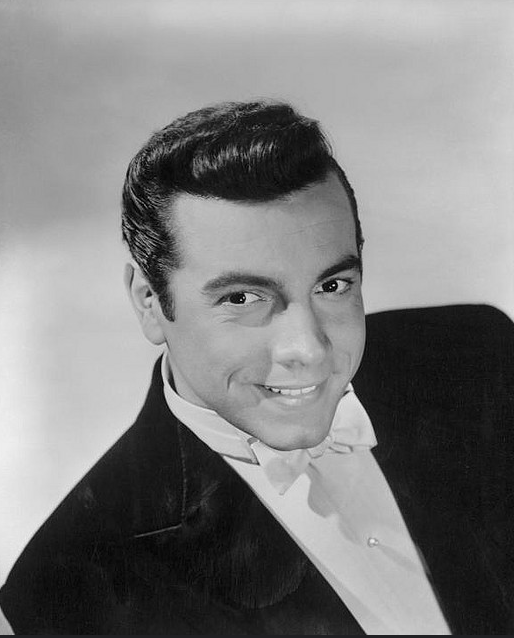


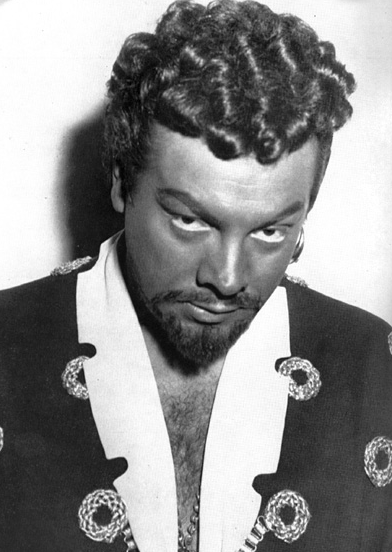
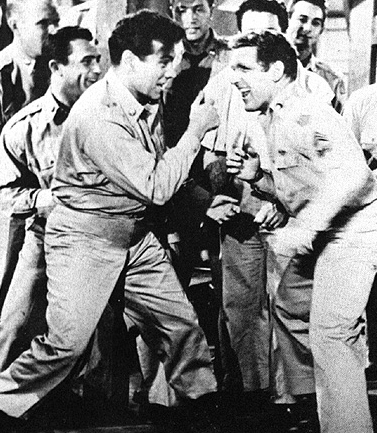

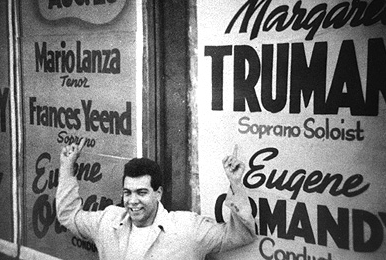

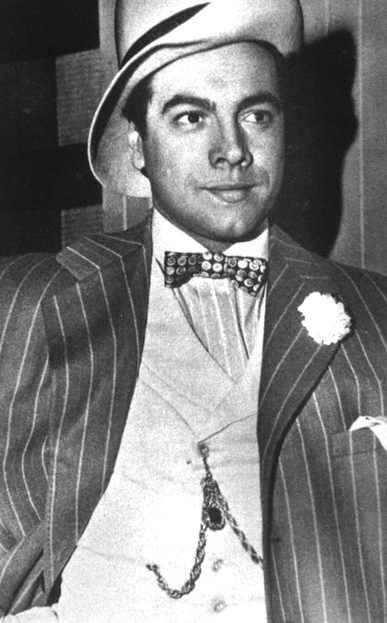


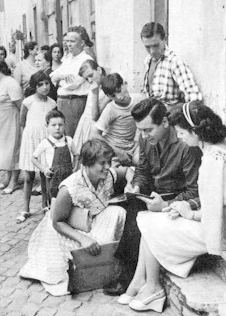
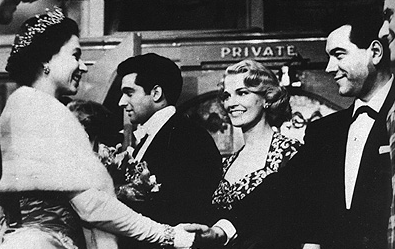


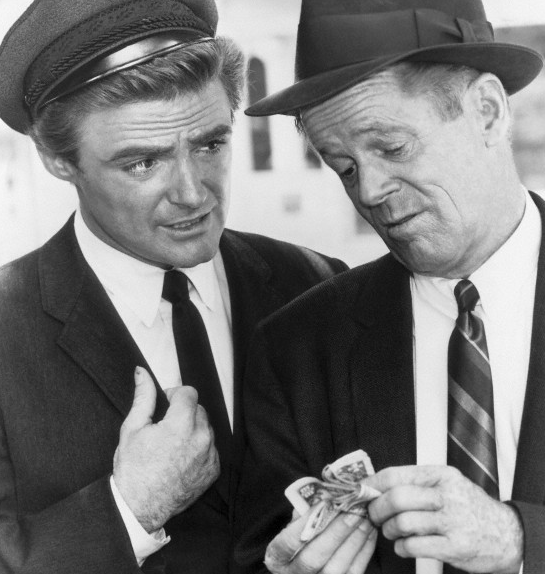


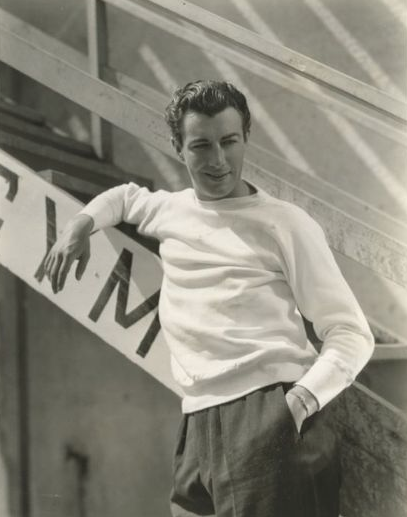
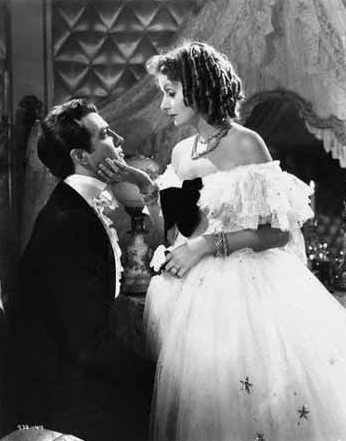

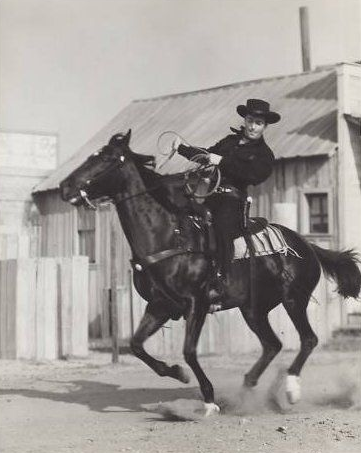


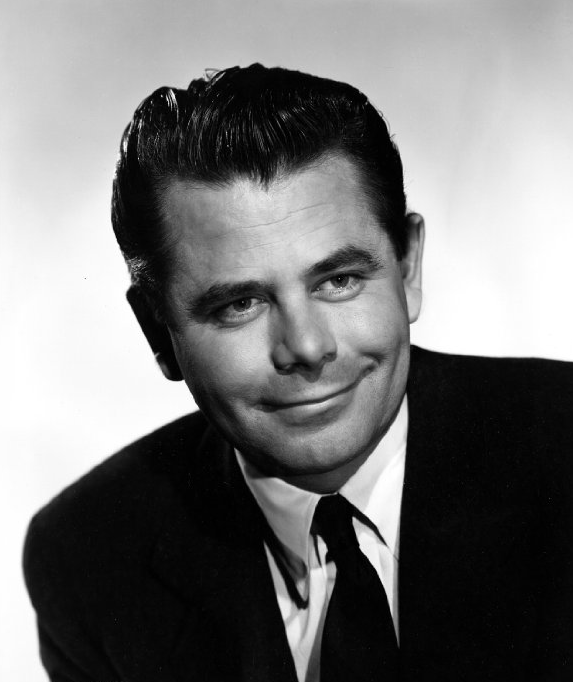
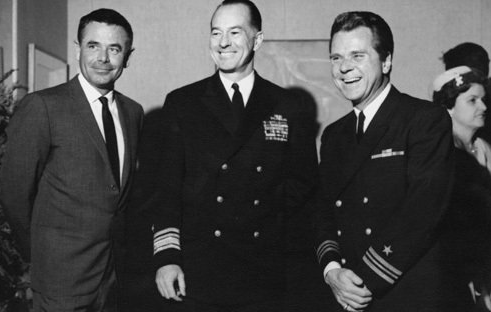

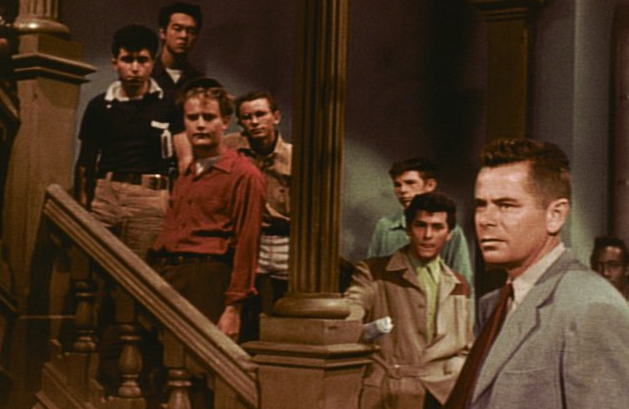


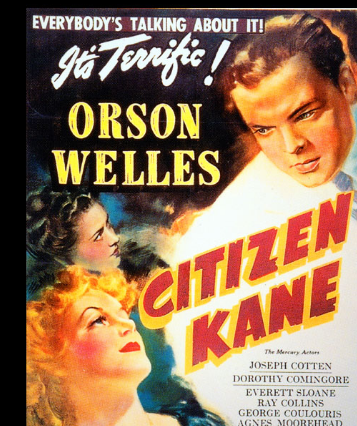

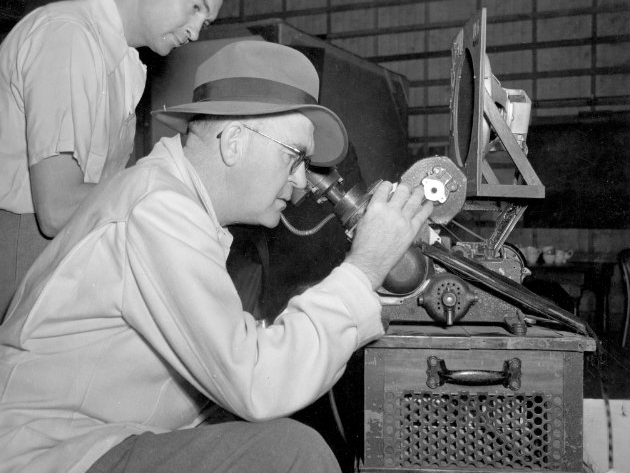

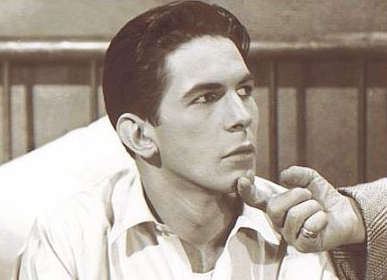


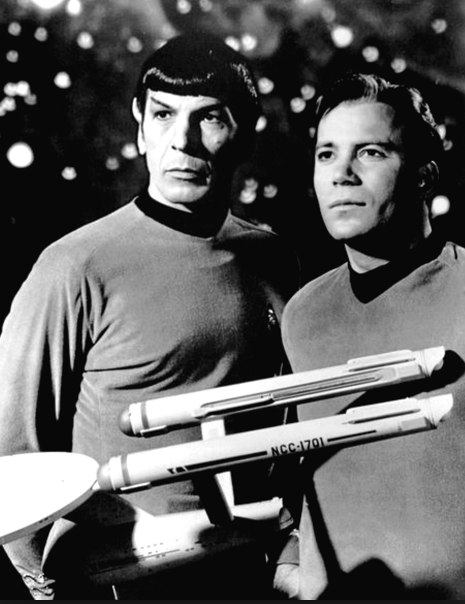



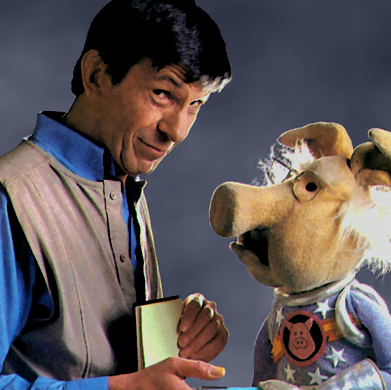
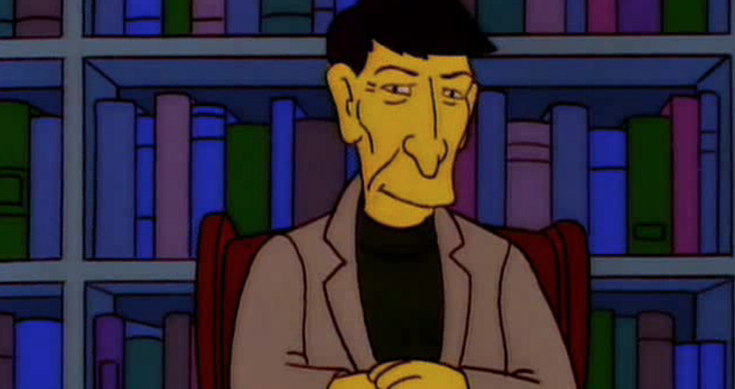
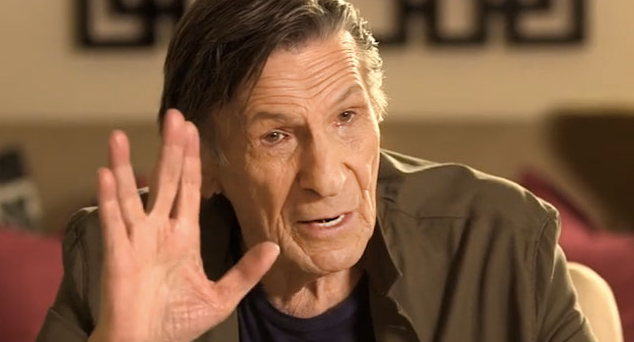
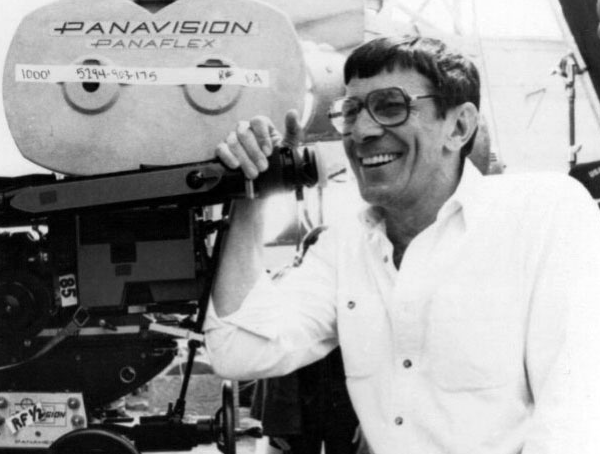


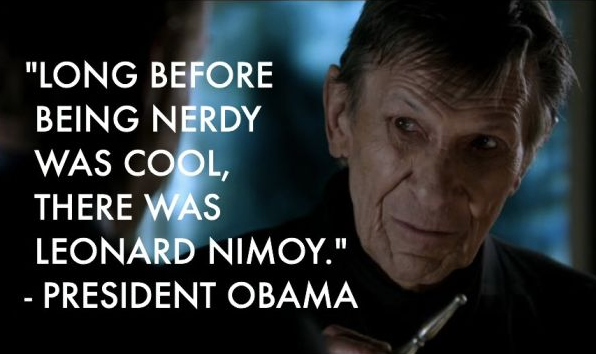
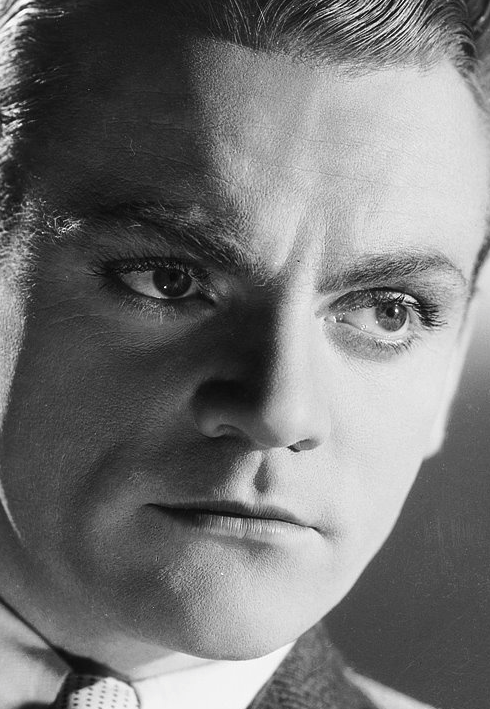


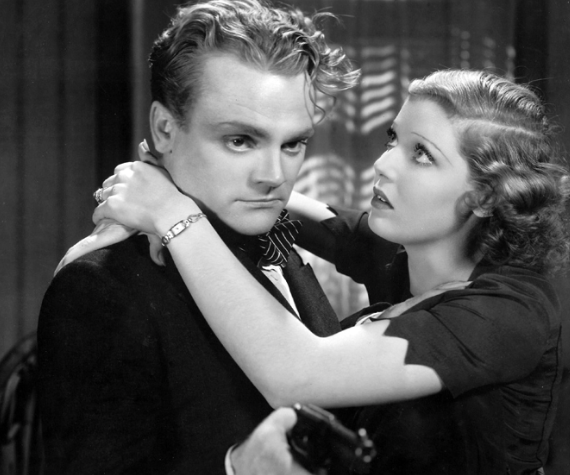
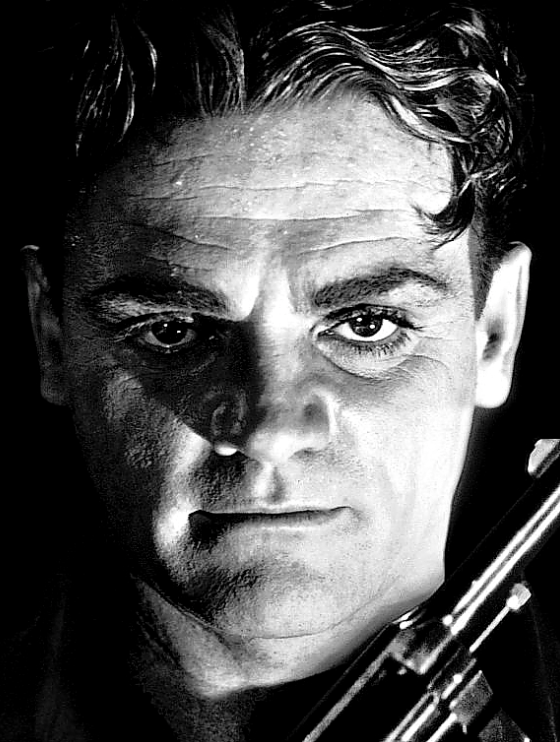

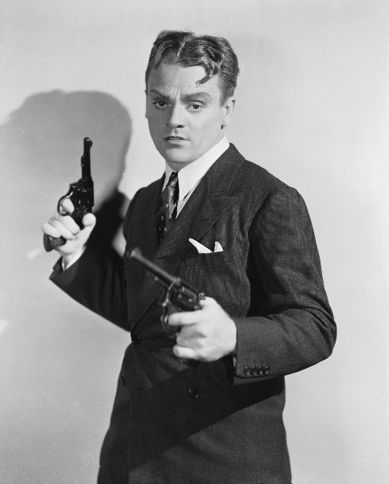
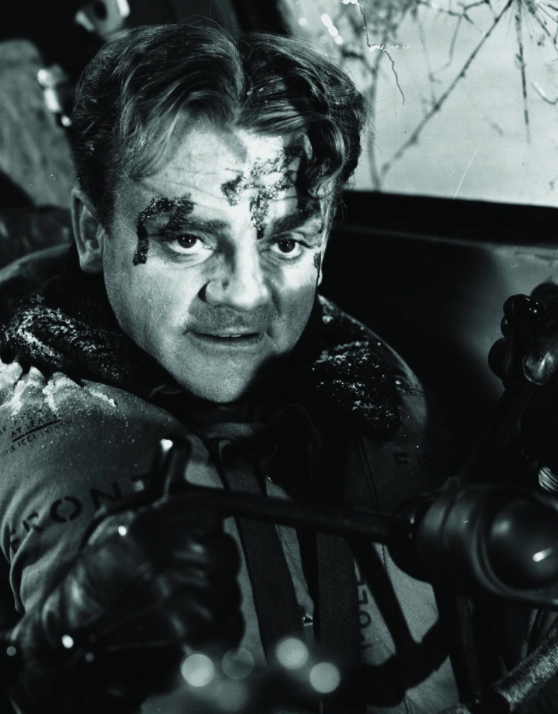
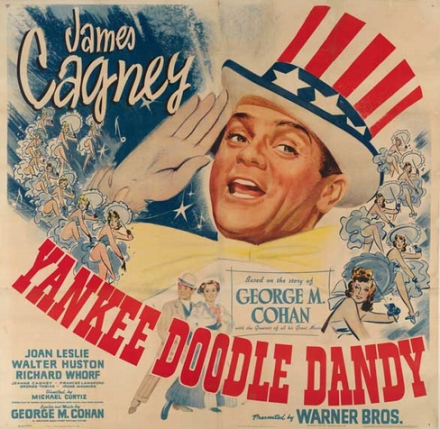




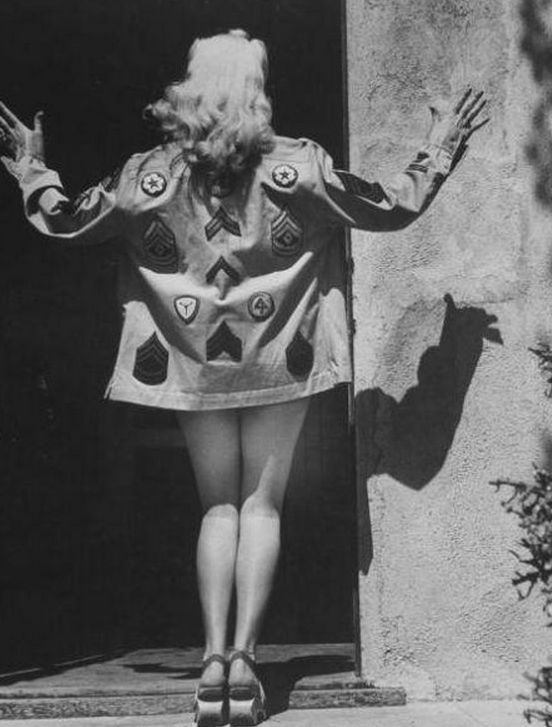
 Jess Waid