Days of Wine and Roses

Screenshot 2016-04-05 19.14.06

This is the second in a series of articles featuring movies from the 1950s and 1960s — films fictional LAPD cop Mike Montego might have watched.


Days of Wine and Roses is a 1962 film directed by Blake Edwards with a screenplay by JP Miller adapted from his own 1958 Playhouse 90 teleplay of the same name.

The movie was produced by Martin Manulis, with music by Henry Mancini, and features Jack Lemmon, Lee Remick, Charles Bickford and Jack Klugman. The film depicts the downward spiral of two average Americans who succumb to alcoholism and attempt to deal with their problems.

An Academy Award went to the film’s theme music, composed by Mancini with lyrics by Johnny Mercer. The film received four other Oscar nominations, including Best Actor and Best Actress.


Plot

Screenshot 2016-04-05 19.16.08

San Francisco public relations man Joe Clay (Jack Lemmon) meets and falls in love with Kirsten Arnesen (Lee Remick), a secretary. Kirsten is a teetotaler until Joe introduces her to social drinking. Reluctant at first, after her first few Brandy Alexanders, she admits that having a drink “made me feel good.” (She had previously disdained alcohol but admitted that she loved chocolate.) Despite the misgivings of Kirsten’s father (Charles Bickford), who runs a San Mateo landscaping business, they marry and have a daughter named Debbie.

Joe slowly goes from the “two-martini lunch” to full-blown alcoholism. It affects his work and, in due time, he and Kirsten both succumb to the pleasures and pain of addiction. Joe is demoted due to poor performance brought on by too much booze. He is sent out of town on business. Kirsten finds the best way to pass the time is to drink, and she drinks a lot. While drunk one afternoon, she causes a fire in their apartment and almost kills herself and their child. Joe eventually gets fired from the public relations firm and goes from job to job over the next several years.

Screenshot 2016-04-05 19.15.40

One day, Joe walks by a bar and looks at his reflection in the window. He goes home and says to his wife: “I walked by Union Square Bar. I was going to go in. Then I saw myself, my reflection in the window, and I thought, ‘I wonder who that bum is.’ And then I saw it was me. Now look at me. I’m a bum. Look at me! Look at you. You’re a bum. Look at you. And look at us. Look at us. C’mon, look at us! See? A couple of bums.”

Seeking escape from their addiction, Joe and Kirsten work together in Mr. Arnesen’s business and succeed in staying sober for two months. However, the urges are too strong, and after a late-night drinking binge, Joe destroys his father-in-law’s greenhouse and plants while looking for a stashed bottle of liquor.
Screenshot 2016-04-05 19.15.16

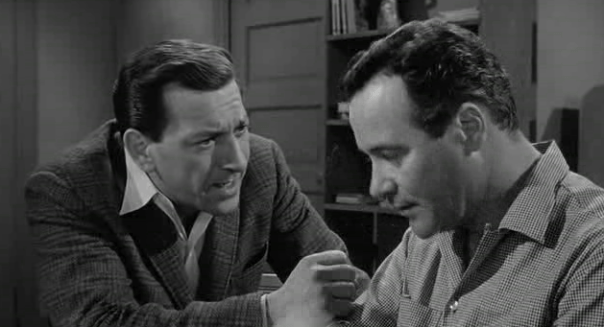
After commitment to a sanitarium wearing a straitjacket, Joe finally gets sober for a while, with the help of Alcoholics Anonymous, a dedicated sponsor named Jim Hungerford (Jack Klugman) and regular AA meetings. When Joe tries to help Kirsten, he instead ends up drinking again, and goes to a liquor store that’s closed for the night. Joe breaks into the store and steals a bottle, resulting in another trip to the sanitarium stripped down and tied to a treatment table.

Screenshot 2016-04-05 19.17.35

Hungerford warns him that he must keep sober no matter what, even if that means staying away from Kirsten. He explains to Joe how alcoholics often demonstrate obsessive behavior, pointing out that Kirsten’s previous love of chocolate may have been the first sign of an addictive personality, and counsels him that most drinkers hate to drink alone in the company of sober people.

Joe eventually becomes sober for close to a year and a responsible father to his child while holding down a steady job. He tries to make amends with his father-in-law by offering him a payment for past debts and wrongs, but Mr. Arnesen lashes out at him for indirectly getting Kirsten involved in the alcoholic lifestyle. After calming down, Arnesen says that Kirsten has been disappearing for long stretches of time and picking up strangers in bars.

One night, after Debbie is asleep, Kirsten, shakily sober for two days, comes to Joe’s apartment to attempt a reconciliation. Joe sees that if he were to return to her, it could lead to more of his previous self-destructive behavior.

Screenshot 2016-04-05 19.15.40

Kirsten longs for going back to “the way it was,” but as Joe explains to her, “You remember how it really was? You and me and booze — a threesome. You and I were a couple of drunks on the sea of booze, and the boat sank. I got hold of something that kept me from going under, and I’m not going to let go of it. Not for you. Not for anyone. If you want to grab on, grab on. But there’s just room for you and me — no threesome.”

Kirsten refuses to admit she’s an alcoholic, but does acknowledge that without alcohol, she “can’t get over how dirty everything looks.” “You better give up on me,” she says. When Kirsten leaves, Joe fights the urge to go after her. He looks down the street as Kirsten walks away. (She walks past a bar without entering, perhaps offering a faint note of hope). When Debbie asks, “Daddy, will Mommy ever get well?” he replies gently, “I did, didn’t I?” Again Joe looks down the street, the bar’s flashing sign reflecting in his window.

Screenshot 2016-04-05 19.14.28

Cast

Jack Lemmon as Joe Clay

Lee Remick as Kirsten Arnesen/Clay

Charles Bickford as Ellis Arnesen

Jack Klugman as Jim Hungerford

Jack Albertson as Trayner

Alan Hewitt as Rad Leland

Tom Palmer as Ballefoy

Debbie Megowan as Debbie Clay

Maxine Stuart as Dottie

Ken Lynch as Liquor Store Proprietor

Gail Bonney as Gladys the Cleaning Lady

Mel Blanc as TV Cartoon Characters (voice)

Jack Riley as Waiter

Katherine Squire as Mrs. Nolan

Lisa Guiraut as Belly Dancer

Jennifer Edwards as Debbie Clay at age 5

Lynn Borden uncredited as a party guest


Production

Background
Screenshot 2016-04-06 09.56.49

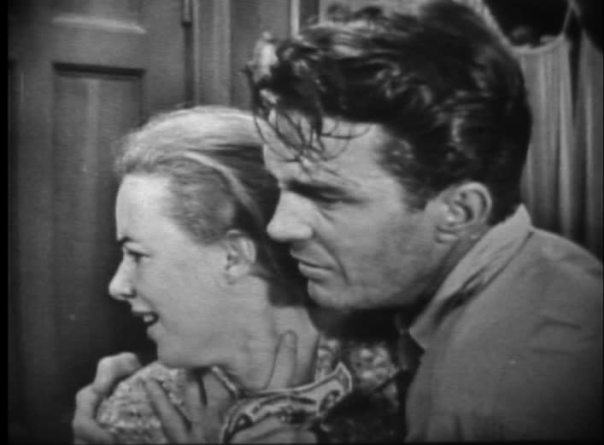
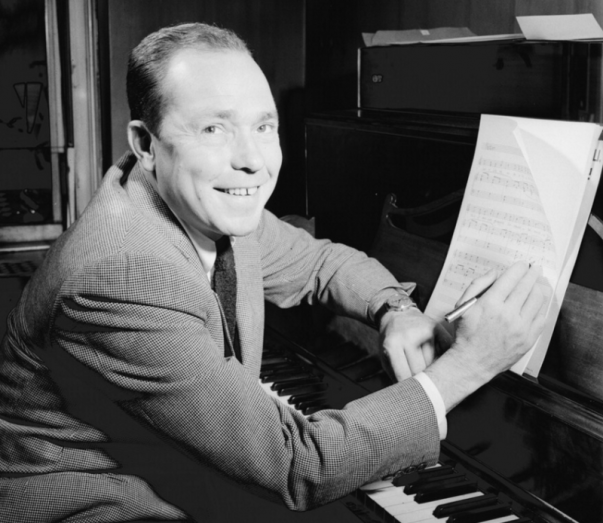
JP Miller found his title in the 1896 poem, “Vitae Summa Brevis Spem Nos.” Some critics observed that the movie lacked the impact of the original television production, which starred Cliff Robertson as Joe and Piper Laurie as Kirsten. In an article written for DVD Journal, critic D.K. Holm noted numerous changes that altered the original considerably when the material was filmed. He cites as an example the hiring of Jack Lemmon. With his participation, “little remained of the Vetat Incohare Longam” by the English writer Ernest Dowson (1867–1900). It also inspired the title song devised by Henry Mancini and Johnny Mercer:


They are not long, the weeping and the laughter,

Love and desire and hate;

I think they have no portion in us after

We pass the gate.

They are not long, the days of wine and roses:

Out of a misty dream

Our path emerges for a while, then closes

Within a dream.


(Coincidentally, Johnny Mercer, who wrote the lyrics for the title tune, had also written the lyrics for the theme from “Laura”, a 1944 classic film in which Dowson’s poem was quoted in its entirety. Dowson also wrote the poem Cynara which gave Margaret Mitchell the title for her novel Gone With the Wind).
Screenshot 2016-04-06 09.59.04

Miller’s teleplay for Playhouse 90, also titled Days of Wine and Roses, had received favorable critical attention and was nominated for an Emmy in the category “Best Writing of a Single Dramatic Program – One Hour or Longer.” Manulis, a Playhouse 90 producer, decided the material was ideal founding teleplay, except for actor Charles Bickford reprising his role.”


Filming

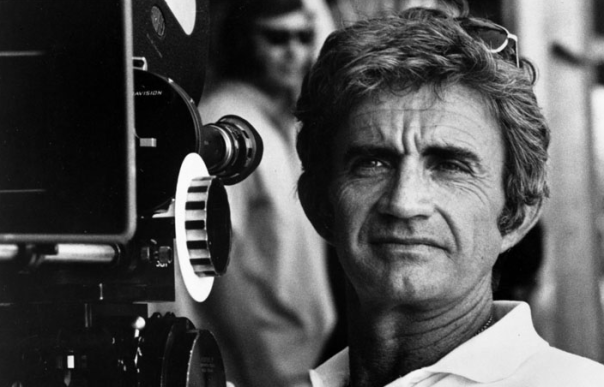
 The film’s Northern California locations included San Francisco, Albany and the Golden Gate Fields racetrack. The Oscar-winning title song had music by Henry Mancini and lyrics by Johnny Mercer. Single records by Andy Williams and the Henry Mancini chorus made the Billboard Top 40.
Screenshot 2016-04-06 10.02.07

Director Blake Edwards became a non-drinker a year after completing the film and went into substance recovery. He said that he and Jack Lemmon were heavy drinkers while making the film. Edwards used the theme of alcohol abuse often in his films, including: 10 (1979), Blind Date (1987) and Skin Deep (1989). Both Lemmon and Remick sought help from Alcoholics Anonymous long after they had completed the film. Lemmon revealed to James Lipton on Inside the Actors Studio his past drinking problems and his recovery. The film had a lasting effect in helping alcoholics deal with their problem. Today, Days of Wine and Roses is required viewing in many alcoholic and drug rehabilitation clinics across America.

 In the same Inside the Actors Studio interview, Lemmon stated that there was pressure by the studio to change the ending. To preserve the integrity of the movie, scenes were filmed in the same order as they appeared in the script, with the last scene filmed last. This is in contrast with the standard practice of filming different scenes together that take place in the same location, which reduces expenses, shortens the schedule and aids with scheduling the actors’ time on set. Immediately following the completion of filming, Lemmon left for Europe and remained out of communication so that the studio would be forced to release the movie without changing the storyline.


Reception

Box office and release

The producers used the following ironic tagline to market the film:

This, in its own terrifying way, is a love story.

The picture opened in wide release in the United States on December 26, 1962. The box office receipts for the film were good given the numbers reported are in 1962 dollars. It earned $4 million in US theatrical rentals, making it the 15th highest grossing film of the year. Total domestic sales were $8,123,077.


Critical response

The film became one of Blake Edwards’ best-regarded films, opening to praise from the critics and audiences alike. New York Times film critic Bosley Crowther wrote, “[It] is a commanding picture, and it is extremely well played by Mr. Lemmon and Miss Remick, who spare themselves none of the shameful, painful scenes. But for all their brilliant performing and the taut direction of Blake Edwards, they do not bring two pitiful characters to complete and overpowering life.”

The staff at Variety magazine liked the film, especially the acting, writing, “Miller’s gruelling drama illustrates how the unquenchable lure of alcohol can supersede even love, and how marital communication cannot exist in a house divided by one-sided boozing… Lemmon gives a dynamic and chilling performance. Scenes of his collapse, particularly in the violent ward, are brutally realistic and terrifying. Remick, too, is effective, and there is solid featured work from Charles Bickford and Jack Klugman in fine supporting performances.”

In a review of the DVD, critic Gary W. Tooze lauded Edwards’ direction and the acting, writing, “Blake Edwards’s powerful adaptation of J.P. Miller’s Playhouse 90 story, starring Jack Lemmon and Lee Remick in career performances, remains a variation in his body of work largely devoted to comedy… Lemmon is at his best and ditto for Remick in this harrowing tale of people consumed by their mutual addiction. This turns to an honest and heartbreaking portrayal of alcoholism as deftly done as any film I can remember.”

Margaret Parsons, film curator at the National Gallery of Art, said, “[The film] remains one of the most gut-wrenching dramas of alcohol-related ruin and recovery ever captured on film…and it’s also one of the pioneering films of the genre.”

The review aggregator Rotten Tomatoes reported that 100% of critics gave the film a positive review, based on seven reviews.


Awards


Academy Awards Wins (1963)


Academy Awards Nominations (1963)


Other wins

  • San Sebastián International Film Festival: OCIC Award Blake Edwards; Prize San Sebastián, Best Actor, Jack Lemmon; Best Actress, Lee Remick; 1963.
  • Fotogramas de Plata, Spain: Fotogramas de Plata; Best Foreign Performer, Jack Lemmon; 1964.


Other Nominations

  • Golden Globes: Golden Globe; Best Motion Drama Picture; Best Motion Drama Picture Actor, Jack Lemmon; Best Motion Drama Picture Actress, Lee Remick; Best Motion Picture Director, Blake Edwards; 1963.
  • British Academy of Film and Television Arts: BAFTA Film Award; Best Film from any Source, USA; Best Foreign Actor, Jack Lemmon; Best Foreign Actress, Lee Remick; 1964.


Other honors


Notable Quotes from the Film

  • Joe: My name is Joe Clay. I’m an alcoholic.

  • Kirsten: Thanks for the compliment, but I know how I look. This is the way I look when I’m sober. It’s enough to make a person drink, wouldn’t you say? You see, the world looks so dirty to me when I’m not drinking. Joe, remember Fisherman’s Wharf? The water when you looked too close? That’s the way the world looks to me when I’m not drinking.
     

https://www.youtube.com/watch?v=U0ajn_ebQNk


The Naked Spur

Screenshot 2016-03-23 13.33.08

I thought it might be fun to switch the focus of these monthly blogposts, from actors to films — the sorts of movies the main character in my Mike Montego series of novels might have watched as a kid or young man. They quite literally “don’t make ’em like this” anymore!

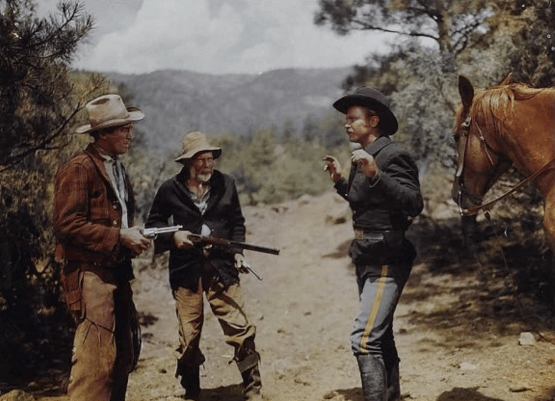
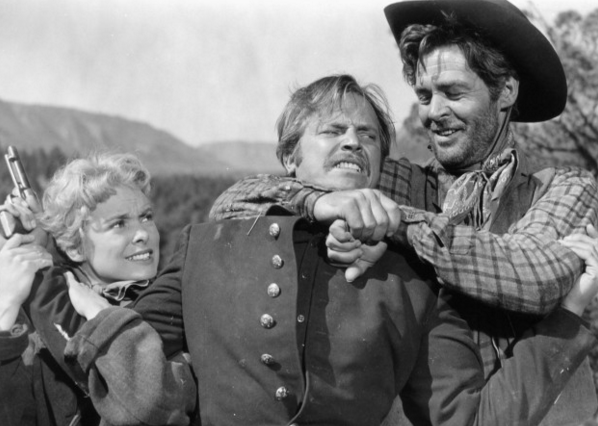
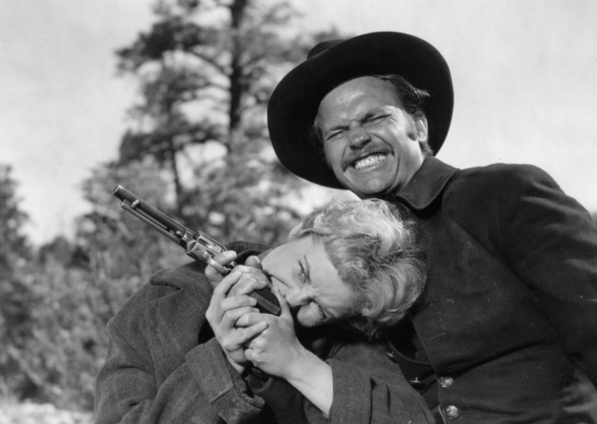
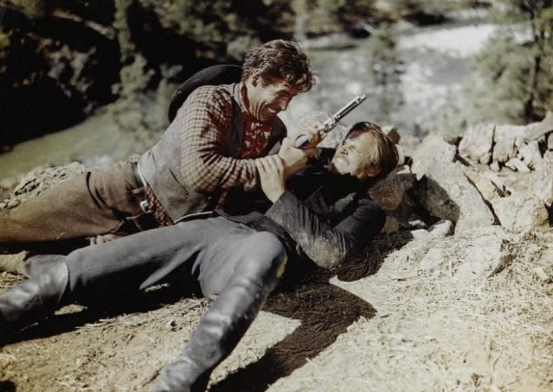
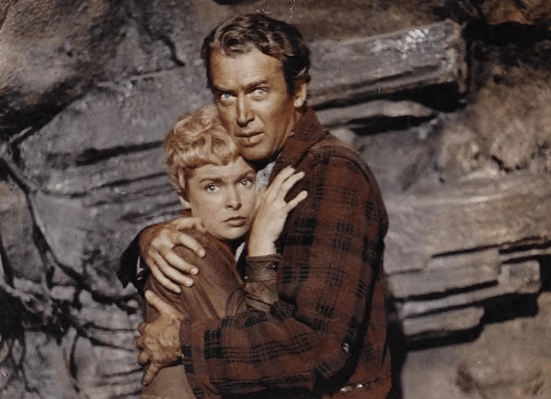
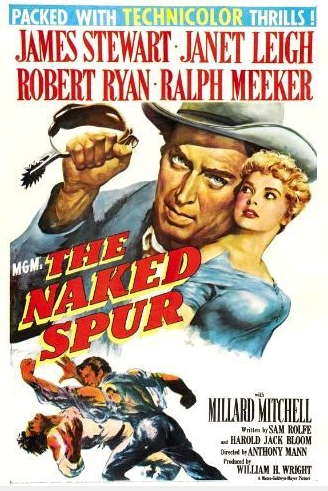
We’ll start with The Naked Spur, a 1953 Technicolor  Western film directed by Anthony Mann, starring James Stewart, Janet Leigh, and Robert Ryan. Written by Sam Rolfe and Harold Jack Bloom, the film is about a bounty hunter who tries to bring a murderer to justice, and is forced to accept the help of two strangers who are less than trustworthy. The original music score was composed by Bronislau Kaper and the cinematography was by William C. Mellor. The Naked Spur was filmed on location in Durango and the San Juan Mountains in Colorado, and Lone Pine, California. The film was nominated for an Academy Award for Best Original Screenplay—a rare honor for a Western. This was the third Western film collaboration between Anthony Mann and James Stewart.


Plot

In March 1868, Howard Kemp (James Stewart) is tracking Ben Vandergroat (Robert Ryan), who is wanted for the murder of the marshal in Abilene, Kansas.

On the western slopes of the Rocky Mountains in Southwestern Colorado, Kemp meets a grizzled old prospector, Jesse Tate (Millard Mitchell), and offers him twenty dollars to help out. Tate assumes that Kemp is a sheriff and Kemp does nothing to disillusion him.

They trap someone on top of a rocky hill who Kemp is convinced must be his wanted man. Rockslides force a retreat. Looking for a way around the hill, Kemp and Tate meet up with a Union soldier, Lieutenant Roy Anderson (Ralph Meeker). He has been discharged from the 6th Cavalry at Fort Ellis in Bozeman and is heading east. Tate questions why Anderson isn’t on the Bozeman Trail. Anderson’s story is that there are some “bad tempered Indians” whose chief’s daughter fell in with a handsome young army lieutenant. Kemp has a chance to see Anderson’s discharge order in which he is described as “morally unstable,” and given a dishonorable discharge.

Screenshot 2016-03-23 13.37.11

Tate tells Anderson that Kemp is a sheriff. With the aid of Anderson, who scales a sheer cliff face, Vandergroat is caught, along with his companion, Lina Patch (Janet Leigh), the daughter of Vandergroat’s friend, Frank Patch, who was shot dead trying to rob a bank in Abilene.

Vandergroat sets Tate and Anderson straight on two facts: that Kemp is no lawman, and that a reward is offered to bring him in— $5000, dead or alive. Tate and Anderson want their shares, to aid Kemp in getting Vandergroat back to Kansas. Lina is convinced that her father’s friend is innocent.

On the trail to Abilene, Vandergroat attempts to turn his captors against each other, using greed as his weapon. He also encourages Lina to use her beauty to divide Kemp and Anderson. When scouting a way through a mountain pass, Kemp and Tate spot a dozen Blackfeet, a normally friendly tribe, far from their normal hunting grounds. They tell the others and Anderson confesses that the Indians are after him. Kemp tells Anderson to hightail it out of there to avoid being captured by the Blackfeet. Anderson thinks Kemp just wants a bigger share of the reward money. He rides ahead, and from his position hidden behind a fallen tree trunk, with his rifle he elects to pick off a chief of the Blackfeet, at the moment Kemp’s group have confronted the Indians and are about to engage them in talk.

During the ensuing battle, Kemp saves Lina from the Blackfeet and she, in turn, helps him when he is shot in the leg. Later, Kemp passes out on the trail and awakes from a delirious nightmare. He thinks Lina is Mary, his ex-fiancée. Vandergroat tells the others that Mary sold Kemp’s ranch, which he left in her safekeeping, while he was serving in the army during the Civil War, and then went off with another man. Vandergroat further reveals that Kemp is determined to buy his ranch back, and that it can’t happen if he splits the reward money with Anderson and Tate.

Lina’s feelings of loyalty to her father’s friend, combined with an attraction to Kemp, confuses her. She has never seen Vandergroat hurt anyone unless it was in a fair fight, but after he loosens Kemp’s saddle cinch and tries to push him off a high mountain pass, Lina’s sympathies for Kemp grow.

Screenshot 2016-03-23 13.34.46

Taking refuge from a storm in a cave, Vandergroat manipulates Lina into distracting Kemp. She tells the rancher of her dream to go to California, where no one knows her and she can make a fresh start. He tells her of his wish to repurchase his ranch. They kiss and this gives Ben a chance to escape. Kemp catches Vandergroat, and Anderson suggests that since the reward is for a “dead or alive” criminal, they should just kill the troublemaker. Tate stops Anderson but, caught up in the anger of the moment and hurt by what he sees as Lina’s treachery, Kemp challenges Vandergroat to a shoot out. The wanted man declines to take part.

Next day, the group comes to a high-running river. They argue about whether to cross or go downstream. Anderson grabs a rope and throws it around Vandergroat’s neck and says he’ll drag him across the river. A fight ensues between Kemp and Anderson, as Vandergroat watches with malicious enjoyment. Kemp finally manages to kick Anderson unconscious. While Kemp and Anderson recover from the fight and Lina searches for firewood, Vandergroat convinces Tate to sneak off with him to find a gold mine, the whereabouts of which Vandergroat has been tempting the old man with. When they depart during the night, he convinces Tate to take Lina along.

Vandergroat and Lina ride double; Tate follows, holding a rifle on them. Ben suddenly yells, “Snake!” and in the confusion grabs Tate’s rifle from him and kills him. He fires two more shots in order to lure Kemp and Anderson to a spot where he intends to kill them. Lina finally sees Vandergroat for what he is.

Screenshot 2016-03-23 13.34.24

Kemp and Anderson discover Tate’s body where Vandergroat has positioned it for an ambush from the high cliff face. Preparing to shoot Kemp, Vandergroat is caught off guard when Lina grabs the rifle barrel, saving Kemp’s life. While Anderson exchanges gunfire with Vandergroat, Kemp removes one of his spurs to aid in climbing up the back of the cliff to outflank Vandergroat. He uses the spur as a combination climbing tool and makeshift piton.

Vandergroat, hearing Kemp, gets the drop on the rancher. However, before he can pull the trigger, Kemp throws his spur into the killer’s left cheek. As Ben reels from the pain of the spur, he is shot by Anderson and his body falls into the nearby river, becoming entangled in the roots of a tree. Anderson lassos a branch on the other side of the river and crosses using the rope. He then wraps it around Ben’s body but is crushed by a large tree stump barrelling down the river.

Screenshot 2016-03-23 13.35.15

Kemp grabs the rope and drags Vandergroat’s body across the river and, in a rage, vows that he will take him back to reclaim his land. Lina pleads with him not to take blood money for bringing Vandergroat in. She says she will go with him, no matter what, marry him, and live with him on the ranch. Kemp realizes what he is doing and his love for Lina makes him stop. He begins digging a grave to bury Vandergroat and they decide to make for California, leaving their pasts behind.

Screenshot 2016-03-23 13.36.36

Cast


Production

Screenshot 2016-03-23 13.38.55

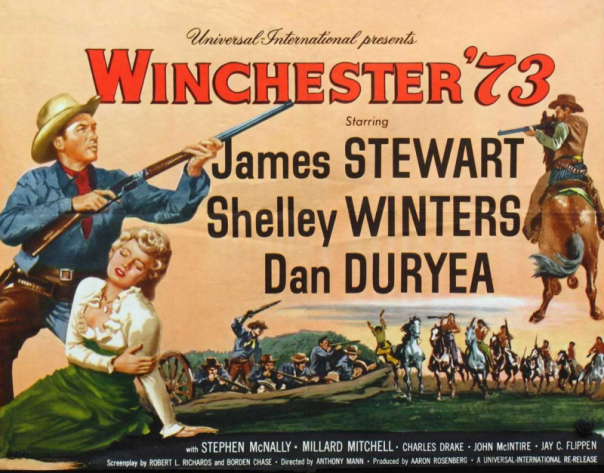
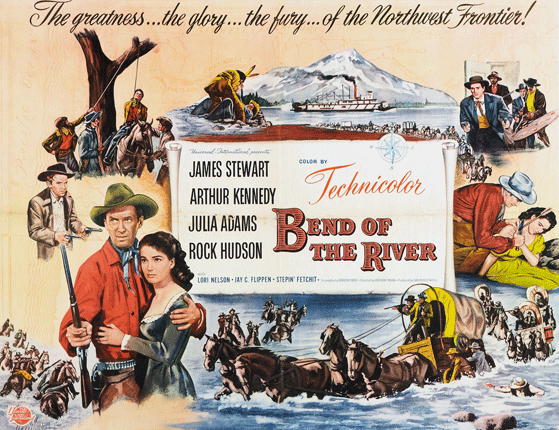
The Naked Spur was the third of five Western collaborations between James Stewart and Anthony Mann and also, third of the eight collaborations they did overall. Two previous Westerns included Winchester ’73 (1950) and Bend of the River (1952). The film is notable for having only five actors.

Screenshot 2016-03-23 13.40.55

Robert Ryan, known for his roles as ruthless villains and hard-boiled cops, would work with Mann again in Men in War (1957) and God’s Little Acre (1958). Janet Leigh starred alongside Ryan in the film noir Act of Violence (1948), which was directed by Fred Zinnemann. Ralph Meeker was cast as Roy Anderson, a disgraced Army officer.

Millard Mitchell, who played Jesse Tate, a grizzled old prospector, died at fifty years of age from lung cancer shortly after this picture. This was his next-to-last movie, followed by Here Come the Girls (released October 1953), starring Bob Hope.

The film was filmed on location in Durango and the San Juan Mountains in Colorado, and Lone Pine, California. According to writer and historian Frederic B. Wildfang, during filming, Stewart dedicated a monument in town, marking the area as the “Hollywood of the Rockies.” Production started in late May and ended in June 1952.


Reception

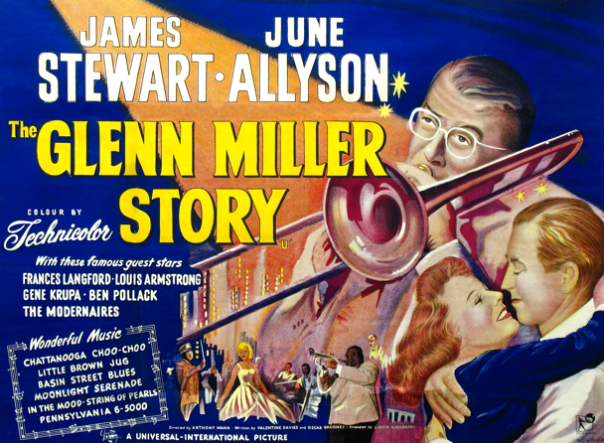
The film premiered in the first day of February 1953. That same year, two other films directed by Mann and starring Stewart were also released: Thunder Bay and The Glenn Miller Story.

Screenshot 2016-03-23 13.56.29

According to MGM records the film earned $2,423,000 in the US and Canada and $1,427,000 overseas, resulting in a profit to the studio of $1,081,000. This success ensured three more Stewart-Mann collaborations, including two more westerns. Screenwriters Sam Rolfe and Harold Jack Bloom were nominated for the 1953 Best Screenplay Academy Award. In the years since its release, the film has achieved continued success, gaining more critical acclaim now than upon first release. Leonard Maltin has lauded The Naked Spur as “one of the best westerns ever made.”

In 1997, The Naked Spur was added to the United States National Film Registry, being deemed “culturally, historically, or aesthetically significant.”

Barbara Hale

Screenshot 2016-02-20 15.34.03

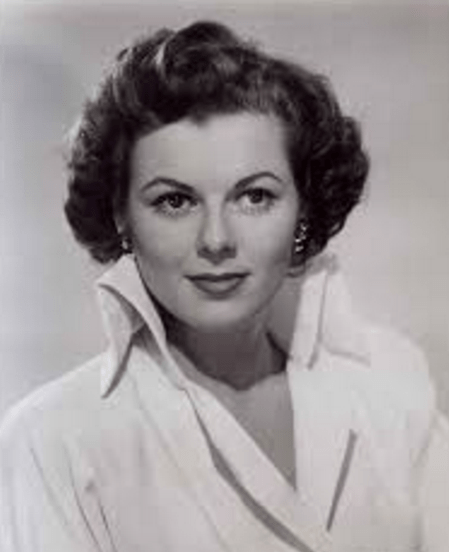
Barbara Hale (born April 18, 1922) is an American actress best known for her role as legal secretary Della Street on more than 270 episodes of the long-running Perry Mason television series. She reprised the role in 30 Perry Mason movies for television.

Barbara Hale was born in DeKalb, Illinois, to Luther Ezra Hale, a landscape gardener, and his wife, Wilma Colvin. She is of Scots-Irish ancestry. Hale graduated in 1940 from Rockford High School in Rockford, Illinois, then attended the Chicago Academy of Fine Arts, planning to become an artist. Her performing career began in Chicago when she started modelling to pay for her education. Hale’s family included a sister, Juanita, for whom Hale’s younger daughter was named.


Acting career

Screenshot 2016-02-20 15.33.22

Hale moved to Hollywood in 1943, and made her first screen appearances playing small parts (often uncredited). Her first role was in Gildersleeve’s Bad Day. She was under contract to RKO Radio Pictures through the late 1940s. She appeared in Higher and Higher (1943) with Frank Sinatra and sang with the crooner; played leading lady to Robert Mitchum in West of the Pecos(1945); enjoyed top billing in both Lady Luck (1946), her first “full stardom”) and “her fifth A picture” opposite Robert Young andThe Window (1949) with Arthur Kennedy; and co-starred in Jolson Sings Again (1949), with Larry Parks playing Al Jolson and Hale as Jolson’s wife, Ellen Clark.

Screenshot 2016-02-20 15.33.47

She played the top-billed title role in Lorna Doone (1951), co-starred with James Stewart in The Jackpot (1951), with James Cagney in a 1953 drama, A Lion Is in the Streets, and opposite Rock Hudson in 1953’s Seminole, then appeared in 1955’s The Far Horizons with Fred MacMurray and Charlton Heston, working with some of Hollywood’s best-known leading men of the day.

Screenshot 2016-02-20 15.33.07

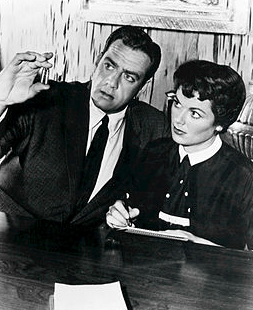
Hale’s flourishing movie career more or less ended when Hale accepted her best known role as legal secretary Della Street in the television series Perry Mason starring Raymond Burr as the titular character. The show ran from 1957 to 1966, and she reprised the role in 30 Perry Mason television films (1985–95). For more on the Della Street character, see below.

She co-starred with Joel McCrea in a 1957 western, The Oklahoman, but there were few leading roles thereafter. Hale did have a featured role in the 1970 ensemble film Airport, playing the wife of a jetliner pilot (Dean Martin).

Screenshot 2016-02-20 15.36.39

Hale’s career became inextricably linked with that of Perry Mason co-star Burr, including her 1971 guest-starring role on his next series, Ironside, in an episode titled “Murder Impromptu,” followed by their 1980s and early ’90s TV movies together.

Her last on-screen appearance to date came in a TV biographical documentary about Burr that aired in 2000.

Hale’s activity in radio was more limited than in film or television. She appeared in five episodes of Family Theater (1950-1954) and in one episode each of Lux Radio Theatre (1950), Voice of the Army (1947), and Proudly We Hail (syndicated).


Screen shot 2016-02-20 at 4.13.40 PM

Barbara Hale also is remembered as a spokesperson for Amana, makers of Radarange microwave ovens, memorably intoning, “If it doesn’t say Amana, it’s not a Radarange.”


Private life

Screen shot 2016-02-20 at 4.23.08 PM


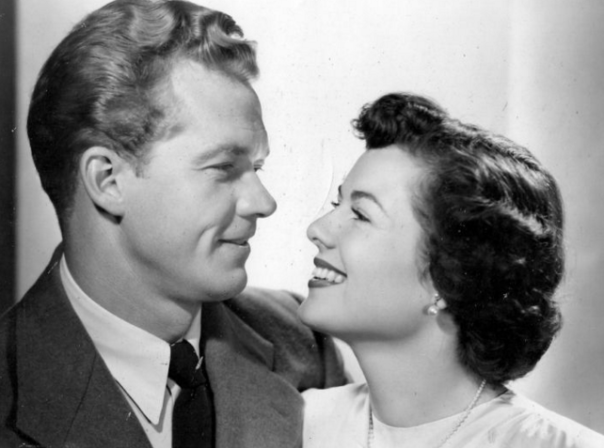
In 1945 during the filming of West of the Pecos, Hale met actor Bill Williams (for more on Williams, see below). They married June 22, 1946, and became the parents of two daughters, Jodi and Juanita, and a son, actor William Katt. Katt played detective Paul Drake, Jr., with her in several made-for-television Perry Mason movies. She also guest-starred as the mother of Ralph Hinkley (played by Katt) in a 1982 episode of The Greatest American Hero (Episode 29, “Who’s Woo in America”), and appeared as his mother in the movieBig Wednesday (1978).

Bill Williams (See below) died of cancer in 1992, after 46 years of marriage. Hale herself is a cancer survivor, and a grandmother. She is a follower of the Bahá’í Faith.


Accolades

Hale was recognized as a Star of Television (with a marker at 1628 Vine Street) on the Hollywood Walk of Fame on February 8, 1960. She won the Emmy Award for Best Supporting Actress (Continuing Character) in a Dramatic Series in 1959 and was nominated for the Emmy for Outstanding Performance in a Supporting Role by an Actor or Actress in a Series in 1961.

She was presented one of the Golden Boot Awards in 2001 for her contributions to western cinema.


Della Street

Screenshot 2016-02-20 15.34.19

Della Street is the fictional secretary of Perry Mason in the long-running series of novels, short stories, films, and radio and television programs featuring the fictional defense attorney created by Erle Stanley Gardner.

In the first Perry Mason novel, The Case of the Velvet Claws, written in the early days of the Great Depression, it is revealed that Della Street came from a wealthy, or at least well-to-do, family that was wiped out by the stock market crash of 1929. Della was forced to get a job as a secretary. By the time of the TV series in the 1950s and 1960s, this would have not fit well with the age of the characters as then portrayed. According to The Case of The Caretaker’s Cat, she is approximately 15 years younger than Perry Mason.

A character named Della Street first appeared in Gardner’s unpublished novel Reasonable Doubt, where she was a secretary, but not the secretary of the lawyer, Ed Stark. Gardner described her this way: “Della Street … Secretary, twenty-seven, quiet, fast as hell on her feet, had been places. Worked in a carnival or side show, knows all the lines, hard-boiled exterior, quietly efficient, puzzled over the lawyer, chestnut hair, trim figure, some lines on her face, a hint of weariness at the corners of her eyes.”

When Gardner submitted Reasonable Doubt to William Morrow, an editor suggested that “Della Street is a better character than the secretary.” Gardner took this suggestion when he rewrote Reasonable Doubt as The Case of the Velvet Claws and made Della Street Perry Mason’s secretary. In the published novel, the carnival or side show was jettisoned, and Street came from a more respectable background. This is a good example of the difference between the pulp writing and slick writing of the 1930s.

In 1950 Gardner published the short story “The Case of the Suspect Sweethearts” under the pseudonym Della Street.

There are several instances of sexual tension between Mason and Street in the Gardner novels; multiple glances, kisses and so on. There were also several proposals of marriage, all of which Della turned down because she wanted to be a part of Mason’s life and she knew that meant being a part of his work.

In “The case of the Weary Watchdog,” Della is pulled over and introduces herself to the officer as “Mrs. BRANDON Street, Della Street.”

Erle Stanley Gardner, the creator of Perry Mason in a series of novels, was a prolific author, who employed three secretaries simultaneously, all sisters, to keep up with his output. One of them he eventually married, after his first wife—from whom he was separated for 30 years—died. This was Jean Gardner, born Agnes Helene Walter. People who knew her believed she was the inspiration for Della Street, though neither she nor Erle Stanley Gardner himself admitted it. Mrs. Gardner said she thought he put several women together to create the character.

In the film adaptations made in the 1930s, Della Street was portrayed by five different actresses: Helen Trenholme, Claire Dodd, Genevieve Tobin, June Travis and Ann Dvorak.

Screenshot 2016-02-20 15.36.39

On television, Della Street was of course played by  Hale in the series and 30 made-for-TV movies. Sharon Acker played Della Street in the short-lived revival series The New Perry Mason, starring Monte Markham as Mason.

Gertrude Warner was the first actress to portray Street regularly, albeit on the radio series, followed by Joan Alexander and Palmolive’s “Madge”, Jan Miner. The character portrayed in the radio series was reworked into Sara Lane on the daytime show Edge of Night, which was to be the daytime Perry Mason, until Gardner pulled his support for the project.


Bill Williams

Screen shot 2016-02-20 at 4.25.53 PM

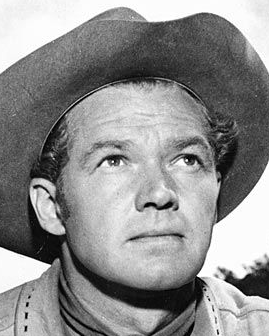
Bill Williams, born Herman August Wilhelm Katt, (May 15, 1915 – September 21, 1992) was an American television and film actor. He is best known for his starring role in the early television series, The Adventures of Kit Carson, which aired in syndication from 1951-55.


Career

Williams was born in Brooklyn, New York to German immigrant parents. He attended Pratt Institute, calling himself William H. Katt, and became a professional swimmer, performing in underwater shows. He landed a walk-on role as a theatre usher inKing Kong (1933). He enlisted in the United States Army during World War II, but was discharged before the end of the conflict and became an actor. He made his credited debut in The Blue Room in 1944, using the professional name Bill Williams. His first starring role opposite Susan Hayward in Deadline at Dawn (1946) made him a star.

Screen shot 2016-02-20 at 4.27.20 PM

Williams had appeared in ten films before he landed the lead role in The Adventures of Kit Carson, which ran for 104 episodes. After the series ended, Williams’ star power quickly fizzled out. It was briefly revived in 1957 when he co-starred with Betty White in television’s Date with the Angels. Williams played Federal agent Martin Flaherty in The Scarface Mob (1959), the pilot for ABC‘s The Untouchables. In the series, however, the role went to Jerry Paris. In 1958, Williams turned down the lead in Sea Hunt because he believed that an underwater show would not work well on television. Lloyd Bridges accepted the part and turned it into a hit. Williams then starred as a former Navy frogman in Assignment: Underwater, which ran for just one season. He played a variety of roles on Perry Mason, in which his wife Barbara Hale co-starred with Raymond Burr as his secretaryDella Street. In the 1962 episode, “The Case of the Crippled Cougar,” he played defendant Mike Preston. In 1963 he played murder victim Floyd Grant in “The Case of the Bluffing Blast.” In 1965 he played murderer Charles Shaw in “The Case of the Murderous Mermaid,” and murderer Burt Payne in “The Case of the 12th Wildcat”. Williams appeared in a final season episode of Ironside along with his son, bringing him together again with Raymond Burr. He also made guest appearances on television and worked in low-budget science fiction films until his retirement.


Personal life

Screen shot 2016-02-20 at 4.23.08 PM

Williams married  Hale June 22, 1946. They had met during the filming of West of the Pecos and would have two daughters, Jodi and Juanita, and a son, actor William Katt.

Williams died of a brain tumor at age 77 in 1992.

For his contribution to the television industry, Bill Williams has a star on the Hollywood Walk of Fame. It is at 6161 Hollywood Blvd.

Shelly Manne


Screenshot 2016-01-08 11.20.50Sheldon “Shelly” Manne (June 11, 1920 – September 26, 1984), was an American jazz drummer. Most frequently associated with West Coast jazz, he was known for his versatility and also played in a number of other styles, including Dixieland, swing, bebop, avant-garde jazz and fusion, as well as contributing to the musical background of hundreds of Hollywood films and television programs.

Manne’s father and uncles were drummers. In his youth he admired many of the leading swing drummers of the day, especially Jo Jones and Dave Tough. Billy Gladstone, a colleague of Manne’s father and the most admired percussionist on the New York theatrical scene, offered the teenage Shelly tips and encouragement. From that time, Manne rapidly developed his style in the clubs of 52nd Street in New York in the late 1930s and 1940s. His first professional job with a known big band was with the Bobby Byrne Orchestra in 1940. In those years, as he became known, he recorded with jazz stars like Coleman Hawkins, Charlie Shavers, and Don Byas. He also worked with a number of musicians mainly associated with Duke Ellington, like Johnny Hodges, Harry Carney, Lawrence Brown, and Rex Stewart.

In 1943, Manne married a Rockette, Florence Butterfield (known affectionately to family and friends as “Flip”). The marriage would last 41 years, until the end of Manne’s life.

When the bebop movement began to change jazz in the 1940s, Manne loved it and adapted to the style rapidly, performing with Dizzy Gillespie and Charlie Parker. Around this time he also worked with rising stars like Flip Phillips, Charlie Ventura, Lennie Tristano, and Lee Konitz.

Manne rose to stardom when he became part of the working bands of Woody Herman and, especially, Stan Kenton in the late 1940s and early 1950s, winning awards and developing a following at a time when jazz was the most popular music in the United States. Joining the hard-swinging Herman outfit allowed Manne to play the bebop he loved. The controversial Kenton band, on the other hand, with its “progressive jazz,” presented obstacles, and many of the complex, overwrought arrangements made it harder to swing. But Manne appreciated the musical freedom that Kenton gave him and saw it as an opportunity to experiment along with what was still a highly innovative band. He rose to the challenge, finding new colors and rhythms, and developing his ability to provide support in a variety of musical situations.

In the early 1950s, Manne left New York and settled permanently on a ranch in an outlying part of Los Angeles, where he and his wife raised horses. From this point on, he played an important role in the West Coast school of jazz, performing on the Los Angeles jazz scene with Shorty Rogers, Hampton Hawes, Red Mitchell, Art Pepper, Russ Freeman, Frank Rosolino, Chet Baker, Leroy Vinnegar, Pete Jolly, Howard McGhee, Bob Gordon, Conte Candoli, Sonny Criss, and numerous others. Many of his recordings around this time were for Lester Koenig’s Contemporary Records, where for a period Manne had a contract as an “exclusive” artist (meaning that he could not record for other labels without permission).

Manne led a number of small groups that recorded under his name and leadership. One consisting of Manne on drums, trumpeter Joe Gordon, saxophonist Richie Kamuca, bassist Monty Budwig, and pianist Victor Feldman performed for three days in 1959 at the famous Black Hawk club in San Francisco. Their music was recorded on the spot, and four LPs were issued. Highly regarded as an innovative example of a “live” jazz recording, the Black Hawk sessions were reissued on CD in augmented form years later.

Screenshot 2016-01-08 11.24.43

Manne is often associated with the once frequently criticized West Coast school of jazz. He has been considered “the quintessential” drummer in what was seen as a West Coast movement, though Manne himself did not care to be so pigeonholed. In the 1950s, much of what he did could be seen as in the West Coast style: performing in tightly arranged compositions in what was a cool style, as in his 1953 album named The West Coast Sound, for which he commissioned several original compositions. Some of West Coast jazz was experimental, avant-garde music several years before the more mainstream avant-garde playing of Cecil Taylor and Ornette Coleman (Manne also recorded with Coleman in 1959); a good deal of Manne’s work with Jimmy Giuffre was of this kind. Critics would condemn much of this music as overly cerebral.

Screenshot 2016-01-08 11.26.39

Another side of West Coast jazz that also came under critical fire was music in a lighter style, intended for popular consumption. Manne made contributions here too. Best known is the series of albums he recorded with pianist André Previn and with members of his groups, based on music from popular Broadway shows, movies, and television programs. (The first and most famous of these was the one based on My Fair Lady, recorded by Previn, Manne, and bassist Leroy Vinnegar in 1956. See My Fair Lady (Shelly Manne album).) The music—with each album devoted to a single show—was improvised in the manner of jazz, but always in a light, immediately appealing style aimed at popular taste, which did not always go over well with aficionados of “serious” jazz music — a possible reason why Manne has been frequently overlooked in accounts of major jazz drummers of the 20th century. Much of the music produced on the West Coast in those years, as Robert Gordon concedes, was in fact imitative and “lacked the fire and intensity associated with the best jazz performances.” But Gordon also points out that there is a level of musical sophistication, as well as an intensity and “swing” in the music recorded by Manne with Previn and Vinnegar (and later Red Mitchell) that is missing in the many lackluster albums of this type produced by others in that period.

West Coast jazz, however, represented only a small part of Manne’s playing. In Los Angeles and occasionally returning to New York and elsewhere, Manne recorded with musicians of all schools and styles, ranging from those of the swing era through bebop to later developments in modern jazz, including hard bop, usually seen as the antithesis to the cool jazz frequently associated with West Coast playing.

From the 78-rpm recordings of the 1940s to the LPs of the 1950s and later, to the hundreds of film soundtracks he appeared on, Manne’s recorded output was enormous and often hard to pin down. According to the jazz writer Leonard Feather, Manne’s drumming had been heard on well “over a thousand LPs”—a statement that Feather made in 1960, when Manne had not reached even the midpoint of his 45-year-long career.

An extremely selective list of those with whom Manne performed includes Benny Carter, Earl Hines, Clifford Brown, Zoot Sims, Ben Webster, Maynard Ferguson, Wardell Gray, Lionel Hampton, Junior Mance, Jimmy Giuffre, and Stan Getz. In the 1950s, he recorded two solid albums with Sonny RollinsWay Out West (Contemporary, 1957) received particular acclaim and helped dispel the notion that West Coast jazz was always different from jazz made on the East Coast—and, in the 1960s, two with Bill Evans. Around the same time in 1959, Manne recorded with the traditional Benny Goodman and the iconoclastic Ornette Coleman, a striking example of his versatility.

One of Manne’s most adventurous 1960s collaborations was with Jack Marshall, the guitarist and arranger celebrated for composing the theme and incidental music for The Munsters TV show in that period. Two duet albums (Sounds Unheard Of!, 1962, and Sounds!, 1966) feature Marshall on guitar, accompanied by Manne playing drums and a wide variety of percussion instruments unusual in jazz, from “Hawaiian slit bamboo sticks,” to a Chinese gong, to castanets, to piccolo Boo-Bam.

Another example of Manne’s ability to transcend the narrow borders of any particular school is the series of trio albums he recorded with guitarist Barney Kessel and bassist Ray Brown as “The Poll Winners.” (They had all won numerous polls conducted by the popular publications of the day; the polls are now forgotten, but the albums endure, now reissued on CD.) Manne even dabbled in Dixieland and fusion, as well as “Third Stream” music. He participated in the revival of that jazz precursor ragtime (he appears on several albums devoted to the music of Scott Joplin), and sometimes recorded with musicians best associated with European classical music. He always, however, returned to the straight-ahead jazz he loved best.

Screenshot 2016-01-08 11.31.10

In addition to Dave Tough and Jo Jones, Manne admired and learned from contemporaries like Max Roach and Kenny Clarke, and later from younger drummers like Elvin Jones and Tony Williams. Consciously or unconsciously, he borrowed a little from all of them, always searching to extend his playing into new territory.

Despite these and numerous other influences, however, Shelly Manne’s style of drumming was always his own—personal, precise, clear, and at the same time multilayered, using a very broad range of colors. Manne was often experimental, and had participated in such musically exploratory groups of the early 1950s as those of Jimmy Giuffre and Teddy Charles. Yet his playing never became overly cerebral, and he never neglected that element usually considered fundamental to all jazz: time.

Whether playing Dixieland, bebop, or avant-garde jazz, in big bands or in small groups, Manne’s self-professed goal was to make the music swing. His fellow musicians attested to his listening appreciatively to those around him and being ultra-sensitive to the needs and the nuances of the music played by the others in the band, his goal being to make them—and the music as a whole—sound better, rather than calling attention to himself with overbearing solos.

Manne refused to play in a powerhouse style, but his understated drumming was appreciated for its own strengths. In 1957, critic Nat Hentoff called Manne one of the most “musical” and “illuminatively imaginative” drummers. Composer and multi-instrumentalist Bob Cooper called him “the most imaginative drummer I’ve worked with.” In later years this kind of appreciation for what Manne could do was echoed by jazz notables like Louie Bellson, John Lewis, Ray Brown, Harry “Sweets” Edison, and numerous others who had worked with him at various times. Composer, arranger, bandleader, and multi-instrumentalist Benny Carter was “a great admirer of his work.” “He could read anything, get any sort of effect,” said Carter, who worked closely with Manne over many decades.

Screenshot 2016-01-08 11.32.49

Though he always insisted on the importance of time and “swing”, Manne’s concept of his own drumming style typically pointed to his melody-based approach. He contrasted his style with that of Max Roach: “Max plays melodically from the rhythms he plays. I play rhythms from thinking melodically.”

Manne had strong preferences in his choice of drum set. Those preferences, however, changed several times over his career. He began with Gretsch drums. In 1957, intrigued by the sound of a kind of drum made by Leedy (then owned by Slingerland), he had a line made for him that also became popular with other drummers. In the 1970s, after trying and abandoning many others for reasons of sound or maintainability, he settled on the Japanese-made Pearl Drums.

Manne was also acclaimed by singers. Jackie Cain, of the vocal team of Jackie and Roy (“Roy” being Roy Kral), claimed that she had “never heard a drummer play so beautifully behind a singer.” Jackie and Roy were only two of the many singers he played behind, recording several albums with that husband-and-wife team, with their contemporary June Christy, and with Helen Humes, originally made famous by her singing with the Count Basie orchestra.

Over decades, Manne recorded additional albums, or sometimes just sat in on drums here and there, with renowned vocalists like Ella Fitzgerald, Mel Tormé, Peggy Lee, Frank Sinatra, Ernestine Anderson, Sarah Vaughan, Lena Horne, Blossom Dearie, and Nancy Wilson. Not all the singers Manne accompanied were even primarily jazz artists. Performers as diverse as Teresa Brewer, Leontyne Price, Tom Waits, and Barry Manilow included Manne in their recording sessions.

At first, jazz was heard in film soundtracks only as jazz bands performed in the story. Early in his career, Manne was occasionally seen and heard in the movies, for example in the 1942 film Seven Days Leave, as the drummer in the highly popular Les Brown orchestra (soon to be known as “Les Brown and His Band of Renown”).

In the 1950s, however, jazz began to be used for all or parts of film soundtracks, and Manne pioneered in these efforts, beginning with The Wild One (1953). As jazz quickly assumed a major role in the musical background of films, so did Manne assume a major role as a drummer and percussionist on those soundtracks. A notable early example was 1955’s The Man with the Golden Arm; Manne not only played drums throughout but functioned as a personal assistant to director Otto Preminger and tutored star Frank Sinatra. The Decca soundtrack LP credits him prominently for the “Drumming Sequences.”

From then on, as jazz became more prominent in the movies, Manne became the go-to percussion man in the film industry; he even appeared on screen in some minor roles. A major example is Johnny Mandel‘s jazz score for I Want to Live! in 1958.

Soon, Manne began to contribute to film music in a broader way, often combining jazz, pop, and classical music. Henry Mancini in particular found plenty of work for him; the two shared an interest in experimenting with tone colors, and Mancini came to rely on Manne to shape the percussive effects in his music. Breakfast at Tiffany’s (1961), Hatari! (1962) and The Pink Panther (1963) are only a few of Mancini’s films where Manne’s drums and special percussive effects could be heard.

Manne frequently collaborated with Mancini in television as well, such as in the series Peter Gunn (1958–1961) and Mr. Lucky (1959–1960). Although Mancini developed such a close partnership with Manne that he was using him for practically all his scores and other music at this time, the drummer still found time to perform on movie soundtracks and in TV shows with music by others, including the series Richard Diamond (music by Pete Rugolo, 1959–1960), and Checkmate (music by John Williams, 1959–1962), and the film version of Leonard Bernstein‘s West Side Story (1961).

In the late 1950s, Manne began to compose his own film scores, such as that for The Proper Time (1959), with the music also played by his own group, Shelly Manne and His Men, and issued on a Contemporary LP. In later years, Manne divided his time playing the drums on, adding special percussive effects to, and sometimes writing complete scores for both film and television. He even provided a musical setting for a recording of the Dr. Seuss children’s classic Green Eggs and Ham (1960) and later performed in and sometimes wrote music for the backgrounds of numerous animated cartoons. For example, he joined other notable jazz musicians (including Ray Brown and Jimmy Rowles) in playing Doug Goodwin‘s music for the cartoon series The Ant and the Aardvark (1969–1971). Notable examples of later scores that Manne wrote himself and also performed in are, for the movies, Young Billy Young (1969) and Trader Horn (1973), and, for television, Daktari, 1966–1969. With these and other contributions to cartoons, children’s stories, movies, television programs (and even commercials), Manne’s drumming became woven into the popular culture of several decades.

A star in Stan Kenton’s famous orchestra in the 1940s and 1950s, as well as that of Woody Herman, also in the 1940s, and winner of numerous awards, Manne slipped from public view as jazz became less central in popular music. In the 1960s and early 1970s, however, he helped keep jazz alive on the Los Angeles scene as part owner of the nightclub Shelly’s Manne-Hole on North Cahuenga Boulevard. There, the house band was Shelly Manne and His Men, which featured some of his favorite sidemen, such as Russ Freeman, Monty Budwig, Richie Kamuca, Conte Candoli, and later Frank Strozier and Mike Wofford, among many other notable West Coast jazz musicians. Also appearing was a roster of jazz stars from different eras and all regions, including Ben Webster, Rahsaan Roland Kirk, Les McCann, Bill Evans, John Coltrane, Sonny Stitt, Thelonious Monk, Michel Legrand, Carmen McRae, Milt Jackson, Teddy Edwards, Monty Alexander, Lenny Breau, Miles Davis, and many, many others. Stan Getz was the last to be featured (at a briefly occupied second location at Tetou’s restaurant on Wilshire Boulevard), when, late in 1973, Manne was forced to close the club for financial reasons.

From that point, Manne refocused his attention on his own drumming. It might be argued that he never played with more taste, refinement, and soulful swing than in the 1970s, when he recorded numerous albums with musicians like trumpeter Red Rodney, pianist Hank Jones, saxophonists Art Pepper and Lew Tabackin, and composer-arranger-saxophonist Oliver Nelson.

From 1974 to 1977 he joined guitarist Laurindo Almeida, saxophonist and flutist Bud Shank, and bassist Ray Brown to perform as the group The L.A. Four, which recorded four albums before Manne left the ensemble.

In the 1980s, Manne recorded with such stars as trumpeter Harry “Sweets” Edison, saxophonist Zoot Sims, guitarists Joe Pass and Herb Ellis, and pianist John Lewis (famous as the musical director of the Modern Jazz Quartet).

Meanwhile, he continued to record with various small groups of his own. Just one representative example of his work in this period is a live concert recorded at the Los Angeles club “Carmelo’s” in 1980 with pianists Bill Mays and Alan Broadbent and bassist Chuck Domanico. With their enthusiasm and spontaneity, and the sense that the audience in the intimate ambience of the club is participating in the music, these performances share the characteristics that had been celebrated more than two decades before in the better-known Black Hawk performances.

Although this phase of his career has frequently been overlooked, Manne, by this time, had greatly refined his ability to back other musicians sympathetically, yet make his own musical thoughts clearly heard.

Manne’s heavy load of Hollywood studio work sometimes shifted his attention from his mainstream jazz playing. Even in lackluster films, however, he nevertheless often succeeded in making art of what might be called hackwork. Still, for all his tireless work in the studios, Manne’s labor of love was his contribution to jazz as an American art form, to which he had dedicated himself since his youth and continued to work at almost to the last day of his life.

Manne died somewhat before the popular revival of interest in jazz had gained momentum. But in his last few years, his immense contribution to the music regained at least some local recognition, and the role Manne had played in the culture of his adopted city began to draw public appreciation. Two weeks before his sudden death of a heart attack, he was honored by the City of Los Angeles in conjunction with the Hollywood Arts Council when September 9, 1984 was declared “Shelly Manne Day.”


Screenshot 2016-01-08 11.44.12

The Black Hawk was a San Francisco nightclub which featured live jazz performances during its period of operation from 1949 to 1963. It was located on the corner of Turk Street and Hyde Street in San Francisco’s Tenderloin District. Guido Caccienti owned the club along with Johnny and Helen Noga.

The Black Hawk’s intimate atmosphere was ideal for small jazz groups and the club was a very popular hangout. In 1959, the fees that the club was able to pay jazz acts rose from less than $300 to more than $3,000 a week. A number of musicians recorded albums at the club, including Miles Davis, Cal Tjader, Thelonious Monk, Shelly Manne and Mongo Santamaría.

Other notable musicians who appeared there include the Dave Brubeck Quartet, John Coltrane, Dizzy Gillespie, Chet Baker, Vince Guaraldi, Stan Getz, Mary Stallings, Johnny Mathis, Art Blakey, Shorty Rogers, Art Pepper, Art Farmer, Gerry Mulligan, Horace Parlan and Russ Freeman. Art Tatum mainly did concert work in the last 18 months of his life; he played the Black Hawk in 1955.

Sunday afternoon sessions at the Black Hawk offered blowing time to young musicians. After a young sextet working at the Black Hawk brought Johnny Mathis in for a Sunday afternoon session, Helen Noga, co-owner of the club, decided that she wanted to manage his career. In early September 1955, Mathis gained a job singing at weekends for Ann Dee’s 440 Club. After repeated attempts, Noga convinced George Avakian, then head of Popular Music A&R at Columbia, to see him. Avakian came to the club, heard Mathis sing and sent the now famous telegram to his record company: “Have found phenomenal 19-year-old boy who could go all the way.”

Billie Holiday and Lester Young played their last West Coast club dates here and the Modern Jazz Quartet played its first. When Charlie Parker was supposed to be opening across town at the Say When Club, he could be found instead jamming at the Hawk. For several months each year, Brubeck, who got his real start at the Black Hawk, returned for extended series of appearances with his quartet, playing for consecutive weekends, sometimes for three months at a time.

Nick Esposito and his Sextet appeared many times at the Black Hawk during the 1950s. Esposito was known for his guitar jazz stylings. He had hit records such as “Empty Ballroom Blues”, “Penny”, “Fat Cat Boogie” and others. He always enjoyed coming home to San Francisco where he resided and the Black Hawk Nightclub.

The site of the Blackhawk is now a parking lot. Still standing is the adjacent building on Hyde Street (now housing the 222 Club) where tape recorders were set up to record the Miles Davis album.

NYPD Blue

 Screenshot 2015-12-20 11.40.17


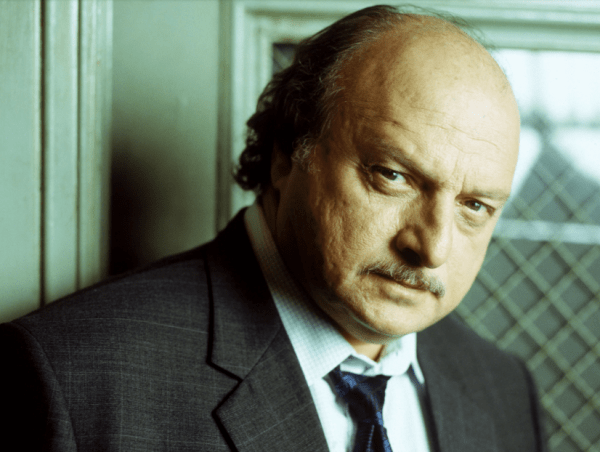
NYPD Blue is an American television police procedural set in New York City, exploring the struggles of the fictional 15th Precinct ofManhattan. Each episode typically intertwined several plots involving an ensemble cast.

The show was created by Steven Bochco and David Milch and was inspired by Milch’s relationship with Bill Clark, a former member of the New York City Police Department who eventually became one of the show’s producers. The series was originally broadcast on the ABC network, debuted on September 21, 1993‚ and aired its final episode on March 1, 2005. It remains ABC’s longest-running primetime one-hour drama series.

NYPD Blue was met with critical acclaim, praised for its grittiness and realistic portrayal of the cast’s personal and professional lives, though the show garnered controversy for its depiction of nudity and alcoholism. In 1997, “True Confessions” (Season 1, Episode 4), written by Art Monterastelli and directed by Charles Haid, was ranked #36 on TV Guide‘s 100 Greatest Episodes of All Time. In 2009, TV Guide ranked “Hearts and Souls” (Season 6, Episode 5), Jimmy Smits‘ final episode written by Steven Bochco, David Milch, Bill Clark, and Nicholas Wootton and directed by Paris Barclay, #30 on TV Guide‘s 100 Greatest Episodes of All Time.

Here are profiles of some of NYPD Blue‘s stars.

DAVID CARUSO

Screenshot 2015-12-20 11.43.44

David Stephen Caruso (born January 7, 1956) is an American actor and producer. His most prominent roles are his portrayals of Lieutenant Horatio Caine on the TV series CSI: Miami and as Detective John Kelly on the ABC crime drama NYPD Blue. He also appeared in movies such as First Blood, Kiss of Death, Jade and Proof of Life

Early life

Caruso was born in Forest Hills Gardens, Queens, New York, New York, the son of Joan, a librarian, and Charles Caruso, a magazine and newspaper editor. He is of Irish and Italian (Sicilian) descent. His father left when he was two years of age, forcing him to “end up fathering myself”, as he put it. Raised as a Roman Catholic, Caruso attended Our Lady Queen of Martyrs Catholic School in Forest Hills.  He later attended Archbishop Molloy High School in nearby Briarwood, graduating in 1974.

Caruso worked as a cinema usher, where he would see up to eighty movies a week. He said that he and his coworkers would act out scenes from some of these movies while they were at the back of the theater. It was in this job he found his role models in Humphrey Bogart, James Cagney and Edward G Robinson. 

The ethics of certain actors certainly had a power over me. These guys taught me how to be what I call a stand up kind of guy.

Career

1980s

His first film appearance was in the 1980 film Getting Wasted as Danny. Caruso then spent most of the next decade in film supporting roles, appearing in such films as First Blood, An Officer and a Gentleman, Blue City, Thief of Hearts and China Girl. Caruso credits his role as Daniels, “the cadet who nearly drowned,” in An Officer and a Gentleman as what got him noticed. Caruso also appeared in Twins. On television, he had a recurring role as Tommy Mann, the leader of the street gang The Shamrocks on Hill Street Blues in the early 1980s. He made a two-episode appearance on the television series Crime Story which ran from 1986 to 1988 on NBC. In 1984, Caruso portrayed U.S. Olympian James Brendan Connolly in the NBC miniseries The First Olympics: Athens, 1896.

1990s

Caruso had supporting roles as police officers in the crime films King of New York (1990) and Mad Dog and Glory (1993). While filming 1991’s Hudson Hawk, Caruso employed method acting, refusing to talk to anyone on set because his character, Kit-Kat, was mute, having had his tongue bitten off.

Caruso’s first major role was in 1993 as Detective John Kelly on NYPD Blue, for which Caruso won a Golden Globe Award. TV Guide named Caruso as one of the six new stars to watch in the 1993–94 season. He made news by leaving the highly rated show the following year (only four episodes into the second season) after failing to obtain the raise he wanted. He was unable to establish himself as a leading man in films despite starring in the crime thriller Kiss of Death, which was critically well-received but did not perform well financially. He also appeared in Jade (1995), which flopped critically and at the box office. In a 2010 issue of TV Guide, Caruso’s decision to leave NYPD Blue was ranked #6 on a list of TV’s 10 biggest “blunders”. In the first episode of South Park, (“Cartman Gets an Anal Probe“) Kyle tells his brother Ike to “do your impersonation of David Caruso’s career” to get Ike to jump out of a spaceship.

In 1997, Caruso returned to television as a New York City-based federal prosecutor in the short-lived CBS law drama series, Michael Hayes, which aired for one season.

2000s

Caruso returned to film with a supporting role as Russell Crowe‘s mercenary associate in the film Proof of Life in 2000. In 2001, he had a lead role in the cult psychological horror film Session 9.

From 2002 to 2012, he starred as Lieutenant Horatio Caine in the popular CSI spin-off series CSI: Miami. He was the first actor in the franchise to appear as the same character on three of the four CSI programs. On CSI: Miami, Caruso is known for frequently using one-liners at the beginning of each episode. Many of these include him putting on his trademark sunglasses mid-sentence, then walking off-screen just as the main theme starts (finishing move). On an episode of the Late Show with David Letterman that aired on March 8, 2007, comedian Jim Carrey professed to being a fan of the show and went on to satirically impersonate Caruso. Carrey asked for an “intense close-up” from the camera, spoke in a deep voice and put sunglasses on. Caruso later said in an interview with CBS that he was impressed with the impersonation.

Personal life

Caruso is founder of DavidCarusoTelevision.tv and LexiconDigital.tv, as well as co-owner of Steam on Sunset, a clothing store in South Miami.

Caruso has a daughter, Greta with his second wife, Rachel Ticotin. He and former girlfriend Liza Marquez have two children together: a son and a daughter.

In April 2009, Marquez filed papers against Caruso for fraud, breach of their settlement agreement and emotional distress.

In March 2009, an Austrian woman was placed in custody in Tyrol, Austria, on charges of stalking Caruso; she had twice failed to appear in court to answer the charges before fleeing to Mexico; following her deportation from Mexico, Austrian officials took her into custody to await trial on the stalking charges.

Awards and nominations

In 1994 Caruso won a Golden Globe Award for starring in NYPD Blue as Detective John Kelly, for which he was also nominated for a Primetime Emmy Award for Outstanding Lead Actor in a Drama Series. In 2001, he was nominated for the Blockbuster Entertainment Award for Favorite Supporting Actor – Suspense for starring in the film Proof of Life as Dino.

DENNIS FRANZ

Screenshot 2015-12-20 11.44.42

Dennis Franz Schlachta, born October 28, 1944, is an American actor best known for his role as hard-boiled NYPD Detective Andy Sipowicz in NYPD Blue

Early life

Franz was born in Maywood, Illinois, the son of German immigrants Eleanor, a postal worker, and Franz Schlachta, who was a baker and postal worker. Franz is a graduate of Proviso East High School (in Maywood), Wilbur Wright College and Southern Illinois University Carbondale. After graduating from college, Franz was drafted into the United States Army. He served eleven months with the 82nd Airborne Division in Vietnam.

Career

Franz began his acting career at Chicago’s Organic Theater Company. Although he has in the past performed Shakespeare, his appearance led to his being typecast early in his career as a police officer. (By Franz’s own count, the character of Andy Sipowicz was his 27th role as a police officer). He has also guest starred in shows such as The A-Team. Other major roles were on the television series Hill Street Blues in which he played two characters over the run of that show. Franz first played the role of Detective Sal Benedetto, a corrupt cop in the 1983 season, who later kills himself. Due to his popularity with fans, he returned in 1985 as Lt. Norm Buntz, remaining until the show’s end in 1987. He also starred in the short-lived Beverly Hills Buntz as the same character.

During the late 1970s and early 1980s, Franz worked regularly with directors Brian De Palma and Robert Altman. He appeared in three of Altman’s films from this period, and five of De Palma’s, most prominently as a low budget movie director in Body Double (1984).

Franz went on to win four Emmy Awards for his portrayal of Andy Sipowicz on NYPD Blue. The character of Sipowicz was ranked #23 on Bravo‘s 100 Greatest TV Characters list.

In 1994 Franz made a cameo appearance as himself in The Simpsons episode “Homer Badman” — when Homer is accused of sexually harassing a babysitter, the case becomes tabloid fodder, generating an exploitative television movie, Homer S.: Portrait of an Ass-Grabber, in which Franz portrays Homer.

In May 11, 2001, Franz was featured in the celebrity edition of the hit television game show, Who Wants to Be a Millionaire, winning $US250,000 for his charity.

He starred as Earl, the abusive husband, in the Dixie Chicks‘ music video “Goodbye Earl,” as airport police captain Carmine Lorenzo in the 1990 film Die Hard 2 and as Nathaniel Messinger in the 1998 film, City of Angels.

Franz has stayed out of the acting spotlight since 2005 to focus on his private life. He has told Access Hollywood he would be interested in returning to acting if given the right opportunity.

Personal life

Franz is married to Joanie Zeck, whom he met in 1982 and married in 1995. He is stepfather to Zeck’s two daughters, Tricia and Krista, from a previous marriage.


JAMES McDANIEL

Screenshot 2015-12-20 11.48.32

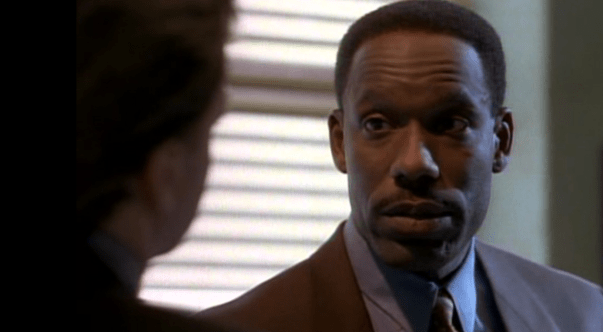
James McDaniel (born March 25, 1958) is an American stage, film and television actor. He is best known for playing Lt. Arthur Fancy on NYPD Blue. He created the role of Paul in the hit Lincoln center play 6 Degrees of Separation. He also played a police officer in the ill-fated 1990 series Cop Rock, and a close advisor to activist Malcolm X in the 1992 film Malcolm X. He also played Sgt. Jesse Longford in the ABC television series Detroit 1-8-7.

He was born in Washington, D.C.


 SHARON LAWRENCE

Screenshot 2015-12-20 11.46.34

Sharon Elizabeth Lawrence (born June 29, 1961) is an American actress, singer, and dancer. She is best known for the role of Sylvia Costas Sipowicz in NYPD Blue. The role garnered her three Primetime Emmy Award nominations for Outstanding Supporting Actress in a Drama Serie

Early life

Lawrence was born in Charlotte, North Carolina, the daughter of Earlyn, an education administrator and Head Start supervisor, and Tom Lawrence, a television news reporter for WRAL-TV in Raleigh, North Carolina. She grew up in Charlotte, moved to Raleigh in her junior year of high school, graduated from Needham B. Broughton High School and then University of North Carolina at Chapel Hill.

Career

Lawrence began her acting career on Broadway stage in the 1987 revival of Cabaret. In 1990, she performed in Fiddler on the Roof. She appeared in a number of television movies and series in 1990s, like Cheers, and Star Trek: Voyager. In 1993 she was cast as Assistant District Attorney Sylvia Costas in NYPD Blue. Her consistently praised performance earned the actress three Primetime Emmy Award for Outstanding Supporting Actress in a Drama Series nominations from 1993 to 1996, and the Screen Actors Guild Award for Outstanding Performance by a Female Actor in a Drama Series in 1996. In 1996 she left the show for her own comedy series, Fired Up on NBC.  The series was canceled after two seasons. She later returned to NYPD Blue as a regular, and left the show in 1999, after her character was killed.

Lawrence starred with Betty White and Alfred Molina on the short-lived sitcom Ladies Man from 1999 to 2001. She played Velma Kelly in the Broadway musical Chicago in 2000.  She also had a series regular role on the CBS supernatural drama Wolf Lake from 2001 to 2002. In film, she co-starred in Gossip (2000), Little Black Book (2004), and The Alibi (2006).

Lawrence guest starred on many television dramas and sitcoms in the 2000s. She played Maisy Gibbons, a housewife/prostitute in season one o fDesperate Housewives. She also appeared in Law & Order: Special Victims Unit, Boston Legal, Monk, Curb Your Enthusiasm, The Mentalist, and Body of Proof. She had a regular role on the short-lived CW teenage drama series Hidden Palms (2008), as Tess Wiatt, and was seen in the Canadian cable television drama The Line in 2009.

In 2009, Lawrence was nominated for the Emmy Award for Outstanding Guest Actress in a Drama Series for her portrayal as Izzie Stevens‘ mother on Grey’s Anatomy. In April 2010, Lawrence joined Josh Schwartz’s CBS pilot Hitched. In October 2010, she began a recurring role on One Tree Hill as Sylvia Baker, the mother of Julian Baker (Austin Nichols) who comes to Tree Hill from Los Angeles to plan the upcoming wedding of Julian and Brooke Davis (Sophia Bush). She also played the lead character mother in a Lifetime comedy-drama Drop Dead Diva from 2009 to 2013. Also, she played the birthmother of Dr. Maura Isles (Sasha Alexander) in the TNT television series Rizzoli & Isles, although in real life the actresses are only 12 years apart. In recent years, Lawrence also starred in several independent films. In 2013 she was cast in the Chris Carter thriller drama series The After. The show was set to premiere on Amazon Studios in 2014 but was cancelled by Amazon before its premiere on January 5, 2015. In March, 2015, Lawrence was cast in the ABC comedy-drama pilot Mix.

Personal life

In 2002, Lawrence married Dr. Tom Apostle. Their wedding was held at the Greek Orthodox church Saint Sophia, the same Los Angeles church in which her character, Sylvia Costas, in NYPD Blue married Detective Andy Sipowicz. Lawrence has played on the World Poker Tour and performed in benefits for Alzheimer’s Association in Los Angeles called Night at Sardi’s and the What A Pair show for the John Wayne Breast Cancer Center.

Lawrence is the Chairman of the Women In Film Foundation, the philanthropic arm of Women In Film, which since 1973 has advanced professional opportunities for women in the global entertainment marketplace. She supports Global Green and World Wildlife Fund to protect the environment and endangered species. She is an avid scuba diver.

JIMMY SMITS

Screenshot 2015-12-20 11.52.53

James “Jimmy” Smits (born July 9, 1955) is an American actor. Smits played attorney Victor Sifuentes on the 1980s legal drama L.A. LawNYPD Detective Bobby Simone on NYPD Blue, and Matt Santos on The West Wing. He also appeared as Bail Organa in the Star Wars prequel trilogy, and Miguel Prado in Dexter. In 2012, he joined the main cast of Sons of Anarchy as high-level pimp Nero Padilla.

Early life

Smits was born in Brooklyn, New York. His father, Cornelis Leendert Smits, was from Paramaribo, Suriname, and was of Dutch descent. His mother, Emilina (Pola), was Puerto Rican, born in Peñuelas. Smits identifies himself as Puerto Rican, and was raised in a strictly devout Roman Catholic family. “Jimmy” is the name on his birth certificate, rather than “Jim” or “James”. He has two sisters, Yvonne and Diana. He grew up in a working-class neighborhood and spent time in Puerto Rico during his childhood. Smits earned a bachelor’s degree from Brooklyn College in 1980 and an MFA from Cornell University in 1982. Though born in New York, Smits has deep Puerto Rican roots and frequently visits the island. In 2001, he was arrested for his participation in protests against U.S. Navy bombing practices on the Puerto Rican offshore island of Vieques.

Career

An early role played by Smits was that of Eddie Rivera in the series premiere of Miami Vice. In the episode, he was Sonny Crockett‘s original partner, only to be shortly killed off in a sting gone wrong. He played Victor Sifuentes in the first five seasons of the long-running legal drama L.A. Law.

Smits played a repairman on Pee-wee’s Playhouse. He also starred in the multigenerational story of a Chicano family in My Family in 1995.

One of Smits’ most acclaimed roles was that of Detective Bobby Simone on NYPD Blue, which he starred in from 1994 to 1998. He was nominated several times for Emmys for his performance on that television series and won the ALMA award twice.

Smits appeared as Senator Bail Organa of Alderaan in Star Wars Episode II: Attack of the Clones (2002) and Star Wars Episode III: Revenge of the Sith (2005), in which the character becomes Princess Leia‘s adoptive father. He reappears as Bail Organa in the game Star Wars: The Force Unleashed.

In 1999, he received the HOLA Award for Excellence from the Hispanic Organization of Latin Actors (HOLA).

Smits was to have hosted the 2001 Latin Grammy Awards broadcast on September 11, 2001, but it was called off because of the terrorist attacks that day. He instead hosted a non-televised press conference to announce the winners.

Smits played the role of Congressman Matt Santos of Houston, Texas, in the final two seasons of the American television drama The West Wing, joining fellow L.A. Law alumnus John Spencer. Smits’s character eventually ran for and won the US Presidency in the series.

For the third season of Dexter, Smits played the role of Miguel Prado, an assistant district attorney who befriends Dexter. Smits was nominated for an Emmy Award for Outstanding Guest Actor in a Drama Series for the role. Additionally, he portrayed the character Alex Vega in the CBS TV series Cane, which aired from September 25, 2007, to December 18, 2007, and was subsequently cancelled by the network due to the 2007 Screen Writer’s Guild strike.

Smits joined the Sons of Anarchy cast in season 5 as Nero Padilla, a high-level pimp who refers to himself as a “companionator.” He builds a relationship with Gemma Teller Morrow (Katey Sagal) and creates an alliance and mentorship with the central character Jax Teller (Charlie Hunnam).

Smits will star in The Get Down, a musical drama television series that is slated to debut in 2016 on Netflix.

Stage performances

In the mid-1980s, Smits acted in numerous performances at the Hangar Theatre in Ithaca, New York. His roles at the Hangar included Max in the 1982 production of Cabaret and Paul in Loose Ends the same year. Smits has participated in the Public Theater‘s New York Shakespeare Festival, playing the role of Duke Orsino in Twelfth Night in 2002, and Benedick in Much Ado about Nothing in 2004. From November 2009 to February 2010, he appeared opposite Christine Lahti, Annie Potts and Ken Stott in the critically lauded Broadway play God of Carnage, replacing Jeff Daniels. In December 2012 through March 2013, he appeared in Chicago in The Motherfucker with the Hat at Steppenwolf Theatre Company.

Personal life

Smits was married to Barbara Smits from 1981 until their divorce in 1987. They have two children, Taina (born in 1973) and Joaquin (born in 1983). Since 1986, Smits has been in a relationship with actress Wanda De Jesus; they live in Los Angeles. Smits helped found the National Hispanic Foundation for the Arts to advance the presence of Latinos in the media, telecommunications and entertainment industries. Smits is also an advocate for diagnostic colorectal screening and has appeared in a public service commercial. Most recently, Smits filmed a PSA for Detroit Non-Profit Cass Community Social Services. Smits will act as the Honorary Chair of their 6th Annual “Catch the Fireworks With Cass” event that takes place during the notable fireworks display in Brooklyn.

Smits was arrested in 1987 for assaulting an officer after police answered a call for help at his home. He and his girlfriend were arrested for battery on three police officers who responded to the call. The charges were later dropped because of conflicting witness statements. Smits later pled guilty to the misdemeanor of disturbing the peace, receiving a sentence of 18 months of unsupervised probation and a $150 fine. Wanda De Jesus pled guilty to misidentifying herself to a police officer and disturbing the peace. She received a fine of $250, 18 months of unsupervised probation and 75 hours of community service.

Charity work

Smits’s main accomplishment in the non-profit sector has been his work with the National Hispanic Foundation for the Arts. Smits has also donated to several other organizations, including the Red Cross, New York Cares, and Stand up to Cancer. In addition, he regularly donates to HIV and AIDS treatment and to further human rights around the world. His main work with Latinos is summarized by these quotes:

I’ve been very lucky to work on a wide variety of projects, including two long-run and top-10 dramatic television shows. That is why it is so important to offer a helping hand to the next generation of young Latinos coming up behind me.

I am a firm believer in education and have worked very hard to tell young Latinos that they must go to college and that, if possible, they should pursue an advanced degree. I am convinced that education is the great equalizer.


Martin Milner

Screenshot 2015-11-19 14.53.54

Martin Sam Milner (December 28, 1931 – September 6, 2015) was an American film, stage, radio and television actor. Milner is best known for his performances in two popular television series: Route 66, which aired on CBS from 1960 to 1964, and Adam-12, which aired on NBC from 1968 to 1975.


Early years

Screenshot 2015-11-19 14.54.13

Milner was born on December 28, 1931, to film distributor Sam Gordon Milner and Paramount Theater circuit dancer Mildred (née Martin) in Detroit, Michigan. The family left Detroit when he was a young child and moved frequently before settling in Seattle, Washington, by the time he was nine. There he became involved in acting, first in school, and then in a children’s theater group at the Cornish Playhouse.

When Milner was a teenager, he moved with his family to Los Angeles where his parents hired an acting coach and later an agent for him. Milner had his first screen test and began his film career with his debut in the 1947 film Life with Father in the role of John Day, the second oldest son of Clarence Day played by William Powell. Less than two weeks after filming for that film ended in August 1946, Milner contracted poliomyelitis. He recovered within a year and had bit parts in two more films before graduating from North Hollywood High School in 1949. He immediately landed a minor role in the film Sands of Iwo Jima starring John Wayne. He also had a role in Richard Fleischer‘s Compulsion, featuring Orson Welles.

Screenshot 2015-11-19 14.55.31

He had several more roles, both minor and major, in war films in the 1950s, including another John Wayne picture called Operation Pacific in 1951 and Mister Roberts with Henry Fonda, James Cagney and Jack Lemmon in 1955. On the set of Halls of Montezuma in 1950 he met and befriended actor Jack Webb. Soon thereafter, he began intermittent work on Webb’s radio series, Dragnet.


Career

Milner attended the University of Southern California where he studied theater. He dropped out after a year in the fall of 1950 to concentrate on acting. He made his first television appearance in 1950 as a guest star in episode 28 titled “Pay Dirt” on The Lone Ranger. That same year, he began a recurring role as “Drexel Potter” on the television sitcom The Stu Erwin Show.

In 1952, Milner began a two-year stint in the United States Army. He was assigned to Special Services at Fort Ord on California’s Monterey Bay Peninsula, where he directed training films. He also emceed and performed in skits in a touring unit show to entertain the soldiers. Milner was encouraged by fellow soldier David Janssen to pursue an acting career when his time in the Army ended. He also served at Ft Ord at the same time as future actors Clint Eastwood and Richard Long. While in the Army, Milner continued working for Jack Webb, playing “Officer Bill Lockwood” (briefly the partner of “Sgt. Friday”) and other characters on the Dragnet radio series on weekends. He also appeared on six episodes of Webb’s Dragnet television series between 1952 and 1955.

Screenshot 2015-11-19 15.04.15

After his military service ended, Milner had a recurring role on The Life of Riley from 1953 to 1958. He also made guest appearances on numerous television shows including episodes of The Bigelow Theatre, The Great Gildersleeve, TV Reader’s Digest, Science Fiction Theatre, Westinghouse Desilu Playhouse, NBC Matinee Theater, The West Point Story, The Twilight Zone (episode: Mirror Image) and Rawhide. Milner also acted in films, the most notable of which are The Long Gray Line (1955), Mister Roberts (1955), Gunfight at the O.K. Corral (1957), as jazz guitarist Steve Dallas in Sweet Smell of Success (1957), Marjorie Morningstar (1958), Compulsion (1959) and 13 Ghosts (1960).

Screenshot 2015-11-19 15.05.13


Route 66

In 1960, Milner won the role of Tod Stiles in the CBS television series, Route 66, from 1960 to 1964. Created by Stirling Silliphant, Route 66 is essentially about two regular, but distinctly different young men in a car touring the United States.

Screenshot 2015-11-19 14.58.07

After the sudden death of his father left him unexpectedly penniless, Tod traveled across the United States in a Chevrolet Corvette, taking a variety of odd jobs along the way and getting involved in other people’s problems. Tod’s traveling partner on his escapades was his friend Buz Murdock, a former employee of his father’s played by George Maharis. During the series’ third season, Milner got a new co-star as Glenn Corbett was brought in to replace Maharis. Tod’s new traveling partner was Lincoln “Linc” Case, an Army veteran who had a dark past, and Corbett remained in the role for the remaining season and a half.

Route 66 was a different sort of television program, as the travels of Tod and his traveling partners were shot on location. Thus, Milner spent nearly four years traveling the country for the series, sometimes taking his wife and children along.


Adam-12

 Milner and Webb had a long-established working relationship by the time it came to cast Adam-12. Milner appeared in numerous episodes of both the radio and television versions of the seminal Jack Webb series Dragnet. Milner had also worked with Webb in the 1950 film Halls of Montezuma and the 1955 film Pete Kelly’s Blues. This led to the role for which Milner is best known.

Screenshot 2015-11-19 14.54.38

In 1968, Milner returned to television as seven-year LAPD veteran uniform patrol Officer Peter Joseph “Pete” Malloy in the Jack Webb-produced police drama, Adam-12. Kent McCord played his partner, rookie Officer James A. “Jim” Reed. The popular NBC series ran from 1968 to 1975. Like Webb’s Dragnet, it was based on real Los Angeles Police Department procedures and cases. It was hailed for its realistic, positive portrayal of ordinary police officers.

Screenshot 2015-11-19 14.55.00

Milner was Webb’s hands-down choice for “cop behind the wheel” Pete Malloy, in part because his relative youth and prior acting credits and because of his on-camera driving experience from his days on Route 66.


Emergency!

 Milner guest starred in three episodes of Emergency! between 1972 and 1976, during and after Adam-12s run on NBC, the best known and first of which was the pilot episode The Wedsworth-Townsend Act.


Later career

After Adam-12 Martin Milner starred as Karl Robinson in a television series version of The Swiss Family Robinson (1975–1976), produced by Irwin Allen. Most of his following work was as a television guest star, most notably in action-adventure series MacGyver (as James MacGyver, MacGyver’s father), Airwolf, Life Goes On , Murder, She Wrote and RoboCop: The Series. In 1983, Milner hosted a morning radio wake-up show on AM 600 KOGO, San Diego.

Screenshot 2015-11-19 14.57.46

Milner also has the distinction of having portrayed the victim in the premiere episode of Columbo titled “Murder by the Book.” In 1990, Milner re-teamed with Kent McCord, his co-star from Adam-12, in the cable TV-movie Nashville Beat (1990), originally shown on the now-defunct The Nashville Network. The story, partly written by Kent McCord, had McCord as an LAPD detective who teams up with his old partner, Milner, in Nashville, Tennessee. In 1992, he guest starred on five episodes of ABC’s Life Goes On. After retiring from acting, Milner co-hosted a radio show about fishing called “Let’s Talk Hook-Up” on San Diego-area sports station XETRA AM 690 (now XEWW).


Personal life

Screenshot 2015-11-19 14.58.31

In May 1956, Milner met singer and actress Judith Bess Jones at a Hollywood dinner party. They were married on February 23, 1957, in Waukegan, Illinois. They had four children together: Amy, Molly, Stuart and Andrew.

In February 2003, Milner’s eldest daughter Amy, who appeared in an episode of Adam 12, was diagnosed with acute myeloid leukemia. She died in December 2004.


Death

Screenshot 2015-11-19 14.53.28

On September 6, 2015, Milner died of heart failure at his home in Carlsbad, California, at the age of 83. His memorial service was held by Law Enforcement and community members in Oceanside, California six days later.


Johnnie Ray

Screenshot 2015-10-05 11.34.42John Alvin “Johnnie” Ray (January 10, 1927 – February 24, 1990) was an American singer, songwriter, and pianist. Extremely popular for most of the 1950s, Ray has been cited by critics as a major precursor of what would become rock and roll, for his jazz and blues-influenced music and his animated stage personality. Tony Bennett credits Ray as being the true father of rock and roll.

British Hit Singles & Albums noted that Ray was “a sensation in the 1950s, the heart-wrenching vocal delivery of ‘Cry’ … influenced many acts including Elvis and was the prime target for teen hysteria in the pre-Presley days.”

In 1952, Ray rose very quickly from obscurity to stardom in the United States. He became a major star in the United Kingdom by performing and releasing recordings there in 1953 and was supported by many acts including Frank Holder. He matched these achievements in Australia the following year. His career in his native United States began to decline in the late 1950s, and his American record label dropped him in 1960. He never regained a strong following there and very rarely appeared on American television after 1973. His fan base in other countries, however, remained strong until his last year of performing, which was 1989. His recordings never stopped selling outside the United States.

Early life

Johnnie Ray was born January 10, 1927, in Dallas, Oregon, to parents Elmer and Hazel (Simkins) Ray. Along with older sister Elma, Ray spent part of his childhood on a farm in Dallas and attended grade school there. The family later moved toPortland, Oregon, where Ray attended high school.

At age 13, Ray became deaf in his left ear following a mishap that occurred during a Boy Scout “blanket toss.” In later years, Ray performed wearing a hearing aid. Surgery performed in 1958 left him almost completely deaf in both ears, although hearing aids helped his condition.

Career

Inspired by rhythm singers like Kay Starr, LaVern Baker and Ivory Joe Hunter, Ray developed a unique rhythm-based singing style, described as alternating between pre-rock R&B and a more conventional classic pop approach. He began singing professionally on a Portland, Oregon, radio station at age 15.

Ray first attracted the attention of Bernie Lang, a song plugger, who was taken to the Flame Showbar nightclub in Detroit, Michigan by local DJ, Robin Seymour of WKMH. Lang went to New York to sell the singer to Danny Kessler of the Okeh label, a subsidiary of Columbia Records. Kessler came over from New York, and he, Lang and Seymour went to the Flame. According to Seymour, Kessler’s reaction was, “Well, I don’t know. This kid looks well on the stand, but he will never go on records.”

It was Seymour and Lowell Worley of the local office of Columbia who persuaded Kessler to have a test record made of Ray. Worley arranged for a record to be cut at the United Sound Studios in Detroit. Seymour told reporter Dick Osgood that there was a verbal agreement that he would be cut in on the three-way deal in the management of Ray. But the deal mysteriously evaporated, and so did Seymour’s friendship with Kessler.

Screenshot 2015-10-05 11.38.02Ray’s first record, the self-penned R&B number for OKeh Records, “Whiskey and Gin,” was a minor hit in 1951. The following year he dominated the charts with the double-sided hit single of “Cry” and “The Little White Cloud That Cried“. Selling over two million copies of the 78rpm single, Ray’s delivery struck a chord with teenagers and he quickly became a teen idol. When OKeh parent Columbia Records realized that Ray had developed a fan base of white listeners, he was moved over to the Columbia label.

Screenshot 2015-10-05 11.35.03

 20th Century Fox capitalized on his stardom by including him in the ensemble cast of the movie There’s No Business Like Show Business (1954) alongside Ethel Merman as his mother, Dan Dailey as his father, Donald O’Connor as his brother and Marilyn Monroe as his sister-in-law. Ray’s performing style included theatrics later associated with rock and roll, including tearing at his hair, falling to the floor, and crying. Ray quickly earned the nicknames “Mr. Emotion”, “The Nabob of Sob”, and “The Prince of Wails” among others.

More hits followed, including “Please Mr. Sun,” “Such a Night,” “Walkin’ My Baby Back Home,” “A Sinner Am I.” and “Yes Tonight Josephine.” He had a United Kingdom number 1 hit with “Just Walkin’ in the Rain” (which Ray initially disliked) during the Christmas season in 1956. He hit again in 1957 with “You Don’t Owe Me a Thing,” which reached number 10 on the Billboard chart. Though his American popularity was declining in 1957, he remained popular in the United Kingdom, breaking the record at the London Palladium formerly set by fellow Columbia Records artist Frankie Laine. In later years, he retained a loyal fan base overseas, particularly in Australia.

Screenshot 2015-10-05 11.36.26

Later career

Ray had a close relationship with journalist and television game show panelist Dorothy Kilgallen. They became acquainted soon after his sudden rise to stardom in the United States. They remained close as his American career declined. Two months before Kilgallen’s death in 1965, her newspaper column plugged Ray’s engagements at the Latin Quarter in New York and the Tropicana Resort & Casino in Las Vegas, Nevada. He began his engagement at the Latin Quarter immediately after an eight-month vacation in Spain during which he and new manager Bill Franklin had extricated themselves from contracts with Bernie Lang, who had managed Ray from 1951 to 1963. Ray and Franklin believed that a dishonest Lang had been responsible for the end of Ray’s stardom in the United States and for large debts that he owed the Internal Revenue Service.

Screenshot 2015-10-05 11.35.21In early 1969, Ray befriended Judy Garland, performing as her opening act during her last concerts in Copenhagen, Denmark and Malmö, Sweden. Ray was also the best man during Garland’s wedding to nightclub manager Mickey Deans in London.

In the early 1970s, Ray’s American career revived to a limited extent, as he had not released a record album or single for more than ten years. He made network television appearances on The Andy Williams Show in 1970 and The Tonight Show Starring Johnny Carson three times during 1972 and 1973. His personal manager Bill Franklin resigned in 1976 and cut off contact with the singer a few years later. His American revival turned out to be short-lived as Ray’s career had already begun to decline as the 1980s approached. Speculation why has been attributed to booking agents and songwriters not knowing who he was or what his “sound” was like, thus ignoring him as a commercial talent.

In 1981, Ray hired Alan Eichler as his manager and resumed performing with an instrumental quartet rather than with the large orchestras he and his audiences had been accustomed to for the first 25 years of his career. When Ray and the quartet performed at a New York club called Marty’s on Third Avenue and East 73rd Street in 1981, The New York Times stated, “The fact that Mr. Ray, in the years since his first blush of success, has been seen and heard so infrequently in the United States is somewhat ironic because it was his rhythm and blues style of singing that help lay the groundwork for the rock-and-roll that turned Mr. Ray’s entertainment world around. Recently, Ringo Starr of the Beatles pointed out that the three singers the Beatles listened to in their fledgling days were Chuck Berry, Little Richard. and Johnnie Ray.”

In 1986, Ray appeared as a Los Angeles taxicab driver in Billy Idol‘s “Don’t Need a Gun” video and is name-checked in the lyrics of the song. During this time period, Ray was generally playing small venues in the United States such as Citrus College in Los Angeles County, California. He performed there in 1987 “with a big-band group,” according to a Los Angeles Times profile of him during that year.

While his popularity continued to wane in the United States, Australian, English and Scottish promoters booked him for large venues as late as 1989, his last year of performing.

Personal life

Screenshot 2015-10-05 11.36.05

In 1951, when Ray was obscure and not yet signed to a record label, he was arrested in Detroit for accosting and soliciting an undercover vice squad police officer in the restroom of the Stone Theatre, a burlesque house. When he appeared in court, he pleaded guilty. He paid a fine and was released. Because of his obscurity at the time, the Detroit newspapers did not report the story. After his sudden rise to fame the following year, rumors about his sexuality began to spread.

Despite her knowledge of the solicitation arrest, Marilyn Morrison, daughter of the owner of West Hollywood’s Mocambo nightclub, married Ray on May 25, 1952. The wedding ceremony took place in New York a short time after he gave his first New York concert at the Copacabana. Aware of the singer’s sexuality, Morrison told a friend she would “straighten it out.” The couple separated in January 1953 and divorced in 1954. Several writers have noted that the Ray-Morrison marriage occurred under false pretenses, and that Ray had a long-term relationship with his manager, Bill Franklin. Ray later blamed rumors about his sexuality for the breakup of his marriage to Morrison.

In 1959, Ray was arrested again in Detroit for soliciting an undercover officer at the Brass Rail, a bar that was described many years later by one biographer as a haven for musicians and by another biographer as a gay bar. Ray went to trial following this second arrest and was found not guilty.

Ray, along with some of his friends, denied publicly throughout his life that he was gay. Two years after his death, several friends shared with biographer Jonny Whiteside their knowledge of Ray’s homosexuality.

Later years and death

Screenshot 2015-10-05 11.36.43In 1960, Ray was hospitalized after contracting tuberculosis. In 1965, he was 38 years old when he was emotionally devastated by the death of close friend Dorothy Kilgallen. Biographer Jonny Whiteside claimed that Ray managed to stay sober despite his grief. He began to regain his health. Shortly after he returned to the United States from a European concert tour that he headlined with Judy Garland, an American doctor informed him that he was well enough to drink an occasional glass of wine. Ray resumed drinking heavily and his health quickly began to decline. He continued touring until he gave his final concert, a benefit for the Grand Theater in Salem, Oregon, on October 6, 1989. In early 1990, poor health forced him to check into Cedars-Sinai Medical Center. On February 24, 1990, he died of liver failure at Cedars-Sinai in Los Angeles. He is buried at Hopewell Cemetery near Hopewell, Oregon.

For his contribution to the recording industry, Johnnie Ray has a star on the Hollywood Walk of Fame at 6201 Hollywood Boulevard.

In 1999, Bear Family Records issued two five CD sets of his entire body of work, each containing an 84-page book on his career. Companies like Sony and Collectables have kept his large catalogue of recordings in continual release worldwide.

Here’s a Ray clip from There’s No Business Like Show Business….

Studio albums

Live albums

Compilations


Mario Lanza

Screenshot 2015-09-02 12.32.47

Mario Lanza (born Alfred Arnold Cocozza; January 31, 1921 – October 7, 1959) was an American tenor, actor and Hollywood film star of the late 1940s and the 1950s.

Lanza began studying to be a professional singer at the age of 16. After appearing at the Hollywood Bowl in 1947, Lanza signed a seven-year film contract with Louis B. Mayer, the head of Metro-Goldwyn-Mayer who saw his performance and was impressed by his singing. Prior to this, the adult Lanza had sung only two performances of an opera. The following year (1948), however, he would sing the role of Pinkerton in Puccini’s Madama Butterfly in New Orleans.

His film debut was in That Midnight Kiss (1949) with Kathryn Grayson and Ethel Barrymore. The following year, in The Toast of New Orleans, his featured popular song “Be My Love” became his first million-selling hit. In 1951, he played the role of Enrico Caruso (1873–1921), his tenor idol, in the biopic, The Great Caruso, which produced another million-seller with “The Loveliest Night of the Year” (a song which used the melody of Sobre las Olas). The Great Caruso was the top-grossing film that year.

The title song of his next film, Because You’re Mine, was his final million-selling hit song. The song went on to receive an Academy Award nomination for Best Original Song. After recording the soundtrack for his next film, The Student Prince, he embarked upon a protracted battle with Studio Head Dore Schary arising from artistic differences with director Curtis Bernhardt, and was eventually dismissed by MGM.

Lanza was known to be “rebellious, tough, and ambitious,” and during most of his film career, he suffered from addictions to overeating and alcohol that had a serious effect on his health and his relationships with directors, producers and, occasionally, other cast members. Hollywood columnist Hedda Hopper wrote, “his smile, which was as big as his voice, was matched with the habits of a tiger cub, impossible to housebreak.” She adds that he was the “last of the great romantic performers.” He made three more films before dying of an apparent pulmonary embolism at the age of 38. At the time of his death in 1959 he was still “the most famous tenor in the world.” Author Eleonora Kimmel concludes that Lanza “blazed like a meteor whose light lasts a brief moment in time.”


Early years

Screenshot 2015-09-02 12.38.28

Born Alfred Arnold Cocozza in Philadelphia, Pennsylvania, he was exposed to classical singing at an early age by his Abruzzese-Molisan Italian parents. His mother, Maria Lanza, was from Tocco da Casauria a province of Pescara in the region of Abruzzo. His father, Antonio Cocozza, was from the town of Filignano a province of Isernia in the region of Molise. By age 16, his vocal talent had become apparent. Starting out in local operatic productions in Philadelphia for the YMCA Opera Company while still in his teens, he later came to the attention of longtime (1924–49) principal Boston Symphony conductor Serge Koussevitzky. In 1942, Koussevitzky provided young Cocozza with a full student scholarship to the Berkshire Music Center at Tanglewood, Massachusetts. Reportedly, Koussevitzky would later tell him, “Yours is a voice such as is heard once in a hundred years.”


Opera career

His opera debut, as Fenton in Otto Nicolai’s The Merry Wives of Windsor (in English), came at the Berkshire Music Festival in Tanglewood on August 7, 1942, after a period of study with conductors Boris Goldovsky and Leonard Bernstein. This was when Cocozza adopted the stage name Mario Lanza, for its similarity to his mother’s maiden name, Maria Lanza.

Screenshot 2015-09-02 12.39.54

His performances at Tanglewood won him critical acclaim, with Noel Straus of The New York Times hailing the 21-year-old tenor as having “few equals among tenors of the day in terms of quality, warmth and power”. Herbert Graf subsequently wrote in Opera News (October 5, 1942), “A real find of the season was Mario Lanza […] He would have no difficulty one day being asked to join the Metropolitan Opera.” Lanza sang Nicolai’s Fenton twice at Tanglewood, in addition to appearing there in a one-off presentation of Act III of Puccini’s La Bohème with the noted Mexican soprano Irma González, baritone James Pease and mezzo-soprano Laura Castellano. Music critic Jay C. Rosenfeld wrote in The New York Times of August 9, 1942, “Irma González as Mimì and Mario Lanza as Rodolfo were conspicuous by the beauty of their voices and the vividness of their characterizations.” In an interview shortly before her own death in 2008, González recalled that Lanza was “very correct, likeable, with a powerful and beautiful voice.”


Lanza as Giuseppe Verdi’s Otello

Screenshot 2015-09-02 12.38.44

His budding operatic career was interrupted by World War II, when he was assigned to Special Services in the U.S. Army Air Corps. He appeared in the wartime shows On the Beam and Winged Victory. He also appeared in the film version of the latter (albeit as an unrecognizable member of the chorus). He resumed his singing career with a concert in Atlantic City with the NBC Symphony Orchestra in September 1945 under Peter Herman Adler, subsequently his mentor. The following month, he replaced tenor Jan Peerce on the live CBS radio program Great Moments in Music on which he made six appearances in four months, singing extracts from various operas and other works.

Screenshot 2015-09-02 12.40.29

He studied with Enrico Rosati for fifteen months, and then embarked on an 86-concert tour of the United States, Canada and Mexico between July 1947 and May 1948 with bass George London and soprano Frances Yeend. Reviewing his second appearance at Chicago’s Grant Park in July 1947 in the Chicago Sunday Tribune, Claudia Cassidy praised Lanza’s “superbly natural tenor” and observed that “though a multitude of fine points evade him, he possesses the things almost impossible to learn. He knows the accent that makes a lyric line reach its audience, and he knows why opera is music drama.”

In April 1948, Lanza sang two performances as Pinkerton in Puccini’s Madama Butterfly for the New Orleans Opera Association conducted by Walter Herbert with stage director Armando Agnini. Reviewing the opening-night performance in the St. Louis News (April 9, 1948), Laurence Oden wrote, “Mario Lanza performed … Lieutenant Pinkerton with considerable verve and dash. Rarely have we seen a more superbly romantic leading tenor. His exceptionally beautiful voice helps immeasurably.” Following the success of these performances, he was invited to return to New Orleans in 1949 as Alfredo in Verdi’s La traviata. But, as biographer Armando Cesari wrote, Lanza by 1949 “was already deeply engulfed in the Hollywood machinery and consequently never learned [that key mid-Verdi tenor] role.”

Screenshot 2015-09-02 12.59.12

At the time of his death, Lanza was preparing to return to the operatic stage. Conductor Peter Herman Adler, with whom Lanza had previously worked both in concert and on the soundtrack of The Great Caruso, visited the tenor in Rome during the summer of 1959 and later recalled that, “[Lanza] was working two hours a day with an operatic coach, and intended to go back to opera, his only true love.” Adler promised the tenor “all possible help” in his “planning for his operatic future.” In the October 14, 1959, edition of Variety, it was reported that Lanza had planned to make his return to opera in the role of Canio in Leoncavallo’s Pagliacci during the Rome Opera’s 1960–61 season. This was subsequently confirmed by Riccardo Vitale, Artistic Director of the Rome Opera. Variety also noted that preparations had been underway at the time of Lanza’s death for him to participate in recording a series of complete operas for RCA Italiana.


Film career


Screenshot 2015-09-02 12.43.14

A concert at the Hollywood Bowl in August 1947 had brought Lanza to the attention of Louis B. Mayer, who promptly signed Lanza to a seven-year film contract with Metro-Goldwyn-Mayer. The contract required him to commit to the studio for six months, and at first Lanza believed he would be able to combine his film career with his operatic and concert one. In May 1949, he made his first commercial recordings with RCA Victor. His rendition of the aria “Che gelida manina” (from La Bohème) from that session was subsequently awarded the prize of Operatic Recording of the Year by the (United States) National Record Critics Association.


The Toast of New Orleans

Screenshot 2015-09-02 12.34.53

Lanza’s first two starring films, That Midnight Kiss and The Toast of New Orleans, both opposite top-billed Kathryn Grayson, were commercial successes, and in 1950 his recording of “Be My Love” from the latter became the first of three million-selling singles for the young singer, earning him enormous fame in the process. While at MGM, Lanza worked closely with the Academy Award-winning conductor, composer, and arranger Johnny Green.

In a 1977 interview with Lanza biographer Armando Cesari, Green recalled that the tenor was insecure about the manner in which he had become successful, and was keenly aware of the fact that he had become a Hollywood star before first having established himself on the operatic stage.

“Had [Lanza] been already a leading tenor, if not the leading tenor at the Metropolitan Opera House], and come to Hollywood in between seasons to make a picture, he would have had [the security of having] the Met as his home,” Green remarked. According to Green, Lanza possessed “the voice of the next Caruso. [Lanza] had an unusual, very unusual quality…a tenor with a baritone color in the middle and lower registers, and a great feeling for the making of music. A great musicality. I found it fascinating, musically, to work with [him].”


The Great Caruso

Screenshot 2015-09-02 12.59.30

In 1951, Lanza portrayed Enrico Caruso in The Great Caruso, which proved a success. At the same time, Lanza’s increasing popularity exposed him to intense criticism by some music critics, including those who had praised his work years earlier. His performance earned him compliments from the subject’s son, Enrico Caruso Jr., a tenor in his own right. Shortly before his own death in 1987, Enrico Jr. wrote in Enrico Caruso: My Father and My Family (posthumously published by Amadeus in 1990) that:

Screenshot 2015-09-02 12.41.16

“I can think of no other tenor, before or since Mario Lanza, who could have risen with comparable success to the challenge of playing Caruso in a screen biography… Lanza was born with one of the dozen or so great tenor voices of the century, with a natural voice placement, an unmistakable and very pleasing timbre, and a nearly infallible musical instinct.”


The Student Prince

In 1952, Lanza was dismissed by MGM after he had pre-recorded the songs for The Student Prince. The reason most frequently cited in the tabloid press at the time was that his recurring weight problem had made it impossible for him to fit into the costumes of the Prince. However, as his biographers Cesari and Mannering have established, Lanza was not overweight at the beginning of the production, and it was, in fact, a disagreement with director Curtis Bernhardt over Lanza’s singing of one of the songs in the film that led to Lanza walking off the set. MGM refused to replace Bernhardt, and the film was subsequently made with English actor Edmund Purdom, who was dubbed to Lanza’s recorded voice.

Screenshot 2015-09-02 12.34.31

Depressed by his dismissal, and with his self-confidence severely undermined, Lanza became a virtual recluse for more than a year, frequently seeking refuge in alcoholic binges. During this period, Lanza also came very close to bankruptcy as a result of poor investment decisions by his former manager, and his lavish spending habits left him owing about $250,000 in back taxes to the IRS.


Serenade

Lanza returned to an active film career in 1955 in Serenade, released by Warner Bros. However the film was not as successful as his previous films, despite its strong musical content, including arias from Der Rosenkavalier, Fedora, L’arlesiana, and Otello, as well as the Act III duet from Otello with soprano Licia Albanese. Ms. Albanese said of Lanza in 1980: I had heard all sorts of stories about Mario [Lanza]. That his voice was too small for the stage, that he couldn’t learn a score, that he couldn’t sustain a full opera; in fact, that he couldn’t even sing a full aria, that his recordings were made by splicing together various portions of an aria. None of it is true! He had the most beautiful lirico spinto voice. It was a gorgeous, beautiful, powerful voice. I should know because I sang with so many tenors. He had everything that one needs. The voice, the temperament, perfect diction. . . . Vocally he was very secure. All he needed was coaching. Everything was so easy for him. He was fantastic!
Screenshot 2015-09-02 13.01.01

He then moved to Rome, Italy in May 1957, where he worked on the film Seven Hills of Rome, and returned to live performing in November of that year, singing for Queen Elizabeth II at the Royal Variety Show at the London Palladium. From January to April 1958, Lanza gave a concert tour of the UK, Belgium, the Netherlands, France and Germany. He gave a total of 22 concerts on this tour, receiving mostly positive reviews for his singing. Despite a number of cancellations, which resulted from his failing health during this period, Lanza continued to receive offers for operatic appearances, concerts, and films.

Screenshot 2015-09-02 12.42.26

In September 1958, he made a number of operatic recordings at the Rome Opera House for the soundtrack of what would turn out to be his final film, For the First Time. It was then that he came to the attention of that opera house’s artistic director, Riccardo Vitale, who promptly offered the tenor carte blanche in his choice of operatic roles. Lanza also received offers to sing in any opera of his choosing from the San Carlo in Naples. At the same time, however, his health continued to decline, with the tenor suffering from a variety of ailments, including phlebitis and acute high blood pressure. His old habits of overeating and crash dieting, coupled with binge drinking, compounded his problems.


Death

In April 1959, Lanza reportedly suffered a minor heart attack followed in August by double pneumonia. On September 25, 1959, he entered Rome’s Valle Giulia clinic for the purpose of losing weight for an upcoming film. While in the clinic, he underwent a controversial weight loss program colloquially known as “the twilight sleep treatment,” which required its patients to be kept immobile and sedated for prolonged periods. On October 7, a day before his scheduled discharge, he died at the age of 38. No autopsy was performed. He was buried at the Holy Cross Cemetery in Culver City, California. Maria Caniglia, Franco Fabrizi and Enzo Fiermonte attended the funeral. Frank Sinatra sent his condolences by telegram.


Legacy

Screenshot 2015-09-02 12.43.46

Lanza was the first RCA Victor Red Seal artist to win a gold disc and the first artist to sell 2 1/2 million albums. Lanza was referred to by some sources as the “new Caruso” after his “instant success” in Hollywood films, while MGM hoped he would become the movie studio’s “singing Clark Gable” for his good looks and powerful voice.

In 1994, outstanding tenor José Carreras paid tribute to Lanza during a worldwide concert tour, saying of him, “If I’m an opera singer, it’s thanks to Mario Lanza.” His equally outstanding colleague Plácido Domingo echoed these comments in a 2009 CBS interview with, “Lanza’s passion and the way his voice sounds are what made me sing opera. I actually owe my love for opera … to a kid from Philadelphia.”

Even today “the magnitude of his contribution to popular music is still hotly debated,” and because he appeared on the operatic stage only twice, many critics feel that he needed to have had more “operatic quality time” in major theaters before he could be considered a star of that art form. His films, especially The Great Caruso, influenced numerous future opera stars, including Joseph Calleja, José Carreras, Plácido Domingo and Luciano Pavarotti. According to opera historian Clyde McCants, “Of all the Hollywood singers who performed operatic music… the one who made the greatest impact was Mario Lanza.” Hollywood gossip columnist Hedda Hopper concluded “there had never been anyone like Mario, and I doubt whether we shall ever see his like again.”

In 1998, a Golden Palm Star on the Palm Springs, California, Walk of Stars was dedicated to him. Mario Lanza has been awarded two Stars on the Hollywood Walk of Fame: a Star for Recording at 1751 Vine Street, and a Star at 6821 Hollywood Boulevard for Motion Pictures.


Portrayal on stage

In October 2007, Charles Messina directed the big budget musical Be My Love: The Mario Lanza Story, written by Richard Vetere, about Lanza’s life, which was produced by Sonny Grosso and Phil Ramone, and which premiered at The Tilles Center for the Performing Arts in Greenvale, New York.


Filmography

•    Winged Victory, Twentieth Century-Fox 1944 (un-credited chorus member)

•    That Midnight Kiss, MGM 1949

•    The Toast of New Orleans, MGM 1950

•    The Great Caruso, MGM 1951

•    Because You’re Mine, MGM 1952

•    The Student Prince, MGM 1954 (voice only)

•    Serenade, Warner Bros. 1956

•    Seven Hills of Rome, MGM 1958

•    For the First Time, MGM 1959


Dan Duryea

Screenshot 2015-08-05 16.23.49

Dan Duryea (January 23, 1907 – June 7, 1968) was an American actor in film, stage

and television. Known for portraying a vast range of character roles as a villain, he

nonetheless had a long career in a wide variety of leading and secondary roles.


Early Life

Born and raised in White Plains, New York, Duryea graduated from White Plains High

School in 1924 and Cornell University in 1928. While at Cornell, he was elected

into the prestigious Sphinx Head Society, Cornell’s oldest senior honor society. He

majored in English with a strong interest in drama, and in his senior year succeeded

Franchot Tone as president of the college drama society.

Screenshot 2015-08-05 16.24.13

As his parents did not approve of his choice to pursue an acting career, Duryea

became an advertising executive, but after six stress-filled years, had a heart attack

that sidelined him for a year.‪


Acting Career

Returning to his earlier love of acting and the stage, Duryea made his name on

Broadway in the play Dead End, followed by The Little Foxes, in which he portrayed

Leo Hubbard.‪ In 1940, Duryea moved to Hollywood to appear in the film version of

The Little Foxes.‪‬ He continued to establish himself with supporting and secondary

roles in films such as The Pride of the Yankees and None But the Lonely Heart. As

the 1940s progressed, he found his niche as the “sniveling, deliberately taunting”

antagonist in a number of film noir subjects (Scarlet Street, The Woman in the

Window, Criss Cross, Too Late for Tears) and westerns such as Along Came Jones

and Black Bart, although he was sometimes cast in more sympathetic roles (Black

Angel, One Way Street).‪ In 1946, exhibitors voted him the eighth most promising “star

of tomorrow.”‬

Screenshot 2015-08-05 16.23.03

In the 1950s, Duryea co-starred with James Stewart in three films, Winchester ’73 (as

the dastardly “Waco Johnny” Dean), Thunder Bay, and Night Passage. He was

featured in several other westerns, including Silver Lode, Ride Clear of Diablo, and

The Marauders, and in more film-noir productions like 36 Hours, Chicago Calling,

Storm Fear, and The Burglar, not always as the film’s villain but often.

When interviewed by Hedda Hopper in the early 1950s, Duryea spoke of career goals

and his preparation for roles:

Screenshot 2015-08-05 16.28.54

“Well, first of all, let’s set the stage or goal I set for myself when I decided to become

an actor … not just ‘an actor’, but a successful one. I looked in the mirror and knew

with my ‘puss’ and 155-pound weakling body, I couldn’t pass for a leading man, and I

had to be different. And I sure had to be courageous, so I chose to be the meanest

s.o.b. in the movies … strictly against my mild nature, as I’m an ordinary, peace-loving

husband and father. Inasmuch, as I admired fine actors like Richard Widmark, Victor

Mature, Robert Mitchum, and others who had made their early marks in the dark,

sordid, and guilt-ridden world of film noir; here, indeed, was a market for my talents. I

thought the meaner I presented myself, the tougher I was with women, slapping them

around in well produced films where evil and death seem to lurk in every nightmare

alley and behind every venetian blind in every seedy apartment, I could find a market

for my screen characters…. At first it was very hard as I am a very even-tempered

guy, but I used my past life experiences to motivate me as I thought about some of

the people I hated in my early as well as later life … like the school bully who used to

try and beat the hell out of me at least once a week … a sadistic family doctor that

believed feeling pain when he treated you was the birthright of every man inasmuch

as women suffered giving birth … little incidents with trade-people who enjoyed acting

superior because they owned their business, overcharging you. Then the one I used

when I had to slap a woman around was easy! I was slapping the over-bearing

teacher who would fail you in their ‘holier-than-thou’ class and enjoy it! And especially

the experiences I had dealing with the unbelievable pompous ‘know-it-all-experts’ that

I dealt with during my advertising agency days … almost going ‘nuts’ trying to please

these ‘corporate heads’ until I finally got out of that racket!”‪

Screenshot 2015-08-05 16.19.32

In his last years, Duryea rejoined former co-star Stewart for the adventure film The

Flight of the Phoenix, about men stranded in the Sahara desert by a downed airplane.

He worked in overseas film productions including the Italian western The Hills Run

Red (1966) and the spy thriller Five Golden Dragons (1967) in West Germany, while

continuing to find roles on American television. He also appeared twice on the big

screen with his son, character actor Peter Duryea, in the low-budget westerns

Taggart (1964), and The Bounty Killer (1965).


Duryea starred as the lead character China Smith in the television series China Smith

from 1952 to 1956, and The New Adventures of China Smith from 1953 to 1954.

He spoofed his tough-guy image in a comedy sketch about a robbery on the Feb. 20,

1955 episode of The Jack Benny Program.


Duryea guest starred as Roy Budinger, the self-educated mastermind of a criminal

ring dealing in silver bullion, in the episode “Terror Town” on October 18, 1958 of

NBC’s western series Cimarron City.‪

Screenshot 2015-08-05 16.56.02

In 1959, Duryea appeared as an alcoholic gunfighter in third episode of The Twilight

Zone, “Mr. Denton on Doomsday.”  He guest starred on NBC’s anthology series The

Barbara Stanwyck Show and appeared in an episode of Rawhide in 1959, “Incident

Of The Executioner.”‪ On September 15, 1959, Duryea guest starred as the outlaw

Bud Carlin in the episode “Stage Stop,” the premiere of NBC’s Laramie western

series. ‪‬ Duryea appeared again as Luke Gregg on Laramie on October 25, 1960, in

the episode “The Long Riders.”‪ Duryea also put in a great comic performance in The

Alfred Hitchcock Hour in an episode called “Three Wives Too Many” (1964).

Three weeks later, on November 16, 1960, Duryea played a mentally unstable

pioneer obsessed by demons and superstitions in “The Bleymier Story” of NBC’s

Wagon Train. Elen Willard played his daughter; James Drury, his daughter’s suitor.

Duryea was cast twice in 1960 as Captain Brad Turner in consecutive episodes of the

NBC western series Riverboat.‪

Screenshot 2015-08-05 16.58.07

In 1963, Duryea portrayed Dr. Ben Lorrigan on NBC’s medical drama, The Eleventh

Hour. From 1967 to 1968, he appeared in a recurring role as Eddie Jacks on the soap

opera Peyton Place.

Screenshot 2015-08-05 17.00.16

Personal Life

Duryea was quite different from the unsavory characters he often portrayed. He was

married for 35 years to his wife, Helen, until her death in January 1967. The couple

had two sons: Peter (who worked for a time as an actor), and Richard, a talent agent.

At home, Duryea lived a quiet life at his house in the San Fernando Valley, devoting

himself to gardening, boating, and community activities that included, at various times,

active membership in the local parent-teacher association, and Scout Master of a Boy

Scout troop.


On June 7, 1968, Duryea died of cancer at the age of 61. The New York Times

tellingly noted the passing of a “heel with sex appeal.” His remains are interred in

Forest Lawn – Hollywood Hills Cemetery in Los Angeles, California.