Here’s a blogpost kindly shared by the folks at Radio Free Kaslo, a fun, funky Canadian radio program. I’m a fan of the show, and am happy to have given them access to my jazz collection, which apparently is going to be featured in future shows as well.
Today’s Radio Free Kaslo broadcast (Friday, April 12, 2013), features the stunning insights of marketing guru to the stars (and all-around Big Personality) Blair Enns…
… an interview that includes tough, probing questions (like “have you ever caught a fish in Kootenay Lake, and if so, how big?”) with Liberal candidate for the British Columbia legislature Greg Garbula…
… and music from Emmy Lou Harris & Rodney Crowell’s new album…
…as well as a soulful tune from the great Billie Holiday…
… the latter pulled from the extensive Jazz collection of author Jess Waid (The Mike Montego Series and the forthcoming He Blew Blue Jazz). Many thanks to Jess!
My life-long love of music was fueled by the fact that, growing up in Hollywood, I was constantly exposed to some amazing talent.
Like Nino Tempo.
I went to Hollywood High with Nino, who originally hailed from New York. He and his older sister, April Stevens (their birth name, by the way, was Lo Tiempo), went on to become one of the hottest acts in the early ’60s.
Signed as a duo with Atco Records, they had a string of Billboard hits and earned a Grammy Award as “best rock & roll record of the year” for the single “Deep Purple”. “Deep Purple” was originally released as a “B-side” by legendary producer Ahmet Ertegun, who was dubious of Tempo’s belief that it would be a hit, calling it “the most embarrassing thing” the duo had ever recorded. When the “A-side” song, “Paradise”, flopped, Ertegun relented, and the song achieved notability as the longest running hit B-side, a title it carried for 21 years. The version I’ve posted above is from an American Bandstand broadcast of the era.
Music journalist Richie Unterberger has described the later song “All Strung Out” as Nino Tempo & April Stevens’ “greatest triumph”, declaring it “one of the greatest Phil Spector-inspired productions of all time”. For years following their charting singles, the duo continued recording, but failed to achieve continued sales success.
However in March 1973 they scored a #5 hit in the Netherlands with “Love Story” on A & M Records, two years after Andy Williams took that same song to #13 in the Dutch Top 40.
Watching and listening to this old clip from the most popular music program of the era brings back a flood of memories.
I haven’t been able to ascertain what they’re up to these days — or even if they’re still with us. I do know that they were inducted into the city of Buffalo’s Musical Hall of Fame in 1999. And that in November, 2007, Nino performed Amazon Moon (formerly Bahia Manhattan, from his Nino album) at Carnegie Hall at the request of the great Mike Stoller, who labeled Nino’s version of that song one of his all-time favorites. On an evening hosted by Rob Reiner, designed to pay tribute to Stoller and his songwriting partner, Jerry Leiber, Nino was joined on stage by the likes of Natalie Cole, Ben E. King, Sally Kellerman and the late Marvin Hamlisch.
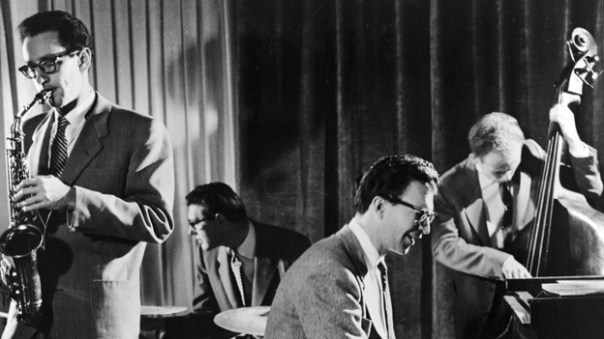
When someone talks about “West Coast jazz” or “cool jazz,” they’re almost invariably referring to a style performed by jazz musicians in California (and primarily in Los Angeles) in the ’50s and early ’60s. As opposed to the hard-bop sound dominant on the East Coast during that time, the West Coast sound was a bit mellower and more lyrical, with blended harmonies and — broadly speaking — more interest in composition and arrangement than improvisation.


 Jess Waid