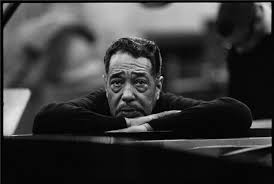
Duke Ellington influenced millions of people, around the world and at home. He gave American music its own sound for the first time. In his fifty year career, he played over 20,000 performances in Europe, Latin America, the Middle East, and Asia.
Ellington’s legacy transcends boundaries and fills the world with a treasure trove of music that renews itself through every generation of fans and music-lovers. His work continues to live on, and will endure for generations to come. Winton Marsalis put it best when he said, “His music sounds like America.” Because of the unmatched artistic heights to which he soared, no one deserved the phrase “beyond category” more than Ellington, for it aptly describes his life as well. He was most certainly one of a kind, a man who led a life with universal appeal and a style that transcended countless boundaries.
Duke Ellington is best remembered for the over 3,000 songs he composed during his lifetime. His best known titles include, “It Don’t Mean a Thing if It Ain’t Got That Swing,” “Sophisticated Lady,” “Mood Indigo,” “Solitude,” “In a Mellotone,” and “Satin Doll.” As a musician, he was most creative while on the road. It was during this time when he wrote his most famous piece, “Mood Indigo”which brought him world wide fame.
When asked what inspired him to write, Ellington replied, “My men and my race are the inspiration of my work. I try to catch the character and mood and feeling of my people.”
Duke Ellington’s popular compositions set the bar for generations of brilliant jazz, pop, theatre, and soundtrack composers to come. While these compositions guarantee his greatness, what made Duke an iconoclastic genius, and an unparalleled visionary, what has granted him immortality, are his extended suites. From 1943’s “Black, Brown and Beige,” to 1972’s “The Uwis Suite,” Duke used the suite format to give his jazz songs a far more empowering meaning, with enhanced resonance and purpose. They exalt, mythologize, and re-contextualize the African-American experience on a grand scale.
Duke Ellington was partial to giving brief verbal accounts of the moods his songs captured. Reading those accounts is like looking deep into the background of an old photo of New York, and noticing the lost and almost unaccountable details that gave the city its character during Ellington’s heyday, which began in 1927 when his band made the Cotton Club its home. ”The memory of things gone,” Ellington once said, ”is important to a jazz musician,” and the stories he sometimes told about his songs are the record of those bygone days. But what is gone returns, its pulse kicking, anytime Ellington’s music is played — the music still carries us forward today.
Duke Ellington was awarded the Grammy Lifetime Achievement Award in 1966. He was later awarded several other prizes, including the Presidential Medal of Freedom in 1969, and the French Legion of Honor in 1973, the highest civilian honors in each country. He died of lung cancer and pneumonia on May 24, 1974, a month after his 75th birthday, and is buried in the Bronx, in New York City. At his funeral, attended by over 12,000 people at the Cathedral of St. John the Divine, Ella Fitzgerald summed up the occasion, “It’s a very sad day…A genius has passed.”
Lester Willis Young (August 27, 1909 – March 15, 1959), nicknamed “Pres” or “Prez”, was an American jazz tenor saxophonist and sometime clarinetist.
Coming to prominence while a member of Count Basie’s orchestra, Young was one of the most influential players on his instrument. In contrast to many of his hard-driving peers, Young played with a relaxed, cool tone and used sophisticated harmonies, using “a free-floating style, wheeling and diving like a gull, banking with low, funky riffs that pleased dancers and listeners alike.”
Famous for his hip, introverted style, he invented or popularized much of the hipster jargon which came to be associated with the music.
Lester Young was born in Woodville, Mississippi, and grew up in a musical family. His father, Willis Handy Young, was a respected teacher, his brother Lee Young was a drummer, and several other relatives played music professionally. His family moved to New Orleans, Louisiana, when Lester was an infant and later to Minneapolis, Minnesota. Although at a very young age Young did not initially know his father, he learned that his father was a musician. Later Willis taught his son to play the trumpet, violin, and drums in addition to the saxophone.
Young played in his family’s band, known as the Young Family Band, in both the vaudeville and carnival circuits. He left the family band in 1927 at the age of 18 because he refused to tour in the Southern United States, where Jim Crow laws were in effect and racial segregation was required in public facilities.
In 1933 Young settled in Kansas City, where after playing briefly in several bands, he rose to prominence with Count Basie. His playing in the Basie band was characterized by a relaxed style which contrasted sharply with the more forceful approach of Coleman Hawkins, the dominant tenor sax player of the day.
He left the Basie band to replace Hawkins in Fletcher Henderson’s orchestra. He soon left Henderson to play in the Andy Kirk band (for six months) before returning to Basie. While with Basie, Young made small-group recordings for Milt Gabler’s Commodore Records, The Kansas City Sessions. Although they were recorded in New York (in 1938, with a reunion in 1944), they are named after the group, the Kansas City Seven, and comprised Buck Clayton, Dicky Wells, Basie, Young, Freddie Green, Rodney Richardson, and Jo Jones. Young played clarinet as well as tenor in these sessions. He was a master of the clarinet, and there too his style was entirely his own. As well as the Kansas City Sessions, his clarinet work from 1938–39 is documented on recordings with Basie, Billie Holiday, Basie small groups, and the organist Glenn Hardman.
After Young’s clarinet was stolen in 1939, he abandoned the instrument until about 1957. That year Norman Granz gave him one and urged him to play it (with far different results at that stage in Young’s life—see below).
Young left the Basie band in late 1940. He is rumored to have refused to play with the band on Friday, December 13 of that year for superstitious reasons, spurring his dismissal. Lester left the band around that time and subsequently led a number of small groups that often included his brother, noted drummer Lee Young, for the next couple of years; live and broadcast recordings from this period exist.
During this period Young accompanied the singer Billie Holiday in a couple of studio sessions in 1940 and 1941 and also made a small set of recordings with Nat “King” Cole (their first of several collaborations) in June 1942. His studio recordings are relatively sparse during the 1942 to 1943 period, largely due to the American Federation of Musicians’ recording ban. It was Holiday who gave Young the nickname “Pres”, short for President.
In December 1943 Lester Young returned to the Count Basie fold for a 10-month stint, cut short by his being drafted into the army during World War II.
In September 1944 Young and Jo Jones were in Los Angeles with the Basie Band when they were inducted into the U.S. Army. Unlike many white musicians, who were placed in band outfits such as the ones led by Glenn Miller and Artie Shaw, Young was assigned to the regular army where he was not allowed to play his saxophone. Based in Ft. McClellan, Alabama, Young was found with marijuana and alcohol among his possessions. He was soon court-martialed. Young did not fight the charges and was convicted. He served one year in a detention barracks and was dishonorably discharged in late 1945. His experience inspired his composition “D.B. Blues” (with D.B. standing for detention barracks).
Some jazz historians have argued that Young’s playing power declined in the years following his army experience, though critics such as Scott Yanow disagree with this entirely. Recordings show that his playing began to change before he was drafted. Some argue that Young’s playing had an increasingly emotional slant to it, and the post-war period featured some of his greatest renditions of ballads.
Recordings made during this and subsequent periods suggest Young was beginning to make much greater use of a plastic reed, which tended to give his playing a somewhat heavier, breathier tone (although still quite smooth compared to that of many other players). While he never abandoned the wooden reed, he used the plastic reed a significant share of the time from 1943 until the end of his life. Another cause for the thickening of his tone around this time was a change in saxophone mouthpiece from a metal Otto Link to an ebonite Brilhart. In August 1944 Young appeared alongside drummer Jo Jones, trumpeter Harry “Sweets” Edison, and fellow tenor saxophonist Illinois Jacquet in Gjon Mili’s short film Jammin’ the Blues.
In September 1944 Young and Jo Jones were in Los Angeles with the Basie Band when they were inducted into the U.S. Army. Unlike many white musicians, who were placed in band outfits such as the ones led by Glenn Miller and Artie Shaw, Young was assigned to the regular army where he was not allowed to play his saxophone. Based in Ft. McClellan, Alabama, Young was found with marijuana and alcohol among his possessions. He was soon court-martialed. Young did not fight the charges and was convicted. He served one year in a detention barracks and was dishonorably discharged in late 1945. His experience inspired his composition “D.B. Blues” (with D.B. standing for detention barracks).
Some jazz historians have argued that Young’s playing power declined in the years following his army experience, though critics such as Scott Yanow disagree with this entirely. Recordings show that his playing began to change before he was drafted. Some argue that Young’s playing had an increasingly emotional slant to it, and the post-war period featured some of his greatest renditions of ballads.
Young’s career after World War II was far more prolific and lucrative than in the pre-war years in terms of recordings made, live performances, and annual income. Young joined Norman Granz’s Jazz at the Philharmonic (JATP) troupe in 1946, touring regularly with them over the next 12 years. He made a significant number of studio recordings under Granz’s supervision for his Verve Records label as well, including more trio recordings with Nat King Cole. Young also recorded extensively in the late 1940s for Aladdin Records (1946-7, where he had made the Cole recordings in 1942) and for Savoy (1944, ’49 and ’50), some sessions of which included Basie on piano.
While the quality and consistency of his playing ebbed gradually in the latter half of the 1940s and into the early 1950s, he also gave some brilliant performances during this stretch. Especially noteworthy are his performances with JATP in 1946, 1949, and 1950.[citation needed] With Young at the 1949 JATP concert at Carnegie Hall were Charlie Parker and Roy Eldridge, and Young’s solo on “Lester Leaps In” at that concert is a particular standout among his performances in the latter half of his career.
While the quality and consistency of his playing ebbed gradually in the latter half of the 1940s and into the early 1950s, he also gave some brilliant performances during this stretch. Especially noteworthy are his performances with JATP in 1946, 1949, and 1950. With Young at the 1949 JATP concert at Carnegie Hall were Charlie Parker and Roy Eldridge, and Young’s solo on “Lester Leaps In” at that concert is a particular standout among his performances in the latter half of his career.
From around 1951, Young’s level of playing declined more precipitously, as he began to drink more and more heavily. His playing showed reliance on a small number of clichéd phrases and reduced creativity and originality, despite his claims that he did not want to be a “repeater pencil” (Young coined this phrase to describe the act of repeating one’s own past ideas). A comparison of his studio recordings from 1952, such as the session with pianist Oscar Peterson, and those from 1953–1954 (all available on the Verve label) also demonstrates a declining command of his instrument and sense of timing, possibly due to both mental and physical factors. Young’s playing and health went into a crisis, culminating in a November 1955 hospital admission following a nervous breakdown.
He emerged from this treatment improved. In January 1956 he recorded two Granz-produced sessions featuring pianist Teddy Wilson (who had led the Billie Holiday recordings with Young in the 1930s), trumpet player Roy Eldridge, trombonist Vic Dickenson, bassist Gene Ramey, and drummer Jo Jones – available on the Jazz Giants ’56 and Prez and Teddy albums. 1956 was a relatively good year for Lester Young, including a tour of Europe with Miles Davis and the Modern Jazz Quartet and a successful stint at Olivia’s Patio Lounge in Washington, DC.
Throughout the 1940s and 50s, Lester Young had sat in on Count Basie Orchestra gigs from time to time. The best-known of these is their July 1957 appearance at the Newport Jazz Festival, the line-up including many of Lester’s old buddies: Jo Jones, Roy Eldridge, Illinois Jacquet and Jimmy Rushing. His playing was in better shape, and he produced some of the old, smooth-toned flow of the 1930s. Among other tunes he played a moving “Polkadots and Moonbeams,” which was a favorite of his at that time.
In September 1944 Young and Jo Jones were in Los Angeles with the Basie Band when they were inducted into the U.S. Army. Unlike many white musicians, who were placed in band outfits such as the ones led by Glenn Miller and Artie Shaw, Young was assigned to the regular army where he was not allowed to play his saxophone. Based in Ft. McClellan, Alabama, Young was found with marijuana and alcohol among his possessions. He was soon courtmartialed. Young did not fight the charges and was convicted. He served one year in a detention barracks and was dishonorably discharged in late 1945. His experience inspired his composition “D.B. Blues” (with D.B. standing for detention barracks).
Some jazz historians have argued that Young’s playing power declined in the years following his army experience, though critics such as Scott Yanow disagree with this entirely. Recordings show that his playing began to change before he was drafted. Some argue that Young’s playing had an increasingly emotional slant to it, and the post-war period featured some of his greatest renditions of ballads. Like Change My Plan; I Didn’t Know What Time It Was (1956 version); Gigantic Blues;This Year’s Kisses;You Can Depend on Me; and, I Guess I’ll Have.
On December 8, 1957, Young appeared with Billie Holiday, Coleman Hawkins, Ben Webster, Roy Eldridge, and Gerry Mulligan in the CBS television special The Sound of Jazz, performing Holiday’s tunes “Lady Sings The Blues” and “Fine and Mellow.” It was a reunion with Holiday, with whom he had lost contact for years. She was also in decline at the end of her career, and they both gave moving performances. Young’s solo was brilliant, considered by many jazz musicians an unparalleled marvel of economy, phrasing and extraordinarily moving emotion. But Young seemed gravely ill, and was the only horn player who was seated (except during his solo) during the performance. By this time his alcoholism had cumulative effect. He was eating significantly less, drinking more and more, and suffering from liver disease and malnutrition. Young’s sharply diminished physical strength in the final two years of his life yielded some recordings with a frail tone, shortened phrases, and, on rare occasions, a difficulty in getting any sound to come out of his horn at all.
Lester Young made his final studio recordings and live performances in Paris in March 1959 with drummer Kenny Clarke at the tail end of an abbreviated European tour during which he ate next to nothing and virtually drank himself to death. He died in the early morning hours of March 15, 1959, only hours after arriving back in New York, at the age of 49. He was buried at the Cemetery of the Evergreens in Brooklyn. According to jazz critic Leonard Feather, who rode with Holiday in a taxi to Young’s funeral, she said after the services, “I’ll be the next one to go.” Billie Holiday died four months later at age 44.
Charles Mingus dedicated an elegy, “Goodbye Pork Pie Hat,” for Young only a few months after his death. Wayne Shorter, then of Art Blakey’s Jazz Messengers, composed a tribute, called “Lester Left Town.”
Young’s playing style influenced many other tenor saxophonists. Perhaps the most famous and successful of these were Stan Getz and Dexter Gordon, but he also influenced many in the cool movement such as Zoot Sims, Al Cohn, and Gerry Mulligan. Paul Quinichette modeled his style so closely on Young’s that he was sometimes referred to as the “Vice Prez” (sic). Sonny Stitt began to incorporate elements from Lester Young’s approach when he made the transition to tenor saxophone. Lester Young also had a direct influence on young Charlie Parker (“Bird”), and thus the entire be-bop movement. Indeed, recordings of Parker on tenor sax are similar in style to that of Young. Lesser-known saxophonists, such as Warne Marsh, were strongly influenced by Young.
Don Byron recorded the album Ivey-Divey in gratitude for what he learned from studying Lester Young’s work, modeled after a 1946 trio date with Buddy Rich and Nat King Cole. “Ivey-Divey” was one of Lester Young’s common eccentric phrases.
Young is a major character in English writer Geoff Dyer’s 1991 fictional book about jazz, But Beautiful.
The Resurrection of Lady Lester by OyamO (Charles F. Gordon) is a play and published book depicting Young’s life, subtitled “A Poetic Mood Song Based on the Legend of Lester Young.”
In the 1986 film Round Midnight, the fictional main character Dale Turner, played by Dexter Gordon, was partly based on Young – incorporating flashback references to his army experiences, and loosely depicting his time in Paris and his return to New York just before his death.
Acid Jazz/boogaloo band the Greyboy Allstars song “Tenor Man” is a tribute to Young. On their 1999 album “Live,” saxophonist Karl Denson introduces the song by saying, “…now some folks may have told you that Lester Young is out of style, but we’re here to tell you that the Prez is happenin’ right now.” Those were literally the lyrics Rahsaan Roland Kirk wrote and sang to the melody of the Charles Mingus elegy, “Goodbye Pork Pie Hat.”
Peter Straub’s short story collection Magic Terror (2000) contains a story called “Pork Pie Hat,” a fictionalized account of the life of Lester Young. Straub was inspired by Young’s appearance on the 1957 CBS-TV show The Sound of Jazz, which he watched repeatedly, wondering how such a genius could have ended up such a human wreck.
Lester Young is said to have popularized use of the term “cool” to mean something fashionable. Another slang term he coined was the term “bread” for money. He would ask, “How does the bread smell?” when asking how much a gig was going to pay.
While jazz is difficult to define, improvisation is one of its major elements — the creative expression and interaction between composer and performer. Improvisation developed enormously over the history of the music. In early New Orleans and Dixieland jazz, performers took turns playing the melody, while others improvised counter-melodies. During the Big Band era, the reliance turned more toward arranged music while individual soloists improvised within the arrangements. With the shift back toward small groups, the melody was stated briefly at the start and end of a piece, but the core of the performance was a series of improvisations. Unlike symphonic music, which is played without ever varying a single note, skilled jazz performers interpret music in individual ways, never playing a composition exactly the same way twice. The performer’s mood and personal experience, interactions with other musicians, or even members of the audience, may alter melodies, harmonies, or even time signatures.
The jazz genre originated at the beginning of the 20th century within the African-American communities of the southern United States. It combined European harmony and form elements with African-based music, evident in its use of blue notes, improvisation, poly-rhythms, syncopation, and swing. From its early development until the present day, jazz has also incorporated elements from popular music, especially American.
As the music developed and spread around the world, it drew on many different musical cultures, giving rise to distinctive styles, like New Orleans jazz, bebop, Afro-Cuban jazz, avant-garde jazz, Latin jazz, jazz fusion, and other ways of playing the music.
Here’s an interesting feature on two jazz greats, Sonny Rollins and John Coltrane…
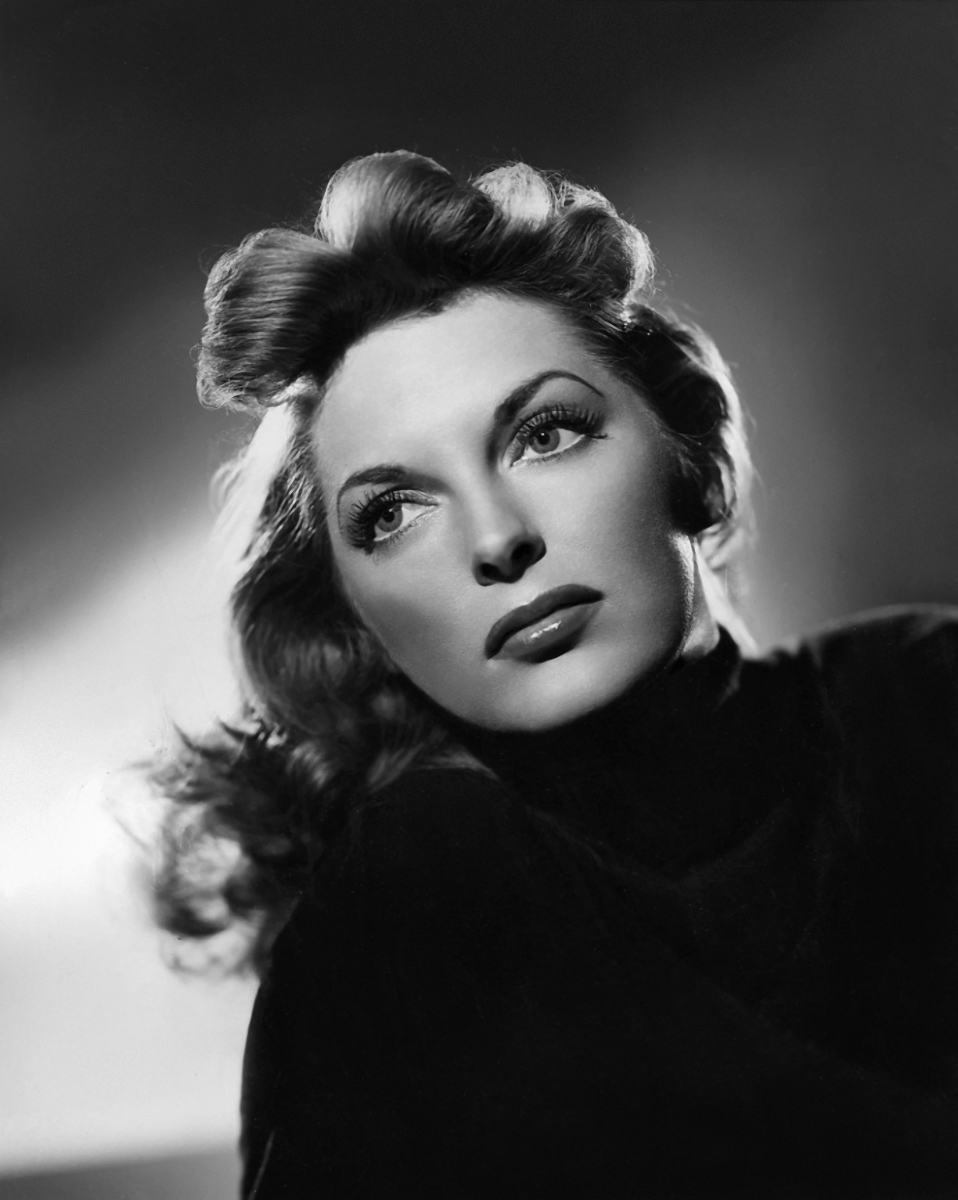
“Cry Me a River” is a popular American torch song, written by Arthur Hamilton, first published in 1953, and made famous in the version by Julie London in 1955.
A jazzy blues ballad, “Cry Me a River” was originally written for Ella Fitzgerald to sing in the 1920s-set film, Pete Kelly’s Blues (released in 1955), but the song was dropped. Fitzgerald first released a recording of the song on Clap Hands, Here Comes Charlie! in 1961. The song’s first release was by actress/singer Julie London in 1955, backed by Barney Kessel on guitar and Ray Leatherwood on bass. A performance of the song by London in the 1956 film The Girl Can’t Help It helped to make it a bestseller (reaching number nine on U.S. and number 22 on U.K. charts). London’s recording was later featured in the soundtracks for the movies Passion of Mind (2000), and V for Vendetta (2005).
Here are a series of videos featuring the incomparable June Christy, one of the most overlooked vocalists of her generation. This first one was shot at the Playboy Mansion, in 1959…
Here’s a younger June, this time performing with the Stan Kenton Orchestra…
Zoot Sims on the tenor sax, during the recording session for the 1956 album, Jutta Hopp with Zoot Sims
The tenor saxophone is a medium-sized member of the saxophone family, a group of instruments invented by Adolphe Sax in the 1840s. The tenor, with the alto, are the two most common types of saxophones. The tenor is pitched in the key of B Flat♭, and written as a transposing instrument in the treble clef, sounding an octave and a major second lower than the written pitch. Modern tenor saxophones which have a high F# key have a range from A♭2 to E5 (concert) and are therefore pitched one octave below the soprano saxophone. People who play the tenor saxophone are known as “tenor saxophonists” or “tenor sax players”.
The tenor saxophone uses a larger mouthpiece, reed, and ligature than the alto and soprano saxophones. Visually, it is easily distinguished from these instruments by the bend in its neck, or its crook, near the mouthpiece.
The tenor saxophone is used in many different types of ensembles, including concert bands, big band jazz ensembles, small jazz ensembles, and marching bands. It is occasionally included in pieces written for symphony orchestra and for chamber ensembles; three examples of this are Ravel’s Boléro, Prokofiev’s suite from Lieutenant Kijé,and Webern’s Quartet for violin, clarinet, tenor saxophone, and piano. In concert bands, the tenor plays mostly a supporting role, sometimes sharing parts with the euphonium, horn and trombone. In jazz ensembles, the tenor plays a more prominent role, often sharing parts or harmonies with the alto saxophone.
Many of the most important jazz musicians have been tenor saxophonists, including Coleman Hawkins, Lester Young, Ben Webster, Sonny Rollins, Stan Getz, John Coltrane, Dexter Gordon, and Wayne Shorter.
History
The tenor saxophone was one of a family of fourteen instruments patented in 1846 by Adolphe Sax, a Belgian-born instrument maker, flautist and clarinetist. A medley of ideas drawn from the clarinet, flute, oboe and ophicleide, the saxophone was intended to form a tonal link between the clarinets and brass instruments found in military bands, an area which Sax considered sorely lacking. Sax’s patent, granted on 28 June 1846, divided the family into two groups of seven instruments, each ranging from sopranino down to contrabass. One family, pitched alternatively in B♭ and E♭, was designed specifically to integrate with the other instruments then common in military bands. The tenor saxophone, pitched in B♭, is the fourth member of this family.
Description
Soprano sax
Tenor sax

The tenor saxophone, like all saxophones, is in essence an approximately conical tube of thin brass, a type of metal. The wider end of the tube is flared slightly to form a bell, while the narrower end is connected to a mouthpiece similar to that of a clarinet. At intervals down the bore are placed between 20 and 23 tone holes; these are covered by pads which can be pressed onto the holes to form an airtight seal. There are also two small speaker holes which, when opened, disrupt the lower harmonics of the instrument and cause it to overblow into an upper register. The pads are controlled by pressing a number of keys with the fingers of the left and right hands; the left thumb controls an octave key which opens one or other of the speaker holes. The original design of tenor saxophone had a separate octave key for each speaker hole, in the manner of the bassoon; the mechanism by which the correct speaker hole is selected based on the fingering of the left hand (specifically the left ring finger) was developed soon after Sax’s patent expired in 1866.
Although a handful of novelty tenors have been constructed ‘straight’, like the smaller members of the saxophone family, the unwieldy length of the straight configuration means that almost all tenor saxophones feature a ‘U-bend’ above the third-lowest tone hole which is characteristic of the saxophone family. The tenor saxophone is also curved at the top, above the highest tone-hole but below the highest speaker hole. While the alto is usually bent only through 80–90° to make the mouthpiece fit more easily in the mouth, the tenor is usually bent a little more in this section, incorporating a slight S-bend.
The mouthpiece of the tenor saxophone is very similar to that of the clarinet, an approximately wedge-shaped tube, open along one face and covered in use by a thin strip of material prepared from the stem of the giant cane (Arundo donax) commonly known as a reed. The reed is shaved to come to an extremely thin point, and is clamped over the mouthpiece by the use of a ligature. When air is blown through the mouthpiece, the reed vibrates and generates the acoustic resonances required to produce a sound from the instrument. The mouthpiece is the area of the saxophone with the greatest flexibility in shape and style, so the material and dimensions of its mouthpiece primarily determine the timbre of the instrument. Materials used in mouthpiece construction include plastic, ebonite and various metals e.g. bronze, brass and stainless steel.
The mouthpiece of the tenor saxophone is proportionally larger than that of the alto, necessitating a similarly larger reed. The increased stiffness of the reed and the greater airflow required to establish resonance in the larger body means the tenor sax requires greater lung power but a looser embouchure than the higher-pitched members of the saxophone family. The tenor sax reed is similar in size to that used in the bass clarinet, so the two can be easily substituted.
Uses of the tenor saxophone
The tenor saxophone first gained popularity in one of its original intended roles: the military band. Soon after its invention, French and Belgian military bands began to take full advantage of the instrument that Sax had designed specifically for them. Modern military bands typically incorporate a quartet of saxophone players playing the E♭ baritone, tenor, E♭ alto and B♭ soprano. British military bands customarily make use only of the tenor and alto saxs, with two or more musicians on each instrument.
Much of the popularity of saxophones in the United States derives from the large number of military bands that were around at the time of the American Civil War. After the war disused former military band instruments found their way into the hands of the general public, where they were often used to play Gospel music and jazz. The work of the pioneering bandleader Patrick Gilmore (1829–1892) was highly influential; he was one of the first arrangers to pit the brass instruments (trumpet, trombone and cornet) against the reeds (clarinet and saxophone) in the manner which has now became the norm for big-band arrangements.
The tenor is also used in classical music. It is a standard instrument in concert bands and saxophone quartets. It has a decent amount of solo repertoire as well. The tenor is sometimes used as a member of the orchestra in pieces such as Sergei Prokofiev’s “Romeo and Juliet” and Maurice Ravel’s “Boléro”.
The tenor saxophone became best known to the general public through its frequent use in jazz music. It was the pioneering genius of Coleman Hawkins in the 1930s that lifted the tenor saxophone from its traditional role of adding weight to the ensemble and established it as a highly effective melody instrument in its own right.
Stan Getz
Many prominent jazz musicians from the 1940s onwards have been tenor players. The strong resonant sound of Hawkins and his followers always in contrast with the light, almost jaunty approach of Lester Young and his school. Then during the be-bop years the most prominent tenor sounds in jazz were those of the Four Brothers in the Woody Herman orchestra, including Stan Getz who in the 1960s went on to great popular success playing the Brazilian Bossa nova sound on tenor saxophone (not forgetting John Coltrane, Dexter Gordon and Sonny Rollins). In recent years, the tenor continues to be very popular with fans of smooth jazz music, being used by notable artists like Kirk Whalum, Richard Elliot, Steve Cole and Jessy J. Saxophonists Ron Holloway and Karl Denson are two of the major proponents of the tenor on the Jam band music scene.
As a result of its prominence in American jazz, the instrument has also featured prominently in other genres, and it’s been said that tenor saxophonists pioneered many innovations in American music. The tenor is common in rhythm and blues music and has a part to play in rock and roll and more recent rock music as well as Afro-American, Latin American, Afro-Caribbean, and African music. Many post-punk and experimental bands throughout the UK and Europe have also used it on occasion in the 1980s, sometimes atonally.
Here’s a fascinating series of articles highlighting the achievements of jazz visionary Jimmy Giuffre.
Visionary Jazz, October 13, 2001, by N. Dorward
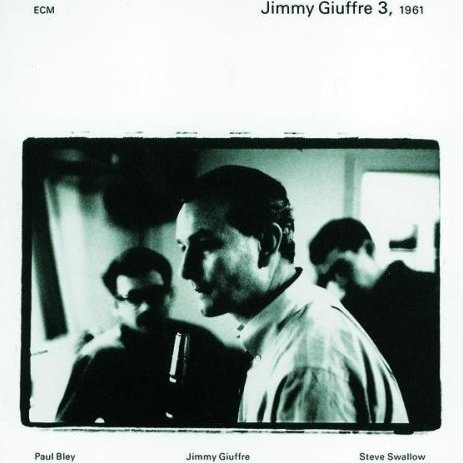
This reissue doubles up two Verve albums recorded by the Jimmy Giuffre Trio, Fusion & Thesis. Both were recorded in 1961, & it’s remarkable to think of that year in jazz: consider, for instance, that Eric Dolphy & Booker Little recorded a live date for Prestige at the Five Spot in July of that year; Coltrane played the Vanguard in November, yielding Live at the Village Vanguard & Impressions; the Bill Evans trio with La Faro had recorded two albums’ worth of material in June for Riverside; Cecil Taylor recorded a large amount for Candid early in the year; Lee Konitz recorded Motion; Ornette Coleman had just rounded off his Atlantic output with the magnificent Ornette! & the lesser Ornette on Tenor. All of these recordings were to prove influential, some of them (Coltrane and Evans) extremely so; & yet despite the fact that Giuffre’s trio hardly met with equal success or acclaim, one might claim these two recordings for Verve as in their way equally influential on the course of jazz. Though Giuffre’s trio didn’t have much impact in the U.S., it met with a warmer critical reception in Europe, & its example proved highly influential on the development of jazz in Europe, especially in the creation of a free jazz (or free improvisation) that was quiet, reflective, & as considerable remove from the high-volume, “blacker” free jazz associated with the ESP & Impulse labels. ECM’s founder Manfred Eicher was a great admirer of Giuffre’s work, & it’s fitting that three decades later he should reissue these two discs, which still sound quietly visionary.
One characteristic that defines almost all the experimentation in forward-looking jazz of circa 1960 is the desire to replace the conventional idea of the “soloist” with a much greater & more democratic role for “accompanists.” Think, in particular, of emphasis on three-way dialogue in Bill Evans’ trio; or the development in Coltrane’s music of the drummer’s role, so that rather than conventional solo-and-accompaniment, Jones & Coltrane engage in furious, combative dialogue; or the nascent “harmolodics” of Coleman’s quartet. Giuffre’s trio music is very much part of this line of inquiry: both the pianist Paul Bley & the bass player Steve Swallow are forceful personalities, & the music is strikingly nonhierarchical: the divisions between “solo” and “accompaniment” are often blurred.
Of the two albums, I think the second is considerably the more engaging. (As with Bill Evans’ trio with La Faro, the music was developing so quickly that each album sounds very different from the last: neither of these albums sound much like Free Fall, the 3rd and last disc they recorded [for Columbia].) The first is a touch dry & too unvaryingly slow, mostly developing through a series of carefully paced, almost static harmonies. It’s nonetheless worth a close listen. The 2nd album, Thesis, is truly a marvel: it opens with Carla Bley’s “Ictus”, which issues with a clatter from the instruments & then breaks free, into completely open space. One thing I like about this album in particular is the pacing & dynamics: sometimes, for instance, the trio introduces a brief meditative pause before the restatement of the head after the solos. Throughout the album, Bley & Giuffre draw unconventional sounds out of their instruments: Bley works with the interior of the piano, while Giuffre sometimes produces un-pitched breath-noises from his clarinet. Swallow (only 20 years old at the time!) is commanding throughout both albums, & he’s sometimes the “lead” voice—for instance, he’s given the statement of the melody on “Goodbye” (the one standard performed here: listeners should check out Bley’s recent disc Not Two, Not One, which has a theme-less improvisation which sounds to me like it’s based on this tune). Swallow often gives the music a strong push & an air of tension exactly when one expects it to become reflective: check out, for instance, his work on “Afternoon”.
This is music that still sounds sui generis. It’s not music that grabs the listener forcefully: it’s altogether more subtle & insidious. The one album of the period it does seem related to, oddly enough, is Kind of Blue—there are a few points where Bley’s playing suggests “Blue in Green” or “Flamenco Sketches”. Like that album, 1961 is notable as a turn away from the high volume & brash pyrotechnics of contemporary hard bop, to something much more oblique & atmospheric. 1961 is a much more “difficult” album than Davis’s masterpiece, of course, and many jazz fans will find it too un-swinging, too mysterious or too far from bop & post-bop tenets (though they would be missing the fact that swing & the blues are very much present here, just much more obliquely expressed). But I’d still claim this as one of the essential postwar jazz albums. Essential listening. Fans of this album will also want to listen to the trio’s 1962 album Free Fall (which is considerably more difficult music than these two dates, stepping out into complete atonality & freedom). The group also reformed in 1989 & has recorded several new albums. I would also recommend Time Will Tell, a disc on ECM featuring Evan Parker, Paul Bley & Barre Phillips performing music that is overtly influenced by Giuffre’s work (Phillips was Swallow’s replacement in the trio); & Lee Konitz’s Rhapsody, which has one track, nearly 20 minutes long, which is a theme-less improvisation on “All the Things You Are” by Konitz, Giuffre, Bley & Gary Peacock.
Paving the Way June 12, 2003, by Christopher Forbes
The cool movement in jazz is often considered a dead end musically. By the late ’50s the Hard Bop movement had become dominant in the jazz world, leaving once central musicians such as Jimmy Giuffre and Gerry Mulligan out of the mainstream. Then the free jazz movement erupted, partly as a reaction to the hard boppers. But Ornette, Coltrane and the like were far removed from the cerebral styling of the cool musicians, so once again, the spirit of the times seemed against them. As a result, many cool school musicians struggled in the early ’60s to find a way to accommodate these new styles, while keeping up their interests. Much of this music is forgotten now, but at least in the case of the Jimmy Giuffre 3, there is much treasure in this work.
Giuffre had been leading a drummer-less group since the mid ’50s, often featuring Jim Hall on guitar. But in 1961 he formed a new group with Paul Bley on the piano and a 19-year-old Steve Swallow on bass. They recorded the two albums on this disc for Verve, the first as Fusion and the second as Thesis. Listening to them in chronological order, you can hear the group getting progressively freer. This is chamber jazz at it’s most vital. The first album features tunes by Giuffre and by Bley’s then-wife Carla. The sound is a premonition of the ECM style that Manfred Eichter would develop in the 70s…lyrical, gently swinging at times, modal but floating in and out of tonality. The compositions themselves are strong, focusing on unusual harmonies underpinning cleverly concealed traditional song structures. Improvisation is often collective with a gentle trading of lines between Giuffre and Bley. Swallow is an even voice here. Occasionally he walks lines, but more often he improvises subtle counterpoint to the lines of the piano and clarinet. Bley is stunning. He has discovered his trademark spare dissonant harmony, and his lyricism is ecstatic. You can hear that he was an overwhelming influence on many later pianists, Keith Jarrett not the least.
Thesis is an even more far ranging album. Though the recording does have plenty of cerebral “bop” numbers, the entire approach to improvising is even freer than on the earlier disc. In many tunes, particularly the opening “Ictus,” tonality disappears altogether. Bley and Guiffre experiment on their instruments, coaxing unusual tones out of them. Even the more conventional tunes seem somehow free of preplanning. An ostinato might lead to a dark passage with unusual chords or scales through in. Dissonance is used subtly but effectively. This is not music that makes its impact through groove or energy. Its pleasures are subtle and you have to listen closely for the rewards. But this is passionate music, passionate in its understatement. Every note is pregnant with meaning.
This work has nearly been lost. Verve had no compelling reason to re-release it, as it never made a huge impact when first released, at least in the US. However, it was devoured by Europeans, not the least Manfred Eichter. It is much to the ECM guru’s credit that he brought this out again. By doing so he acknowledges his tremendous debt to these musicians. If you like your music adventurous but subtle, you should definitely get this album, and the subsequent Guiffre 3 album, Free Fall on Sony. Listened to side by side, these three recording paint a picture of three top musicians in transition to what would be their mature styles.
Delicate filigree creations – sublime & awesome January 31, 2004, by IrishGit
When Jimmy Giuffre broke away from the straightjacket of white West Coast Jazz in the mid-’fifties he went on to produce a series of albums experimenting with drummer-less trios. In fact he did a wonderful album just before this series using a quartet of reeds/trumpet/bass/drums where the drums are not used rhythmically at all (Tangents in Jazz—long unavailable except on the Mosaic 6 CD set). Giuffre had always felt uncomfortable as a straight jazz improviser—he needed the space & freedom to explore ideas & sounds as they cropped up in order to express himself fully, & found the thrust of a good rhythm section too restricting—he didn’t want to ride the beating drum—his rhythmic sense was more dynamic & extreme. This trio with Bley & Swallow is where he first really comes into his own as composer, improviser & leader. The two albums on this release (Fusion & Thesis) were the trio’s first two recordings done only a few months apart in New York 1961. Also available by this trio are the seminal Free Fall (1962) & two wonderful live albums—Emphasis & Flight—recorded in Germany late 1961 (recently released on HatArt as a double CD). The remit of the trio really was to reinvent music—to take it apart piece by piece & reconstruct it afresh, making each component vibrate with its own independence whilst relating to other components with a new delicate vitality. Each instrument is also treated as a component in this web of interactions—each played with restraint & sensitivity—leaving much space around each other (bringing to mind Cage’s aphorism—”love is the space you leave around the loved one”)—listening as attentively as creating—creative listening. Not only was this group investigating the various components of music but they were also acutely aware & sensitive to the dynamics of creating as a threesome—as a trio—in fact on the later album “Free Fall” there are duets & solo pieces as well—all sounding very different in character. The overall feel of these recordings is of intense & intelligent inquiry—the more intense it gets the quieter it becomes. The music is not really jazz—it’s as much influenced by European atonal music—especially that of Berg & Webern—as it is Armstrong or Parker—in fact in the sleeve notes to Free Fall Giuffre states “Given: the urge to enter new realms, glimpse other dimensions, reach the absolute. Given: the visions received from thinking on such things as . . . gravity, Monk, electricity, time, space, the micro-cosmos, leaves, chemistry, power, gods, white-hot heat, asteroids, love, eternity, Einstein, Rollins, Evans, the heartbeat, pain, Delius, Scherchen, Art, overtones, the prehistoric, La Violette, wife, life, voids, Berg, Bird, the universe. . . .” This may sound like pretentious youthful enthusiasm but in fact it is all clearly audible in the music (Giuffre was, after all, a mature 40 years old when he made these albums)—La Violette, by the way, was Giuffre’s composition teacher. Whilst Free Fall may be this trios best & most intense deconstruction (& final—no one would record them afterwards)—these two albums—Fusion & Thesis—are the more listenable—softer (they’ve been given a little ECM reverb unfortunately)—transition recordings that still vibrate strongly with the intelligence, generosity, courage & commitment with which they were made.
Free Fall influenced the whole European free improvisation movement enormously, whereas these recordings influenced the ECM sound just as much (hence Manfred Eicher’s insistence to pay homage by releasing them on his label). Given how important this trio was & is, then surely it’s time we had everything they ever recorded available to us—even fluffed takes.
In short this trio is, along with Evans/LaFaro/Motian, the best in jazz, & this album set is their most attractive recording—sublime & awesome.
If you were alive in 1957, and old enough to enjoy Rock and Roll, you will probably remember the group “The Diamonds” who had just launched their super hit “Little Darlin’.” For those of you too young to remember, it was a time when performers actually had fun, enjoyed themselves, respected their fans, dressed appropriately — their lyrics could be (more or less!) understood. They did not feel obligated to scream, eat the microphone, mumble inaudible lyrics, or trash the set. In 1957, The Diamonds had a hit with “Little Darlin’.” Forty-seven years later, they were requested to perform in Atlantic City. Here are both performances. Tom Hanks’ father is much better looking than Tom, and even better looking with age — he’s the lead singer on the left. He still has it! Hope you enjoy. Two performances, 47 years apart
I had an opportunity to meet Tony Bennett once at Sandpoint, Idaho, during the summer festival there. I went to Sacramento College to see and listen to Dave Brubeck and Cal Tjader in the mid-fifties. So of course this article I’m re-posting by Charles Gans of the Associated Press resonated with me.
Tony Bennett & Dave Brubeck, together in Washington
Wednesday, June 19, 2013 11:00 AM CDT
Long lost Bennett-Brubeck recording discovered
by Charles J. Gans
NEW YORK (AP) — Tony Bennett never forgot the first time he performed with Dave Brubeck more than half a century ago. But the tape of that memorable collaboration between two American jazz masters lay forgotten in a record label’s vaults until its discovery by an archivist just weeks after Brubeck’s death in December, and it’s just been released as “Bennett/Brubeck: The White House Sessions, Live 1962.”
President John F. Kennedy’s White House made this jazz summit possible when it booked Brubeck and Bennett to perform at a concert on Aug. 28, 1962, for college-age summer interns. The crowd was so big that the concert had to be moved from the Rose Garden to an open-air theater at the base of the Washington Monument.
After Brubeck and Bennett each performed with their bands, the pianist came back on stage with his drummer Joe Morello and bassist Eugene Wright to accompany the singer on four encore numbers: “We haven’t rehearsed this, so lots of luck, folks,” Bennett joked with the audience.
“It was very spontaneous — a real jam session, where you really don’t plan what you’re going to sing or how you’re going to play it,” said Bennett, who had never previously performed with his Columbia Records label-mate. “I just gave Dave the key and the song, and we just went for it. The audience went crazy, and you can hear the reaction on the record.”
Columbia Records had sent its mobile recording unit to tape the concert. But only one song, their version of “That Old Black Magic,” surfaced years later on several compilation albums. The nearly one-hour tape had been mislabeled as “American Jazz Concert” with no reference to the two jazz legends and ended up lost in a section of the massive Sony Music Entertainment archives mostly devoted to classical music recordings.
Matt Kelly, director of the archives, was doing routine research last year into Columbia recording sessions done 50 years ago when he pieced together the paper trail that would lead to the tape’s discovery. He cross-referenced incomplete logbook entries for an Aug. 28, 1962, live recording in Washington, which didn’t list the performers’ names, and separate listings for Bennett and Brubeck sessions that same day. After Brubeck’s death at age 91 on Dec. 5, Bennett’s camp prodded Sony to see if a tape of the Washington concert existed and it was quickly located.
“I was shocked they even had it,” Bennett said in a telephone interview.
John Jackson, Sony Legacy’s vice president of A&R and Content, was surprised to find the tape in pristine condition and decided it had to be released.
“Both Tony and Dave are absolutely at the top of their game,” Jackson said. “It’s the only time they were recorded performing together and to have them on tape together was just too good to be true.”
Brubeck’s classic quartet — with alto saxophonist Paul Desmond — begins the set by playing the odd-metered “Take Five” at a faster tempo than on their groundbreaking 1959 album “Time Out,” which the year before had peaked at No. 2 on the pop album charts. The rest of the set includes Brubeck compositions inspired by the rhythms of countries where he had performed — “Nomad” (Afghanistan), “Thank You (Dziekuje)” (Poland) and “Castilian Blues” (Spain).
The smooth-voiced Bennett, accompanied by pianist Ralph Sharon’s trio, sings Broadway tunes such as “Just In Time” and “Small World” in his set, which closes with a song that had begun climbing the pop singles chart a few weeks earlier — “I Left My Heart In San Francisco.”
Their joint performance offers a rare chance to hear Brubeck perform Great American Songbook standards with a top-flight jazz singer and Bennett unleash his jazz chops often kept in check on his more pop-oriented Columbia recordings.
They begin their impromptu performance with a brisk “Lullaby of Broadway” in which Bennett unexpectedly changes the lyrics to “Come along and listen to the lullaby of … Dave Brubeck” and the pianist quickly jumps into his solo. On “Chicago (That Toddlin’ Town),” Brubeck’s solo gets somewhat funky. Bennett starts off singing “There Will Never Be Another You” as a slow ballad, but suddenly shifts to a fast tempo displaying some daring jazz phrasing, accompanied by Brubeck’s rapid-fire bop lines.
“It was a matter of listening to one another and we turned each other on,” Bennett said. “It’s always a joy to perform with people that you’ve admired your whole life.”
They didn’t perform together again until the 2009 Newport Jazz Festival when Brubeck sat in with Bennett to reprise “That Old Black Magic” — an encounter encouraged by jazz buff Clint Eastwood, who was producing a Brubeck documentary. At the time, Brubeck expressed his admiration for Bennett.
“Tony has such great command, control and power that it’s a thrill to hear him really start to belt it out,” Brubeck told the AP. “It’s a wonderful experience when somebody has all that power.”
His 1962 performance inspired Bennett to work with other jazz pianists. Bennett says he met Bill Evans for the first time at that Washington concert and they would record two albums in the 1970s that rank among the best of the singer’s career. He recently recorded an album of Jerome Kern tunes with husband-and-wife jazz pianists Bill Charlap and Renee Rosnes for later release.
Bennett, who will celebrate his 87th birthday in August with a Hollywood Bowl concert, is also planning to record a jazz CD with Lady Gaga later this year. He was impressed by her performance of “The Lady Is a Tramp” on his Grammy-winning 2011 “Duets II” CD.
“We just hit it off and I realized, ‘Oh, my God, this woman’s a really great jazz singer,’” Bennett said. “She’s going to surprise everybody as to how well she’s going to sing on this record.”
Here’s That Old Black Magic, and There Will Never Be Another You from those historic sessions — enjoy!








 Jess Waid