Purple Haze…


My life-long love of music was fueled by the fact that, growing up in Hollywood, I was constantly exposed to some amazing talent.

Like Nino Tempo.

I went to Hollywood High with Nino, who originally hailed from New York. He and his older sister, April Stevens (their birth name, by the way, was Lo Tiempo),  went on to become one of the hottest acts in the early ’60s.

Signed as a duo with Atco Records, they had a string of Billboard hits and earned a Grammy Award as “best rock & roll record of the year” for the single “Deep Purple”. “Deep Purple” was originally released as a “B-side” by legendary producer Ahmet Ertegun, who was dubious of Tempo’s belief that it would be a hit, calling it “the most embarrassing thing” the duo had ever recorded. When the “A-side” song, “Paradise”, flopped, Ertegun relented, and the song achieved notability as the longest running hit B-side, a title it carried for 21 years. The version I’ve posted above is from an American Bandstand broadcast of the era.

Music journalist Richie Unterberger has described the later song “All Strung Out” as Nino Tempo & April Stevens’ “greatest triumph”, declaring it “one of the greatest Phil Spector-inspired productions of all time”. For years following their charting singles, the duo continued recording, but failed to achieve continued sales success.

However in March 1973 they scored a #5 hit in the Netherlands with “Love Story” on A & M Records, two years after Andy Williams took that same song to #13 in the Dutch Top 40.

Watching and listening to this old clip from the most popular music program of the era brings back a flood of memories.

I haven’t been able to ascertain what they’re up to these days — or even if they’re still with us. I do know that they were inducted into the city of Buffalo’s Musical Hall of Fame in 1999. And  that in November, 2007, Nino performed Amazon Moon (formerly Bahia Manhattan, from his Nino album) at Carnegie Hall at the request of the great Mike Stoller, who labeled Nino’s version of that song one of his all-time favorites. On an evening hosted by Rob Reiner, designed to pay tribute to Stoller and his songwriting partner, Jerry Leiber, Nino was joined on stage by the likes of Natalie Cole, Ben E. King, Sally Kellerman and the late Marvin Hamlisch.

Not bad for a kid from Hollywood High. 


All that jazz… California style

dave-brubeck

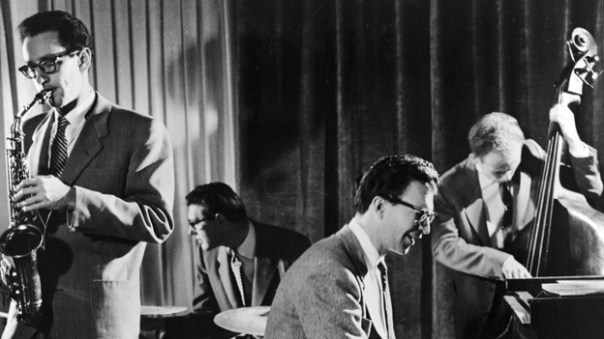
When someone talks about “West Coast jazz” or “cool jazz,” they’re almost invariably referring to a style performed by jazz musicians in California (and primarily in Los Angeles) in the ’50s and early ’60s. As opposed to the hard-bop sound dominant on the East Coast during that time, the West Coast sound was a bit mellower and more lyrical, with blended harmonies and — broadly speaking — more interest in composition and arrangement than improvisation.

So starts a cool bit on National Public Radio’s website — an article called West Coast Cool: the Jazz Sound of ’50s California.

Check it out!

Mike Montego Radio!

audiobook-3jpg


Why shouldn’t books have soundtracks?

Certainly the Mike Montego series deserves one. If the cool tunes of the early Sixties turn your crank, pour yourself something appropriate, lower the lights, make yourself comfortable, and listen in to this publisher’s overview of Shades of Blue, 459-Framed in Red, and The Purple Hand, featuring the marvelous music of artists such as Ella Fitzgerald, Louis Armstrong, Johnny Mathis, Ritchie Valens, and Ray Charles.

Oh, yeah!

BONUS! Mike Montego Radio

A reunion of car model makers

47JordanMariolRauthStumpf650


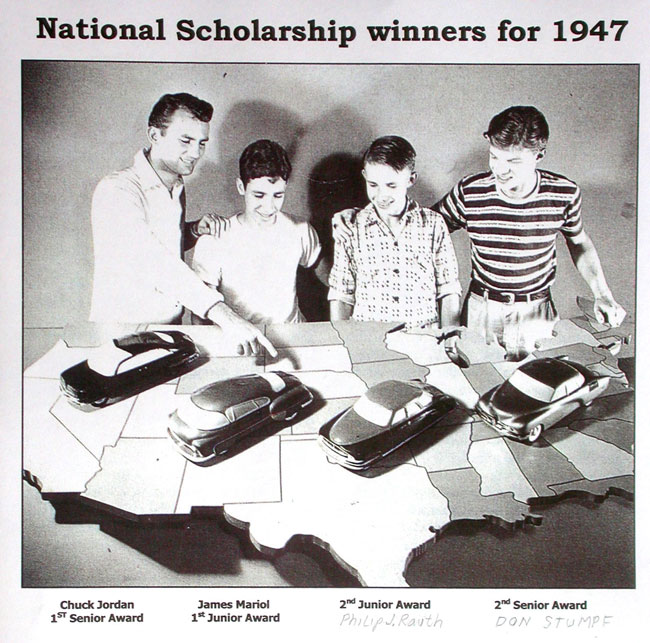
PHOENIX — By 1953, Anthony Joslin’s parents had saved $3,000, and earmarked it for sending their son to college. But Mr. Joslin was able to pay for his own tuition, room and board at North Carolina State University after winning a scholarship for the 1/12-scale car model he designed and built.

Like millions of other teenage boys from 1930 to 1968, Mr. Joslin entered the Fisher Body Craftsman’s Guild, an annual car-building and design competition sponsored by General Motors, which asserted that eight million teenagers participated in the guild.

Mr. Joslin and many other guild alumni gathered here last weekend for a reunion, sharing their stories and the model cars they have cherished all these years.

FisherBodyCraftsmansGuild1965_1500

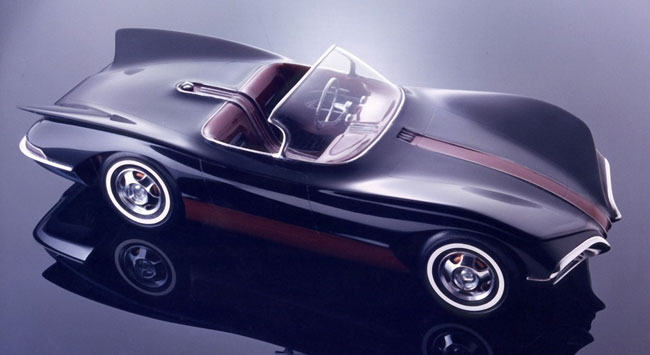
The models are worthy of being cherished. They are futuristic visions of the highway from the 1950s and ’60s, much like a miniature version of General Motors own Motorama dream car shows. Typically, a young man spent 700 to 800 hours creating his scale-model car from wood or plaster or in a few cases, from metal.

images

In the early years of the guild, boys were challenged to use a set of plans they were provided to build an elaborate scale model of the horse-drawn coach that was Fisher Body’s emblem. Fisher Body manufactured car bodies for all General Motors divisions.

In the early years of the guild, the goal was to identify young men with those skills that might be employed in making cars.

After World War II, it was future car designers the company sought, and thus the original 1/12th-scale models.

At North Carolina State, Mr. Joslin studied industrial, not automotive design, and afterward had a career designing instruments, computers and other products for Hewlett Packard.

For Paul Tatseos, winning a Craftsman’s Guild scholarship not only enabled him to go to college, but also to attend the Art Center College of Design in Pasadena, Calif., a school known for its automotive design program. After college, Mr. Tatseos worked as a designer at G.M. for 35 years.

Mr. Tatseos grew up in Boston. “My father said, ‘You live within walking distance of M.I.T. and Harvard and you’ve decided you want to go to college in California?’” Mr. Tatseos recalled at the reunion.

The scholarship program had an even more striking impact on the Simone family from Providence, R.I. e brothers Jerry, Eugene and Anthony all entered and won scholarships. Jerry Simone spent five years as a designer at Ford before going to pharmacy school. After college, Eugene Simone worked for 45 years at Merrill Lynch. Anthony Simone became a teacher and international school administrator, working around the world and at the United Nations.

“Our father was a tool-and-die maker,” Anthony Simone said at the reunion.

“Mother and father always said we were going to college, but that there was no money in the till for it,” Eugene Simone added.

57ArthurRussell650

But with the scholarships they won for their car design and building skills, the Simone sons were able to attend college.

The Fisher Body scholarships benefited the boys who won and their families as well. With Mr. Joslin attending college on his scholarship, his parents could use the money they’d saved to buy the only house they ever owned.

Ciro’s & the Trocadero

CIRO’S

1941, Ciro's Nightclub


Ciro’s (also known as Ciro’s Le Disc) was a nightclub in West Hollywood, California, at 8433 Sunset Boulevard, on the Sunset Strip, opened in January 1940, by entrepreneur William Wilkerson. Herman Hover took over management of Ciro’s in 1942 until it closed its doors in 1957. Hover filed for bankruptcy in 1959, and Ciro’s was sold at public auction for $350,000.

Ciro’s combined an overdone baroque interior with an unadorned exterior, and became a famous hangout for movie people of the 1940s, 1950s, and early 1960s. It was one of “the” places to be seen, and guaranteed being written about in the gossip columns of Hedda Hopper and Louella Parsons.

Among the galaxy of celebrities who frequented Ciro’s were Marilyn Monroe, Humphrey Bogart and Lauren Bacall, Frank Sinatra, Ava Gardner, Sidney Poitier, Anita Ekberg, Lucille Ball and Desi Arnaz, Joan Crawford, Betty Grable, Marlene Dietrich, Ginger Rogers, Ronald Reagan, Dean Martin, Mickey Rooney, Cary Grant, George Raft, George Burns and Gracie Allen, Judy Garland, June Allyson and Dick Powell, Mamie Van Doren, Jimmy Stewart, Jack Benny, Peter Lawford, and Lana Turner (who often said Ciro’s was her favorite nightspot) among many others. During his first visit to Hollywood in the late 1940s, future President John F. Kennedy dined at Ciro’s.

In the 1960s, Ciro’s became a Sunset Strip rock and roll club, and was the only major venue to make such a transition while keeping its original name. The Byrds got their start there in 1964. Accounts of the period (reproduced in the sleeve notes to The Preflyte Sessions box set) describe a “church-like” atmosphere, with interpretive dancing. The club also served as the host during the recording of the 1965 Dick Dale album “Rock Out With Dick Dale: Live At Ciro’s.”

Co-founder Wilkerson also opened other nightclubs on the Sunset Strip such as Cafe Trocadero, and later The Flamingo in Las Vegas.

The site of Ciro’s became The Comedy Store in 1972.

Notable performers


THE TROCADERO 


trocadero

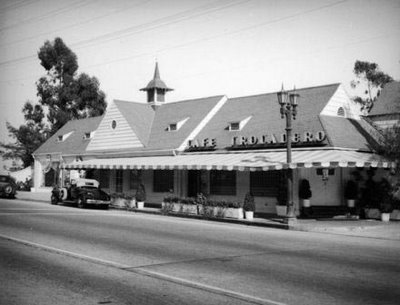
In West Hollywood, California, the Cafe Trocadero was the center of jitterbug craze in the 1930s. Today, a ” new” Trocadero stands as a nightclub at 8610 Sunset Boulevard on the Sunset Strip. A black tie, French-inspired supper club, the original Trocadero, now demolished, was considered the jewel of the Strip in the 1930s, and became synonymous with stars, starlets, movie producers, and fun. Founded by William R. Wilkerson in 1934, the successful publisher of The Hollywood Reporter who owned other nightclubs nearby on the Sunset Strip like Ciro’s and LaRue. It was also the scene of many famous movie premiere parties. There was a mid 1940s low-budget film about the Trocadero and its history starring Ralph Morgan which bore little resemblance to reality.

Among the celebrities who frequented the Trocadero were Fred Astaire, Bing Crosby, Cary Grant, Myrna Loy, Jackie Gleason, Henry Fonda, Judy Garland, Lucille Ball, Desi Arnaz, Jean Harlow, and Norma Shearer. The Trocadero was featured in the 1937 movie, A Star is Born starring Janet Gaynor and Fredric March. That same year, vaudevillian and Three Stooges manager Ted Healy died shortly after a fight in the parking lot, allegedly at the hands of fellow contractee Wallace Beery and MGM studio executive Eddie Mannix. A 2004 documentary film claimed that Healy’s assailants were actually Wallace Beery, gangster Pat DiCicco, and DiCicco’s cousin Albert “Cubby” Broccoli.

Actress/comedienne Thelma Todd, who died mysteriously in December 1935, spent an evening at the Trocadero at a party thrown by Ida Lupino and her father Stanley. Todd had formerly been married to Pat DiCicco, and was angry that he had shown up there with another actress, Margaret Lindsay. The party was one of the last times she was seen alive.

The dance club was parodied in the 1938 Warner Bros. cartoon, Porky at the Crocadero. The club also received a brief mention, via actual film footage, in 1944’s What’s Cookin’ Doc?.


Parker Center — end of an LA era

parkercenter


After over 60 years of service, on Tuesday, January 15th at 2 PM, the Los Angeles Police Department closed the tinted, large glass doors for the last time to its headquarters in Parker Center, located downtown at 150 North Los Angeles Street.

Originally called the Police Administration Building (PAB), groundbreaking for the Center occurred on December 30, 1952, and construction was completed in 1955. The architect was Welton Becket. The building combined police facilities that had been located throughout the Civic Center area. The location was previously home to the Olympic Hotel.

The PAB was a state of the art facility, and the envy of other police departments across the nation. So great was the demand for public tours that the Department assigned policewomen full-time for the first year to give tours several times a day.

It was later renamed in honor of Chief William H. Parker, who died in office on July 16, 1966 from a heart attack. Chief since 1950, he helped establish the LAPD’s reputation as a world leader in law enforcement.

15WEBB

Soon after his death, the Los Angeles City Council renamed the building “Parker Center.” The building was one of the sites of unrest during the 1992 Los Angeles riots, following a not-guilty verdict for the four police officers involved in the Rodney King matter.

A MEDIA STAR

200px-Dragnet_title_screen

Probably Parker Center’s greatest early notoriety began with the fifth season in 1955 of the television drama by Jack Webb’s Mark VII Productions, Dragnet, and again in the late 1960’s when the show returned to TV, this time in color.


6a010536b86d36970c01761778711e970c-800wi


This was only the start. The PAB appeared in several establishing shots for the Perry Mason TV series between 1958 and 1966. This was followed by the popular NBC drama Hunter that also used the building in its sixth and seventh seasons, as did the TNT series The Closer. Parker Center is also featured as one of the main locations in Police Quest: Open Season, the fourth installment of the Police Quest series, a 1993 PC video game by Sierra Entertainment.

Parker Center is often mentioned in the novels of the Harry Bosch series, written by Michael Connelly.

Featured as a backdrop in countless other movie and television features over the decades, Parker Center was a place where the line between art and real-life truly blurred.

At times art imitated life, and at times life imitated art in the fictional and real life dramas that unfolded at Parker Center. High profile investigations took place there, and it was not unusual for occasional big-name celebrities to be booked into the Parker Center Jail—tagged “the glass house” by arrestees because of its large glass-walled holding tanks—on anything from minor charges up to homicide.

It also was the scene of occasional public protests and raucous police commission meetings. If the PAB’s walls were to talk, how much they would have to say!


NEW HEADQUARTERS

l


With time, the Parker Center became outdated and was in need of expensive seismic retrofits. After considering a number of downtown sites for a new facility, the city council selected a property directly south of City Hall, Caltrans‘ former Los Angeles headquarters. Ground was broken for the new building in January 2007. It was dedicated on October 24, 2009.

Since 2009, Parker Center continued to house portions of the Department’s Scientific Investigations Division (SID). This division has since been transferred to the nearby C. Erwin Piper Technical Building.

Until recently LAPD’s Robbery – Homicide Division operated from a Parker Center annex.

The heliport at the new facility is marked with an ‘H’. The Parker Center’s heliport was marked with a ‘5’.

Viva Mexico!


Enjoy-Mexico-img01


The following blogpost was written by Terry Denton. As a recently arrived resident of Mexico, I found it well worth sharing.


The Media’s Myopia

If you look up myopia in the free dictionary.com you will find it defined as ” . . . a visual defect in which distant objects appear blurred because their images are focused in front of the retina rather than on it; nearsightedness.”  What you won’t find there, but probably should, are pictures of almost every major U.S. cable and broadcast news network.

Most of us have long since figured out that the 24-hour news cycle demands a relentless stream of drama dripping, nerve-jangling “Breaking News” alerts every half-hour. God forbid eyeballs should be allowed to wander. That reality is unfortunate on a number of levels, but nowhere more so than here where an entire noble nation is callously maligned.

Just to be clear, I am not suggesting that the media “has it in for” Mexico. Not at all. This is not another rant against media bias. What I do maintain, however, is that in their insatiable thirst for the salacious, Mexico and its 112 million proud people are in the minds of the media – assuming they bother to think about such things at all – unfortunate collateral damage. Just like the definition above, the media’s image of Mexico is blurred precisely because their focus is on one relatively small, admittedly ugly reality and thus falls woefully short of the retina of responsible reportage.

As an unrepentant lover of Mexico, I confess it is hard not to take this personally. What if day after day you had to read gross exaggerations, half-truths and outright, and often outrageous, lies about someone you cherished? You don’t need to respond to my rhetorical question because we both know that it would make your blood boil. So imagine how I feel, laboring away in the vineyards of travel and being subjected to a flood of negative news reports about Mexico, a country of incredible beauty, rich history and some of the finest people God ever planted on this planet.


The Three Metrics That Matter

Let’s turn our attention to three practical metrics you can use for measuring the safety of Mexico.

Metric One:  Geography

mxnewzzz


Allow me to share a couple of realities that seldom get mentioned by the media.  The first is the fact that the vast majority of the security problems in Mexico are restricted to towns along the border and a few other scattered sites. It is worth noting that Mexico has over 2500 municipalities, and security problems have been concentrated in just 18 of them. You probably won’t run across this embarrassing little jewel either, embarrassing to the US that is. It almost makes you question the wisdom of staying at home.

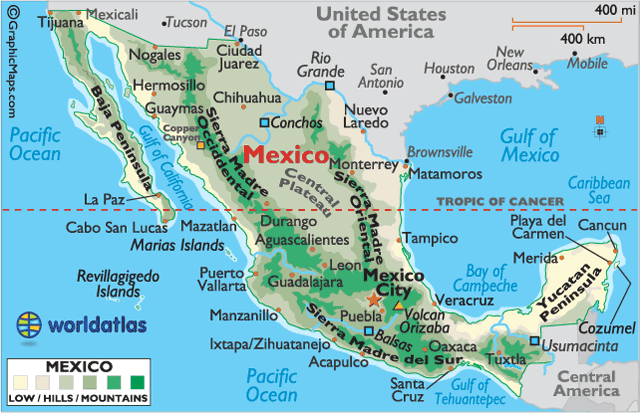
The second fact rarely discussed is the immense size of Mexico (roughly the size of Western Europe) and the distances between historical hot spots and resort cities. Take a look at the map below. You may be surprised to discover that it is roughly 1000 miles from Juarez to Cancun, and almost 800 miles from Tijuana to Cabo San Lucas. How head-scratchingly strange we here in the U.S. would find it if a potential visitor from a foreign country shared with us that he was apprehensive about visiting San Diego because he had heard of a recent ugly incident in New Orleans.


Metric Two:  Statistics

4-305-Cancun Mexico Beach

Here are a few interesting facts you probably have not heard in the media:

1)              The Mexican Ministry of Tourism revealed that 2011 was a record-breaking year for tourism with 23.4 million international travelers visiting Mexico in 2011.

2)              The Mexican Ministry of Tourism announced that 4.99 million international tourists visited Mexico between January-April 2012, representing an increase of 5.3 percent compared to the same period in 2011.

3)              Mexico is currently rated 10th in the world rankings for most international visitors, and has publicly set a goal to be in the top 5 by 2018.

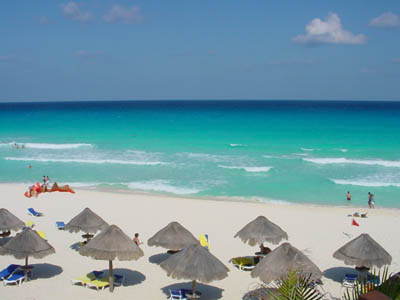
4)              There are currently no US travel advisories in place for popular tourist destinations like Cancun, Cozumel, Playa del Carmen, Riviera Maya and Tulum, the Riviera Nayarit, Cabo San Lucas, Puerto Vallarta, Guadalajara, San Miguel de Allende, Leon or even Mexico City.


Metric Three:  Experience

mexico


If you were to ask me the number one reason I believe Mexico is safe I would say it is based on my own personal experience. I have been traveling there for over 25 years, multiple times many years, without ever once being threatened or harassed. My story is but one of millions as the statistics above corroborate.

If you would like to hear some real stories from real people talking about the real Mexico, just visit the Mexico Taxi Project. These are unscripted comments from consumers just like you on their way home from the airport upon returning to the US. OK, there may be a couple of folks in those clips still feeling the negative effects of over-indulgence but hey, hangovers don’t reach the threat threshold set for this blog post.


SUMMARY

I hope I have demonstrated that striking Mexico off your list of vacation destinations based solely on money driven media reports is, dare I say it, illogical, irrational and well, myopic. The real shame is that you are depriving yourself of one of the most value centered travel experiences available anywhere in the world. Mexico has world-class hotels, incredible dining, exciting activities and rich traditions, all tendered to the world by humble masters of unparalleled service.


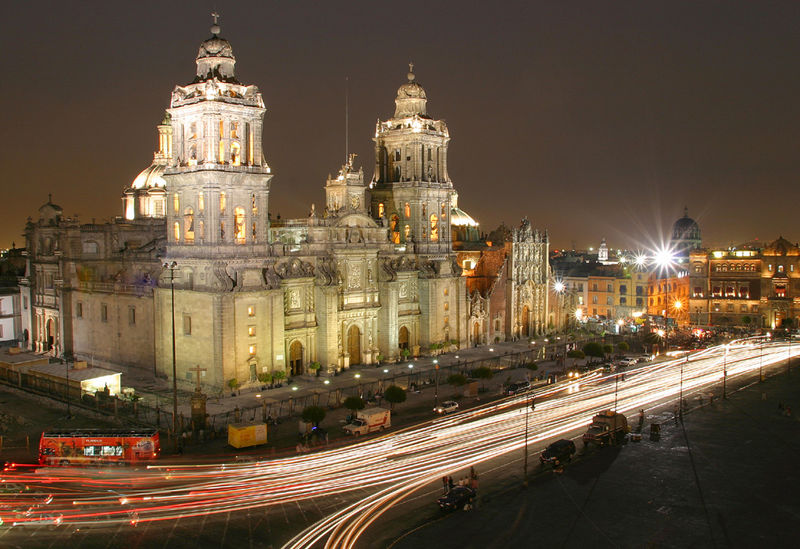
200397092-001_mexico city_tcm530-378257


Unfortunately, this poor blogger doesn’t have a prayer by himself of making the least dint in the news coverage of Mexico. Unbowed and undeterred, however, I shall keep on lending my own voice to many others crying in the wilderness. I shall attend Mexico, I shall defend Mexico, I shall recommend Mexico!  My only hope is your decision, fellow traveler, when it is made, will be based on a basic grasp of geography, a familiarity with a few simple statistics and a confident reliance on the consistent testimony of a legion of travelers to Mexico with irrefutable firsthand knowledge.

Whatever you eventually decide, I will fully respect your decision. But please—and again I say please, don’t let a myopic media’s thirst for mayhem rob you of experiencing one of the world’s great treasures. Take if from one who knows, you will be the poorer for it.

The Gamewell


pt3231310


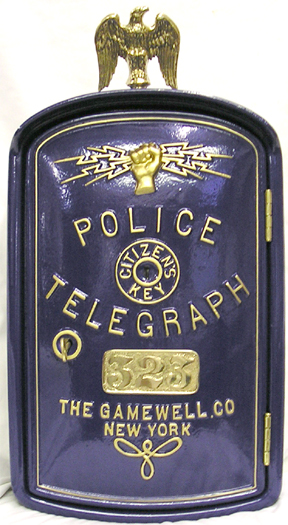
The police call box, or callbox, is a metal box containing a special-purpose direct line telephone or other telecommunications device. Before the introduction of two-way radios, some police agencies installed call boxes at various street locations as a way for beat officers to report to their dispatch office.

In 1852, Dr. William Channing and Moses G. Farmer developed the first practical fire alarm system, utilizing the telegraph system. Two years later, they applied for a patent for their “Electromagnetic Fire Alarm Telegraph for Cities.”

In 1855, John Gamewell of South Carolina, purchased regional rights to market the fire alarm telegraph. He obtained the patents and full rights to the system in 1859.

During the Civil War, the government seized the patents. John F. Kennard subsequently bought the patents and returned them to Gamewell.

In 1867 the two men formed a partnership, Kennard and Co., to manufacture the alarm systems. The Gamewell Fire Alarm Telegraph Co. was established in 1879.


IMG_0788


Gamewell call box systems were installed in 250 cities by 1886, growing to 500 cities by 1890.  A new factory was opened in Newton Upper Falls, Massachusetts. By 1910, Gamewell had gained a 95% market share.


logoHoneywell

Today the company is called Gamewell-FCI (Fire Control Instruments), and is owned by Honeywell Automation and Control Solutions. They develop self-programming, networked, and sophisticated voice evacuation systems.

“Let’s fire it up!”


lapraaclogo1

by PAT CONNELLY


Sgt. II, Pat Connelly retired from the LAPD in 1996.  He was elected to the Los Angeles Police Revolver and Athletic Club (LAPRAAC ) Board of Directors, and presently serves in the retirement position. A member of the Baker to Vegas Race Committee, Connelly was appointed the “Official B to V Team Coach & Coordinator.”


A while back, I went to the Police Academy in Elysian Park to attend a LAPRAAC Board of Directors meeting. I walked past the security office and up the road to the Chief Daryl F. Gates Lounge. Making my way, I passed between the familiar stone walls on each side of the roadway. My walk brought back memories of the first time I did so, over 46 years ago.

Before the Watts Riots in August 1965, I joined the LAPD Reserve Corps. My training commenced on a Saturday morning in the Academy gym. Greeting our class were Officer Les Jenkins and Sergeant George Morrison (the late Morrison retired at the rank of Commander). Both men were spit and polish; standing tall in Class A uniforms, impressing all 30 members of a nervous and unsuspecting recruit reserve class.

The first thing Sgt. Morrison did after mustering the class, was speak about the heritage and history of the Los Angeles Police Academy, and the role that LAPRAAC played in its development.

Starting at the two rock pillars supporting the arcing Police Academy sign, the two men in blue took us on a tour of the grounds. As we walked along, Sgt Morrison pointed out different structures, landscaping, and memorable and historical landmarks. He spoke softly, and the steady tempo of his words radiated his strong sense of pride. It was obvious he was honored to be a member of the LAPD, as well as a member and in his day a noted athlete in LAPRAAC.

Sgt. Morrison explained the rock formations that divide the narrow roadway and then stated, “As you can see,, the walls are made of slabs of concrete, broken chunks of sidewalk brought up here in 1935 by trustees and a cadre of police officers. I will say more on this project later.”

As we walked, he told us the Academy’s history and how it became what it was on that day in 1965 and still is today.

In 1926, Chief James Davis was instrumental in the development and the formalizing of training for officers. The first such training was held in an armory downtown, where officers were instructed in all aspects of criminal justice and street police training. However, no firearms training was provided, except for a makeshift firing range behind the Lincoln Heights station. Today, it is known as Hollenbeck Station.

In 1931, Chief Davis set his sights on obtaining an area in the City of Los Angeles that would provide a formal shooting range for firearms instruction, qualification (including a bonus shoot) and shooting practice. Griffith Park was first suggested, but subsequently disapproved by the Recreation and Parks Commission. An alternative site in Elysian Park, consisting of 21 hillside acres, was then selected and approved; the rugged land was situated above Chavez Ravine.

Chief Davis put out a call throughout the Department for any officers skilled in building, and in electrical and plumbing installation. Sgt. Henry Fricket, assigned Lincoln Heights Station, was the first officer to answer the call. He applied his expertise in carpentry, constructing a 25-yard enclosed pit area, target frames, and firing points. The Department finally had a place to improve one’s shooting skills with the newly approved .45 caliber revolver. Officer Ronald French was the first range master.

In early 1931, eight officers formed a competitive pistol (revolver) team. The “Bulls Eye” shooting specialists were Chief James Davis, and Officers Stanley Stone, Jack Bartley, Joe Dircks, Bud Buchanan, R. J. Ward, J.J. Engbecht, and Mark Wheeler. The team was the first of many championship pistol teams to earn prestige and national fame for the Department and LAPRAAC.

The 25-yard range design and construction was professionally laid out and so complete that it was chosen as the venue for the 1932 Summer Olympic Games pistol competition.

In the fall of 1934, the Los Angeles Police Revolver and Athletic Club filed and obtained legal status. It then took on the responsibility of maintaining the Academy grounds. Under the supervision of Chief Davis (at the time he was President of the LAPRAAC Board of Directors), Sgt William H. Parker, also a lawyer, was assigned to draw up the necessary documents. Sgt. Parker would later become Chief of Police and rebuild what had been a corrupt entity into a professional police department, respected throughout the world. A bust of Chief Parker, commemorating his contributions during his long and distinguished career, currently stands in an honored spot on the Academy grounds.

Once the legal paperwork was approved, signed and delivered, the “club” started focusing on recreational and athletic outlets for its membership.

Officer Fred Eberhart obtained the services of the Department of Forestry. This action brought pine trees and shrubs to the Academy that stand today. Club members supervised 400 trusties that were put to work constructing the rock garden, landscaping, and building the pair of entry pillars and high walls traversing up the hill alongside the Academy roadway. The walls, made of rock and concrete chunks, had been pedestrian walkways on both sides of Ventura Boulevard in the San Fernando Valley.

Tons of concrete from the sidewalks torn out for road widening, utilizing a federal worker program (WPA) during the Depression, were transported to Elysian Park. In addition, the Department of Fish and Game donated 200 quail, 18 gray squirrels, and many fish to create a natural habitat within the hillside rock garden and its several waterfalls and shaped pools.

The first building constructed at the Academy had been an Olympic Village mess hall, located in Baldwin Hills during the 1932 Summer Games. It now is called the Chief Daryl F. Gates Lounge. Club members disassembled the building and reassembled it at its present location. After its completion, a large pool and athletic field and track were constructed across the street.

To cover the cost, members of the Department donated 1% of one month’s salary.

The Academy’s first graduating class of forty recruits, numbers 1-36, called their group “Club 40.” A plaque is on display honoring their place in Academy history. A photograph of class members is on the wall in the public café. The first female class graduated ten years later, in 1946.

The indoor gymnasium was constructed in 1935 at a cost of $181,000. Included in the project were a stage, a locker room, handball courts, administrative offices, billiards room, barbershop, beauty salon, steam room, and a massage alcove. A licensed masseur was available.

Officer Bob Burke (retired LAPRAAC Club Athletic Director) revealed a legendary story about a closet in the Academy Commanding Officer’s office. At one time it opened to a wet bar, designed and constructed for the comfort (possibly on and off duty) of Chief James Davis. Burke says if one looks hard, one will see a piece of the old liquor cabinet still in the office.

Only months after the start of WW II, police recruits in training lived on the grounds; they were allowed to go home on the weekends. A barracks type bunkroom was set up in the present day lounge. A small, separate, square-shaped building just inside the wall near the security office, is where meals were served. That area and the barbeque pit are still present. The building used to be the Law Instructor’s Unit; it currently is leased to a commercial real estate business.

A consultant for the residents’ living and training needs was Melvin Furbish, a retired Marine Corps general. General Furbish patterned discipline of the recruits after his beloved Corps. He included the class “A” uniform style worn today by the Department, and still worn by the USMC.

Another Academy landmark is the concrete seating area on the athletic field. The long and tiered seating, three levels high, is located behind home plate, where LAPRAAC’s baseball team plays. Many Department participants were former college and semi-professional baseball players. They played other local pro teams, including the Hollywood Stars and the Los Angeles Angels, as well as university teams from USC and UCLA. The LAPD diamond-field hardball athletes have won their fair share of games.

On March 3, 2013, the Department baseball team will have been playing continuously for 100 years.

A former member of a LAPRAAC post-WWII baseball team was my watch commander at West Valley Division (1967), Lt. Frank Mullins. At the age of 48, he participated on the Department’s long distance running/relay team, sponsored by LAPRAAC. Frank retired out of Robbery-Homicide Division, RHD. He loved to talk about the Club’s all-star team and how proud he was to wear the LAPD logo on his baseball uniform.

Frank’s baseball-playing name was “Moon” Mullins. He got his nickname playing shortstop as a member of the Chicago Cub’s farm team, the Vancouver Canucks. His moniker is not to be confused with 1959 Dodger, Wally Moon. However they did have one thing in common: hitting a home run, a short distance over a high fence.

Moon claimed he mastered his swing with a flick of his wrist, often hitting a very high pop fly over the Academy’s 50-foot-tall right field fence. The arcing balls would either bounce onto the road and roll down to Chavez Ravine, or would splash into the pool. An unlucky class recruit, usually on discipline, had the task of retrieving each ball.

Lieutenant Frank “Moon” Mullins, a Medal of Valor winner, passed away in 2010. He is another part of Academy history.

Sergeant George Morrison ended his Academy history lesson and tour where it started an hour earlier. He closed by stating (I believe with a tear), “Don’t ever take this place for granted. Be respectful of its history and legacy and be thankful for all the Department personnel who funded, sacrificed, and labored to make this place unique in American law enforcement, along with its notable athletic history. Now you can enjoy a place to recreate, increase your physical fitness, and have family and partner privacy. Complementing all we have seen today, you too, can proudly wear a sports competition uniform displaying the logo LAPD/ LAPRAAC.”